
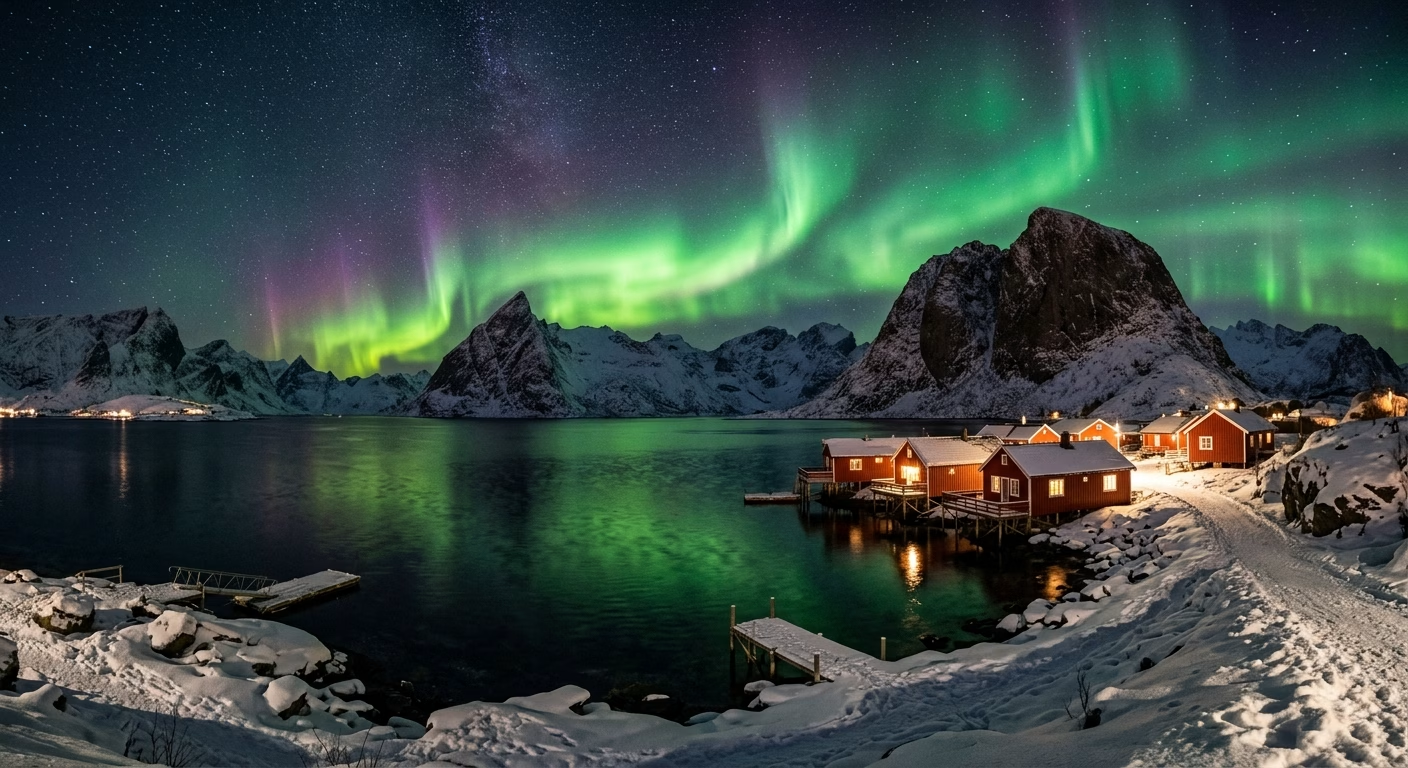
The best places to go in Europe in December depend on the trip you want. You can swim off a beach in the Canary Islands. You can chase the northern lights above the Arctic Circle. Or you can walk through a lit-up old town with a hot drink in hand. All three happen in the same month, often a short flight apart.
This guide groups 12 destinations by trip type: winter sun, snow and northern lights, and city breaks with Christmas atmosphere. For each one, you get the December weather, the daylight you can expect, who it suits, and what to sort out before you go. Every place on this list is covered by one Telekonek Europe eSIM, so you can mix trip types without changing plans at a border.
Key takeaways
- For real warmth in Europe in December, go to the Canary Islands. Daytime highs sit around 22°C (72°F), and the sea is warm enough to swim.
- For the northern lights, go north of the Arctic Circle. Tromsø, Iceland and Swedish Lapland all have long, dark nights in December.
- For Christmas cities, pick Prague, Budapest, Copenhagen or Rome. Each pairs a festive feel with something to do beyond the markets.
- The first two weeks of December are cheaper and quieter than the run-up to Christmas and New Year.
- Daylight changes everything. Rome gets about 9 hours of daylight in mid-December. Tromsø gets no sunrise at all.
How to Choose Where to Go in Europe in December
Start with the trip you want, not the destination. December in Europe splits into three very different holidays. The south and the Atlantic islands feel like spring. The Arctic is dark, snowy and built around the northern lights. The cities in between are cold, short on daylight, and full of lights and seasonal events.
The table below compares the best places to go in Europe in December on this list. Temperatures are typical December daytime highs. A cold snap or warm spell can move them by several degrees, so check a forecast in the week before you fly.
| Destination | Typical December high | Daylight in mid-December | Best for |
|---|---|---|---|
| Canary Islands, Spain | 22°C / 72°F | About 10.5 hours | Beach days, hiking |
| Madeira, Portugal | 20°C / 68°F | About 10 hours | Walking, New Year’s Eve |
| Malta | 17°C / 63°F | About 10 hours | History, short breaks |
| Cyprus | 19°C / 66°F | About 10 hours | Quiet beaches, ruins |
| Tromsø, Norway | -1°C / 30°F | No sunrise, about 5 hours of twilight | Northern lights, Arctic activities |
| Iceland | 3°C / 37°F | About 4 to 5 hours | Northern lights, ice caves |
| Swedish Lapland | -8°C / 18°F | Little or no direct sun | Icehotel, clear-sky aurora |
| Zermatt, Switzerland | 1°C / 34°F | About 8.5 hours | Skiing, mountain views |
| Prague, Czech Republic | 3°C / 37°F | About 8 hours | Old town, Christmas market |
| Budapest, Hungary | 4°C / 39°F | About 8.5 hours | Thermal baths, value |
| Copenhagen, Denmark | 4°C / 39°F | About 7 hours | Tivoli, cozy city break |
| Rome, Italy | 13°C / 55°F | About 9 hours | Sightseeing without the crowds |
Takeaway: Decide between sun, snow or city first. Then use daylight hours to judge how much you can fit into each day.
Best Places to Go in Europe in December for Winter Sun
The warmest places in Europe in December are in the far south and out in the Atlantic. Expect spring-like days, not summer heat. Evenings cool down fast, and a rainy day or two is normal. Even so, you can eat outside, walk in a T-shirt at midday and, in a few places, swim in the sea.
1. Canary Islands, Spain
The Canary Islands sit off the coast of West Africa, and they are the most reliable warm-weather choice in Europe in December. Tenerife and Gran Canaria have the most flights and the widest choice of places to stay. Lanzarote and Fuerteventura are drier, windier and good for long beach walks.
The islands give you more than a sun lounger. In Tenerife, you can hike in Teide National Park, where the summit of Spain’s highest mountain is often dusted with snow in winter. In Las Palmas on Gran Canaria, a nativity scene carved from sand usually appears on Las Canteras beach in the weeks before Christmas.
Why go: The warmest dependable weather in Europe, with a sea temperature around 21°C (70°F). Weather: Highs of about 20–23°C (68–73°F). The south of each island is usually sunnier than the north. Best for: Beach breaks, families and hikers. Connectivity: The islands are part of Spain, so a Spain eSIM covers them.
Planning a wider trip? Our guide to the best time to go to Spain explains how the Canaries compare with the mainland month by month.
Watch out: Christmas and New Year are peak season here. Book flights and rooms early if you want those dates.
2. Madeira, Portugal
Madeira is a green, steep island in the Atlantic, about 1.5 hours by air from Lisbon. Its capital, Funchal, puts up its Christmas lights in early December and keeps them on into January. The streets of the old town fill with music, food stalls and decorated shopfronts.
New Year’s Eve is the big night. Funchal’s fireworks over the bay are among the largest displays in the world, and cruise ships anchor offshore to watch. During the day, you can walk the levadas, narrow paths that follow old irrigation channels along the mountainsides.
Why go: Mild weather, dramatic walking and one of Europe’s best New Year’s Eve shows. Weather: Highs of about 19–20°C (66–68°F), with more rain in the north and the mountains. Best for: Walkers, couples and anyone planning a New Year trip. Connectivity: A Portugal eSIM covers Madeira.
Watch out: Rooms in Funchal for New Year’s Eve sell out months ahead. Book by early autumn if you want a view of the bay.
3. Malta
Malta packs 7,000 years of history into an island you can cross in under an hour. Valletta, the capital, hangs Christmas lights along its main streets. Nativity scenes, called presepju, are a serious tradition, and you will find them in churches, shop windows and village squares.
On the smaller island of Gozo, Bethlehem f’Għajnsielem turns a field into a live nativity village. In recent years it has opened on selected dates from mid-December to early January. English is an official language, which makes Malta an easy first trip for many travelers.
Why go: Mild weather, walkable cities and history at every corner. Weather: Highs of about 16–17°C (61–63°F), with cooler, windy evenings. Best for: Short breaks, history lovers and English speakers. Connectivity: Get a Malta eSIM before you land.
Watch out: Winter storms can bring a day or two of strong wind and heavy rain. Keep one indoor option for each day, such as a museum or a long lunch.
4. Cyprus
Cyprus has some of the warmest sea water in Europe in December, at around 20°C (68°F). Limassol and Larnaca stay lively through winter. Paphos has a UNESCO-listed archaeological park with some of the finest Roman mosaics in the Mediterranean.
Head inland and the Troodos Mountains often get snow in winter. That makes it possible to spend one day on the beach and the next in the mountains. Many villages in the hills also hold small Christmas fairs and church services worth seeing.
Why go: Quiet beaches, ancient sites and warm water without the summer crowds. Weather: Coastal highs of about 18–20°C (64–68°F), with colder nights in the mountains. Best for: Road trips, couples and travelers who want a calm beach. Connectivity: A Cyprus eSIM keeps maps working on mountain roads.
Watch out: Some resort hotels close for the winter. Check that your hotel and any beach restaurants you want are open before you book. Cyprus also drives on the left.
Prefer to stay on the mainland? Seville and Málaga in southern Spain often reach 16–18°C (61–64°F) on a sunny December afternoon.
Takeaway: For guaranteed warmth, choose the Canary Islands. For warm weather plus history, choose Malta or Cyprus.
Snow, Skiing and Northern Lights in Europe in December
Some of the best places to go in Europe in December are in the far north. December is the start of the Arctic’s darkest season, which is exactly why it suits northern lights trips. The nights are long, the snow is usually down, and the landscapes glow blue in the short midday twilight. You need proper clothing and a flexible plan, because weather decides almost everything.
5. Tromsø, Norway
Tromsø sits about 350 km north of the Arctic Circle. From 27 November to 15 January, the sun does not rise above the horizon. Instead, you get a soft blue twilight from roughly 9 a.m. to 2 p.m., and the rest of the day is dark. That darkness gives you long hours to look for the northern lights.
The city makes a comfortable base. You can go dog sledding, feed reindeer with Sámi hosts, or join an evening concert at the Arctic Cathedral. In early winter, orcas and humpback whales often feed in the fjords north of the city, and boat tours run from Tromsø.
Why go: One of the easiest places in Europe to combine a real city with serious aurora hunting. Weather: Around -1°C to -5°C (23–30°F). The coast keeps it milder than inland Lapland. Best for: First Arctic trips and northern lights hunters. Connectivity: A Norway eSIM covers the city and the fjords.
Watch out: Aurora tours chase clear skies, so they often drive for hours and sometimes cross into Finland. A regional plan that covers both countries saves you from losing data at the border.
6. Iceland
In mid-December, Reykjavík gets only about 4 to 5 hours of daylight. The sun rises late in the morning and sets in the middle of the afternoon. The long nights are good news for northern lights, and the low light makes the landscapes look golden all day.
Icelandic Christmas has its own folklore. From 12 December, the 13 Yule Lads come down from the mountains, one each night, and leave gifts in children’s shoes. On New Year’s Eve, Reykjavík lights bonfires and sets off fireworks across the whole city. In the south, guided tours visit ice caves under the Vatnajökull glacier during the winter season.
Why go: Northern lights, ice caves, hot pools and festive traditions you will not find anywhere else. Weather: Around -2°C to 3°C (28–37°F), often windy. Best for: Nature lovers and curious families. Connectivity: An Iceland eSIM keeps you in touch on long drives.
Watch out: Winter storms can close roads with little warning. Check official road conditions and weather alerts each morning before you drive.
7. Swedish Lapland: Abisko and Kiruna
Abisko National Park sits in a pocket of the mountains that often stays clear when clouds cover the rest of the region. That gives it some of the best odds for seeing the northern lights in Europe. Around the solstice, the sun barely rises, or does not rise at all.
Near Kiruna, the village of Jukkasjärvi is home to the Icehotel. It is rebuilt every winter from ice taken from the Torne River, and the new seasonal hotel opens in mid-December. A permanent building lets you sleep on ice all year if your dates fall earlier. You can find opening details on the official Icehotel site.
Why go: Clear-sky aurora odds, the Icehotel, dog sledding and Sámi culture. Weather: Often between -5°C and -20°C (-4°F to 23°F). Best for: Couples and travelers who want a quieter Arctic trip. Connectivity: A Sweden eSIM covers Kiruna and Abisko.
Watch out: The cold here is serious. Most tour operators lend insulated overalls and boots, but bring thermal base layers, a hat and mittens. Phone batteries drain fast at these temperatures, so keep yours in an inside pocket.
8. Zermatt, Switzerland
Zermatt is a car-free village at the foot of the Matterhorn. Its high-altitude ski area opens on 1 November 2026, and the Sunnegga and Gornergrat areas follow on 28 November. By December, most of the slopes are running. Lift passes are at their lowest price from 28 November to 18 December, according to the official Matterhorn Paradise ski pass page.
You do not have to ski to enjoy it. The Gornergrat railway climbs to a viewpoint facing the Matterhorn and dozens of other peaks. The Glacier Express, one of Switzerland’s famous panoramic trains, links Zermatt to St. Moritz.
Why go: Reliable snow, the Matterhorn and a village with no car traffic. Weather: Around -5°C to 1°C (23–34°F) in the village, and colder on the slopes. Best for: Skiers, snowboarders and anyone who wants snow without the Arctic dark. Connectivity: A Switzerland eSIM works across the resort.
Watch out: Switzerland is not in the EU. Even an EU phone plan can charge roaming fees here, so sort your data before you arrive.
Takeaway: Choose Tromsø or Iceland for an easy first aurora trip, Swedish Lapland for the clearest skies, and Zermatt for skiing.
City Breaks with Christmas Atmosphere
For many travelers, the best places to go in Europe in December are its cities. December is when they feel most festive. Lights go up in late November, markets fill the main squares, and concerts fill the churches. Daylight is short, so plan sights for the morning and save the lit-up streets for after dark.
Looking for the classic market cities? Vienna, Strasbourg and Nuremberg are covered in detail in our guide to Christmas markets in Europe, with 2026 dates for 15 markets. The four cities below give you a festive feel plus plenty to do beyond the stalls.
9. Prague, Czech Republic
Prague’s Old Town Square market runs from 28 November 2026 to 6 January 2027, so it is open through the whole of December. The stalls wrap around a tall Christmas tree, with the Týn Church on one side and the astronomical clock on the other. In the days before Christmas, you may also see live carp sold from tubs in the street, a Czech holiday tradition.
Beyond the market, walk across the Charles Bridge at dawn and visit Prague Castle. In the evening, catch a classical concert in one of the old town’s churches.
Why go: A fairy-tale old town and a market that stays open after Christmas. Weather: Around -1°C to 3°C (30–37°F), often foggy or damp. Best for: First-time winter visitors and architecture lovers. Connectivity: A Czech Republic eSIM keeps tram routes on your phone.
Watch out: Pay in Czech koruna. If a card machine offers to charge you in your home currency, decline. The exchange rate is almost always worse.
10. Budapest, Hungary
Budapest’s main Christmas fair on Vörösmarty Square runs from mid-November to New Year’s Eve. The smaller market at St. Stephen’s Basilica has a skating rink and light shows projected onto the church after dark.
The real reason to come in winter is the thermal baths. At Széchenyi, you can sit in a steaming outdoor pool while the air is close to freezing. Few things in Europe in December feel better. Budapest is also cheaper than Vienna or Prague, and its New Year’s Eve celebrations are among the liveliest in the region.
Why go: Thermal baths, grand architecture and strong value. Weather: Around -1°C to 4°C (30–39°F). Best for: Budget travelers, couples and New Year’s Eve trips. Connectivity: A Hungary eSIM helps you book bath slots on the go.
Watch out: Hungary uses the forint, not the euro. Carry a little local cash for market stalls.
11. Copenhagen, Denmark
Copenhagen does December with Danish hygge, the idea of warm, candlelit comfort. Tivoli Gardens, the city’s historic amusement park, holds its Christmas season from 13 November 2026 to 3 January 2027 and closes on Christmas Eve. Unlike a public market, Tivoli charges admission. In return, you get rides, thousands of lights and proper sit-down restaurants.
The canal-side Nyhavn district also hosts a Christmas market. With about 7 hours of daylight, the city glows from mid-afternoon, which suits slow evenings in cafés and wine bars.
Why go: Tivoli, design, food and a cozy, walkable center. Weather: Around 1°C to 5°C (34–41°F), often damp and windy. Best for: Couples, families and design lovers. Connectivity: A Denmark eSIM covers the city and day trips.
Watch out: Copenhagen is one of Europe’s most expensive cities. Lunch specials and bakeries help keep costs down.
12. Rome, Italy
Rome is a smart choice if you want famous sights without summer heat and queues. Early December is especially calm. On 8 December, the Feast of the Immaculate Conception is a public holiday, and the Pope traditionally visits the Marian column near the Spanish Steps.
St. Peter’s Square puts up a large Christmas tree and nativity scene each December. Churches across the city display their own nativity scenes, called presepi, which are free to visit. The mild weather also makes long walks between the Colosseum, the Pantheon and Trastevere easy.
Why go: World-class sights, shorter lines and mild days. Weather: Highs of about 13–14°C (55–57°F), with cool nights and some rain. Best for: First-time visitors, food lovers and history fans. Connectivity: An Italy eSIM keeps museum tickets and maps on hand.
Watch out: Many museums, including the Vatican Museums, close on Christmas Day. Book timed tickets for the days around it early.
Takeaway: Choose Prague for the market, Budapest for baths and value, Copenhagen for hygge, and Rome for sightseeing.
Early December vs Late December in Europe
When you travel matters almost as much as where. The best places to go in Europe in December cost far less in the first two weeks than in the last two. The month splits into three parts.
- 1–19 December: The best value of the month. Markets are open, lights are up and crowds are thinner. Lift passes in many ski resorts are cheaper, though lower slopes can have thin snow.
- 20–26 December: Prices jump and flights fill. Christmas Eve is the main celebration in much of Europe, including the Nordic countries and Central Europe. Shops close early on 24 December, and many restaurants, museums and transport services cut hours from 24 to 26 December.
- 27–31 December: New Year’s Eve demand pushes prices up again in Madeira, Reykjavík, Budapest and the ski resorts. Many hotels set minimum stays.
If the budget matters most, go early in the month or consider January instead. Our guide to cheap European destinations shows what a day costs in ten countries and when prices bottom out.
Takeaway: Travel before 20 December for lower prices. Book Christmas and New Year trips months ahead.
What to Pack for Europe in December
Pack for the coldest part of your trip, not the warmest. Layers work better than one heavy coat, because you move between cold streets and warm buildings all day.
- Winter sun: Light layers, a fleece or light jacket for evenings, a rain shell, a swimsuit and sunscreen.
- Arctic trips: Thermal base layers, wool socks, insulated boots, a warm hat, mittens and thin gloves that work with a touchscreen.
- City breaks: A warm, waterproof coat, boots with grip for wet cobblestones, a scarf and gloves.
- Everyone: A power bank, because cold weather drains phone batteries quickly.
Check your plugs, too. Most of mainland Europe uses Type C and F sockets. Malta and Cyprus use the three-pin Type G plug, the same as the UK.
Takeaway: Layers, waterproof shoes and a power bank cover almost every December trip.
Entry Rules for a December 2026 Trip
Two EU border systems affect visitors from outside the EU, including travelers from the US, Canada, the UK and Australia.
The Entry/Exit System (EES) has been fully running at the Schengen Area’s external borders since 10 April 2026. It replaces passport stamps with a digital record. The first time you cross, you give fingerprints and a photo at the border. There is nothing to apply for and no fee, but allow extra time at passport control. Details are on the official EU EES page.
ETIAS is a travel authorization for visa-free visitors. It was not live at the time of writing. The EU’s stated target has been late 2026, and it has promised to announce the exact start date months in advance. When it launches, it will cost €20 and a transition period will apply. Check the official ETIAS page before you fly, and never pay a third-party site more than the official fee.
Takeaway: Allow extra time for EES checks at your first Schengen border, and confirm the ETIAS status a week before you travel.
Staying Connected Across Borders in December
A December trip in Europe often crosses more borders than you expect. An aurora tour from Tromsø can end up in Finland. A train from Prague to Budapest passes through Slovakia. A week of sun in the Canaries can turn into a week of skiing in the Alps.
Whichever of the best places to go in Europe in December you pick, a regional plan pays off. The Telekonek Europe eSIM covers 35 countries, including every destination in this guide, with plans from $2.50. Unlimited data is also available for Europe if you would rather not watch your usage. You install it once, and it keeps working as you cross each border.
Winter adds a few reasons to keep your data reliable:
- It gets dark early. In Copenhagen, the sun sets before 4 p.m. You will use maps after dark more than on a summer trip.
- Plans change with the weather. Tour times, ferry crossings and mountain roads all shift with storms. Live updates matter.
- Not every country follows EU roaming rules. Switzerland and the UK sit outside them, so your home plan may charge more there.
Install your eSIM at home before you fly, while you have stable Wi-Fi. Your home SIM stays active for calls and bank codes, and the eSIM handles your data. For setup steps and tips on making your data last, see our Europe eSIM guide.
Takeaway: One regional eSIM covers a multi-country December trip, from beach to Arctic, without a SIM change at any border.
Europe in December: Frequently Asked Questions
What are the best places to go in Europe in December?
For winter sun, the Canary Islands, Madeira, Malta and Cyprus. For snow and the northern lights, Tromsø, Iceland, Swedish Lapland and Zermatt. For festive city breaks, Prague, Budapest, Copenhagen and Rome.
Is December a good time to go to Europe?
Yes, if you match the destination to the trip. December is good for winter sun in the south, northern lights in the Arctic and festive city breaks. The first half of the month is cheaper and quieter than the holiday weeks.
Where is the warmest place in Europe in December?
The Canary Islands, with highs around 22°C (72°F). Madeira and Cyprus come next, at about 19–20°C (66–68°F).
Can you swim anywhere in Europe in December?
Yes. The sea around the Canary Islands is about 21°C (70°F), and Cyprus is about 20°C (68°F). Madeira and Malta are a little cooler but still swimmable for many people.
Where can you see snow in Europe in December?
Snow is most reliable in Swedish Lapland, northern Norway, Iceland and high Alpine resorts such as Zermatt. Cities like Prague and Budapest get snow some years, but rain and fog are more common.
Is Europe expensive in December?
It depends on the dates. The first two weeks are often good value. The days from about 20 December to New Year are among the most expensive of the year for flights and hotels.
Which European city is best for Christmas?
Vienna, Strasbourg and Nuremberg are the classic market cities. Prague and Tallinn keep their markets open after Christmas Day. For more ideas, including options outside Europe, see our list of the best places to celebrate Christmas.
Plan Your December Trip
The best places to go in Europe in December are the ones that fit the trip you actually want. Choose the Canaries, Madeira, Malta or Cyprus for sun. Choose Tromsø, Iceland, Swedish Lapland or Zermatt for snow and the northern lights. Choose Prague, Budapest, Copenhagen or Rome for festive cities.
Book early if your dates touch Christmas or New Year, pack in layers, and confirm entry rules a week before you fly. Then set up your eSIM at home so you land connected. Browse Telekonek plans for 200+ countries and get ready for your trip.