
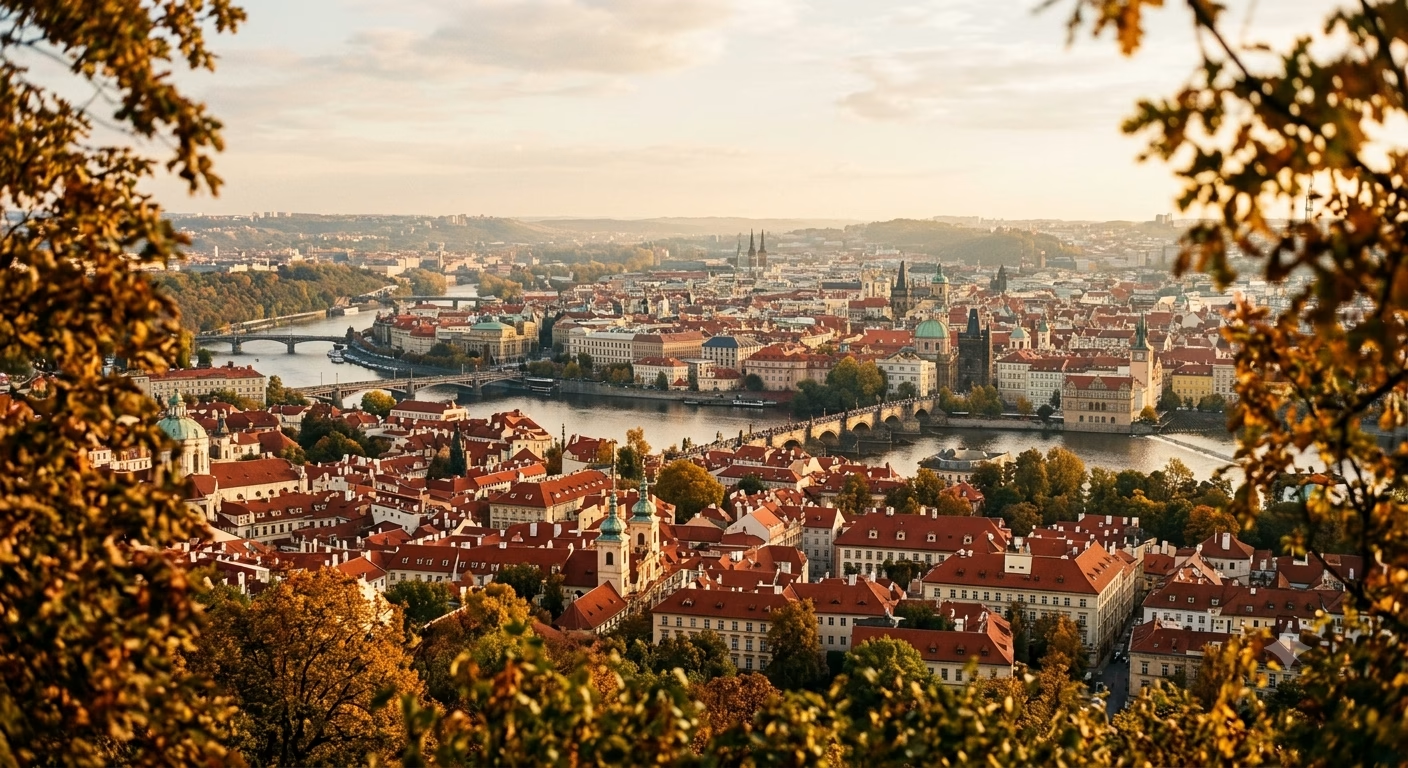
Understanding the Czech Republic’s Climate and Seasons
The best time to visit Czech Republic depends on how you handle heat, cold, crowds, and changing skies. This is a landlocked Central European country with four clear seasons, but weather can shift quickly between a sunny square and a rainy tram stop. Before arrival, set up your Telekonek Czech Republic eSIM so you can check forecasts, train changes, and opening hours without hunting for public Wi-Fi.
Prague and the lowlands have a mild continental climate. Summer days often reach 22–28°C, while January daytime temperatures usually hover around 0°C. Higher areas, including the Krkonoše Mountains near Poland, are cooler year-round and hold snow far longer than Prague.
- Spring, March to May: Expect cool mornings, fresh green parks, and temperatures rising from about 8°C in March to 18°C in May. April can bring bright days followed by cold rain, so pack layers and waterproof shoes.
- Summer, June to August: Days are warm, long, and best for beer gardens, river walks, and countryside trips. Heatwaves now push Prague above 30°C at times, while sudden thunderstorms can flood cobbled lanes and delay outdoor plans.
- Autumn, September to November: September can still feel like summer, but October turns crisp and November is often grey, damp, and chilly. This is the season for city museums, wine areas in South Moravia, and quieter streets.
- Winter, December to February: Prague is cold rather than reliably snowy, with temperatures commonly between -3°C and 4°C. Mountain resorts are the better bet for snow, while cities offer dark afternoons, festive lights, and indoor culture.
Watch out for the temperature gap: a July afternoon in Prague can be 10°C warmer than a hike in the Šumava or Krkonoše hills. Bring a light insulating layer even in summer, especially if you plan early trains or evening castle walks.
Rain falls throughout the year, with late spring and summer generally the wettest period. It rarely means all-day rain, but a sharp shower can make Prague’s polished stone streets slippery. Keep an offline map and live weather access ready; reliable data matters when you need to reroute quickly, and Telekonek eSIM data plans work in 200+ countries.
Takeaway: Choose late spring or early autumn for balanced weather, summer for long outdoor days, and winter for atmosphere rather than dependable city snow.
Spring Awakening: March to May in the Czech Republic
Spring gives you a softer, less crowded route into Czech cities and countryside. March can still feel wintry, but April brings green parks, flowering fruit trees, and longer daylight for walking between sights. If you want milder temperatures and fewer summer tour groups, aim for late April through May.
In Prague, walk up Petřín Hill in mid-April for cherry and apple blossom views over the red roofs. For a grander garden day, take a train to Lednice, about 50 minutes from Brno, where landscaped parkland, lakes, and the neo-Gothic château grounds start to look their best. Keep your Telekonek Czech Republic eSIM active for train times, trail maps, and rain radar; spring showers can arrive quickly.
Easter falls from 3 to 6 April 2026. Prague’s Old Town Square and Wenceslas Square usually host Easter markets around the holiday, with painted eggs, wooden toys, grilled sausages, and sweet trdelník pastries. In Moravian towns, look for hand-painted kraslice eggs and decorated willow branches.
Watch out for the Easter Monday custom. You may see pomlázka, a braided willow switch carried by boys and men as part of a traditional, symbolic ritual. It can feel surprising if you do not know the context. Stick to public events and markets, where the custom is presented gently for visitors, rather than assuming every local celebration is a tourist activity.
- March: lower hotel rates and quieter museums, but pack a warm layer and waterproof shoes.
- April: Easter markets and blossom walks, with daytime temperatures often comfortable but uneven.
- May: the strongest month for culture. Catch the Prague Spring International Music Festival, opening on 12 May 2026 with Smetana’s Má vlast.
May also suits day trips that feel cramped in summer. You can reach Kutná Hora from Prague in roughly an hour by train, then walk between St. Barbara’s Church and the historic center without midday heat. Buy tickets and confirm platform changes on the go with Telekonek data, especially during holiday weekends when popular trains fill up.
Spring takeaway: Choose late April or May for blossom-filled walks, Easter traditions, and major culture without peak-summer pressure.
Summer Splendor: June to August in the Czech Republic
June through August brings the busiest and most energetic stretch of the year. If you want long evenings, open-air events, and full beer gardens, summer delivers. Expect daytime temperatures around 22–30°C in Prague and Brno, with sudden heavy storms after hot afternoons.
Prague’s historic core is at its most crowded between 10am and 5pm. Cross Charles Bridge before 8am, then use the quieter riverbank paths around Kampa or take tram 22 toward Pohořelec for castle-area views. Save Old Town Square for later, when day groups thin and the façades look better in softer light.
Summer is also when the country’s festival calendar moves outdoors. In July, Colours of Ostrava fills the former Dolní Vítkovice industrial complex with music, talks, and art. The site is about 10 minutes from central Ostrava by tram. Prague’s Letní Letná circus and theatre festival usually takes over Letná Park in August, while the Karlovy Vary International Film Festival brings packed cinemas and late-night street life in early July.
- For a Prague escape: take a 40-minute train to Karlštejn, then walk 2km uphill to the castle. Go on a weekday morning; the village lanes become slow and crowded after lunch.
- For water and countryside: base yourself in Český Krumlov or Vyšší Brod and arrange a Vltava canoe trip. A full-day rental commonly costs about Kč500–800 in 2026, before shuttle fees.
- For city evenings: head to Letná Beer Garden above Prague or Náplavka’s riverside bars. Bring a light layer, since riverside temperatures drop quickly after sunset.
Watch out for: air-conditioned hotel rooms are not guaranteed, especially in older central buildings. Confirm this before paying for a July or August stay. Also keep a downloaded map and your Telekonek data active: festival grounds, rural train platforms, and crowded squares are exactly where you may need a live timetable, ride booking, or message to your accommodation.
Set up your Telekonek Czech Republic eSIM before landing, then use it to check same-day storm alerts and avoid peak-hour routes.
Takeaway: Summer gives you the liveliest Czech Republic experience, but early starts, weekday side trips, and reliable mobile data keep the crowds from running your day.
Autumn’s Enchantment: September to November in the Czech Republic
September to early November is often the best time to visit Czech Republic when you want colour, culture, and more breathing room around major sights. Days can still reach 15–22°C in September, while November is cooler and damper, usually around 5–10°C. Pack a light waterproof layer and shoes with grip; wet cobbles in Prague and Český Krumlov become surprisingly slippery.
Set up a Telekonek Czech Republic eSIM before you land, especially for countryside days. Autumn weather can change fast, and you will want live train updates, trail maps, and a way to find a warm lunch stop when rain moves in.
For foliage, skip Prague’s busiest lanes for a few hours and head to Průhonice Park, about 15 km southeast of the centre. Its lakes, mature maples, and winding paths look their best from late October into early November. The 363 bus from Opatov metro station takes roughly 20 minutes. Entry is usually around Kč100–150, depending on the season and ticket type.
South Moravia gives autumn a different flavour. Around Mikulov and Znojmo, vineyards turn gold while growers sell burčák, a lightly fermented young wine, from roadside stalls and wine cellars. It is sweet, cloudy, and stronger than it tastes. Buy a small cup first, and do not assume it travels well in a backpack; bottles can fizz, leak, and keep fermenting.
- Znojmo Historical Wine Festival: usually held in mid-September, with medieval parades, tastings, music, and evening crowds in the old town.
- Pálava Vintage in Mikulov: generally takes place in September and combines local wine, food stalls, and concerts beneath Mikulov Castle.
- Signal Festival, Prague: typically lights up the city in October with projection art and installations. Installations are spread out, so use your Telekonek data to navigate the route rather than wasting time backtracking.
Autumn also makes room in your budget. In 2026, a well-rated central Prague hotel that can cost €170–250 a night in July may sit closer to €110–180 in October, outside major event weekends. In Mikulov, expect roughly €75–130 for a comfortable double room in September. Watch out for wine-festival weekends, when small-town rooms disappear first and taxi availability drops after concerts.
Takeaway: Choose late September for wine and mild walks, or late October for the richest foliage and quieter city streets.
Winter Wonderland: December to February in the Czech Republic
December to February gives you a colder, more festive side of the country. If you want lights, mulled wine, and mountain snow, choose December for markets or January and February for skiing.
Prague’s main Christmas markets usually run from late November to 6 January. Old Town Square has the biggest tree and busiest stalls, while Wenceslas Square is easier for a quick food stop between museums and shops. Order a warm cup of svařák (mulled wine) and try klobása, a grilled sausage served with mustard and bread.
For a smaller-scale market, spend an Advent weekend in Český Krumlov or Brno. In Brno, Freedom Square (Náměstí Svobody) hosts stalls, concerts, and an ice rink in many years. In Český Krumlov, the market around Svornosti Square feels more intimate, with the castle rising above the old town.
Watch out: 24 December is a major family holiday. Many museums, restaurants, and smaller shops close early or shut completely. Reserve a Christmas Eve dinner before arriving, especially in Prague’s centre, and use your Telekonek Czech Republic eSIM to check same-day opening times and tram changes.
For proper snow, head north to the Krkonoše Mountains. Špindlerův Mlýn is the easiest full-service choice, with several linked ski areas, rentals, ski schools, and plenty of hotels. Expect an adult day lift pass to cost roughly 1,200–1,600 CZK in the 2026 season, while ski rental commonly adds 700–1,000 CZK per day.
- Špindlerův Mlýn: best for convenience, restaurants, and first-time skiers; reach it by bus from Prague in about three hours.
- Pec pod Sněžkou: a quieter base beneath Sněžka, the country’s highest peak, with access to the Černá hora–Pec ski area.
- Jizerské Mountains: better for cross-country skiing, with long groomed routes around Bedřichov and Jizerka.
January normally offers the coldest conditions and the strongest chance of snow, but wind can close exposed lifts around Sněžka. Do not rely on a printed timetable or a hotel forecast. Check live lift status, road conditions, and return buses on your phone before committing to a mountain day.
Takeaway: Choose December for market atmosphere, then January or February for dependable mountain time and fewer city crowds after New Year.
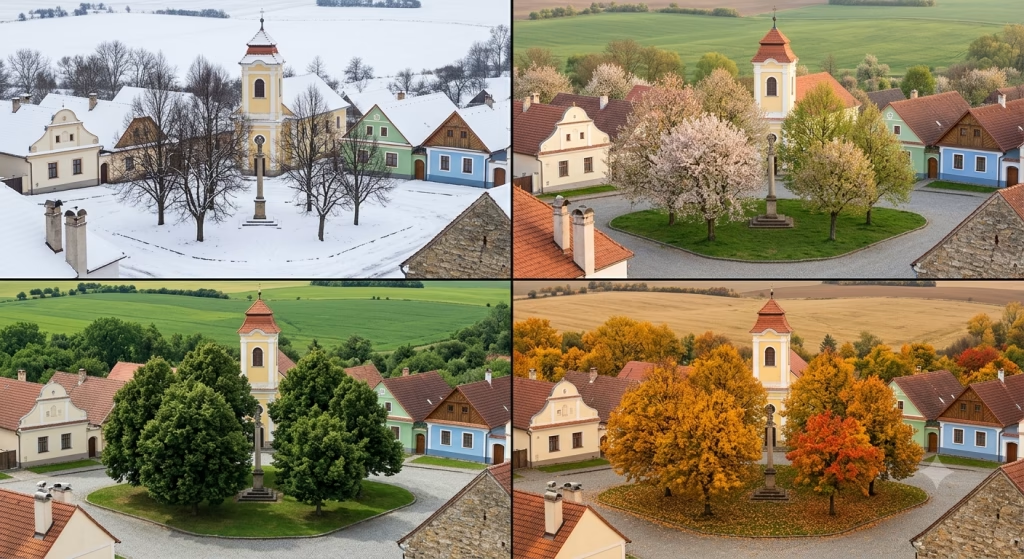
Key Events and Festivals to Experience Year-Round
The best time to visit Czech Republic can depend on one fixed date as much as the weather. A major festival can turn a good city break into a memorable trip, but it can also fill trains and central hotels quickly. Load your Telekonek Czech Republic eSIM before arrival so you can keep tickets, venue maps, and last-minute programme changes on your phone.
- February or March: Masopust carnivals. Catch traditional pre-Lent parades in villages around Prague, especially Roztoky and the Hlinsko region. Expect handmade masks, brass music, doughnuts, and plenty of pork dishes. Dates move with Easter, so confirm the exact weekend before booking a rural stay.
- Mid-May to early June: Prague Spring International Music Festival. This is Prague’s flagship classical music season, with concerts at the Rudolfinum, Municipal House, and other grand halls. Opening-night tickets for Smetana’s Má vlast sell fast; choose a weekday afternoon concert for a better chance of affordable seats.
- Early July: Karlovy Vary International Film Festival. The spa town becomes a lively film hub for roughly nine days. You can watch films at the Hotel Thermal and smaller cinemas, then walk the colonnade between screenings. Watch out: rooms near the centre can jump well above normal July rates, so consider staying in nearby Loket or arriving by bus from Prague.
- Mid-July: Colours of Ostrava. This large multi-genre music festival takes over Dolní Vítkovice, a dramatic former ironworks complex in Ostrava. The site is enormous, with stages spread among blast furnaces and industrial halls. Download the timetable with your Telekonek data connection, because choosing stages on the spot involves a lot of walking.
- Late August: Letní Letná in Prague. This circus and theatre festival in Letná Park is a smart alternative to packed Old Town evenings. International contemporary circus shows appeal even when you do not speak Czech. Bring a light jacket, since the hill gets breezy after sunset.
- October: Signal Festival, Prague. Light installations transform streets, churches, and public squares after dark. Start early around Karlín or Holešovice, then move toward the centre after 9pm. The biggest mistake is trying to see every installation in one night; pick one neighbourhood route instead.
For a food-focused November stop, look for St Martin’s Day menus from 11 November. Restaurants serve young St Martin’s wine with roast goose, red cabbage, and dumplings. Reserve dinner at a traditional Prague restaurant such as Lokál or a countryside wine cellar in South Moravia, because walk-ins often miss the limited goose menu.
Takeaway: Time your trip around one headline event, then book your stay and festival transport before the programme draws the biggest crowds.
Best Time to Visit the Czech Republic for Budget Travel
For the lowest overall spend, target mid-January to mid-March or November before the Christmas markets begin. These are the quietest periods in Prague, Brno, Olomouc, and Český Krumlov. You trade warm weather for cheaper rooms, but you gain calmer streets, easier restaurant bookings, and better value on city-centre stays.
In Prague, a clean private room near Karlín, Vinohrady, or Anděl can often cost €65–€110 per night in January or November 2026. During July, August, and the late-December market period, that same standard commonly rises to €130–€220. Hostels follow the same pattern: expect roughly €20–€35 for a dorm bed off-peak, versus €40 or more on busy summer weekends.
- Best value: late January, February, early March, and most of November. Choose these months for lower accommodation prices and uncrowded museums.
- Good compromise: late April, May, late September, and October. Rooms cost more than winter, yet you can still avoid the highest summer rates.
- Most expensive: Easter weekends, July and August, the first half of October in Prague, and late November through New Year.
Use Prague as a base carefully. A central Old Town address saves walking time, but it can add €40–€80 a night in peak periods. Staying near Náměstí Republiky, Florenc, or Jiřího z Poděbrad usually gives you fast tram or Metro access without paying for a Charles Bridge postcode.
For a lower-cost trip beyond Prague, look at Brno or Olomouc. Both have handsome historic centres, direct rail links, and more modest weekday hotel prices. Brno’s cafés and wine bars are lively year-round, while Olomouc’s compact centre works well when daylight is shorter. Booking Sunday through Thursday can cut room rates further, especially outside festival dates mentioned earlier.
Watch out for “cheap” December. Early December flights may look affordable, but Christmas-market weekends push up hotels sharply, especially Friday and Saturday. January is usually the stronger deal once the market crowds leave, although a few smaller restaurants and seasonal attractions may run shorter hours.
Keep your transport and booking confirmations on your phone with a Telekonek Czech Republic eSIM. It makes it easier to switch to a cheaper tram-connected hotel, buy a rail ticket, or find a lunch menu away from tourist-heavy squares without using roaming data.
Takeaway: For the best budget balance, visit in February or early November and sleep just outside Prague’s Old Town.
Staying Connected: Mobile Data, eSIM, and Local Tips
Seasonal travel in the Czech Republic often means changed train platforms, sudden rain, or a mountain lift closing early. Reliable data matters whenever you visit, especially outside Prague. Set up a Telekonek Czech Republic eSIM before departure so your maps, tickets, and weather alerts work from the moment you land.
You will see three main local networks: O2, T-Mobile, and Vodafone. Coverage is generally strong in Prague, Brno, Olomouc, and on main rail routes. In the Krkonoše mountains, Šumava, or small villages near the border, signal can drop between towns. Download offline maps before a hike, rather than trusting a signal at the trailhead.
- Telekonek eSIM: Best for landing connected without finding a phone shop. Install it while you still have home Wi-Fi, then activate the data line on arrival. Telekonek plans also work in 200+ countries, which helps if your trip continues into Austria, Germany, Poland, or Slovakia.
- Local prepaid SIM: Useful if you need a Czech phone number for longer stays. Expect roughly 10–30 GB packages to cost around CZK 300–700 in 2026, depending on the operator and validity period. Buy from an official city-centre branch, not an airport kiosk with a limited tourist bundle.
- Hotel and café Wi-Fi: Fine for a quick upload, but do not rely on it for train changes or ticket checks. Public networks can be slow during summer festivals and Christmas-market weekends.
For getting around, download PID Lítačka for Prague public transport, IDOS for nationwide bus and train searches, and Můj vlak for Czech Railways tickets and platform updates. Mapy.com is especially useful for marked walking and cycling trails, including routes where Google Maps may not show the colour-coded Czech trail system clearly.
Watch out for border roaming: near Germany, Austria, Poland, and Slovakia, your phone can latch onto a foreign network. Keep network selection on automatic if your Telekonek plan covers the region, or select a Czech network manually when you want to avoid using data in another country. Also keep your home SIM active only for calls and texts if needed, and set Telekonek as your mobile-data line.
Before you fly, install a Telekonek eSIM, download IDOS and offline maps, and keep enough data ready for the first train, tram, or weather change after arrival.