
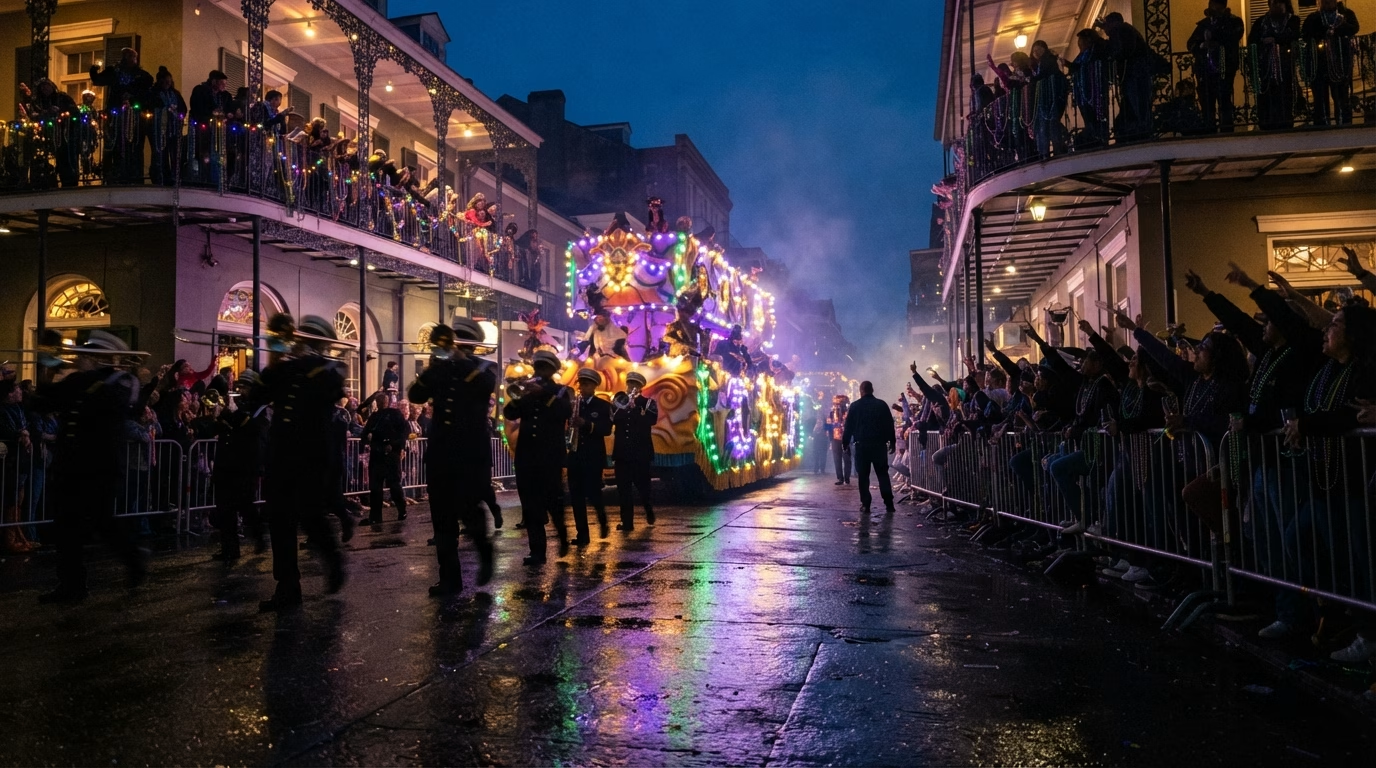
Carnival and Mardi Gras belong to the same pre-Lent celebration, but they are not the same thing. In 2027, Mardi Gras Day falls on Tuesday, February 9. Meanwhile, the Carnival season that builds to it opens on January 6. This guide explains the difference, then walks you through the history, traditions, dates, and trip planning. Before you fly, install a Telekonek USA eSIM so your maps and ride apps work the moment you land.
Key Takeaways
- The difference: Carnival is the whole pre-Lent season, while Mardi Gras is its last day.
- 2027 dates: Carnival opens January 6, then ends on Mardi Gras Day, Tuesday, February 9.
- Crowds: The biggest crowds arrive over the final weekend (February 6 to 7) and Lundi Gras (February 8).
- Etiquette: Many parade routes are family spaces, so respect neighbors and private property.
- Beyond New Orleans: Mobile, Acadiana, Galveston, St. Louis, Rio, and Venice also host their own versions.
- Phone plan: Set up mobile data before the crowds arrive, and pick one meeting point.
What Are Carnival and Mardi Gras?
Carnival is the festive season before Lent, the Christian period of reflection before Easter. In the United States, you hear the term most often in Louisiana. There, especially in New Orleans, parades, music, balls, and neighborhood events build toward one final day.
Mardi Gras is that final day. The French name means “Fat Tuesday.” It marks the last chance for rich food and celebration before Lent begins on Ash Wednesday. So carnival and Mardi Gras are closely linked, yet they are not exact synonyms. Carnival is the season, and Mardi Gras is its grand finale.
In everyday travel talk, “Mardi Gras” often describes the whole New Orleans experience. For example, people use it when they ask about parades, hotels, or street closures. Locally, however, the difference matters. Events start weeks before Mardi Gras Day, while the biggest crowds arrive for the closing stretch.
- Carnival: the wider pre-Lent season, with events over several weeks.
- Mardi Gras: Fat Tuesday, the last and busiest day of that season.
- New Orleans style: parade krewes, floats, marching bands, throws, costumes, and king cake.
- Global context: Brazil, the Caribbean, and parts of Europe also hold pre-Lent festivals with their own customs.
How New Orleans Shapes the Celebration
New Orleans gives these shared roots a very local shape. French language, Catholic tradition, African American culture, and Caribbean ties all play a part. Louisiana’s own music and food add even more. As a result, a New Orleans parade feels different from a Brazilian samba event or a Venetian masked ball. Still, each one belongs to the broader Carnival tradition.
Watch out for a common mix-up. Carnival is not a single parade. Likewise, Mardi Gras is not just a costume party on one street. Routes, crowds, and rules change by day and neighborhood, so check official listings close to your travel date.
Takeaway: Think of Carnival as the whole pre-Lent celebration and Mardi Gras as its final, high-energy Tuesday.
What Is the Historical Context of Both Celebrations?
When you trace carnival and Mardi Gras back far enough, you reach medieval Christian Europe. Communities held feasts before the fasting of Lent began. Over time, French, Spanish, Portuguese, and Italian customs added masks, parades, music, and rich food.
France later carried this tradition into its North American colonies. In 1699, French explorer Pierre Le Moyne d’Iberville reached the Mississippi River area on Mardi Gras. He named a nearby site Point du Mardi Gras. That moment tied the holiday to the Gulf Coast long before New Orleans became its U.S. center.
Mobile, Alabama, held an early Mardi Gras observance in 1703, when the city was part of French Louisiana. New Orleans, founded in 1718, then grew the larger and more public version. The first documented New Orleans parade took place in 1837. It turned a private feast into a street event.
How the Krewe System Began
The modern parade system took shape in 1857. In that year, the Mistick Krewe of Comus staged a formal night procession with floats, costumes, and a theme. Its model led to today’s krewes. These private social groups run parades, balls, and signature throws during the season.
- 1857: Comus set the float-and-theme parade style.
- 1872: Rex added a daytime parade, along with the purple, green, and gold colors.
- 20th century onward: Black Masking Indian traditions, jazz, brass bands, and Creole food gave New Orleans its distinct voice.
Watch out for one common mistake: Mardi Gras did not begin as a New Orleans invention. Instead, you see layers of French Catholic ritual, colonial history, African American culture, and local creativity. That mix explains why a parade can feel like a huge spectacle and a personal neighborhood tradition at once.
Takeaway: Modern Mardi Gras grew from old pre-Lent customs, but New Orleans turned them into a uniquely American season.
Why Do Carnival and Mardi Gras Matter Culturally?
Carnival and Mardi Gras mean far more than a party. In Louisiana, the season also carries family history, neighborhood pride, faith, music, and local identity. You see this most clearly in New Orleans. There, one parade can reflect decades of work by a krewe, a member-run club behind the floats and events.
For a visitor, the key difference is scale and timing. Carnival is the wider season, which can include parades, formal balls, charity work, and religious preparation. Mardi Gras, by contrast, is the final day. On that day, the celebration hits its loudest and most public point before Ash Wednesday.
- Carnival: a full season, from neighborhood parades to ticketed balls.
- Mardi Gras: the closing day, tied to the last feast before Lent.
- New Orleans practice: public parades sit alongside private krewe events, and the two are not the same experience.
Respect the Traditions You Are Watching
The city’s traditions also have deep cultural roots. Brass bands, second-line dancing, Creole cooking, and Black Masking Indian traditions all shape Carnival. Generic “Mardi Gras party” imagery misses most of this. For instance, Black Masking Indian suits are detailed works of art, often hand-sewn with beads and feathers over many months.
Treat these appearances with respect. Watch closely, but photograph only when welcomed. Also, never wear a costume that copies sacred or cultural regalia.
Faith remains part of the season, even when the street scene looks secular. For many Catholic families, the rich food and excess make sense because Lent follows. For others, Carnival is mainly a civic ritual. It is a chance to come home, join relatives on a parade route, or support a krewe’s charity work. You do not need to share any belief to take part. Still, it helps to know why the season matters to locals.
Keep basic courtesy in mind. Beads do not mean consent, and a public party does not cancel good manners. So do not pressure anyone for throws, block driveways, or climb private property. Also, not every parade is a Bourbon Street-style event. Many routes are family spaces, with children, grandparents, folding chairs, and ladders claiming their spots.
Takeaway: Carnival is the cultural season, while Mardi Gras is its final day. Both mean far more than a party.
When Are Carnival and Mardi Gras in 2027? Dates and Schedule
For the 2027 carnival and Mardi Gras calendar, one date matters most: Tuesday, February 9, 2027. That is Mardi Gras Day in New Orleans and the last day of Carnival. Ash Wednesday then follows on February 10, when Lent begins.
The date moves every year because Mardi Gras falls 47 days before Easter Sunday. In 2027, Easter is on March 28, so Fat Tuesday lands early in February.
Key 2027 Dates
- Wednesday, January 6: Twelfth Night opens the Carnival season. However, peak visitor crowds arrive much later.
- Saturday–Sunday, February 6–7: The last full weekend before Mardi Gras brings heavy crowds.
- Monday, February 8: Lundi Gras, or “Fat Monday,” is a high-demand day for hotels, airport transfers, and central streets.
- Tuesday, February 9: Mardi Gras Day, the grand finale of the season.
- Wednesday, February 10: Ash Wednesday ends Carnival, and many visitors leave that day.
Watch out: not every big parade runs on Mardi Gras Day itself. In fact, crowd pressure peaks across the final weekend and Lundi Gras. A parade may also start far from the French Quarter. Then it can take hours to reach the spot you chose.
Final routes and start times usually come out closer to the season. Even then, weather, police planning, and city operations can shift them. So treat social posts and old articles as leads only. Before you pick a viewing spot, check the official guide from New Orleans & Company and each krewe’s own schedule.
Texts can lag when thousands of people crowd the same blocks. For this reason, save offline maps and pin your meeting point before you enter the crowd.
Takeaway: Plan around February 6 to 9, 2027, then confirm each route and start time before you go.
What Are the Traditional Festivities, Foods, and Customs?
Parade Throws and Costumes
In Louisiana, the best-known carnival and Mardi Gras custom is the parade throw. Riders toss beads, cups, doubloons, stuffed toys, and light-up trinkets from the floats. Catching one is part of the fun. However, never push into the street or reach under a moving float.
Watch out for “bead diving.” Throws can land in traffic lanes, and crowds surge when a big one flies. So stand behind barricades where you can, and keep children close. Also, carry a small tote instead of wearing every strand you catch.
Costumes and masks are central too. Purple, green, and gold appear everywhere, and they traditionally stand for justice, faith, and power. On Mardi Gras Day, locals often wear homemade outfits, wigs, sequins, and face paint. Visitors, meanwhile, can join in with something simple and weather-ready.
Mardi Gras Foods to Try
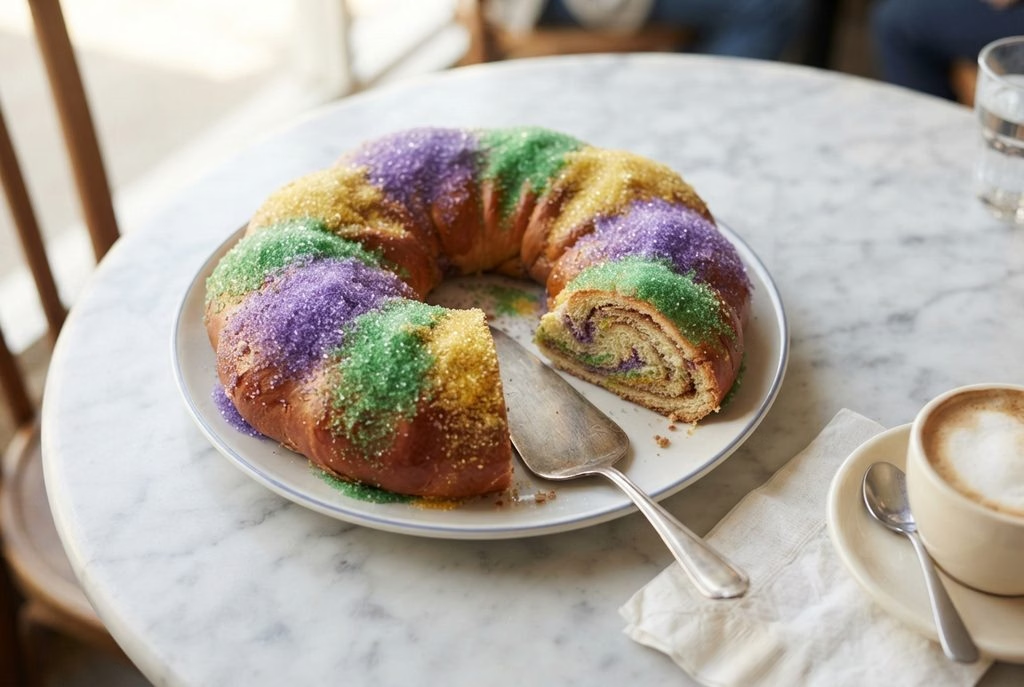
Food follows the pre-Lent idea of richness. The essential sweet is king cake, a ring-shaped pastry iced in purple, green, and gold sugar. A tiny plastic baby usually hides inside. If your slice has the baby, tradition says you bring the next cake or host the next gathering. Still, it is a friendly custom rather than a rule.
- King cake: Grab a slice for a quick parade-day breakfast, or share a whole cake with your group.
- Gumbo: A slow-cooked stew of roux, rice, and sausage, chicken, or seafood. It makes a warm meal on a damp February evening.
- Jambalaya: A seasoned rice dish, often with sausage and chicken or seafood. It also travels well in a takeout box.
- Red beans and rice: A filling, cheap Louisiana staple that is less messy than fried food on a route.
- Beignets: Fried dough under powdered sugar. Eat them seated if you can, because the sugar ends up on dark clothes and phone screens.
Traditions Beyond the Floats
Not every tradition involves floats. In rural Cajun Louisiana, a Courir de Mardi Gras sends costumed riders through the countryside. Along the way, they gather ingredients for a shared gumbo. It is a community event with its own etiquette rather than a staged show. Therefore, follow local directions and never block riders for photos.
Parades also have their own sound. Marching bands, dance teams, brass bands, and torchbearers often pass before the floats. So agree on a meeting spot before the crowd splits your group.
Takeaway: Wear walkable costumes, bring a tote, eat king cake, and treat every route as a busy street.
How Can You Plan a Mardi Gras Trip in 2027?
Mardi Gras Day 2027 is Tuesday, February 9, and Carnival opens on January 6. That gives you about five weeks of carnival and Mardi Gras events. Book your hotel and flights early, because rooms near the routes go fast around the final weekend.
Also, build your visit around more than the final day. The biggest crowds gather in the closing stretch. Earlier parade weekends, in contrast, give you more room to watch, eat, and get home. Either way, use official city and krewe updates to confirm routes, start times, closures, and weather changes.
Rain, crowd controls, or police closures can change a route quickly. For that reason, install a Telekonek eSIM for the USA before you land. Then your phone is ready for maps, ride pickups, group messages, bookings, and delay alerts.
Practical Tips for Parade Day
- Choose your viewing style: A curbside spot gives you floats and throws. A restaurant booking, on the other hand, gives you a seat, a restroom, and a reliable meal.
- Pack for standing: Wear closed shoes with grip, and bring a light rain layer and a small crossbody bag. After a parade, streets turn wet, crowded, and full of beads.
- Carry only what you can keep secure: Leave passports, spare cards, and jewelry at your lodging. Instead, bring one payment card and a power bank in a zipped pocket.
- Pick one regrouping point: Set it before the parade starts, since networks slow down in dense crowds. “Meet by the float” stops working once the street fills.
Plan your exit, too. Getting a ride at the exact finish time is often harder than walking a few blocks away first. So check your route, then head to a well-lit main street before you request a car. Above all, skip unfamiliar shortcuts through closed or quiet areas.
Taking part also means respecting the people around you. Don’t step into the street for beads, block driveways, or climb private structures. A costume is never an invitation to touch someone. Instead, catch throws, cheer for the bands, tip staff fairly, and carry out your trash when bins are full.
Takeaway: Book early, confirm the schedule, set a regrouping plan, and wear practical shoes.
Which Places Outside New Orleans Are Great for Carnival Celebrations?
You do not need to stay in New Orleans for a strong carnival and Mardi Gras experience. Across the Gulf Coast, the Midwest, and abroad, the choices range widely. For example, you can pick family parades, Cajun traditions, or huge street parties.
Gulf Coast and Midwest Picks
- Mobile, Alabama: Mobile offers a historic Gulf Coast celebration with a more local feel. Parades and masked mystic societies are central here. Even so, downtown crowds are often easier to handle than in New Orleans.
- Lafayette and rural Acadiana, Louisiana: Head here for Cajun Mardi Gras rather than big float parades. Expect costumed riders, live music, and food such as gumbo and boudin. However, events can feel less visitor-ready, and access rules vary by community.
- Galveston, Texas: This compact island offers parades, concerts, and restaurants around the historic downtown. It suits a short weekend, especially when you want beaches too. Expect street closures and tight parking near the busiest areas.
- St. Louis, Missouri: Soulard Mardi Gras brings pub culture, costume parties, and a major neighborhood parade. Because February can turn cold fast, wear warm layers under your costume.
International Carnival Trips
Beyond the United States, Rio de Janeiro works on a completely different scale. You can join free street blocos, which are roaming music parties. Alternatively, book a seat for the formal samba-school parade. Crowds are intense and transport slows after big events, so keep mobile data working for maps and safety updates. For the practical side, read this guide to Rio’s Carnival.
Venice, Italy, trades loud parades for masks, period costumes, canal-side events, and elegant balls. It also costs more and feels more curated than Mobile or Lafayette. Finally, Quebec City hosts a snowy winter carnival that is separate from pre-Lent Carnival. In 2027 it runs February 5 to 14, so see what to know before visiting Quebec Winter Carnival.
Takeaway: Pick Mobile for parades, Acadiana for Cajun culture, Galveston for the coast, and St. Louis for parties. For an international trip, choose Rio or Venice.
What Should You Know About the Environmental Impact of Carnival?
Large Carnival crowds create a real cleanup challenge. Within hours, New Orleans routes fill with beads, cups, food containers, broken toys, and old costumes. Much of it is plastic. Worse, anything left near storm drains can wash into the city’s drains and waterways.
The problem is not one bead or one cup. Instead, it is the sheer volume. A few busy parade days leave tons of material for crews to sweep, sort, and haul away. Glitter adds to the problem too, because standard glitter is a microplastic that does not break down easily.
How to Cut Your Carnival Waste
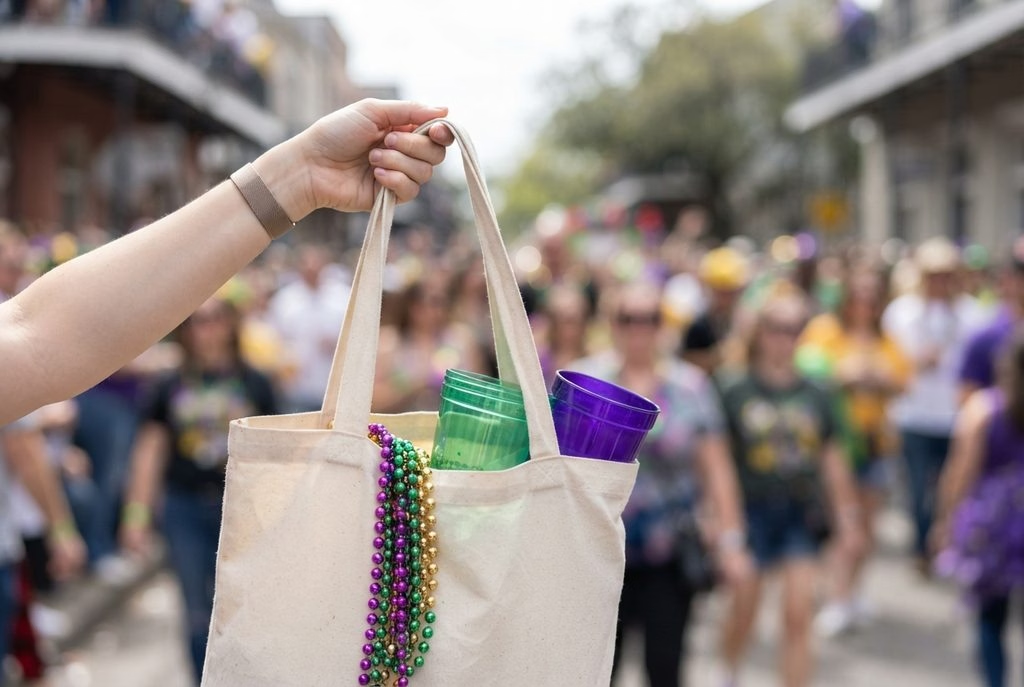
You can still enjoy carnival and Mardi Gras traditions without treating the street as a bin. For example, bring a reusable bottle, carry a bag for your own trash, and keep only throws you want. If you catch ten strands, give the extras to a reuse collection point.
- Choose reusable throws: Cups, fabric items, and handmade pieces last longer than handfuls of cheap beads.
- Skip glitter-heavy costumes: Sequins, painted fabric, feathers, and reusable masks look just as good with less loose plastic.
- Walk, ride transit, or share a car: Parade traffic means long idling lines, so one shared ride cuts congestion.
- Eat and drink with less waste: Choose restaurants with washable plates and cups when you can.
- Reuse your costume: Store it for next year, swap it, or donate it to a local theater or school.
New Orleans also has local groups working to cut parade waste. For instance, Grounds Krewe promotes reused, recycled, and locally made throws. Meanwhile, community collection drives keep usable beads in circulation. Supporting these efforts changes what krewes and vendors choose to offer.
Watch out: street litter after a parade can hide broken glass and other debris. So skip picking beads off the ground, and leave cleanup to workers and volunteers.
Takeaway: Catch less, reuse more, and carry out your trash so New Orleans’ streets stay cleaner.
How Do You Stay Connected During Carnival and Mardi Gras?
During carnival and Mardi Gras, your phone is less about scrolling and more about getting home safely. Crowds clog streets, split up groups, and confuse ride pickups. With reliable data, however, you can share your location, check route changes, and find an open restaurant after a parade.
Set Up Your Telekonek eSIM Before You Fly
Your Telekonek eSIM handles this before you leave home. An eSIM is a digital SIM built into many newer phones. So you add data without a store visit or a plastic card. Your data runs on major US carrier networks. Also, Telekonek plans work in 200+ countries, which helps if your trip continues abroad.
- Check your phone. Confirm it supports eSIM and that your home carrier has unlocked it.
- Install on Wi-Fi. Do this at home, your hotel, or the airport before the crowds build.
- Switch data lines. Set Telekonek as your mobile data line, then turn data roaming on for that line.
- Protect your home plan. Turn data roaming off on your home SIM to avoid surprise charges. However, you can keep it active for calls and texts.
For a full walkthrough, read this guide to how eSIMs work.
Phone Habits for Parade Day
- Download maps offline: Save the areas around your hotel, the route, and the airport. Data can slow when thousands of phones share one block.
- Save key addresses as text: Keep your lodging, meeting point, and backup pickup corner in your notes app. A dropped pin helps less once your battery dies.
- Choose one regrouping rule: Use a fixed corner or shop entrance rather than “near the parade.” Barricades and crowds change how streets look.
- Carry a power bank: Maps, photos, and ride apps drain a battery fast. So keep a charger and cable in a zipped pocket, away from drinks and rain.
Watch out for network congestion. Full signal bars do not always mean fast service during a big parade. So send key messages before the event starts, and use short texts instead of large photos. Also, skip video calls when you are trying to find friends.
Wi-Fi calling can help inside your hotel when indoor signal is weak. Still, it does not replace mobile data outdoors. Before the crowds build, learn how to switch it on with this Wi-Fi calling setup guide.
Takeaway: Install your eSIM before parade day, download offline maps, carry power, and agree on one exact meeting point.
Frequently Asked Questions About Carnival and Mardi Gras
When is Mardi Gras in 2027?
Mardi Gras Day is Tuesday, February 9, 2027. Carnival season opens on January 6 and ends that day. Ash Wednesday then follows on February 10. Because the date depends on Easter, it changes every year.
Are Carnival and Mardi Gras the same thing?
Not quite, although people often use the terms loosely. Carnival is the wider pre-Lent season, while Mardi Gras is its final day. In Louisiana you will hear both, so knowing the difference helps you read event listings.
Do you need tickets for Mardi Gras parades?
No, most public parades are free to watch from the street. Still, a paid grandstand, balcony, or restaurant table gives you a seat, a restroom, and a guaranteed view. Check where a balcony sits first, since some are far from the route.
What foods should you try?
Start with king cake, a sweet iced ring that often has cinnamon filling. Then look for gumbo, jambalaya, red beans and rice, and boiled crawfish when it is in season. Also, warn children about the small plastic baby before you serve king cake.
What should you drink?
Classic New Orleans drinks include the Sazerac, the French 75, and the Hurricane. However, you do not need alcohol to join in. Most restaurants and parade-area businesses also sell water, soft drinks, coffee, and mocktails. Either way, eat first and carry water, because long waits on a route can leave you dehydrated.
Is Mardi Gras good for kids?
Yes, especially at daytime parades away from the French Quarter’s late-night crowds. Bring ear protection for young children, plus snacks and a clear meeting point. Also, keep little hands away from passing floats and traffic lanes when throws land nearby.
Do you have to wear a costume?
No, although bright colors, beads, a fun hat, or a simple mask help you blend in. More importantly, choose closed-toe shoes with grip, since wet sidewalks fill with broken beads. Then keep valuables in a zipped cross-body bag rather than loose pockets.
What is the biggest first-timer mistake?
Treating a parade route like a quick stop is the most common one. Expect blocked crossings, slow ride pickups, and packed restaurants before and after big events. So pick one side of the route, choose your exit before the parade starts, and carry a charger.
How can you stay connected in the crowd?
Download maps, save your lodging address, and set a meeting point before the network gets busy. Then install a Telekonek eSIM for the USA before you fly. That way, your data is ready for route updates, messages, and ride pickups without a SIM shop hunt.
Takeaway: Keep plans simple, stay alert, and keep your phone charged to enjoy carnival and Mardi Gras.