
What Makes Valencia Unique?
Yes—Valencia is worth visiting when you want Spain’s big-city energy without Barcelona’s constant rush or Seville’s inland summer intensity. You get a lived-in Mediterranean city where Gothic gates, tiled Modernista buildings, orange trees, beaches, and bold future-facing architecture sit within a short ride of each other.
The clearest example is the contrast between the narrow lanes around the Cathedral and the white curves of the City of Arts and Sciences. In one afternoon, you can move from the 15th-century Silk Exchange, La Lonja de la Seda, to Santiago Calatrava’s vast science-and-arts complex. That change of scene feels distinctly Valencian, rather than like a city trying to copy Madrid or Barcelona.
Valencia also has an unusual piece of city planning at its center: the former Turia riverbed. After the river was diverted following devastating floods, the old channel became a long green park cutting through the city. You can walk, run, or cycle between neighborhoods instead of spending every day underground on a metro.
For culture, Valencia feels less polished for visitors and more rooted in local life. You will see it in the tiled facades of El Cabanyal, the market stalls of Mercado Central, and the city’s fierce attachment to paella. This is the dish’s home, so expect versions built around rabbit, chicken, green beans, and local beans—not the seafood-heavy pan that many US visitors expect.
- Compared with Barcelona: you trade headline sights and late-night density for wider space, a beach that feels more integrated into daily life, and a calmer pace.
- Compared with Seville: you get a greener, flatter city with a Mediterranean coast and a stronger mix of contemporary design.
- Best fit: you want architecture, food, parks, and sea time in one trip, without treating each day like a museum checklist.
Watch out for: Valencia’s relaxed feel can make you underestimate distances. The old town, Ruzafa, the City of Arts and Sciences, and the beach are not all comfortably walkable in one loop. Keep maps, transit times, and restaurant addresses handy. Reliable data matters when plans shift, and a Telekonek Spain eSIM gets you navigation and messaging working the moment you land.
Takeaway: Choose Valencia for a Spain trip that pairs historic character with striking modern design, local food culture, and room to breathe.
What Are Valencia's Must-See Attractions?
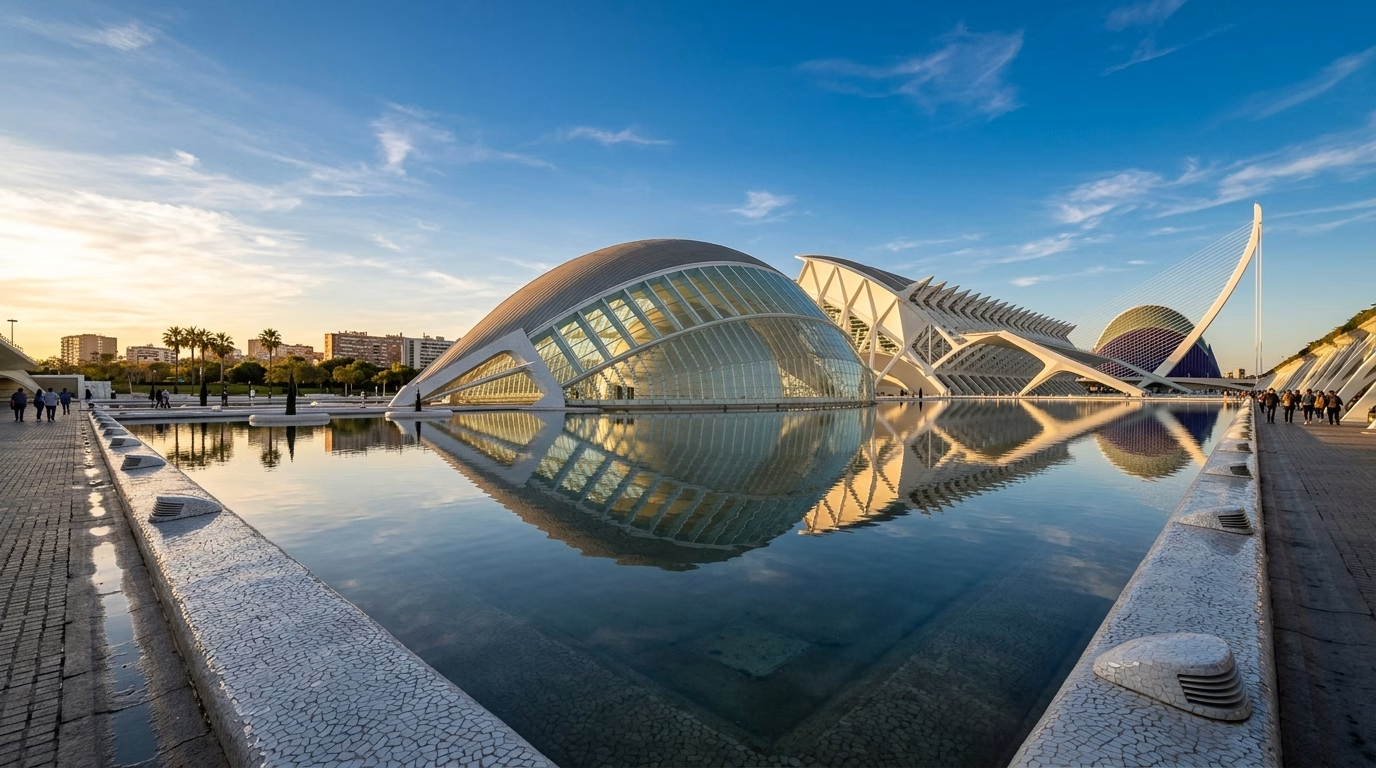
Start at the City of Arts and Sciences, Valencia’s unmistakable modern landmark. The white, curved buildings and shallow blue pools feel almost unreal in bright morning light, especially along the main promenade beside the Museu de les Ciències.
Give yourself choices here rather than rushing through every ticketed venue. Pick the Oceanogràfic for a major aquarium visit, the Hemisfèric for an IMAX-style film or planetarium show, or the science museum for hands-on exhibits. The Palau de les Arts adds a striking opera-house exterior, even without a performance ticket.
Watch out for: this complex is far bigger than photos suggest. Save a map offline and check opening times and show schedules before crossing town; arriving late can leave you with time for only one indoor attraction.
For Valencia’s older side, walk through Ciutat Vella, the historic center. Begin at Plaza de la Virgen, then follow Calle de Caballeros toward the Cathedral and the Micalet bell tower. Climbing the tower is tight and physical, but you get a close-up view of tiled domes, narrow streets, and the flat sweep of the city toward the sea.
Do not skip La Lonja de la Seda, the former silk exchange near Mercado Central. The twisted stone columns make this Gothic building feel more dramatic than many larger churches. Across the street, Mercado Central gives you a useful food stop under a huge iron-and-glass roof, but avoid treating it like a sit-down lunch venue; many stalls focus on ingredients for locals, not ready-made meals.
Connect the old and new city through the Turia Gardens. This long green park runs through a former riverbed and gives you a calm walking or cycling route between major sights. Enter near Torres de Serranos for stone gates and old-city views, then head southeast toward the Gulliver playground and the City of Arts and Sciences.
A bike works well here, but pedestrians often drift across shared paths without warning. Keep your phone charged and pin your next stop before entering the park’s lower paths, where exits are not always obvious.
Takeaway: Valencia earns a full sightseeing day by pairing the City of Arts and Sciences, Ciutat Vella, and the Turia Gardens in one easy-to-link route.
What Cultural Experiences Await You in Valencia?
Valencia’s strongest cultural experience is Las Fallas, the city’s annual festival of giant satirical sculptures, fireworks, brass bands, and street-level noise. The fallas are temporary monuments built by neighborhood groups, then burned at the festival’s finale. You will not find that mix of public art, civic rivalry, and controlled chaos in Barcelona or Seville.
Even outside the main festival period, look for the craft behind it. The Museo Fallero displays saved sculptures from past years, including the “ninots” that escaped the fire through a public vote. It gives you the context that street displays alone can miss: local jokes, political targets, and the intense work of Valencia’s artists.
Watch out for the sound. A mascletà is not a pretty fireworks show; it is a daytime performance built around the rhythm and force of firecrackers. The noise can be startling, especially in packed central streets. Bring ear protection if you are sensitive to loud sound, and keep live data active so you can check crowd notices, route changes, and museum hours before heading into the center.
For traditional music, listen for the high, bright dolçaina and the small drum called the tabalet. These instruments often accompany parades and neighborhood celebrations. The sound is distinctly Valencian, rather than the flamenco guitar and clapping many US visitors expect from Spain. A parade is usually more rewarding than a staged folklore show because you see families, local groups, costumes, and daily streets all working together.
Valencia also has a serious art side beyond its famous futuristic buildings. Visit IVAM, the Institut Valencià d’Art Modern, for modern and contemporary work, then walk to Centre del Carme Cultura Contemporània. The latter occupies a former convent and often makes contemporary art feel less formal, with courtyards, changing exhibitions, and a younger local crowd.
For older art, the Museu de Belles Arts de València is a useful counterweight to the modern scene. You can see Spanish painting in a calmer setting than Madrid’s biggest museums. Around El Carmen, street art adds another layer: murals change often, so treat the lanes around Carrer de Dalt and Carrer de Baix as an open-air gallery, not a checklist.
Leave room in your schedule for a parade, gallery courtyard, or mural-filled detour. Cultural life in Valencia works best when you do not try to compress it into one museum visit.
Takeaway: See Fallas craft, hear a dolçaina parade, and pair IVAM with El Carmen’s street art for a Valencia experience that feels genuinely local.
Where Should You Eat? A Guide to Valencia's Culinary Scene
Valencia is worth visiting for food alone if you care about rice dishes done properly. This is the home of paella, but the local version may not match the saffron-yellow seafood pan you expect. Paella Valenciana traditionally uses chicken, rabbit, green beans, garrofó beans, and sometimes snails.
Order paella at lunch, not late at night. It is a slow-cooked shared dish, usually made for at least two people, and many kitchens need advance notice. Ask for the rice to be cooked “seco” if you want a dry, crisp bottom layer called socarrat.
- Casa Carmela, near Playa de la Malvarrosa, is known for paella cooked over orange-wood fire. Go when you want the classic beachside experience.
- La Pepica, on the seafront promenade, suits a long lunch after the beach. Choose seafood rice here rather than expecting the strict inland-style Valencian recipe.
- Casa Roberto, closer to the city center, is a useful pick when you want traditional rice without spending half your day at the beach.
Watch out for: restaurants around the most tourist-heavy lanes may display huge photo menus and serve paella fast. That is the warning sign. Good rice takes time, so a paella arriving in ten minutes was probably not made for your table.
For a more local daytime habit, try an esmorzaret. This is a substantial mid-morning sandwich meal, often with a bocadillo, olives, peanuts, coffee, and sometimes a small beer. Look for fillings such as tortilla española, longaniza sausage, or blanc i negre, a local pairing of white and black sausage.
Mercado Central is the place to see the raw ingredients behind Valencian cooking: rice, cured meats, tomatoes, artichokes, and fish from the coast. Eat a quick counter-style bite at Central Bar, then buy fruit or sweets for later. Keep data running here, since market stalls can be easy to lose track of and Spanish names on signs are useful to translate.
Save room for horchata, Valencia’s cold drink made from tiger nuts, not dairy. Have it with long, soft fartons at Horchatería Santa Catalina in the old town, or make the short trip toward Alboraya for Horchatería Daniel. In warmer weather, it is a better afternoon reset than another coffee.
Takeaway: Eat paella at lunch from a rice-focused restaurant, then balance it with an esmorzaret, market snack, and cold horchata.
How to Get Around Valencia: Transportation Tips
Valencia is easy to cover without a car. The historic center is compact, the Turia Gardens create a long green route across the city, and buses reach the beach without the stress of parking near Malvarrosa.
For most short stays, combine walking with EMT city buses and Metrovalencia. Check live directions in Google Maps or the EMT València app before leaving your hotel, especially when a bus stop has several routes on the same avenue.
- Walk the old center: From Estació del Nord and Plaza del Ayuntamiento, you can reach the Central Market, La Lonja, the Cathedral, and El Carmen in about 10 to 25 minutes on foot. Wear shoes with grip; the old-town paving becomes slick after rain.
- Use the Turia Gardens as your shortcut: This former riverbed runs roughly nine kilometers west to east. Walk or cycle from the Torres de Serranos toward the City of Arts and Sciences instead of following traffic-heavy streets above it.
- Take buses to the beach: EMT buses are often simpler than the Metrovalencia network for reaching Playa de la Malvarrosa and Cabanyal from central Valencia. Look at the route direction, not just the route number, since the return stop may be on the opposite side of a broad road.
- Use metro for longer jumps: Metrovalencia is useful when you are staying outside the core, arriving through Valencia Airport, or heading to areas beyond the walkable center. Stations can sit farther apart than you expect, so check the final walking distance before choosing it over a bus.
Valencia is one of Spain’s better cycling cities, but treat bike lanes as real traffic lanes. The flat route through the Turia is relaxed, while streets around Xàtiva, Colón, and the City of Arts can feel busy at rush hour. Hire a bike for a half-day if you want to link the old center, gardens, and waterfront; use it for point-to-point rides rather than trying to pedal through every narrow lane in El Carmen.
Watch out for: don’t assume every public bike dock will have a bicycle or an empty return space when you need one. The system is built mainly for local subscribers, so a regular rental shop is usually less frustrating for visitors. Keep your phone charged, because map directions are especially useful where the Turia paths dip below road level and exits are not always obvious.
Takeaway: Walk the center, cycle the Turia, and use buses for the beach—three simple modes cover nearly every Valencia day.
What is the Best Time to Visit Valencia?
Late March through May is Valencia’s easiest sweet spot. Days are usually warm enough for long walks through the Turia Gardens and lunches by the beach, without the hard heat of midsummer. Expect daytime temperatures broadly around 65–80°F (18–27°C), though evenings can still feel cool near the coast.
This is the best window if you want the City of Arts and Sciences, the old center, and Malvarrosa Beach in one trip. Bring light layers and a compact rain jacket. Spring showers are usually brief, but they can catch you halfway between a metro stop and your dinner reservation.
March is different. Las Fallas turns Valencia into a city-wide celebration, with sculptures, fireworks, parades, street closures, and a great deal of noise. It is unforgettable if you want Valencia at its most intense, but it is not a quiet sightseeing break. The festival program and exact dates can change, so confirm them before committing to flights or a hotel.
Watch out for: during Fallas, your normal route can disappear behind crowds, barriers, or a neighborhood event. Load offline maps and keep a working data connection for live transit updates, messages, and last-minute restaurant changes. Earplugs are also a sensible addition if you stay in or near the old center.
June through early September suits you if beach time matters most. July and August are hot, bright, and often humid, with daytime highs commonly reaching the upper 80s°F or higher. Plan outdoor sightseeing before noon, use the long lunch break for museums or a rest, then return outside after 7 p.m. when locals fill terraces and the seafront.
Autumn, especially late September through October, brings another strong balance of warm sea temperatures and fewer peak-summer beach crowds. It works well for cycling the Turia, visiting museums, and booking a proper paella lunch without building your whole day around heat.
Winter is Valencia’s quietest-value season. You will not get reliable swimming weather, but mild afternoons can still make walking enjoyable. December also brings the Valencia Marathon period, which can affect room availability and central traffic; verify the current race calendar if your dates fall around it.
For a month-by-month view across the whole country, including how Valencia’s timing compares with Madrid, Barcelona and Andalusia, read our guide to the best time to go to Spain.
Takeaway: Choose April–May or late September–October for the best mix of comfortable weather, manageable crowds, and time outdoors; choose March only when you want the full Fallas experience.
Is Valencia Safe to Visit After the 2024 Floods?
Yes. The city centre and the main visitor areas are fully operational, and have been since early 2025. This is the question behind a lot of searches for Valencia right now, so it is worth answering plainly rather than in general terms.
On 29 October 2024, a DANA storm system dropped close to a year’s rain on the province in a matter of hours. It was one of the worst natural disasters in modern Spanish history, with more than 220 deaths and damage running into the billions of euros. The destruction was concentrated in towns and districts south and west of the city — Paiporta, Catarroja, Sedaví, Aldaia and neighbouring areas — rather than in Valencia’s historic core.
The parts of the city you are likely to visit came through largely intact. Ciutat Vella, the City of Arts and Sciences, the Turia Gardens, Ruzafa, Cabanyal and the beachfront were barely affected. Hotels, restaurants, museums, the airport and the metro have been running normally for well over a year, and the city has continued adding cultural attractions since.
What this means for your trip: you do not need to plan around the floods. The practical takeaway is a weather habit, not an avoidance list. Autumn is Valencia’s DANA season, so if you travel between late September and November, check AEMET warnings each morning. During a red or orange alert, stay out of underpasses, low-lying paths near drainage channels, and the Turia Gardens itself — the park sits in the old riverbed and is designed to flood.
Emergency number for police, fire or medical anywhere in Spain is 112, and it works without a local SIM.
Takeaway: The floods hit the southern metro towns, not the tourist city. Travel normally and watch the forecast in autumn.
What Safety Tips Should You Know Before Visiting Valencia?
Beyond weather, safety is rarely the reason to question is Valencia, Spain worth visiting. The city feels relaxed by Spanish city standards, and violent crime against visitors is uncommon. Your main risk is opportunistic theft in busy places, especially around Estació del Nord, the Central Market, El Carmen’s narrow lanes, and the Malvarrosa beach promenade.
Keep your phone and wallet in a zipped front pocket or cross-body bag worn in front. At the beach, do not leave a bag unattended while you swim, even for a few minutes. Bring only one card and a small amount of cash for the sand; leave your passport and backup card locked at your hotel.
- On crowded buses and metro platforms: step aside before checking directions, rather than standing by a door with your phone out.
- At restaurants: keep your bag on your lap or looped around a chair leg. A bag hung loosely on a chair is an easy target.
- After dark: use the main, lit streets when walking back from El Carmen. The neighborhood is lively, but its maze-like side streets can become quiet fast.
A working data connection helps here for more than messaging. Keep offline maps saved, share your live location with someone you trust, and use data to call a licensed taxi or check the route home before leaving a bar.
Small etiquette choices make daily interactions easier. Start with “hola” when entering a shop, greet staff before asking a question, and keep your voice low on late-night residential streets. Tipping is modest: round up a café bill or leave a few euros for notably good table service, rather than adding the large percentage you might use in the US.
Dress respectfully inside the Cathedral and other active churches. At lunch, do not rush a server for the check; ask for la cuenta, por favor when you are ready to leave. A photo of your passport is useful if your original goes missing, but it is not formal identification, so keep the original secure and accessible when needed.
Takeaway: Protect your valuables, use lit main streets late at night, and keep your navigation working when you are moving between neighbourhoods.
How Does Valencia Compare to Other Spanish Cities?
Valencia is not “nicer” than Barcelona in every way. It is easier. Barcelona wins for headline sights, late-night variety, major museums, and the kind of dense urban buzz you feel from Eixample to El Born. Valencia gives you more breathing room, a flatter rhythm, and a beach that feels connected to daily city life rather than tacked onto a packed sightseeing schedule.
Choose Barcelona when you want Gaudí, world-class art, and a long list of neighborhoods to explore. Choose Valencia when you want a historic center, contemporary architecture, park space, and rice by the sea without spending every day in crowds. For a deeper Barcelona food plan, use this Barcelona neighbourhood restaurant guide before deciding.
- Valencia: best for a balanced three- to four-day city break. Stay around Ruzafa for cafés and evenings out, or Cabanyal for a more local, beach-adjacent feel.
- Barcelona: best for a first Spain trip when iconic architecture and big-city energy matter most. Expect fuller pavements and more time spent navigating between sights.
- Seville: best for intimate lanes, flamenco, tapas bars, and Andalusian history. Santa Cruz and Triana have a stronger old-world atmosphere than Valencia.
Seville is the sharper contrast. Its center feels more theatrical: tiled courtyards, shaded squares, orange trees, and Moorish-influenced landmarks shape the experience. Valencia feels more Mediterranean and outward-looking, with modern buildings, broad boulevards, and the coast playing a larger role in your day.
Summer can decide the question for you. Valencia’s sea breeze can make outdoor time more manageable, while Seville’s inland heat can make midday sightseeing hard. Barcelona also has a coast, but its beach areas and central attractions are less seamless than Valencia’s park-to-city-to-sea layout.
Watch out for: do not pick Valencia expecting Barcelona’s nonstop nightlife or Seville’s concentrated historic drama. Its appeal is the mix: you can have a slow market lunch, cycle through the former riverbed, and reach the waterfront without turning the day into a logistics project.
For the wider picture, our Spain travel guide can help you shape a multi-city route rather than treating these cities as interchangeable.
Takeaway: Pick Valencia for a calmer, beach-linked Spanish city break; Barcelona for big-ticket sights; and Seville for the deepest Andalusian atmosphere.
What Are the Costs Associated with Visiting Valencia?
Valencia can feel noticeably cheaper than Barcelona, but your dates and neighborhood make a big difference. For a realistic 2026 estimate, plan in euros and treat US-dollar conversions as a moving target. A rough rule is that €100 is often a little more than $100, but check your card’s live exchange rate before you go.
- Budget stay: expect roughly €25–€45 for a hostel bed, or €75–€120 for a basic private room outside the most central streets.
- Mid-range hotel: budget about €120–€190 per night for a well-reviewed double room in Ruzafa, near Plaça de l’Ajuntament, or by the Turia Gardens.
- Higher-comfort stay: expect €220 and up for a polished central hotel, a beach-facing room, or a busy-weekend booking.
March during Las Fallas, Easter week, and warm-weather weekends push room rates up sharply. A room that costs €130 on a Tuesday in May can easily pass €200 on a festival weekend. Staying near Ángel Guimerà, Xàtiva, or Benimaclet can lower the nightly rate while keeping you connected to the center.
Food is where Valencia gives you room to spend well without blowing the budget. A bakery breakfast of coffee and pastry may run €4–€7. A weekday menú del día—usually several courses, bread, and a drink—often lands around €14–€20. For dinner, allow €25–€40 per person at a good neighborhood restaurant, before extra drinks.
Set aside €30–€50 for each major paid attraction day if you want an aquarium, museum, film, or special exhibit. The old center, Turia Gardens, beach promenade, and much of the City of Arts and Sciences exterior cost nothing, so balance ticketed stops with free time outside.
For a daily spending plan excluding flights, use these broad ranges:
- Lean budget: €75–€120 per person, with a hostel bed, supermarket meals, one inexpensive lunch, and mostly free sights.
- Comfortable mid-range: €150–€230 per person, sharing a hotel room, eating out twice, and adding one paid attraction.
- Comfort-focused: €280+ per person, with a central hotel, taxis, long restaurant meals, and several ticketed experiences.
Watch out for: the cheapest hotel rate may exclude breakfast, and restaurant prices can rise quickly once you add bottled water, wine, or a beachside table. Check opening times, ticket slots, and menus before crossing town; it prevents paying for a rushed attraction or settling for an overpriced tourist menu.
Takeaway: Valencia rewards a €150–€230 daily mid-range budget, while free parks and smart weekday choices make it easy to spend less.
Where Are the Hidden Gems in Valencia?
Is Valencia, Spain worth visiting beyond its headline sights? Absolutely—especially when you leave the busiest old-town lanes for neighborhoods and green corners that show how the city actually feels day to day.
Start with Jardí de Monforte, a small formal garden near the northern end of the Turia. You get clipped hedges, marble statues, fountains, and far fewer people than the main park paths. Go in the morning, then walk ten minutes to the Museu de Belles Arts for Spanish painting in a grand former seminary that many short-stay visitors skip.
For a more local side of the coast, wander Cabanyal rather than stopping at the Malvarrosa promenade. Its low houses use bright ceramic tiles and painted façades, while streets such as Carrer de la Reina and Carrer de la Barraca reveal the old fishing district’s character. Pause at La Fábrica de Hielo for a drink or a casual event space near the beach.
Watch out for: Cabanyal is not a polished museum district. Some blocks feel lively and restored, while others feel rougher around the edges. Visit in daylight, keep the same phone-and-bag habits mentioned earlier, and navigate back toward the tram or bus stop rather than cutting through unfamiliar streets after midnight.
For an evening that feels very different from central Valencia, head south toward Albufera Natural Park. The lagoon, rice fields, and low horizon explain why Valencian rice culture matters more than any menu description can. A sunset boat ride can be lovely, but the quieter reward is arriving early enough to walk beside the water and watch the light change over the wetlands.
Do not assume every boat trip runs on the same schedule or follows the same route. Wind, weather, and daylight affect departures, particularly outside summer. Arrange your return transport before sunset; a taxi is often simpler than waiting in a dark rural stop.
Back in town, give Benimaclet a slow evening. This student-heavy neighborhood has small bars, inexpensive meals, murals, and a more residential rhythm than Ruzafa. You are not there for a landmark; you are there to trade a checklist for a few unplanned hours.
Takeaway: Pair Monforte or Cabanyal with an Albufera sunset, and you will see the Valencia that most quick visits miss.
How to Stay Connected While Exploring Valencia?
Staying connected matters when you are deciding is Valencia, Spain worth visiting, because the city rewards flexible days. You may change a beach plan after seeing the wind, find a small rice restaurant outside the center, or need a last-minute museum time slot. Reliable data keeps those small decisions simple.
Set up your Telekonek Spain eSIM before leaving home, while you still have dependable Wi-Fi and access to your email. In Spain, Telekonek runs on Orange and Movistar, so you are on two of the country’s main networks rather than a single fallback. Plans reach 200+ countries, so you land with maps, messages, and bookings ready to use instead of hunting for airport Wi-Fi.
- Check that your phone is unlocked and eSIM-compatible. A carrier-locked phone may not accept a travel eSIM. Your phone settings or carrier account can confirm this before departure.
- Install the eSIM at home, then activate it when needed. Keep your home line enabled for calls or verification texts if necessary, but turn off data roaming on that line.
- Make Telekonek your mobile-data line. Also turn off “cellular data switching” if your phone offers it. That stops your phone from quietly using costly roaming data.
- Download Google Maps offline. Save Valencia before flying, including the old center, Ruzafa, the City of Arts and Sciences, and the beach area. Offline maps help when your battery is low or a building blocks the signal.
If Valencia is one stop on a longer route through France, Italy or Portugal, a Europe eSIM keeps the same setup running across borders without a new install in each country.
A data-only setup is usually enough for a short Valencia stay. WhatsApp is widely used for messages, calls, restaurant contact, and sharing your location. Keep your usual number in WhatsApp, since your contacts can reach you there without needing a Spanish phone number.
Free Wi-Fi can help at your hotel or in a café, but do not depend on it for directions between sights. Avoid logging into banking apps or entering card details on open public networks. A small power bank matters more than extra data on long days: navigation, camera use, and ticket apps can drain your battery quickly under Valencia’s bright sun.
Watch out for: do not delete your eSIM after installation unless you are sure you will not need it again. Some eSIM profiles cannot simply be re-added from the same activation details. Keep the installation email and QR code available offline.
Takeaway: Install before your flight, use it for data, and keep home-carrier roaming data switched off.
Frequently Asked Questions About Visiting Valencia
Is Valencia, Spain worth visiting?
Yes, especially when you want a Spanish city with a real local rhythm rather than a nonstop checklist of blockbuster sights. You can combine historic streets, major architecture, green space, and the coast in one short trip. You also get a strong food culture without needing to build every day around reservations months ahead.
Is Valencia still affected by the 2024 floods?
Not in the areas you will visit. The damage was concentrated in southern metro towns such as Paiporta, Catarroja and Sedaví, while the historic centre, the City of Arts and Sciences, the Turia Gardens and the beachfront came through largely intact. Hotels, museums, transport and the airport have operated normally since early 2025.
How many days in Valencia is enough?
Three full days is the sweet spot. That gives you one day for the old center, one for the City of Arts and Sciences and the Turia Gardens, and one for the beach or a slower neighborhood day. Two days works if Valencia is one stop on a wider Spain route, but you will need to choose between a full museum visit and unhurried beach time.
Is four days too long in Valencia?
No. A fourth day lets you see the city at a more Spanish pace: a long rice lunch, a market visit, an afternoon in a quieter garden, and drinks in Ruzafa without racing across town. It is also useful as a buffer during hot weather, when a packed midday walking plan can become miserable.
What is the prettiest city to visit in Spain?
You should treat this as a style choice, not a contest. Choose Seville for tiled courtyards and Moorish grandeur, Barcelona for landmark architecture and dense city energy, and Granada for mountain views and the Alhambra. Choose Valencia when your ideal beauty includes broad park paths, Mediterranean light, old-world lanes, and modern white buildings by the water.
Is Valencia better than Barcelona?
You may prefer Valencia if Barcelona’s crowds, steeper prices, and constant movement sound tiring. You should choose Barcelona when famous art, Gaudí landmarks, and big-city nightlife matter most. Valencia is the better fit when you want a calmer base and a beach built naturally into the trip.
Can you visit Valencia without speaking Spanish?
Yes. You can manage hotels, major attractions, transport, and central restaurants in English. Learning a few basics still helps in smaller bars and markets: hola, por favor, la cuenta (the bill), and gracias. Watch out for assuming every dinner menu has an English version, particularly away from the tourist center.
Should you add Valencia to a first Spain trip?
Add it when you have at least seven to ten days and do not want every stop to feel alike. It works particularly well between larger, busier cities because you can slow down without running out of worthwhile places to see. For wider route ideas, use our Spain travel guide alongside your Valencia plans.
What is the simplest final planning tip?
Download offline maps, save your hotel address, and sort your data before you fly. A Spain eSIM keeps directions, restaurant messages, and booking details available without spending your first hour searching for a SIM card shop.