
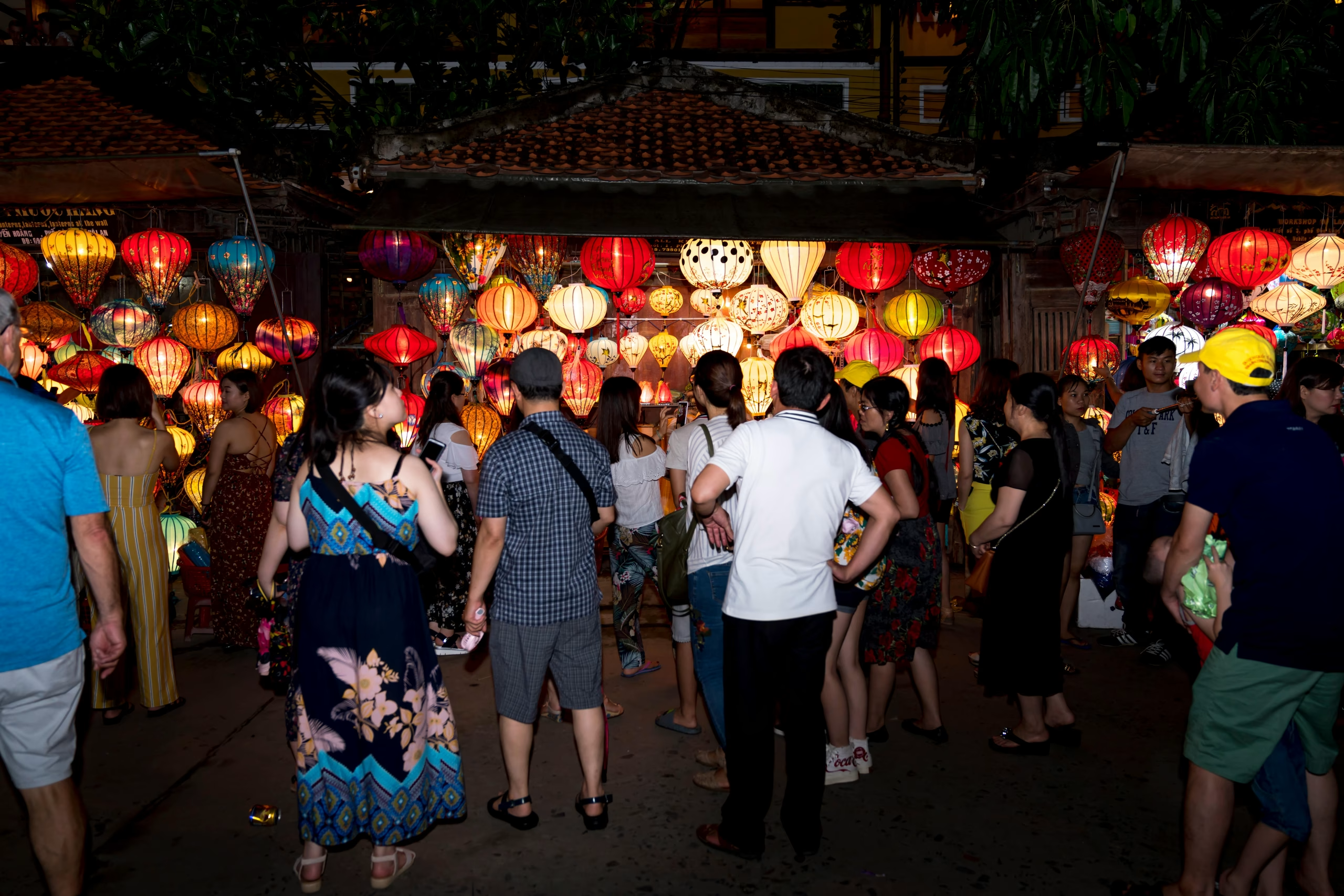
Once a month, Hoi An turns off its electric lights. The Ancient Town closes to traffic, thousands of silk lanterns come on, and paper lanterns drift down the Thu Bon River. It is one of the few festivals of its kind you can plan around easily, because it does not happen once a year. It happens every month.
This guide covers when it falls, what actually happens on the night, where to stand, and how to get there.
When the Festival Happens
The Hoi An Lantern Festival takes place on the 14th day of every lunar month, the night before the full moon. Locally it is known as the Full Moon Festival, and you will also see it called Legendary Night.
Because the lunar and Gregorian calendars drift against each other, the date moves each month. Two further complications worth knowing about:
- Some sources list the full moon date and others list the 14th lunar day, which can differ by a night. If you are booking flights around one specific evening, confirm with your accommodation the week you arrive.
- Lanterns are up in Hoi An year-round, and the evenings either side of the festival night still feel lively. If you miss the exact date by a day, you have not missed the town.
The Editions Worth Timing a Trip Around
All twelve are worth seeing, but a few carry more weight:
- The first full moon of the lunar year (Tet Nguyen Tieu), which follows Lunar New Year. In Hoi An this edition holds national intangible cultural heritage status. It is the biggest and by some distance the most crowded.
- The Mid-Autumn Festival, on the full moon of the 8th lunar month, which falls on 25 September 2026. Lion dances, children’s processions and a strong local turnout.
- Buddha’s birthday, on the full moon of the 4th lunar month, which brings a heavier ceremonial element at the temples.
Timings on the Night
Things get going around sunset, roughly 5:30pm to 6:00pm, and run until about 10:00pm. The strongest atmosphere is between 7:00pm and 9:30pm. Arrive before dark if you want to watch the transition, which is the best part.
What Actually Happens
The Ancient Town is pedestrianised for the evening and fluorescent lighting is switched off, leaving lanterns and candles to do the work. That single decision is what makes the night distinct from an ordinary evening in Hoi An.
Along the riverbank, vendors sell small lotus-shaped paper lanterns with a candle inside. You light one, make a wish, and set it on the water, either from the shore or from a rowing boat. Boat operators work the banks near An Hoi Bridge and negotiate on the spot.
Elsewhere through the evening you will find traditional music performances, poetry recitals, lion dances around the temples, older residents playing Chinese chess in the squares, and food stalls along the southern riverbank opposite the old town.
Note that the festival sits inside the UNESCO-listed Ancient Town, so the standard Hoi An Old Town ticket applies for entry to the heritage houses, museums and temples within the zone.
Where the Tradition Comes From
Hoi An was a major trading port from the 16th and 17th centuries, drawing Chinese and Japanese merchants who settled in the town. Japanese traders hung distinctively shaped lanterns outside their homes, and locals adopted the practice for good fortune. Silk lanterns also served practical ends: merchants used coloured ones to mark their shopfronts along the narrow streets.
Buddhist observance layered on top of that. The full moon is a significant point in the Buddhist month, associated with honouring ancestors and the Lord Buddha, and lantern-lighting ceremonies became part of it.
The town received UNESCO World Heritage status in 1998, and the monthly full moon observance and the lantern tradition were brought together as a formal event around the same period. It has drawn international visitors ever since.
Best Places to Watch
- Bach Dang Street — the riverside promenade, and where the floating lantern activity concentrates.
- An Hoi Bridge — the classic vantage point over the water, and where boats depart. Crowded, but for good reason.
- Japanese Covered Bridge — the town’s landmark, lit and photogenic, though the bottleneck around it gets tight.
- Nguyen Hoang Night Market — on the An Hoi side, combining lantern stalls with street food.
- Rooftop cafes on Tran Phu Street — worth the price of a drink for the elevated view if the streets feel overwhelming.
Photography
Low light and moving crowds make this a harder shoot than it looks. A wide aperture in the f/2.8 range, ISO around 800 to 1600, and a shutter speed fast enough to freeze people at roughly 1/60 to 1/125 is a reasonable starting point. Warm white balance suits the lantern light. Bring a cloth for humidity on the lens.
The best window for river reflections is just after sunset, roughly 5:30pm to 6:30pm, before full dark.
Lantern-Making Workshops
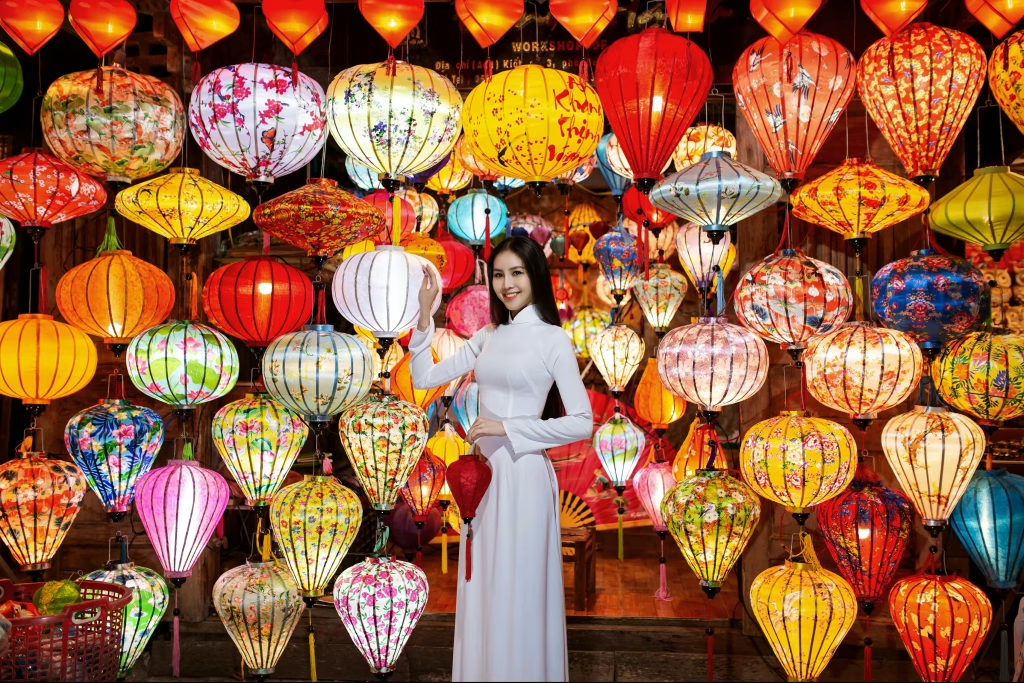
Several families in Hoi An have made silk lanterns for generations and run workshops from their homes and studios. Sessions typically run 60 to 90 minutes and walk you through the process: building the bamboo frame, stretching and gluing the silk, and finishing with tassels.
The classic shapes are the diamond, the cylinder and the folded lotus. You keep what you make, and most workshops will collapse the frame flat so it survives a suitcase. Book ahead on festival nights, when demand spikes.
What to Eat
Hoi An and the wider Quang Nam region have a distinct culinary identity. Worth seeking out on the night:
- Cao Lau — the town’s signature dish. Thick noodles, sliced pork, herbs and crackers in a small amount of rich broth. Traditionally made with water from a specific local well.
- White Rose dumplings — delicate shrimp or pork dumplings shaped like petals, served with a tangy dipping sauce.
- Mi Quang — turmeric noodles with shrimp, pork, peanuts and herbs in a shallow broth.
- Banh Xeo — crisp rice-flour pancakes with shrimp and bean sprouts, wrapped in greens.
- Banh Dap — steamed rice pancake pressed with a crisp cracker, eaten with anchovy sauce.
- Che — sweet bean and jelly soup with coconut milk, good after something spicy.
Getting There and Staying
The nearest airport is Da Nang International (DAD), about 30km away, with connections from major Asian hubs. From there:
- Taxi or private car — around 45 minutes, and the simplest option if you are arriving in the evening.
- Shuttle bus — cheaper, slower, and fine if you are not in a hurry.
- Train to Da Nang Station then a short taxi, if you are coming up or down the coast.
For accommodation, staying inside or just outside the Ancient Town puts you within walking distance of the festival, which matters because the zone closes to vehicles. Boutique hotels in the old town sit at the higher end; guesthouses around Cam Pho and Cam Chau are more affordable and still close. An Bang Beach, roughly 15 minutes out, trades walking access for a beach.
Book early for the Lunar New Year and Mid-Autumn editions in particular.
Staying Connected
The Ancient Town is a warren of narrow lanes, and on festival nights it is dark and packed. If you are travelling with other people, you will separate at some point. Maps and messaging are what get you back together, and public Wi-Fi in a crowded old town is not something to rely on.
A Vietnam eSIM from Telekonek installs before you leave home and is live the moment you land in Da Nang. It runs alongside your existing SIM, so your usual number stays reachable while your data runs locally. Coverage extends across 200+ countries if Hoi An is one stop on a longer trip.
Hoi An is one of several events covered in our guide to lantern festivals around the world, if you are deciding between destinations.