
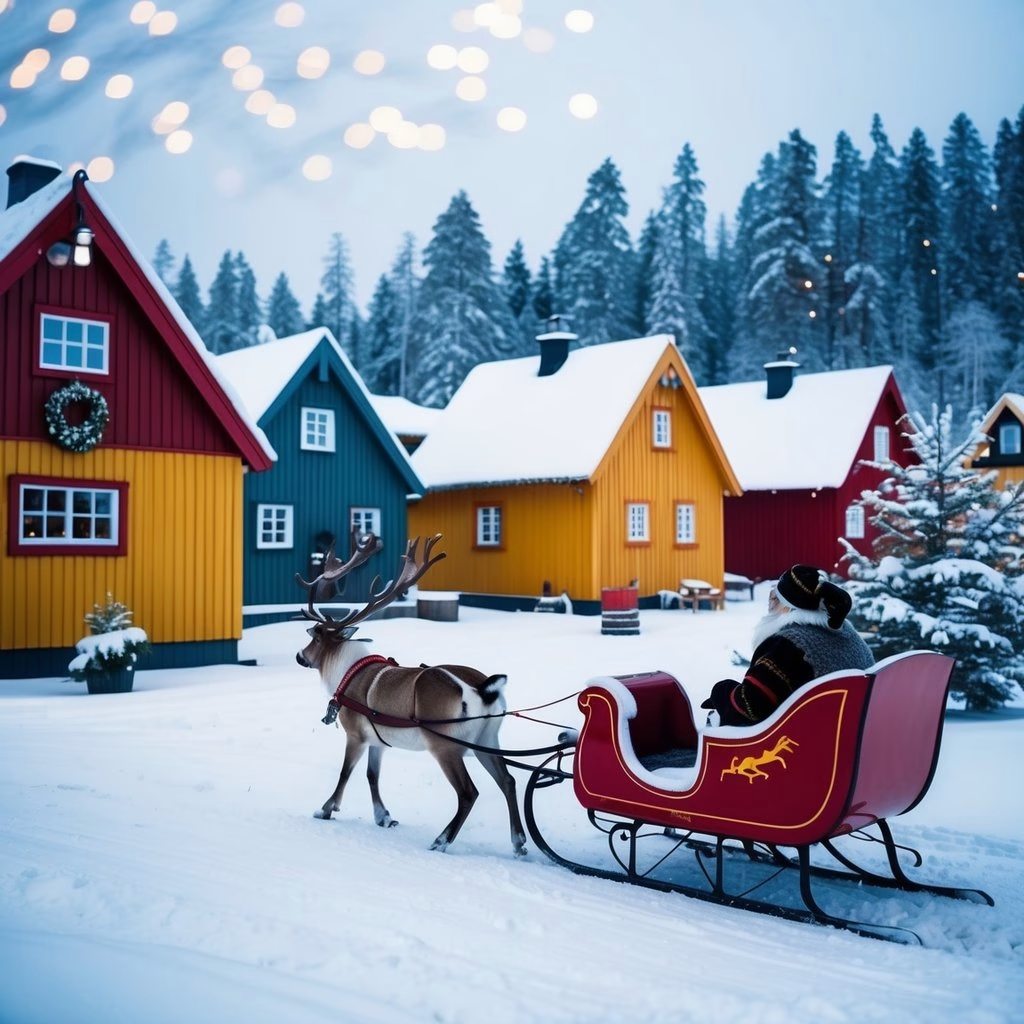
Santa Claus Village Lapland sits directly on the Arctic Circle, eight kilometres northeast of Rovaniemi in northern Finland. It is open every day of the year, entry to the village itself costs nothing, and you can meet Santa Claus in December or in July. If you are planning a Lapland trip around it, the details that matter are what you actually pay for, how you get there, and when to go.
This guide covers the practical side: costs, transport from Rovaniemi and the airport, opening hours by season, which activities are worth booking in advance, and where to stay if you want to wake up inside the village.
Key Takeaways
- Entry to Santa Claus Village is free — you pay for individual activities, photos and rides
- Bus 8 runs from Rovaniemi city centre and the airport; the ride takes about 20 minutes
- Late November to early January is peak season — book husky safaris and accommodation months ahead
- Early December and March give you snow and Northern Lights with far smaller crowds
What Is Santa Claus Village?
Santa Claus Village (Joulupukin Pajakylä in Finnish) is a year-round Christmas theme village built around the point where the Arctic Circle crosses the road north of Rovaniemi. It opened in 1985, on a site whose history goes back to 1950, when a cabin was built there for Eleanor Roosevelt’s visit to Lapland.
It is not a gated amusement park. It is closer to a small commercial village: a cluster of wooden buildings holding Santa’s Office, the Santa Claus Main Post Office, souvenir and design shops, restaurants and cafés, plus tour operators selling husky, reindeer and snowmobile excursions. Around half a million people pass through each year.
The Arctic Circle line itself is painted across the ground and lit at night, and it is the single most photographed thing in the village.
Is Santa Claus Village Free? What It Actually Costs
Walking into the village, crossing the Arctic Circle line, browsing the shops and meeting Santa Claus in his office all cost nothing. This surprises a lot of visitors who assume they need tickets.
What you pay for:
- Official photos and video with Santa — the meeting is free, but you cannot use your own camera inside the office. Expect to pay for the professional shots if you want them.
- Arctic Circle crossing certificate — a small fee for the printed souvenir document.
- Reindeer sleigh rides — short rides around the village are the cheapest animal activity; longer forest safaris cost considerably more.
- Husky safaris — the most expensive core activity, priced by distance and duration.
- Snowmobile tours, Snowman World, ice karting — each ticketed separately.
- Letters from Santa — you can post a letter to be delivered to your home address at Christmas, for the price of the service plus postage.
Prices shift between operators and between low and peak season, and December rates run higher than the rest of the year. Check current pricing with the individual operator before you commit — most publish rates on their own sites and many require advance booking in December regardless.
A realistic budget: you can spend a satisfying half day in the village for the cost of lunch and a certificate. Add a husky safari and professional Santa photos and you are into a different bracket entirely.
How to Get to Santa Claus Village
The village sits between Rovaniemi city centre and Rovaniemi Airport, which makes it easy to reach from either.
By Bus
Bus 8 — often signed as the Santa Claus Village bus — runs from Rovaniemi city centre, stops at the airport, and continues to the village. The trip from the centre takes roughly 20 minutes and runs frequently through the day, with a reduced timetable outside peak season. Buy tickets from the driver or through the local transport app.
Because it stops at the airport, you can go straight to the village on arrival before checking into your hotel. Most buildings have somewhere to leave a bag, but confirm before you rely on it.
By Car or Taxi
Driving from Rovaniemi takes about 15 minutes on Route 4. Parking at the village is free and plentiful. If you rent a car, book winter tyres as standard — they are legally required in the season and every Finnish rental includes them.
Taxis from the city centre or airport are straightforward but cost several times the bus fare.
Getting to Rovaniemi
Rovaniemi Airport takes direct flights from Helsinki in about 90 minutes, plus seasonal direct routes from several European cities during the Christmas period. The overnight train from Helsinki is the slower alternative — around 12 hours, with sleeper cabins and a car-carrier service.
Best Time to Visit Santa Claus Village
The village never closes, but the experience changes completely across the year.
Late November to Early January — Peak
Deep snow, full Christmas decoration, longest opening hours, every activity running. Also the longest queues, the highest prices, and accommodation that sells out months in advance. If you want the postcard version, this is it, and you need to book early.
Early December — The Sweet Spot
The snow has arrived and the decorations are up, but the Christmas rush has not started. Shorter queues for Santa, better availability on safaris, lower accommodation rates. For most travellers this is the best value week of the year.
January to March — Snow Without Crowds
Reliable snow cover, the coldest temperatures of the year, and some of the strongest Northern Lights viewing. The Christmas atmosphere is dialled down but the Arctic activities are all still running, often at lower prices. February and March give you more daylight than December’s few hours.
June to August — Midnight Sun
No snow, no Northern Lights, but 24-hour daylight and a completely different Lapland: green forests, hiking, river activities. Santa is still in his office. Prices are at their lowest and you will not queue. If Christmas atmosphere is the point of your trip, skip summer; if Arctic nature is, it is underrated.
Check seasonal opening hours before you go — the village runs extended hours from late November through early January and shorter hours the rest of the year.
Things to Do in Santa Claus Village
Meet Santa Claus
Santa’s Office is open every day of the year. You join a queue, walk up through a corridor built to look like the inner workings of a clock, and get a few private minutes with him. He speaks a remarkable number of languages and will usually switch to yours.
The meeting is free. Personal cameras and phones are not permitted during it, so if you want a record you buy the official photo or video afterwards. Queues in the week before Christmas can run well over an hour — go first thing in the morning or in the last hour before closing.
Santa Claus Main Post Office
Run by Finland’s national postal service, this office handles letters addressed to Santa from around the world. You can send postcards stamped with the Arctic Circle postmark, or drop mail in the special box that holds it for delivery at Christmas.
You can also order a letter from Santa to be posted to a child’s home address in December. It is one of the cheapest and most durable souvenirs in the village.
Cross the Arctic Circle
The line runs through the middle of the village, marked on the ground and lit up after dark. Stepping over it is free. The certificate confirming you have done it is not, and it is sold at several points around the village.
Husky and Reindeer Safaris
Husky safaris are the marquee Lapland activity — you drive a sled team through forest trails, usually with a short training briefing first. Options range from a few kilometres to full-day expeditions.
Reindeer rides are slower and quieter, typically led by Sámi herders who talk about herding practice while you go. A short loop around the village is inexpensive; a longer forest route costs more. Both need advance booking in December.
Snowmobile Tours
Guided snowmobile excursions leave from the village into the surrounding forest and across frozen lakes. You ride solo or share with a partner, after a safety briefing. A driving licence is required to operate one yourself. Longer tours include stops for hot drinks in a kota hut.
Northern Lights
The aurora season runs roughly September to March. The village itself is well lit, which works against you — the guided hunts drive out to darker locations away from Rovaniemi and increase your odds considerably. Tours usually supply thermal suits and hot drinks, and many include a photographer who will take shots for you.
No tour can promise the lights. Clear skies and solar activity decide it. Spreading your attempts across several nights is the only real way to improve your chances.
Where to Stay
Staying inside the village means you can visit before the day-trip buses arrive and after they leave, which is worth real money in December.
- Glass igloos — heated domes with transparent roofs for watching the aurora from bed. The most expensive option and the first to sell out.
- Log cabins and holiday cottages — heated units with private saunas and kitchenettes. The practical choice for families.
- Snow and ice accommodation — seasonal, built fresh each winter, and a one-night novelty rather than a base.
- Rovaniemi hotels — cheaper, more choice, and 20 minutes away by bus. The sensible option if budget matters more than atmosphere.
December accommodation in and around Rovaniemi is booked out six to nine months ahead. If you are travelling in the Christmas window, secure a room before you plan anything else.
Where to Eat
The village has restaurants, cafés and a fast-food outlet, so nobody goes hungry, but the food is priced for a captive audience.
Local dishes worth trying include sautéed reindeer served with mashed potato and lingonberry, salmon roasted on a board beside an open fire, and creamy salmon soup. For something lighter, Finnish cinnamon buns and cloudberry or lingonberry desserts are everywhere.
Reserve tables in December. Sit-down restaurants fill quickly and walk-in waits get long.
Is Santa Claus Village Worth Visiting?
It depends on what you came for.
If you are travelling with children under about ten, it delivers exactly what it promises. Meeting Santa in what is presented as his actual home, in real snow, north of the Arctic Circle, is difficult to beat.
If you are travelling without children, treat it as a half-day stop rather than the centre of your trip. The village is unashamedly commercial and it will not fill a day on its own. Pair it with the surrounding wilderness — that is where Lapland actually earns its reputation.
If you are chasing the Northern Lights, base yourself somewhere darker and use the village as a day trip. The lighting in and around Rovaniemi works against aurora viewing.
Set expectations correctly and it holds up. Arrive expecting an unspoiled Arctic wilderness and you will be disappointed — it is a busy attraction with car parks and gift shops, and it has never pretended otherwise.
Joulupukki and Finnish Christmas
The Finnish Santa is Joulupukki, literally “Christmas goat” — a name inherited from a much older midwinter tradition involving a straw goat figure and house visits. Over time the goat merged with the gift-giving Saint Nicholas figure and became the Santa the village presents today.
In Finnish households, Christmas Eve rather than Christmas Day is the main event. Families eat roast ham with root vegetable casseroles and fish, visit the sauna, and light candles at family graves — a custom that turns Finnish cemeteries into fields of light on the night of the 24th. Joulupukki traditionally arrives at the door in person and asks whether there are any well-behaved children in the house.
Knowing this makes the village read differently. What looks like an import is anchored in something genuinely local.
Staying Connected in Lapland
Finland has excellent mobile coverage, and Rovaniemi and the village are both well served. You will want data more than you expect: aurora forecast apps, bus timetables, activity bookings, offline maps for forest trails, and getting photos to family at home.
Roaming charges on your home plan are the expensive way to do this. A Finland eSIM gives you local data rates from $3.50, installs before you leave home, and activates the moment you land at Rovaniemi. Your home number stays reachable for two-factor codes, which matters if you are booking activities on the move.
If Lapland is one stop on a longer European trip, a Europe eSIM covers 35 countries on a single plan so you are not buying data country by country. Telekonek covers 200+ destinations either way.
One cold-weather note: battery life drops sharply below freezing. Keep your phone in an inside pocket against your body between shots, and carry a power bank on any full-day safari.
For more on setting up before departure, see our guides to using your phone abroad and how eSIMs work.
Planning Checklist
- Book accommodation first if you are travelling in December — everything else depends on it
- Reserve husky and reindeer safaris in advance for peak season
- Check seasonal opening hours before you build your day around them
- Pack proper thermal layers, insulated boots and gloves — most operators lend outer suits, but not base layers
- Install your eSIM before departure so you land connected
- Arrive at Santa’s Office early or late to avoid the midday queue
Santa Claus Village Lapland works best when you know what it is: a free-to-enter, deliberately commercial Christmas village on the Arctic Circle, surrounded by genuinely spectacular wilderness. Plan for both and the trip pays off.