
What Are the Must-See Things to Do in Seoul?
For first-time visitors, the best things to do in Seoul sit within a few subway stops of each other. Start with the royal core, then move toward the city views and modern districts.
Download Naver Map or KakaoMap before you leave your hotel. Google Maps has limited walking and transit detail in South Korea, so the app you rely on at home is the one that will fail you here. Both Korean apps need live data to show station exits, opening hours and same-day routing, which is why a working connection shapes almost every one of the things to do in Seoul below. Set up your Telekonek eSIM for South Korea before departure, so maps and translation work on arrival. Telekonek data plans work across 200+ countries, which also helps if Seoul is one stop on a longer trip.
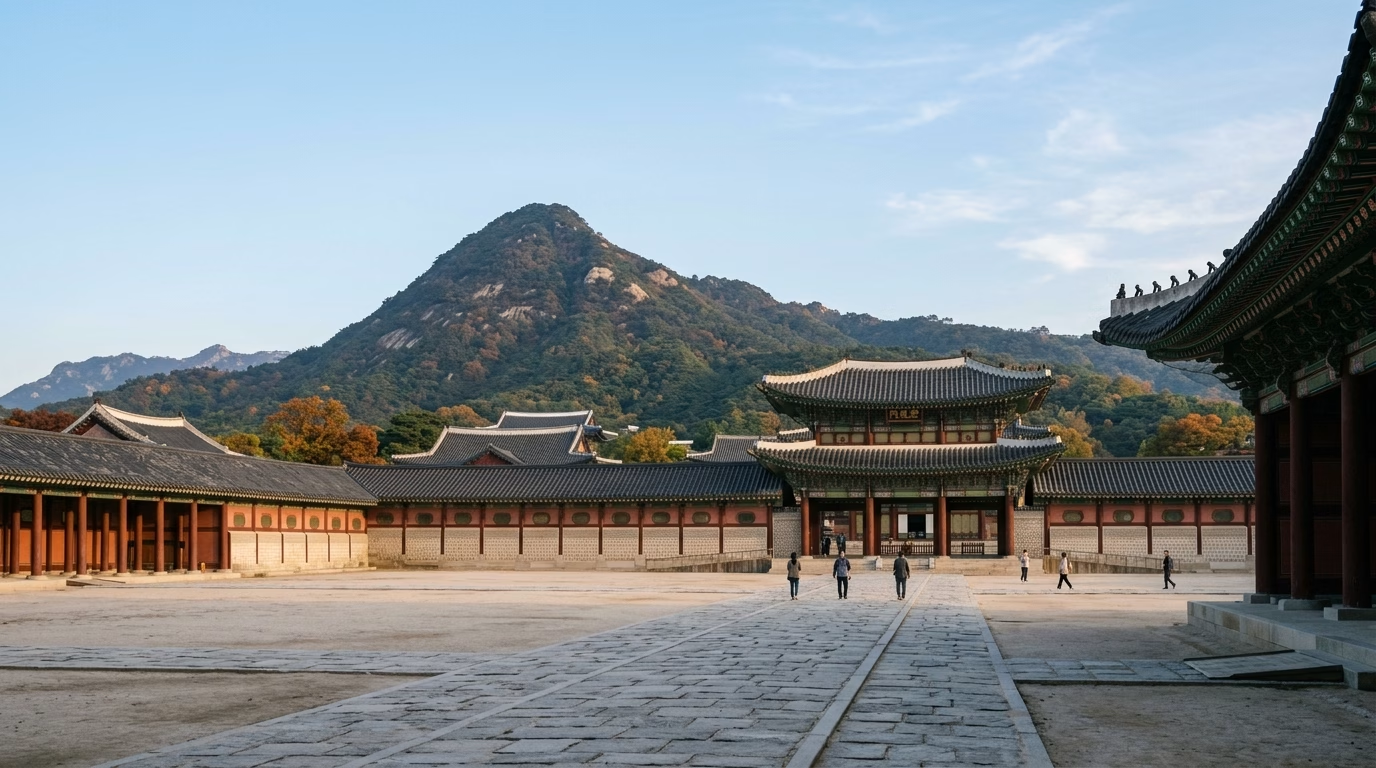
- Gyeongbokgung Palace: Built in 1395 as the main palace of the Joseon dynasty, this is the grandest place to begin. Its broad courtyard, mountain backdrop, and Geunjeongjeon throne hall make Seoul’s royal history easy to picture. Watch out for the changing-of-the-guard ceremony times, which can shift with weather and palace schedules.
- Bukchon Hanok Village: Walk uphill from the palace into lanes lined with hanok, traditional Korean homes with curved tiled roofs. The appeal is the contrast: this is a real residential area, not an open-air museum. Keep your voice low, stay off private driveways, and follow the marked visitor paths.
- Changdeokgung Palace and Huwon: This palace feels calmer and more wooded than Gyeongbokgung. Its Secret Garden was designed around the natural landscape rather than rigid palace geometry. Garden visits can have timed entry or guided access, so confirm the day’s arrangement before making the trip.
- N Seoul Tower: Ride or walk up Namsan for the clearest first look at Seoul’s scale. Go near sunset for daylight, city lights, and the mountains beyond the high-rises. The common mistake is arriving too late: the viewing deck can be busiest after dark.
- Insadong and Jogyesa Temple: Insadong’s main street is useful for tea, calligraphy goods, and Korean crafts, while nearby Jogyesa offers a quieter Buddhist temple stop. Skip the chain souvenir shops and duck into the smaller side alleys for traditional tea houses.
- Cheonggyecheon Stream and Dongdaemun Design Plaza: Follow this restored urban stream for an easy evening walk, then continue east to the curved silver form of DDP. This pairing shows how Seoul blends public space, design, and late-night energy.
For a fuller history stop, add the National Museum of Korea; for a sobering modern-history visit, choose the War Memorial of Korea. Save Myeongdong for shopping rather than culture, especially if your time is short.
Takeaway: Pair Gyeongbokgung, Bukchon, and N Seoul Tower in your first two days for Seoul’s strongest mix of history, streetscape, and skyline.
Which Unique Things to Do in Seoul Set the City Apart?
The most memorable things to do in Seoul go beyond palace photos. Set aside one afternoon for an experience that asks you to slow down, join in, or follow a local ritual rather than simply watch it.
In Insadong or Bukchon, choose a traditional tea room with floor seating, Korean ceramics, and a short tea service. Order a Korean tea such as daechu-cha, made with jujube, or omija-cha, a five-flavour berry tea. You will usually receive small sweets or rice cakes alongside it.
Do not rush this stop between attractions. Tea service is about quiet conversation and careful pouring, which feels like a welcome contrast after busy streets and packed subway platforms. Ask for an English menu before sitting down, as some small tea rooms use Korean-only handwritten menus.
- Best for: a calm cultural break, rainy afternoons, and a less touristy side of Insadong.
- Watch out for: many traditional rooms require each guest to order a drink. A shared pot may not count as two orders.
For Seoul’s modern cultural pulse, take a drop-in K-pop dance workshop in Hongdae, Gangnam, or Seongsu. Classes often teach a short section of a current song, then film a final group run-through. You do not need dance experience, but you will get more from it if you arrive early enough to learn the warm-up and camera marks.
Wear trainers and clothes you can move in. Bring water, too: practice rooms get warm quickly. Before booking, check whether the class allows your face to appear in the final video and whether you need to bring indoor-only shoes.
Themed cafés are another distinctly Seoul pastime, but choose with care. Look for character cafés, design-led dessert spots, 2D-style interiors, or seasonal pop-ups around Hongdae, Seongsu, and Apgujeong. A café visit works best when you treat it as a visual experience first and a snack stop second; elaborate drinks often look better than they taste.
Skip cafés that use animals as photo props. Instead, pick a place with a clear concept, good seating, and a menu you actually want. Keep your Telekonek connection switched on for Naver Map searches, reservation messages, and Korean-to-English menu translation when a pop-up changes location at short notice.
Takeaway: Pair one quiet tea ritual with one hands-on K-pop or café experience to see both Seoul’s old customs and fast-moving creative culture.
What Seasonal Things to Do in Seoul Should You Consider?
Seoul changes sharply with the seasons, so the best things to do in Seoul depend on your travel month. Spring and autumn give you the most comfortable walking weather. Summer heat and winter wind can change how long you want to stay outdoors.
Spring, from late March to April, is cherry blossom season. Seokchon Lake, beside Lotte World, gives you a long waterside walk framed by blossoms and the Lotte World Tower skyline. Yeouido’s riverside area is another popular choice, but peak bloom shifts every year with the weather.
Go on a weekday morning if possible. Weekend crowds can make subway platforms, cafés, and walking paths feel packed. Keep your Telekonek eSIM active for Naver Map, since it helps you check the quickest station exit and spot nearby cafés when blossom areas get busy.
Summer, from June to August, suits evening plans rather than palace-hopping at midday. Hangang parks become the place for convenience-store picnics, chicken and beer deliveries, bike rides, and seasonal night events. The river breeze is welcome after a humid afternoon, but rain and sudden downpours are common during the monsoon period.
Watch out for outdoor night markets and pop-up events. Their dates, sites, and opening nights can change each year, so do not build your whole evening around one event without checking current listings. Have a backup plan in Hongdae, Euljiro, or a large underground shopping area.
Autumn, from late September through November, brings crisp air and red, gold, and orange leaves. This is the strongest season for the outdoor things to do in Seoul: long walks around Seoul Forest, Namsan Park, and the palace grounds. Add a half-day for Changdeokgung’s garden area if foliage is a priority, but reserve enough time because timed entries and seasonal access rules may apply.
- Best for photos: early morning, before tour groups arrive.
- Best for food: pair a foliage walk with hot kalguksu noodles or roasted sweet potatoes from a street stall.
- What goes wrong: peak-color weekends fill cafés and taxis quickly, especially around popular park entrances.
Winter, from December to February, pushes the things to do in Seoul indoors: cafés, museums, jjimjilbang bathhouses, shopping streets, and warm Korean barbecue. You may also find seasonal light displays, ice rinks, and year-end markets, though schedules vary. Pack gloves, a scarf, and shoes with grip; cold wind can feel stronger around the Han River and N Seoul Tower.
Your Telekonek connection is useful in winter too, when you may need to reroute quickly from an outdoor stop to a nearby subway station, café, or indoor attraction.
Takeaway: Choose spring or autumn for outdoor Seoul, summer for river nights, and winter for food, lights, and indoor culture.
How Should You Plan Your Itinerary?
For three days, group the things to do in Seoul by area instead of crossing the city several times a day. Seoul looks compact on a map, but a palace visit, café queue, subway transfer, and steep walk can easily fill an afternoon.
Load Naver Map and Papago before you fly, then activate your Telekonek eSIM for South Korea on arrival. You will need data for subway exits, restaurant waitlists, and last-minute rain changes.
A practical 3-day Seoul itinerary:
- Day 1: Culture in central Seoul. Start at Gyeongbokgung Palace, then walk through Bukchon Hanok Village and continue to Insadong for tea, crafts, and a relaxed dinner. Finish around Ikseon-dong, where narrow lanes have traditional houses turned into cafés and small restaurants.
- Day 2: Markets and city views. Spend the morning at Gwangjang Market for bindaetteok, mung-bean pancakes, and mayak gimbap. Use the afternoon for the Cheonggyecheon stream and Myeongdong, then head to N Seoul Tower near sunset if the sky is clear.
- Day 3: Your main interest day. Culture lovers can add Changdeokgung and Jongmyo. Food-focused travelers should build a café and market route through Seongsu and Euljiro. Shopping fans should give Hongdae, Myeongdong, or the underground stores at Express Bus Terminal most of the day.
Watch out for: do not schedule Bukchon, a palace, and Hongdae as one “walking day.” They are not next door, and the shift from quiet historic streets to Hongdae’s busiest hours can drain more time than expected. Put Hongdae after dinner, when its shops, buskers, and bars are at their liveliest.
With seven days, keep the first three days above, then add depth rather than cramming in more landmarks. This is where the things to do in Seoul stop feeling like a checklist.
- Day 4: Seongsu and Gangnam. Explore Seongsu’s converted-factory cafés and design shops, then move south to COEX and the Gangnam area. Choose this day if Korean beauty, pop culture, and polished malls matter more than old Seoul.
- Day 5: Hongdae, Yeonnam, and Mangwon. Browse indie shops in Hongdae, eat through Yeonnam-dong, then visit Mangwon Market for a more everyday food-market feel than the central tourist stops.
- Day 6: A slower culture day. Book a tea, craft, or K-pop activity mentioned earlier, then leave room for a museum or a second palace district. A slower day is useful after several long subway days.
- Day 7: Flexible Seoul day. Use this for a return to your favorite neighborhood, a seasonal riverside walk, or a reservation you could not fit earlier. Keep your final evening near your hotel if you have an early airport transfer.
Food travelers should prioritize Gwangjang, Mangwon, Euljiro, and Yeonnam. Shopping travelers should put Seongsu, Hongdae, Myeongdong, and Gangnam first. Culture travelers should protect weekday mornings for the historic core, when streets are calmer and photos are easier.
If Seoul is one stop on a longer route through the country, the South Korea travel guide sets out five-, seven-, and ten-day options that add Gyeongju, Busan, and Jeju.
Takeaway: Use three days for Seoul’s essential districts, then use days four to seven to follow your strongest interest—culture, food, or shopping—without wasting hours in transit.
What Are the Costs and Entry Requirements for Attractions?
Entry fees and opening times change often in Seoul, especially after seasonal timetable updates. Treat the notes below as a way to decide which things to do in Seoul deserve your time, then confirm current prices and hours on each attraction’s official page before you go.
For live navigation, translated notices, and official booking pages, keep your Telekonek eSIM active from landing. Naver Map is especially useful for checking a venue’s same-day status, last-admission time, and the correct entrance.
- Gyeongbokgung Palace: Expect a low-cost ticket compared with Seoul’s private attractions. Entry is usually sold at the gate, while the palace is normally closed one weekday each week. Watch out for the final-entry cutoff: arriving near closing time may leave you too little time for the main grounds and changing of the guard.
- Changdeokgung Palace and Secret Garden: Treat these as two separate costs. The garden has limited timed entries and can require advance reservation, particularly on spring and autumn weekends. Do not assume a palace ticket includes the garden.
- N Seoul Tower Observatory: This is a higher-cost viewpoint. Online tickets may use a timed slot, while sunset hours are the most crowded. Book an earlier visit if the view matters more than seeing the city lights.
- Lotte World and Lotte World Aquarium: These are full-day, higher-budget stops. Buy only the ticket that matches your plan: a theme-park pass does not automatically cover every nearby attraction. School holidays and rainy weekends can bring long indoor queues.
- National Museum of Korea and War Memorial of Korea: Permanent collections are commonly the strongest value among cultural things to do in Seoul, but special exhibitions may charge separately. Both museums may close on a regular weekly day, so place them carefully in your itinerary.
Keep a separate “extras” fund for lockers, audio guides, observatory upgrades, and cafés inside major sites. These small add-ons can cost more than entry at the royal palaces. If you are visiting in hanbok, confirm the palace’s current free-entry rule before renting; policies and participating gates can change.
For attractions with timed access, save the Korean address and booking confirmation offline. A live connection helps when a confirmation email loads slowly at the gate or staff need to see the original reservation page.
Takeaway: Budget palace visits as low-cost stops, reserve the Secret Garden and major paid attractions ahead, and verify same-day hours before taking the subway there.
Where Are the Best Neighborhoods for Food and Nightlife?
After dark, the things to do in Seoul shift toward food and neighborhoods. Hongdae and Itaewon offer two very different sides of the city. Hongdae is louder, younger, and more casual. Itaewon is more international, with broader food choices and bars that suit a slower night out.
In Hongdae, start around Hongik University Station and walk toward Yeonnam-dong. The streets near the Gyeongui Line Forest Park are better for café hopping and relaxed dinners than the busiest club lanes. Look for Korean fried chicken, samgyeopsal barbecue, spicy dakgalbi, and late-night tteokbokki stalls.
Korean barbecue is an easy first meal because you can share plates and cook together at the table. Ask for less spicy options if you need them, since even “mild” sauces can be hotter than expected. Use your Telekonek eSIM to search Korean menu photos, translate ingredients, and find restaurants with a live waitlist.
- Hongdae: Choose this for live music, dance clubs, photo booths, street performers, and inexpensive group meals.
- Yeonnam-dong: Choose this for brunch cafés, bakeries, wine bars, and quieter streets within walking distance of Hongdae.
- Euljiro: Choose this for narrow alleys, old-school Korean drinking spots, and moodier cocktail bars after dinner.
Watch out for Hongdae club queues. Friday and Saturday nights can mean long lines, ID checks, and crowded dance floors. Bring your physical passport or another accepted photo ID; a phone photo may not be enough. If you want the atmosphere without the queue, eat around 7 pm, catch a live set, then leave before midnight.
Itaewon works well when your group has mixed tastes. Around Itaewon Station and the streets climbing toward Haebangchon, you can find Korean food alongside halal-friendly, vegetarian, Middle Eastern, Mexican, and Western-style meals. This is useful after several days of pork barbecue, fried chicken, and noodles.
For a more local Korean drinking experience, order makgeolli, a lightly fizzy rice wine, with pajeon, a savory scallion pancake. In Euljiro, the small bars around Nogari Alley are especially good for this style of evening. The setting is casual, but tables fill quickly after office hours.
Do not depend on Google Maps to find the exact entrance, especially in Euljiro’s older buildings and Hongdae’s side streets. Save the Korean address in Naver Map, keep your connection on, and check same-day reviews before walking over. Restaurants and bars can change hours or close without much warning.
Takeaway: Choose Hongdae for high-energy nights, Itaewon for varied food, and Euljiro for a more atmospheric Korean bar crawl.
How Do You Navigate Seoul’s Public Transport System?
Seoul’s subway is the simplest way to link the major things to do in Seoul. Stations are signed in Korean and English, and each line has a color and number. Use the station number as your backup when names look similar or an exit has several directions.
For the royal sights, Line 3 is especially useful: Gyeongbokgung Station and Anguk Station place you near the palace, Bukchon, and Insadong. Line 4 serves Myeongdong and Seoul Station, while Line 6 takes you to Itaewon. Hongik University Station is a major interchange for Line 2, the airport railroad, and the Gyeongui–Jungang Line.
Buy a rechargeable T-money card soon after arrival at a convenience store or station machine, then add credit in Korean won. Tap it when you enter and when you leave, on both subways and buses, because part of the fare is calculated by distance. For the full breakdown of T-money, city buses, KTX, and intercity coaches, see the transport section of the South Korea travel guide.
Watch out for exits. A single Seoul station can have more than ten, and choosing the wrong one may add a steep 15-minute walk. In Naver Map or KakaoMap, check the recommended exit before you get off the train. Keep your Telekonek eSIM active so the route can reroute you when rain, a missed transfer, or a closed station entrance changes the plan.
Buses need more attention than the subway. Board through the front door, tap your T-money card, and tap again when leaving through the rear door. Press the stop button before your stop; buses may not pause if nobody signals.
Do not rely on a foreign bank card working at every ticket machine or for card top-ups. Carry some Korean won for your T-money balance, especially late at night when finding the right machine becomes a hassle.
Takeaway: Get a T-money card, use Line 3 for the historic center, and always check your exact subway exit on your phone before leaving the platform.
What Cultural Etiquette Should You Be Aware Of in Seoul?
Good manners make many of the things to do in Seoul feel easier, especially meals, markets, and small group activities. You do not need to copy every local habit perfectly. A little care goes a long way.
Greet shop staff, hosts, and older people with a small nod or bow. “Annyeonghaseyo” means hello and is useful almost everywhere. Use two hands when giving or receiving money, a business card, or a drink from someone older than you. If one hand holds the item, support your right forearm with the other hand.
At restaurants, wait for the oldest person at the table to begin before you eat. Korean meals are shared, so side dishes called banchan belong to everyone. Use the serving spoon or tongs when provided, rather than taking food directly with your own chopsticks.
- Use the spoon for rice and soup. Chopsticks are mainly for side dishes, meat, and noodles.
- Keep chopsticks off the rice bowl. Standing them upright resembles a funeral ritual.
- Leave bowls on the table. Lifting your rice or soup bowl toward your mouth is not standard Korean table manners.
- Pour drinks for others before filling your own glass. When drinking with an older person, turn your head slightly away as you take a sip.
Watch out for tipping. Tipping is not part of normal restaurant, taxi, café, or salon culture in Seoul. The displayed price usually includes service. Leaving cash on the table can create an awkward moment, so pay the exact total at the counter or through the table payment terminal.
In a home, guesthouse, or certain traditional restaurants, remove your shoes at the entrance. Look for a raised floor, shoe racks, or slippers. On the subway and buses, keep calls quiet, offer priority seats to older passengers, pregnant riders, and people with disabilities, and avoid eating messy food.
Menus and payment screens can be Korean-only, even in busy districts. Keep your Telekonek eSIM active for Papago translations when asking about ingredients, allergies, or how to pay. Showing a translated question politely is better than guessing.
Takeaway: Bow lightly, use two hands, share food thoughtfully, and skip the tip.
How Can You Stay Connected While Traveling in Seoul?
Reliable data keeps your Seoul day moving. You will use it to call a Kakao T taxi after the last subway, translate a restaurant menu, receive a queue message, or find the right building entrance. Set up a Telekonek eSIM for South Korea before departure so your phone is ready when you land. Telekonek data plans work across 200+ countries, which also helps if Seoul is one stop on a longer trip.
Your Telekonek line runs on KT in South Korea. Coverage is strong across Seoul, the airport corridors, and the wider metropolitan subway network. Expect a weaker signal on mountain trails such as Bukhansan and inside older thick-walled buildings.
Install your eSIM while you still have stable Wi-Fi before departure. Once you arrive, set the Telekonek line as your mobile-data line and turn on data roaming for that eSIM. “Data roaming” sounds costly, but it is the setting that lets a travel eSIM connect abroad; your usual SIM can stay switched off for mobile data. These iPhone data roaming settings cover the exact steps.
- Telekonek eSIM: Install at home and land connected, with no SIM swap and no counter to find. Your existing number can still receive app messages over data.
- Public Wi-Fi: Common in cafés, hotels, malls, and some public areas. Treat it as a backup between sights, not the connection you plan around.
- Offline maps: Worth downloading as a fallback, though Naver Map and KakaoMap both need live data for opening hours, station exits, and same-day routing.
Watch out for services that ask for a Korean phone number. A data plan gives you internet, not a local number. Some restaurant queue systems and booking forms require one, so use your hotel’s number where a form demands a local contact, and book through websites rather than number-gated apps.
Public Wi-Fi can also drop when you leave the café or pass through underground corridors. Avoid logging into banking apps or entering card details on an open network. A small power bank matters too, because maps, camera use, and translation drain your battery faster than expected.
Before flying, confirm that your handset is carrier-unlocked and eSIM-compatible. Save your installation details offline, then download key address screenshots and booking confirmations. This gives you a fallback if a café Wi-Fi login page appears only in Korean.
Takeaway: Install your Telekonek eSIM before departure, keep it active from arrival, and use public Wi-Fi only as an extra connection.
Which Things to Do in Seoul Are Easy to Miss?
Some of the best Seoul moments happen when your plan slips by 20 minutes. You may leave a busy street near Anguk Station, follow the smell of roasted chestnuts, and find a tiny alley with a quiet lunch spot upstairs. Many good restaurants sit on the second or third floor, behind modest signs that are easy to miss from the pavement.
A useful habit is to look up before you give up. In areas such as Euljiro, Ikseon-dong, and Seongsu, a plain doorway can lead to a coffee bar, vinyl-listening room, gallery, or noodle shop. Keep your connection running so you can translate a sign, check a building entrance, and save a place before it disappears from your screen.
Food queues teach another Seoul lesson: a line is not always a bad sign, but it can reshape your day. A popular barbecue restaurant may have a digital waiting list, often using a Korean phone number or app. If the system will not accept your number, ask politely at the counter or choose a nearby place rather than losing an hour of sightseeing.
- For a calmer meal: eat before the usual lunch and dinner rush, especially around Myeongdong and Hongdae.
- For a more local feel: walk one or two blocks away from the main shopping street. The menus may be less visual, so use Papago’s camera translation.
- For solo diners: look for gimbap, kalguksu noodle, gukbap soup, or counter-style restaurants. Korean barbecue can feel awkward alone because many places expect two orders.
One of the more surprising things to do in Seoul is simply to pause at the right time. Sit beside Cheonggyecheon Stream after dark, take a convenience-store snack to the Han River parks, or step into a basement arcade during rain. These breaks make the city feel less like a checklist and more like a place you can settle into.
Watch out for: Seoul’s pace can make you overestimate how much you can fit into one day. A café stop may involve a queue, steep stairs, and a long walk from the nearest subway exit. Leave one unscheduled block each afternoon for a missed turn, a good meal, or a sudden downpour.
Photos are welcome in most public places, but do not point your camera into private homes in Bukchon’s residential lanes or film strangers closely in cafés. A quieter street is not automatically an attraction; it may be where people live.
Takeaway: Leave room between major sights, look beyond street-level signs, and use live data to turn small detours into Seoul’s best memories.
Frequently Asked Questions About Things to Do in Seoul
What are the best things to do in Seoul at night? Walk Cheonggyecheon Stream after dark, ride up N Seoul Tower for the lit skyline, eat late in Hongdae or Euljiro, or take a Han River picnic with convenience-store food. Night markets and pop-ups change dates often, so check current listings the same day rather than planning around one event.
What are the things to do in Seoul when it rains? Seoul handles rain better than most cities because so much of it is indoors and underground. Choose the National Museum of Korea, a jjimjilbang bathhouse, the underground shopping at Express Bus Terminal or COEX, a themed café in Seongsu, or a traditional tea room in Insadong. Subway transfers keep you dry between most central stops.
What can you do on an Incheon Airport layover? With roughly six hours or more after immigration, the AREX train reaches Seoul Station in about 45 minutes, which is enough for Myeongdong or Gwangjang Market and back. Under six hours, stay at the airport: it has a traditional culture centre, gardens, showers and rest zones. Keep your data active so you can watch the return train times rather than guess.
What are the free things to do in Seoul? Bukchon Hanok Village, the changing of the guard at Gyeongbokgung, Cheonggyecheon Stream, the Han River parks, Seoul Forest, the DDP grounds, and most of the city’s markets cost nothing to walk through. Several major museums also have free permanent collections, though special exhibitions charge separately.
What should you pack, and can you find English speakers easily? Pack layers, comfortable walking shoes, a Type C or F plug adapter, and a small power bank. You can find English speakers at airports, hotels, major attractions, subway stations, and younger-focused areas, but not in every small restaurant or market. South Korea uses 220V electricity, so bring an adapter before departure rather than buying one at the airport.
Can you get around Seoul without speaking Korean? Yes, especially on the subway and at large sights, where signs commonly include English. The harder moments are taxi pickup points, independent cafés, and menu-only restaurants. Download Papago for camera translation and keep saved screenshots of your hotel address in Korean.
Should you carry cash? Carry a small amount of Korean won for market stalls, street food, and the occasional cash-only shop, but expect to use your card for most meals, shopping, and attraction payments. Tell your bank about the trip before you fly. A declined card at a late-night restaurant is more stressful than it sounds.
What is the simplest way to stay connected? Install a travel eSIM before you fly, then keep your hotel address, maps, translations, and taxi apps available from landing. A Telekonek eSIM plan for South Korea runs on KT and lets you skip hunting for a SIM-card shop after your flight.
Takeaway: Pack for walking and changing weather, save key Korean addresses offline, and arrive with working mobile data.