
Five days is enough to see the Yucatán Peninsula properly, as long as your workday travels with you. This itinerary for working remotely in Yucatán runs from Mérida to Valladolid, Tulum, and Playa del Carmen, and it plans your calls, uploads, and deadlines first.
You will work real days here, not stolen hours. Each day pairs one protected work block with sightseeing that fits around it. Working remotely in Yucatán goes smoothest when your connection is settled before you land, so activate your Telekonek eSIM for Mexico before you fly. Your plan runs on Telcel, the network with the widest reach across the peninsula, and the same eSIM covers 200+ countries on your next trip.
Key Takeaways for Working Remotely in Yucatán
- Base yourself in Mérida. Two nights in one place beats four rushed hotel changes when you have deadlines.
- Pay for a desk on call days. Coworking air conditioning and upload speeds beat any beach table.
- Mind the time change. Tulum and Playa del Carmen run one hour ahead of Mérida and Valladolid.
- Keep your own data on. Telekonek stays live all five days, so every Wi-Fi network is something you test, not something you depend on.
- Front-load the hard work. Most of the friction in working remotely in Yucatán comes on moving days, so finish writing, analysis, and large uploads before you travel between cities.
Day 1: Arrival in Mérida — Setting Up Your Remote Base
Mérida gives you the strongest first base for working remotely in Yucatán. You get a walkable historic center, plenty of cafés, and easy road links for the days ahead.
From Mérida International Airport, choose an authorized taxi, an app-based ride, or public transport. A taxi is simplest with luggage. A ride app lets you confirm the fare before you leave. Public transport costs less but adds transfers and walking in the heat.
Watch out: pickup points and app rules shift around the terminal. Follow the location shown in your app instead of waiting beside the taxi line. Skip the Maya Train for this route entirely — service details have changed during its rollout, so confirm the station, timetable, and transfers directly before you build any plan around it.
- For historic atmosphere: Casa Lucía Hotel Boutique puts you near Plaza Grande and the evening restaurants.
- For comfort and services: Fiesta Americana Mérida gives you a larger, business-style setup near Paseo de Montejo.
- For design: Rosas & Xocolate sits on Paseo de Montejo itself, close to the avenue’s mansions and monuments.
- For long work sessions: Take an apartment around Santa Ana or Santiago with a desk, a kitchen, and recent Wi-Fi reviews.
Rates swing sharply by date, so confirm the total before you pay. Check taxes, air conditioning, desk photos, and comments about night noise. Rooms facing Centro streets pick up music, buses, and church bells.
Hotel Wi-Fi usually handles email and browser work, but never trust the listing alone. Run a speed test in your room after check-in, not beside reception. Your Telekonek line is already running, so the Wi-Fi is the variable you are testing rather than the thing you are counting on.
Keep your arrival walk compact. Start at Plaza Grande, then see Mérida Cathedral, the Casa de Montejo façade, and the murals inside Palacio de Gobierno when access allows. Together they show the city’s Maya, colonial, and modern political layers without eating your workday.
Near sunset, walk Paseo de Montejo toward Monumento a la Patria. The avenue feels calmer than Centro, and its old mansions explain how sisal wealth reshaped Mérida.
Day 1 takeaway: day one of working remotely in Yucatán is setup, not sightseeing. Secure your connection, test your workspace, and keep the walking to Plaza Grande and Paseo de Montejo.
Day 2: Coworking and Culture in Mérida
Day 2 is your longest work block of the trip. Finish demanding tasks before the afternoon heat, then explore the historic center once the streets cool down. This is the day that shows whether working remotely in Yucatán suits your schedule.
For a central desk, check day-pass availability at Conexión 60. Its Calle 60 location sits within walking distance of Plaza Grande, Santa Lucía, and plenty of lunch spots. Expect shared desks, air conditioning, meeting areas, and a more social room than a quiet hotel.
For a more office-like setup, look at Enter_Work or Clustar. These suit video calls and focused work, though northern Mérida locations may need a ride from Centro. Budget roughly MXN 200–400 for a day pass in 2026.
- Choose Centro: less time in traffic, and you can explore on foot during breaks.
- Choose northern Mérida: a quieter business setting, easier parking, and modern meeting rooms.
- Ask before paying: call-booth access, upload speed, coffee, and whether tax is included.
A practical schedule starts at 8:30 a.m. with three focused hours. Keep calls for late morning, then push large files before you leave. Thick stone walls weaken indoor Wi-Fi across Centro, so run your laptop off your Telekonek hotspot whenever the building signal thins.
At 12:30 p.m., walk to Plaza Grande and visit Casa de Montejo. You can study the carved colonial façade and the compact interior in 45–60 minutes. Eat nearby rather than crossing the city.
Return to your desk from 2:00 to 4:30 p.m. for email, edits, and next-day planning. Afterward, walk through Parque de Santa Lucía toward Paseo de Montejo. With energy left, add Palacio Cantón, home to Mérida’s regional anthropology museum.
Watch out for Monday closures. Mérida’s museums often close or cut hours on Mondays, and temporary exhibitions shift. If Day 2 lands on a Monday, swap the museum for Parque de las Américas or a longer walk down Paseo de Montejo.
Day 2 takeaway: work 8:30 a.m. to 4:30 p.m., break at Plaza Grande, then explore Paseo de Montejo before dinner.
Day 3: Digital Detox in Valladolid
Leave Mérida after your morning messages and treat Valladolid as a low-screen day. An ADO bus takes about 2 to 2.5 hours each way, at roughly MXN 250–450 per direction in 2026. Driving gives you more freedom, though parking near Parque Francisco Cantón tightens by midday.
Keep the work plan deliberately light:
- Before departure: finish calls, file uploads, and detailed writing at your Mérida base.
- During transit: handle downloaded documents, saved email, and notes that need no connection.
- In Valladolid: allow one 30-minute check-in, then mute notifications until the ride back.
Start at Parque Francisco Cantón, where pastel buildings and the twin-towered Iglesia de San Servacio frame the center. Walk southwest along Calzada de los Frailes. Its restored façades, small galleries, and shaded doorways give you more inspiration than another afternoon behind a laptop.
Continue to the former Convent of San Bernardino de Siena, and leave at least an hour for the complex and the Sisal neighborhood around it. Cenote Zací offers a cooler stop closer to the center, though maintenance and opening arrangements change, so check locally on the day.
For your short online session, try a central café such as ConKafecito, or use the lobby at Hotel Mesón del Marqués. Hotel Wi-Fi tends to be steadier than a courtyard café, while cafés give you better street-level atmosphere.
Watch out for weak signals behind thick colonial walls. Courtyard tables look appealing but sit far from the router, and power outlets are limited. Arrive with a charged laptop and run your check-in on Telekonek data instead of hunting for a password.
Take lunch near the square rather than squeezing in another attraction. Mesón del Marqués is convenient and polished, and El Atrio del Mayab puts you beside the church with a leafy courtyard. Central sit-down meals cost more than the simple loncherías a few blocks out.
Head back before late evening if Day 4 includes an onward move. Save large cloud backups for Mérida, since a full upload drains your battery during the ride.
Day 3 takeaway: this is the day that makes working remotely in Yucatán feel worth it. Finish demanding work in Mérida, allow one brief check-in, and spend the rest of the day offline on foot.
Day 4: Coastal Focus in Tulum
Leave Valladolid early, because Tulum runs on Quintana Roo time, one hour ahead of Yucatán state. Missing that change turns an easy morning meeting into a frantic bus ride. It is the most common scheduling mistake people make when working remotely in Yucatán.
Start at Botánica Garden Café in La Veleta. The shaded courtyard suits breakfast and email, and the side streets feel calmer than the beach road. Expect roughly MXN 180–350 for coffee and breakfast in 2026.
Move to a proper workspace before your main call block. Tulum’s heat, music, and short power cuts make an air-conditioned desk far more useful than a photogenic beach table.
- Digital Jungle: greenery, shared desks, and a focused La Veleta setting.
- Los Amigos Cowork: rooftop space if you want elevated jungle views, though hours vary by property.
- Beach cafés: scenery only, never important calls. Sand, wind, music, and minimum-spend rules derail a work session fast.
Coworking day access runs about MXN 250–600 in 2026, depending on desk type and amenities. Call any of these before you schedule a meeting around them, since day-pass rules change through the season. Power cuts are short but real here, so keep your laptop charged and your Telekonek eSIM for Mexico carrying the connection through file uploads.
For lunch, Burrito Amor on Avenida Tulum is quick and practical between tasks, at about MXN 150–300. DelCielo works better for a longer breakfast meeting, with a typical meal near MXN 250–450 in 2026.
Use your afternoon break for the Tulum archaeological zone and the Caribbean views beside it. Access arrangements around Parque del Jaguar have changed during recent development, so allow two to three hours for entry, internal transport, and walking. Check the same-day rules rather than trusting an older map.
Watch out for beach-road traffic. A short trip between town and the hotel zone stretches badly near sunset. Seasonal sargassum also affects beach conditions, so check that morning before you plan a swim.
Finish with dinner at Negro Huitlacoxe for corn-based Mexican dishes in a relaxed room. Leave laptop work at your coworking desk; dinner suits a team debrief better than another video call.
Day 4 takeaway: work in La Veleta, keep beach time off your call schedule, and budget three hours for the ruins.
Day 5: Wrapping Up in Playa del Carmen
Playa del Carmen is an easy place to end a week of working remotely in Yucatán. Start your final morning with a short walk around Parque Fundadores before Fifth Avenue fills. The public beach works for a coffee break, though seasonal sargassum can make swimming unpleasant, so check the shoreline before you pay for a beach-club daybed.
Then move indoors for your last serious block. Playa del Carmen’s cafés feel calm at breakfast and fill with music and tour groups by late morning.
- NEST Coworking: video calls, air conditioning, and a desk built for several hours.
- Bunker Coworking: a quieter office setting when your final meeting needs privacy.
- Choux Choux Café: breakfast, email, or a short planning session, but move on before long calls.
- Bajo Café at Mercado 30: lunch and lighter tasks, with several food options nearby.
Test any café network before you open a large upload or join a client call, because shared connections slow sharply as tables fill. Your Telekonek data carries the call regardless, which is why the last day rarely goes wrong.
Finish by noon if you have an afternoon flight from Cancún. Direct airport buses leave from Playa del Carmen’s main tourist terminal near Fifth Avenue and Avenida Benito Juárez. Check current times on the official ADO website, since schedules and fares change.
Allow extra road time for congestion near Cancún. A tight connection unravels when traffic builds around resort entrances and airport terminals. Confirm your airline terminal before you leave Playa, because transferring between terminals adds another step.
Before you sign off, spend ten minutes noting which setup worked: Mérida’s city base, Valladolid’s slower pace, or the Caribbean coast. That answer shapes your next trip more than a list of attractions.
For a return visit, take the passenger ferry from Playa to Cozumel for diving and snorkeling. Bacalar offers a quieter lagoon stay, while Mérida makes more sense for a longer work base. You can also extend this route with a broader five-day Mexico itinerary.

Day 5 takeaway: finish calls indoors, keep your data running, and leave Playa with generous airport time.
Staying Connected While Working Remotely in Yucatán
Reliable data is what keeps working remotely in Yucatán from falling apart. You need it for calls, route changes, cloud files, and last-minute accommodation messages.
Your Telekonek eSIM for Mexico is the one line that stays constant across all five days and all four towns. It runs on Telcel, which reaches furthest once you leave the main tourist corridors, and the same eSIM covers 200+ countries when you travel on. Because it is an eSIM, your home number stays live for bank texts while your Mexico data runs alongside it.
- Telekonek data: your default. Maps, messaging, email, ride apps, and tethering, from the moment you land.
- Coworking internet: worth paying for on client-call days. You also get a desk, air conditioning, and fewer distractions.
- Hotel and café Wi-Fi: useful for very large uploads once you have tested it. Run a speed test in your room, not beside reception.
Before an important call, check download speed, upload speed, and ping. Aim for at least 5 Mbps upload for steady video, though stability matters more than one fast reading.
Anyone working remotely in Yucatán for the first time should test their phone’s hotspot before leaving Mérida. Some laptops connect smoothly but drop the link after sleeping, so make one short trial call first.
Watch out for dual-SIM settings. Your phone can switch to your home SIM when one signal weakens, which triggers roaming charges. On iPhone, open Settings › Cellular, set your Telekonek line as Cellular Data, turn off Allow Cellular Data Switching, and switch off Data Roaming on your home line. On Android, open Settings › Network & internet › SIMs, choose Telekonek for mobile data, then disable automatic data switching and roaming on your home SIM.
Cut data use before you travel between cities. Download Google Maps areas, mark accommodation entrances, and save key documents for offline access. Pause automatic photo backups and system updates until you are back at a desk.
Keep demanding work inside one protected morning block. Use 60–90 minutes for writing or analysis, then group messages and small tasks together. Add a 20-minute buffer before every call, because checkouts, traffic, and café noise never follow your calendar.
On any shared Wi-Fi, use a trusted VPN and avoid opening sensitive financial accounts. If a login page fails to appear, visit a basic website first. If it still stalls, forget the network and reconnect.
Set Slack or Teams to show your real working hours, then mute alerts during ruins, cenotes, and beach time. Clear boundaries stop a five-day work trip from becoming five days of watching notifications.
Takeaway: run everything on your own data by default, pay for coworking on call days, and keep offline files for anything that cannot wait.
Packing Essentials for Working Remotely in Yucatán
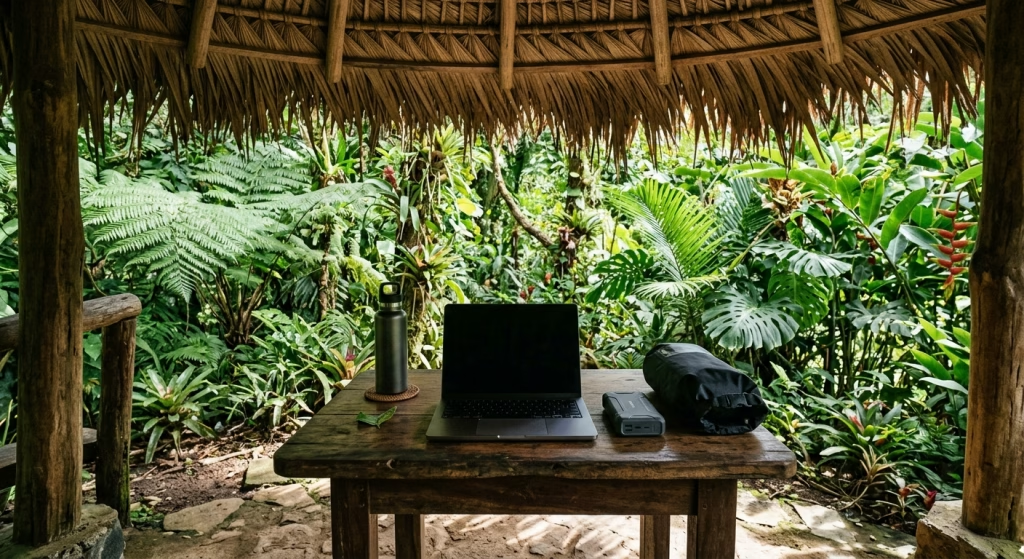
Pack for heat, humidity, sudden rain, and frequent transfers. A carry-on backpack or small wheeled case handles Mérida’s uneven pavements and bus-station changes better than a large suitcase. Keep your laptop in a padded sleeve rather than the bag’s thin built-in divider.
Your tech kit for working remotely in Yucatán should include:
- Lightweight laptop and compact charger: leave bulky bricks at home. A small USB-C charger often powers laptop, phone, and headphones.
- Type A/B plug adapter: Mexico uses the same flat-pin shapes as the United States and Canada. Check your charger label for voltage before you fly.
- Power bank: pick one within your airline’s carry-on battery limit. You will use it on long bus rides and days away from sockets.
- Noise-cancelling headphones: courtyard cafés get loud at lunch, and Tulum and Playa venues play music most of the day.
- Short extension cord: hotel desks often sit far from the nearest socket.
- Webcam cover and privacy screen: useful whenever you handle private work in shared rooms.
Humidity deserves more attention than extra clothing. Carry a dry bag or waterproof pouch for electronics, especially near cenotes and the coast. Add two small silica-gel packets to your laptop sleeve, and keep them away from children and food.
Pack breathable shirts, quick-dry trousers or shorts, and one light long-sleeved layer. The long sleeve helps in strongly air-conditioned workspaces and on mosquito-heavy evenings. Closed shoes suit Mérida’s stone streets, while sandals work better around beaches and cenotes.
Add a refillable bottle, hat, sunglasses, compact umbrella, and water-resistant sunscreen. Bring mosquito repellent rather than waiting until evening, when small shops near tourist areas carry limited choices.
Carry one outfit that covers shoulders and knees for churches and smarter restaurants. Pack a swimsuit without metal details if you plan to use waterslides or adventure equipment, plus a towel that dries overnight.
Watch out for overpacking: five full outfits, a large camera kit, and several pairs of shoes become a burden by the Valladolid transfer. Use a laundry bag and wash quick-dry clothes in your room. Keep medicine, chargers, work credentials, and one clean shirt in your carry-on in case checked luggage is delayed.
Before you fly, download your maps and files, then activate your Telekonek eSIM plan for Mexico. That is the last box to tick for working remotely in Yucatán: laptop, charger, power bank, dry pouch, breathable layer, and live data from the moment you land.
Takeaway: pack light, protect your electronics from humidity, and sort your connection before departure rather than after arrival.