
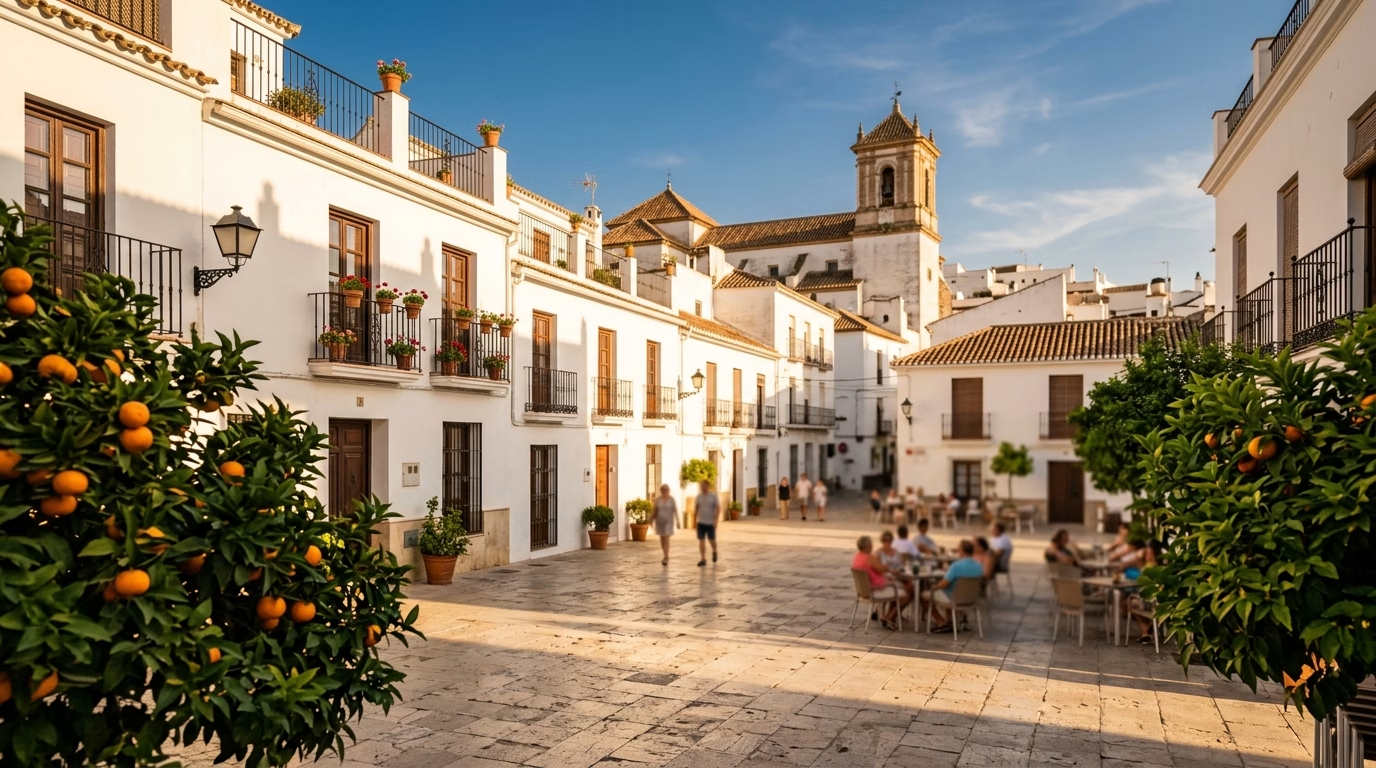
The best time to go to Spain is April to mid-June or September to mid-October, when the weather is warm enough for long days outdoors but the summer crowds and prices have not taken over. That is the short answer. The useful answer depends on where you are going, because Spain does not have one climate, one high season, or one price curve.
Key takeaways
- Overall sweet spot: late April to mid-June and September to mid-October, for cities, coast and countryside alike.
- For beaches and islands: late May to September, with September holding the warmest sea temperatures.
- For the lowest prices: November to March, outside Christmas, New Year and Carnival.
- For winter sun: the Canary Islands, which stay around 18–28°C all year.
- Avoid inland Andalusia in July and August unless you are willing to plan every day around the heat.
- Treat major festivals as peak season for rooms and transport, whatever month they fall in.
Why Timing Shapes the Best Time to Go to Spain
Choosing the best time to go to Spain changes far more than what you pack. It affects whether you spend afternoons exploring or hiding from heat, whether you walk straight into the Alhambra or face sold-out entry slots, and how much your room costs in Barcelona, Seville, or along the coast.
Spain does not move to one national rhythm. Summer brings the strongest demand to beach areas and major cities, while inland afternoons can make long sightseeing days feel slow. Winter can suit city breaks and food-focused trips, but shorter daylight and cooler evenings change how much you can fit into a day.
- Weather: Your route matters. A beach-first holiday, an Andalusian road trip, and a northern hiking trip need different months and different expectations.
- Crowds: Busy periods mean fuller trains, timed-entry attractions selling out, and less room to linger in famous old towns. You may prefer early starts, weekday visits, or smaller nearby cities.
- Culture: Local celebrations can be the reason to travel, not a side activity. They also bring street closures, packed restaurants, and higher demand for rooms. Build your itinerary around the event rather than trying to squeeze it in.
- Cost: Flights, hotels, rental cars, and beach accommodation usually rise when school holidays and warm weather overlap. A slightly quieter travel window can leave more money for tapas, museum tickets, and day trips.
Your travel style should lead the choice. You may accept peak-season prices for warm sea swimming and late outdoor dinners. You may instead value milder walking weather, easier restaurant reservations, and a calmer pace. For a wider look at routes, money, transport, and local customs, use this practical Spain travel guide alongside the seasonal advice below.
Watch out for: do not choose dates based only on a countrywide weather average. A pleasant forecast for one stop does not guarantee comfortable conditions at your next stop, especially when your plan crosses from the coast to inland cities or the north.
Timing also affects how easily you can adapt when plans change. Reliable data lets you check train updates, attraction availability, heat alerts, and restaurant hours while you are out. A Telekonek Spain eSIM keeps that practical information in your pocket, with data plans that work across 200+ countries before and after Spain.
Takeaway: Pick your Spain dates by matching your priority, whether that is beach weather, lower costs, fewer crowds, or cultural events, to the region you want to explore.
What Is the Weather Like? A Seasonal Breakdown of Spain’s Climate
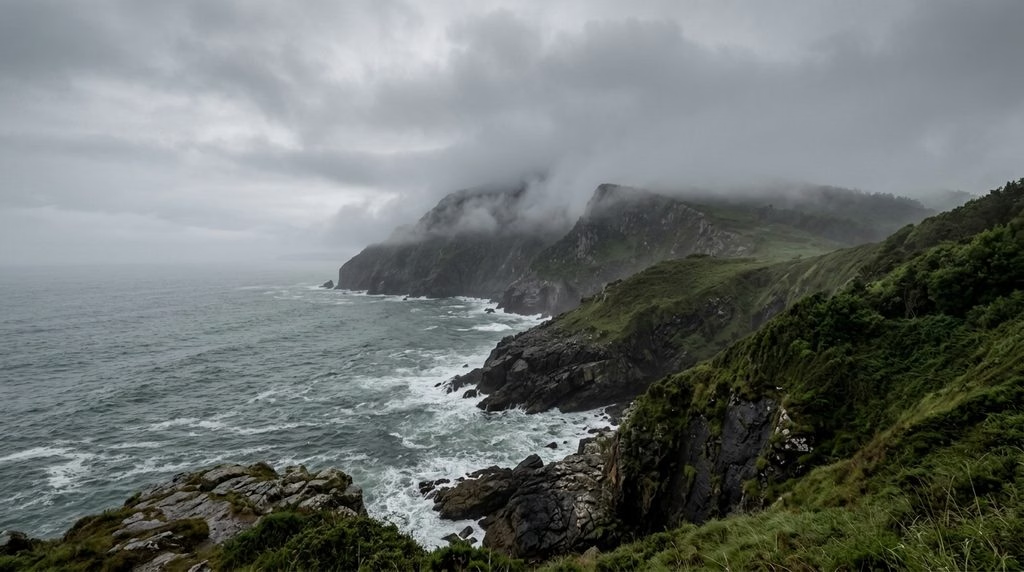
Spain’s weather changes sharply by region, so the best time to go to Spain depends on where you will spend most of your nights. A May trip can mean 18°C and drizzle in Bilbao, 27°C in Seville, and beach weather in Málaga on the same day.
The inland plateau around Madrid has a continental climate. Expect hot, dry summers, with July and August afternoons often reaching 32–38°C. Winters are cooler than many travelers expect: mornings can sit near 0–5°C, especially in December and January.
- Madrid, Toledo and Castilla: April–June and September–October work best for long walking days. In midsummer, plan major sights before 11 a.m., then return after 7 p.m.
- Andalusia: Seville, Córdoba and Granada can exceed 40°C during heatwaves from June through August. Coastal Málaga and Cádiz are more manageable, but still hot.
- Barcelona, Valencia and the Mediterranean coast: Summers are warm and humid, usually around 28–32°C. Sea breezes help, though sticky nights can make an apartment without air conditioning uncomfortable.
- Galicia and the Basque Country: Expect milder summers, often 20–26°C, plus changeable rain. Bring a light waterproof layer even in July.
- Pyrenees and Sierra Nevada: Snow can last into spring at higher elevations. Summer is excellent for hiking, but mountain storms can build quickly in the afternoon.
- Balearic and Canary Islands: The Balearics are strongest from late May through September. The Canary Islands stay mild year-round, commonly 18–28°C, making them useful for a winter sun break.
Spring brings green landscapes, orange-blossom scent in the south, and comfortable city temperatures. Rain showers are still possible, particularly in the north and northwest. Autumn is similarly pleasant, but September sea temperatures remain warmer than spring, so it is often better for combining cities with swimming. If an island stop appeals, our Menorca guide breaks down how the Balearic seasons differ from the mainland.
Watch out for heat alerts. During severe summer heat, shaded plazas can feel pleasant while exposed sites do not. The paths around the Alcázar in Seville, the climb to Granada’s Albaicín, and Madrid’s open Retiro Park become much harder in the middle of the day. Keep your data active for live weather warnings, transit changes, and a quick route to an air-conditioned museum or café.
Winter is not one experience either. You can have bright, crisp days in Madrid, wet Atlantic weather in Santiago de Compostela, and mild lunch-on-the-terrace conditions in the Canaries.
Takeaway: Choose spring or autumn for the broadest comfortable coverage, summer for coasts and islands, and winter for southern cities, ski areas, or the Canaries.
How Do Crowds Affect Your Experience in Spain?
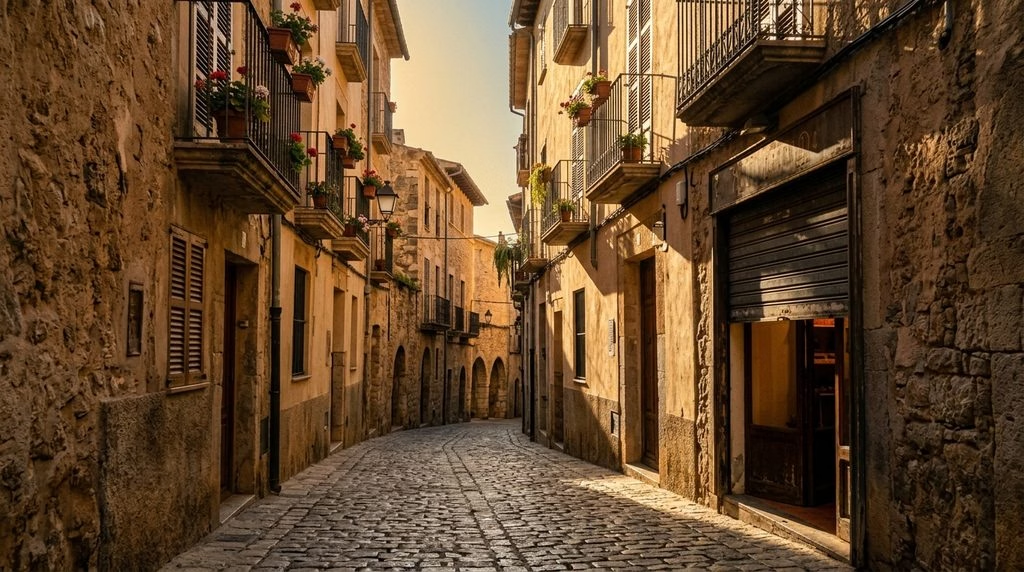
During the main summer rush, crowds change Spain from an easy, walkable trip into a timetable. June through August brings the heaviest pressure to Barcelona, Madrid, Seville, Granada, the Balearic Islands, and famous Costa del Sol resorts. The best time to go to Spain is often the period just outside that rush, when you can spend less time in lines and more time in the places you came to see.
Barcelona feels the effect most clearly. The narrow lanes around the Gothic Quarter, La Rambla, Park Güell, and the Sagrada Família can be packed from late morning until early evening. You can still enjoy the city in summer, but structure your day: visit one timed attraction at opening, take a long lunch away from the center, then return to explore neighbourhoods such as Gràcia, Poblenou, or Sant Antoni later. Our guide to things to do and see in Barcelona has the current ticket prices and free-entry days worth building a day around.
Granada and Seville have a different problem: crowd bottlenecks at landmark sites. The Alhambra, Real Alcázar, and Seville Cathedral use timed entry, so arriving without a reservation can leave you with no practical slot that day. Book official timed tickets before fixing your train journey or hotel nights. Keep your booking confirmation saved offline, too; your Telekonek eSIM is useful for finding the right entrance, but poor signal inside old stone complexes can still happen.
- Instead of central Barcelona every day: add Girona or Tarragona for a calmer historic walk and a slower lunch.
- Instead of Mallorca’s busiest beach towns: consider Menorca, or stay inland and visit the coast early in the day.
- Instead of only Madrid and Toledo: give Zaragoza a night. It has major monuments, good rail links, and far less pressure on its streets.
- Instead of the busiest Andalucía loop: base yourself in Cádiz or Córdoba for a few nights, then make one carefully planned day trip.
Watch out for: a “day trip” can make overcrowding worse. Trains and coaches deliver large groups to Toledo, Segovia, Montserrat, Ronda, and Granada at similar times. Sleep in the destination when you can. An early morning or post-dinner walk gives you a version of the place that day visitors never see.
For beach time, do not judge a resort by the beach alone. In peak weeks, parking fills early, beach clubs and restaurants work on reservations, and short taxi rides can become slow. Download offline maps, save restaurant addresses, and use your data to reroute when a packed promenade or closed road changes your plan.
Takeaway: Visit headline sights at opening, stay overnight in popular day-trip towns, and build quieter cities or neighbourhoods into your route.
Noteworthy Festivals and Events in Spain
Spain’s calendar can decide the best time to go to Spain more than the weather does. A festival trip gives you music, parades, food stalls, and local rituals that a normal sightseeing week cannot match. It also brings road closures, full trains, and hotel prices that rise fast in one city while nearby towns stay quiet.
- February or early March: Carnival in Cádiz and Santa Cruz de Tenerife. Choose Cádiz for satirical street songs, costumes, and a compact old town that stays lively late. Choose Tenerife for large-scale parades and warmer winter weather. You need accommodation close to the center, or you may face expensive late-night taxis after events finish.
- March: Las Fallas in Valencia. You can see towering handmade sculptures, daily fireworks, brass bands, and the final burnings. The noise starts early and continues late, so stay outside the Ciutat Vella if you need sleep. Download offline maps and keep your data active: street closures can turn a ten-minute walk into a long detour.
- March or April: Semana Santa in Seville, Málaga, Granada, and Valladolid. You can watch solemn processions with floats, music, candles, and packed streets. Dates move with Easter, so do not assume the same week each year. Seville offers the biggest spectacle, while Valladolid suits you if you want a more restrained, devotional atmosphere.
- April or May: Feria de Abril in Seville. This fair follows Semana Santa and fills the Los Remedios fairground with decorated tents, flamenco dresses, horses, and dancing. Many private tents are invitation-only, which catches visitors out. Go to the public tents, arrive before dinner, and use the Metro rather than depending on a taxi at closing time.
- July: San Fermín in Pamplona. You get concerts, parades, street parties, and the famous bull-running mornings. Do not join the run unless you fully understand the risks and rules; watching from an approved viewpoint is the sensible choice. Pamplona rooms and transport sell out far ahead of the festival period.
- August: La Tomatina in Buñol. This is a short, ticketed tomato fight near Valencia, not an all-day citywide event. Wear clothes and shoes you are ready to throw away, protect your phone in a sealed pouch, and arrange your return transport before arriving.
- September: La Mercè in Barcelona. Expect free concerts, human towers called castells, giants, and the fire-run known as correfoc. Stand well back during fire events and wear closed shoes.
- December and early January: Christmas markets and Three Kings parades. Madrid, Barcelona, Málaga, and Seville all decorate heavily, but smaller cities often feel more local. On 5 January, parades can block central streets and restaurants may fill after the candy-throwing processions.
Festival dates, routes, and ticket rules can change each year, especially when weather or crowd controls affect outdoor events. Save your tickets, hotel address, and a meeting point on your phone before heading into a packed street. Telekonek gives you working maps and messages when local Wi-Fi slows under the crowd.
Takeaway: Choose March through May or September for Spain’s richest traditional events, but reserve beds and transport around the festival city before building the rest of your route.
Budgeting Your Trip: Cost Considerations by Season
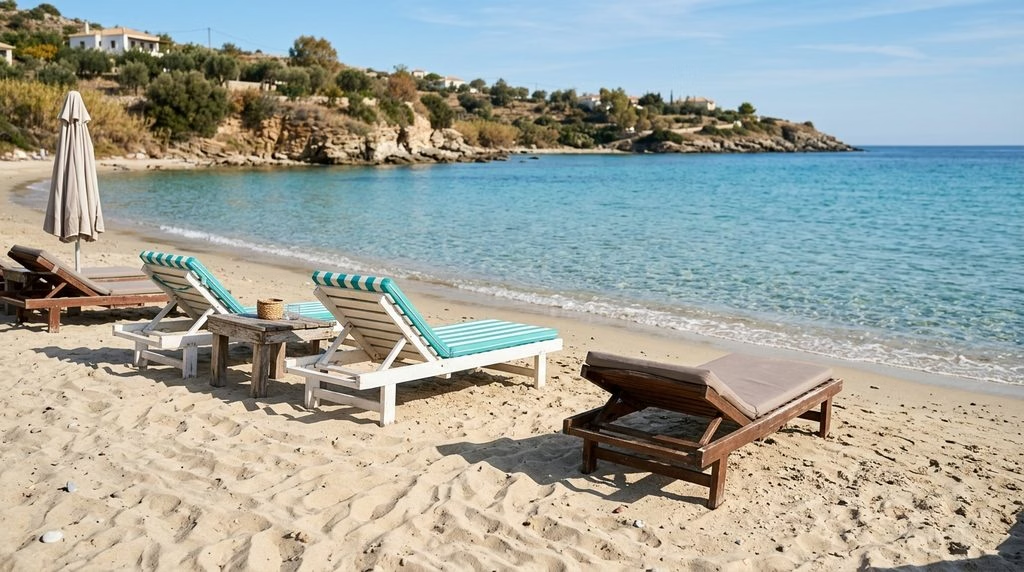
Your budget can change as much as your experience when choosing the best time to go to Spain. Summer usually costs the most, especially in Barcelona, Madrid, Seville, Málaga, Ibiza, Mallorca, and the Costa del Sol. The cheaper months are often late autumn, winter outside holiday weeks, and the quieter part of early spring.
Flights depend heavily on your departure airport, but the pattern is clear: school holidays and the main beach season bring the highest fares. A midweek arrival and departure can cost less than a Friday-to-Sunday trip, particularly on routes to Barcelona and Málaga. Use flexible date searches before locking in hotels, since a cheaper flight can disappear once you add expensive peak-season rooms.
- June to August: Expect the highest accommodation costs in coastal resorts and major cities. Beach apartments may require longer minimum stays, while central hotels can sell out before prices drop.
- April to May and September to October: These are often the strongest-value months for a comfortable trip. You may still pay more during major local celebrations, but you avoid much of the summer beach premium.
- November to March: City breaks can be better value, apart from Christmas, New Year, and Carnival periods. Coastal towns may have fewer open restaurants and reduced ferry or tour schedules.
Accommodation choice matters more than chasing the lowest nightly rate. A central hotel near a Metro station in Madrid or Barcelona can save you repeated taxi fares and time. In smaller cities, staying just outside the historic core can be cheaper, but check the uphill walk and late-night transport before booking.
Attractions do not always become cheaper in winter. Major monuments, museums, and guided tours can keep similar entry prices year-round, while timed tickets may still be essential during busy periods. Your real saving comes from fewer nights at peak hotel rates, cheaper transport, and less need to pay for last-minute tours.
Watch out for festival pricing. A city can become expensive even outside summer when a major celebration is underway. The festival dates discussed earlier should be treated like peak season for rooms, trains, and car rentals. Staying in a connected nearby town can cut the hotel bill, but only if late transport is available after events end.
Build a small data budget into your daily costs, too. With a Telekonek eSIM ready before landing, you can check train changes, use map routes, and reserve timed entries without relying on costly airport Wi-Fi or roaming.
Takeaway: For the strongest balance of prices, weather, and availability, target spring or autumn weekdays and avoid both summer resort demand and major festival weekends.
Who Should Go When? Tailored Recommendations for Different Travelers
Your best time to go to Spain depends on how you travel, not just on a weather chart. A beach-first family trip, a quiet couples’ escape, and a solo city break need different conditions, budgets, and daily rhythms.
For families: choose late spring, early summer, or early autumn. May, June, September, and early October give you more comfortable hours for city walks, playground stops, and outdoor meals. You can build in a beach day without planning every activity around the strongest afternoon heat.
- Strongest fit: Málaga, Valencia, Costa Brava towns, and Mallorca outside the busiest school-holiday weeks.
- Main advantage: You can combine museums, beaches, and early dinners without exhausting younger travelers.
- Trade-off: June and September can still be busy, especially around major attractions and coastal airports.
Watch out for trips built around several famous sights in one day. A late ticket time can unravel nap schedules and dinner plans. Keep tickets, maps, and backup restaurant options saved on your phone before leaving the hotel; your Telekonek eSIM makes it much easier to reroute when a child needs a break.
For couples: choose April to June or September to October. These shoulder-season months suit long lunches, evening walks, wine regions, and smaller hotels that feel less like a summer package holiday. You get more room for spontaneous plans in places such as Seville, Granada, San Sebastián, or the white villages of Andalusia.
- Strongest fit: Spring for gardens and city breaks; autumn for food-focused trips and warm southern evenings.
- Main advantage: Better walking weather and a calmer feel than the height of summer.
- Trade-off: Festival periods can turn a romantic plan into a crowded, expensive one.
Choose a festival only when the event itself is the point of the trip. Otherwise, stay in a nearby smaller city and visit by train for the day. The wider planning advice in this Spain travel guide helps you shape that kind of multi-stop route.
For solo travel: choose spring, autumn, or winter city-break dates. Madrid, Barcelona, Valencia, Bilbao, and Seville are easier to enjoy when you can walk for hours and join tours without peak-season pressure. Winter can be especially good for museums, markets, and tapas bars, provided you accept cooler nights and shorter days.
- Strongest fit: April–May and October for a social, active trip; winter for a lower-key city stay.
- Main advantage: More choice in hostels, day tours, and last-minute train plans outside summer.
- Trade-off: A quiet coastal resort can feel isolated in winter, even when a major city feels lively.
Watch out for arriving without a working data connection, especially when you are changing trains or reaching an unfamiliar apartment after dark. Install your Telekonek plan before departure, then use live maps and transit updates as soon as you land.
Takeaway: Pick May, June, September, or October for the broadest mix of comfort and flexibility; choose winter cities or summer beaches only when those are your main priority.
Staying Safe in Spain Through the Year
Spain is a comfortable country to travel in whatever month you choose, and normal city awareness is usually enough. Your biggest day-to-day risk is theft, not violent crime. Keep your passport, bank cards, and phone out of back pockets, especially in busy transit areas and crowded sightseeing streets.
Pay closest attention around Barcelona’s La Rambla, the Gothic Quarter, Sants station, Madrid’s Sol area, Atocha station, and airport arrivals. A common problem starts with a distraction: a spilled drink, a petition, a fake helpful stranger, or someone pressing close as you board a train. Keep your bag zipped in front of you and never place it on a café chair or under a table.
Watch out for rental-car theft near scenic stops. Do not leave passports, luggage, or electronics visible in a parked car, even for a quick photo stop. Put bags in the trunk before you arrive, not after you park where someone may be watching.
Your timing also affects what you need to prepare for. During summer beach stays, use a waterproof pouch or take turns swimming rather than leaving phones and wallets unattended on the sand. During major festivals, nightlife weekends, and packed city breaks, choose a meeting point before entering a crowd. Download your hotel address and rail tickets to your phone in advance.
Keep a charged phone and working data connection with your Telekonek eSIM. It helps when you need a map after a late train, a translation at a police station, or an urgent change to your travel plans. Save offline copies of your passport, travel insurance details, and accommodation bookings too.
For emergencies, call 112. You can use it for police, ambulance, or fire services anywhere in Spain. If your passport is lost or stolen, make a police report before contacting your embassy or consulate; your insurer may also require that report for a claim.
Entry rules matter as much as safety habits, and they have changed recently with the EU’s new border systems. Check what applies to your nationality in our Spain visa and entry requirements guide before you book. Travelers from the United States can also review the State Department’s Spain country information page and enroll in the Smart Traveler Enrollment Program. Official guidance can change faster than any seasonal travel guide.
Takeaway: Spain rewards relaxed travel, but you should protect valuables in crowds, save emergency details offline, and check your own country’s official guidance close to departure.
Can Weather Changes Disrupt Your Plans? Understanding Regional Differences
Spain’s regional weather can change your day faster than the season-by-season averages suggest. A clear forecast for Madrid does not tell you much about a drive through the Picos de Europa, a ferry from Tarifa, or a beach day in Mallorca. Check the official AEMET weather forecast for each overnight stop, not only your arrival city.
- Atlantic north: Galicia, Asturias, Cantabria, and the Basque Country. Rain can arrive in any month, often as short but persistent showers. Build in indoor options such as Bilbao’s Guggenheim Museum or San Sebastián’s pintxos bars, and carry shoes with grip for wet old-town paving. Coastal wind also makes boat trips and exposed walks feel much colder than the temperature suggests.
- Pyrenees and high country. Mountain weather turns quickly, even when Zaragoza or Barcelona is sunny. Snow can affect higher roads in winter, while summer thunderstorms can develop in the afternoon. Start hikes early, turn around at the first sound of thunder, and do not rely on a rural café’s Wi-Fi for last-minute route changes. Your Telekonek data lets you check radar coverage and message your accommodation before you lose signal in a valley.
- Mediterranean coast and Balearic Islands. A beach forecast can look perfect, then a strong onshore wind makes swimming unpleasant or pauses smaller boat excursions. In late summer and autumn, intense rain can briefly flood low streets and underpasses. Do not park a rental car in a dry-looking creek bed or underground garage during a heavy-rain warning.
- Andalusia’s coast versus inland. Málaga and Cádiz can feel mild while Granada’s higher setting is noticeably cooler after sunset. Pack one warm layer for evening tapas and early train departures, even on a trip built around the coast. Wind near Tarifa can be powerful enough to change your beach plan completely.
- Canary Islands. Each island has its own microclimates. The north can be cloudier and greener, while southern resorts are often sunnier. At Teide’s upper elevations, temperatures can be far lower than at sea level, so bring a jacket rather than treating the islands as one uniform beach forecast.
Watch out for: weather alerts are not merely a packing issue. Heavy rain can disrupt regional rail, close hiking paths, and make rural roads slow. Save hotel addresses offline, keep your connection active for alerts, and leave extra time on transfer days rather than booking a tight onward flight.
Takeaway: Choose plans by microclimate, not by Spain’s national forecast, and keep a flexible indoor or low-risk alternative each day.
Connectivity Essentials: Staying Connected in Spain
Reliable data matters in Spain because so much of a smooth day happens through your phone. You may need a live platform update at Madrid Atocha, a digital museum ticket in Barcelona, or a map when rain changes your hiking route in the north. The regional weather shifts covered earlier make this even more useful.
Set up your Telekonek Spain eSIM before departure, while you still have stable home Wi-Fi and access to any account emails. In Spain, Telekonek runs on Orange and Movistar, so you are on two of the country’s main networks rather than a single fallback. You can keep your regular number active for bank codes and calls, while Telekonek handles mobile data. Plans work in 200+ countries, and a Europe eSIM keeps the same setup running if Spain is one stop on a wider European trip.
- Check that your phone is unlocked. A locked phone cannot add an eSIM from another provider. Look in your phone’s cellular or SIM settings before you buy a plan.
- Install, then activate at the right time. Add the eSIM before flying, but follow the activation instructions carefully. Some plans begin when they first connect to a local network.
- Turn on data roaming for the Telekonek line. This setting allows your travel eSIM to connect in Spain. Keep mobile data switched off for your home line to avoid an unwanted roaming charge.
- Save key items offline. Download your Google Maps areas, train tickets, hotel address, and a Spanish translation pack before leaving Wi-Fi.
Your home plan may include roaming if it is based in the EU or EEA, though fair-use data limits can apply. For a US, Canadian, or other non-EU line, daily roaming passes can become costly on a longer trip. Using Telekonek for data gives you a clearer limit to manage, especially when you are sharing photos, using navigation, or booking last-minute transport.
Use Wi-Fi as a backup, not your only plan. Hotel networks can be slow at busy check-in times, and café Wi-Fi often requires a text-message sign-in that may not work with your home number. Public Wi-Fi is also a poor place to access banking apps unless you use extra security.
Watch out for data-heavy habits: reels, automatic photo backups, and video calls can drain a smaller plan quickly. Set cloud photos to upload only on Wi-Fi, download music and podcasts in advance, and use map downloads for full-day walks in Seville, Granada, or the Balearic Islands.
Takeaway: install your Telekonek eSIM before you fly, use it for data from arrival, and keep offline maps ready for the moments when Spain’s weather or transport plans change.
Frequently Asked Questions About Traveling to Spain
What is the best time to go to Spain overall? For a first trip covering cities and some coast, aim for May, June, September, or early October. You get longer days, outdoor dining weather, and easier sightseeing than in the hottest part of summer. Pick the month around your route: northern Spain can still be wet in spring, while Seville, Córdoba, and Granada can feel very hot by June.
How many days do you need in Spain? Give yourself at least seven days for two or three places. A practical first route is three nights in Barcelona, three in Madrid, and one flexible night for Toledo, Girona, or a slower final evening. With 10 to 14 days, you can add Andalucía, Valencia, Bilbao, or a few beach nights without turning every morning into a transfer day. Use the Spain travel guide to shape a route that matches your season.
What are the cheapest months to visit? January, February, November, and parts of early spring often bring the lowest room and flight prices, outside Christmas, New Year, and major local festivals. You trade beach conditions and late sunsets for better value in Madrid, Barcelona, and many inland cities. Coastal resorts can be very quiet in winter, so check that the restaurants, boat trips, or beach facilities you want are actually operating.
Is Spain safe at any time of year? You can travel safely with normal city habits in every season. The main issue is opportunistic theft in crowded places, especially when summer crowds, festivals, and busy rail stations create distractions. Carry only the card you need that day, keep your phone secured before boarding trains, and avoid putting your passport in a loose daypack pocket. Do not let a friendly distraction near an ATM pull your attention away from your bag.
Should you avoid Spain in July and August? Not necessarily. These months work well for a beach-led trip in the Balearic Islands, Costa Brava, or Atlantic north, where swimming and late dinners are central to the plan. They are less comfortable for a packed inland sightseeing route. In Madrid or Andalucía, schedule major sights at opening time, take a long lunch break, and save walks for the evening.
What usually goes wrong with a Spain trip? You can underestimate travel time between regions, assume one forecast covers the whole country, or leave popular timed tickets until arrival. Build one unscheduled half-day into a weeklong route. That gives you room for heat, rain, a delayed train, or a museum slot that only appears at an awkward hour.
How should you handle maps, tickets, and last-minute changes? Download key maps and rail tickets before leaving Wi-Fi, then keep mobile data ready for platform updates and navigation. Set up a Spain eSIM before you fly and you are online the moment you land, with no hunting for a SIM shop on arrival.
Takeaway: For the strongest balance of weather, value, and flexibility, choose late spring or early autumn and give your route at least one spare half-day.