
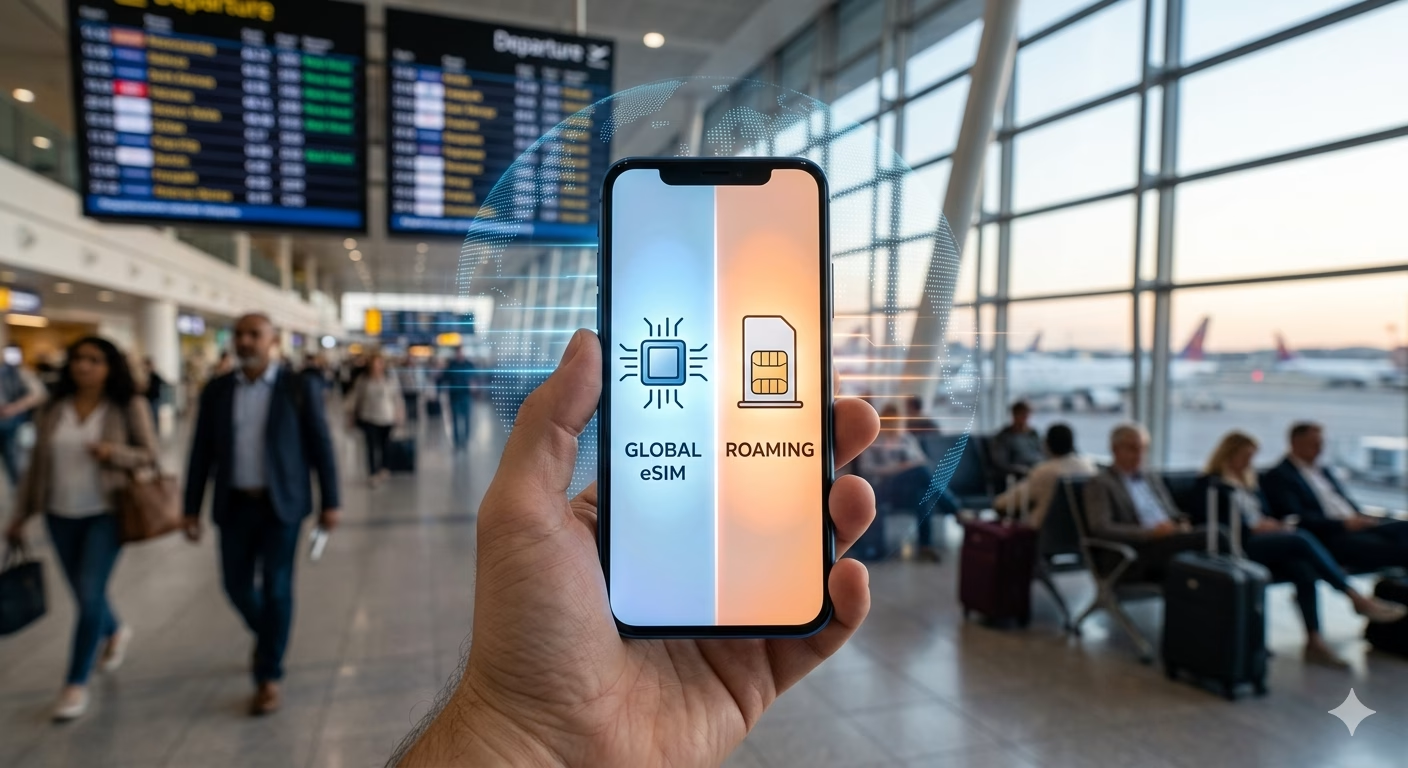
Landing in Tokyo and flipping on data roaming at $12–$15 per day from a U.S. carrier? That can cost more in a week than a travel eSIM covering all of Japan.
For most trips, eSIMs mean lower, predictable costs and more flexibility than old-school roaming plans. Roaming only really makes sense if you’re in town for a day or two, or you just forgot to plan ahead.
Staying connected isn’t just about convenience—it’s survival when you’re lost in Shinjuku Station or trying to book a Bolt ride from Charles de Gaulle at midnight. Services like Telekonek offer eSIM data plans in over 100 countries, with prices often starting around $5 per week, and you can activate before you even leave home.
An eSIM, or embedded SIM, installs digitally—no fiddly plastic cards needed—and connects to a local partner network as soon as you land. Roaming, on the other hand, keeps your home carrier in charge and slaps you with a daily fee, no matter if you use 100MB or 2GB. Here’s a breakdown if you want to dig deeper: eSIM vs. roaming plan for travel.
Roaming feels easy, but surprise charges can show up fast—stream one Uber ride, upload a few photos over flaky hotel Wi‑Fi that drops back to cellular, and suddenly your bill’s doubled.
Coverage and speeds? That’s where things get trickier. It really depends on the country and carrier deals. Some travelers compare international roaming vs travel eSIMs before booking flights.
In rural Tuscany, you might get stuck on 3G with one provider, while a local eSIM can lock you into TIM or Vodafone LTE. Picking the right setup means your maps actually load, your boarding passes don’t vanish, and two‑factor codes arrive when you need them.
How eSIM and Data Roaming Work
Abroad, you’ve got two main options: add a digital plan to your phone, or let your home carrier hand you off to a foreign network. The difference? It’s about how your phone authenticates, how you’re billed, and how much control you actually have.
Understanding eSIM Technology
An eSIM is basically a chip soldered right into your phone’s motherboard. No more swapping tiny plastic cards.
You buy a prepaid plan through an app or website, scan a QR code, and it’s installed in minutes. Providers like Airalo let you compare prices and activation rules up front—this eSIM vs. roaming plan for travel guide is pretty detailed.
Many plans start under $5 for small data packs, scaling up for more gigabytes or longer validity.
Your phone stores the digital SIM profile and connects directly to a local carrier at your destination. Land in Paris, and your eSIM might latch onto Orange or SFR instantly.
But it’s not foolproof. Common issues:
- Buying a plan before checking if your phone actually supports eSIM
- Installing the eSIM but forgetting to switch your data line
- Landing without Wi‑Fi to finish activation
You can dodge most of these by confirming your phone’s compatibility (most models post-2018 are fine) and installing before you leave.
Traditional SIM Card Roaming Explained
Data roaming keeps your original SIM card running. You land in Tokyo, flick on roaming in settings, and your home carrier connects you to a partner network.
The foreign carrier charges your home carrier, which then bills you—usually at a flat daily fee. In North America, it’s often $12–$15 per day, no matter if you use 500MB or 3GB.
It’s simple—nothing changes physically. But coverage and speeds depend on the roaming deal. A U.S. carrier might prioritize its own customers, leaving you stuck with slower speeds.
This eSIM vs roaming: what’s the difference? piece sums it up: roaming means you’re still on your home plan, just borrowing foreign infrastructure.
Billing is where it bites. Forget to turn off roaming after a Dubai layover? Charges stack up. Extend your trip without updating your carrier? More fees.
Digital and Embedded SIM Features
A digital SIM is just more flexible than a single physical SIM. Many phones store several eSIM profiles, letting you switch between them in seconds.
You could keep your UK number active for calls while using an Asia data eSIM for cheaper internet. This setup is great for WhatsApp, Google Maps, and Uber—apps that just need data.
Here’s a quick comparison:
| Feature | eSIM | Data Roaming |
|---|---|---|
| Plan type | Prepaid, fixed data | Daily or usage-based billing |
| Network access | Direct local carrier profile | Partner network via home carrier |
| Control | User manages profiles | Carrier controls terms |
If your eSIM runs out of data mid-trip in Rome, you just top up in the provider’s app. With roaming, you’re at the mercy of your carrier or you get charged automatically.
Both get you online, but the billing, network access, and control are totally different.
Comparing Costs: eSIM Plans vs. Roaming Charges
International data costs are all over the place—depends on your carrier, where you’re headed, and how long you stay. Daily roaming fees add up fast, while prepaid eSIM plans usually stick to flat pricing, making it way easier to budget.
Typical Roaming Rates and Fees
Most big U.S. carriers charge $10–$12 per day for roaming in places like France, Japan, or Mexico. Verizon’s Travel Pass is $12 per day—so a 10-day Paris-to-Rome trip means $120 in roaming, before taxes.
Some plans limit high-speed data. Burn through 1–2GB, and you’re throttled to 2G. That’s fine for Google Maps, but uploading photos from the Colosseum or streaming on a Shinkansen? Forget it.
Skip the roaming plan, and pay-per-use rates can hit $2–$3 per MB—a 100MB app update could cost $200. This 2026 eSIM vs roaming plan costs breakdown shows a two-week Asia trip can rack up $160+ in roaming fees alone.
Taxes, regulatory fees, and weird partial-day billing can make the total even uglier.
eSIM Plan Pricing and Value
Travel eSIMs charge by data amount and validity, not per day. A regional Europe eSIM might cost $18–$25 for 5GB over 7 days; an Asia plan with 10GB for 14 days runs about $30–$40.
Flat pricing means you know what you’ll pay. Spend a week in Barcelona and Madrid using 3GB? You still pay the same upfront rate. No daily charges just because you landed late at night.
Some providers highlight savings over roaming. This 2026 is an eSIM cheaper than roaming comparison uses Japan and Thailand examples—eSIMs win for week-long trips.
Most cheap eSIMs are data-only, though. If you need regular voice calls, you’ll be using FaceTime, Skype, or WhatsApp instead of your main number.
Avoiding Surprise Roaming Bills
Surprise roaming bills usually come from three things: forgetting to turn off data roaming, blowing past your daily high-speed cap, or assuming hotel Wi‑Fi will cover everything.
Phones love to switch back to cellular when Wi‑Fi drops—think London Underground or JFK’s Terminal 4. Background app updates can trigger roaming fees before you even realize.
To avoid roaming charges:
- Turn off data roaming in settings before you leave
- Remove your carrier’s roaming plan if you can
- Track usage in real time with your carrier’s app
With an eSIM, you pay upfront. If you use up your 5GB or 10GB, data just stops—no $300 bill shock when you get home.
Network Coverage and Data Speeds Abroad
Coverage and speeds are a mixed bag. How you connect—roaming vs eSIM—decides which network you get, how fast your data loads, and how easily you can switch if coverage tanks.
Roaming Coverage Limitations
Roaming coverage is all about your home carrier’s deals. A U.S. customer on Verizon’s TravelPass ($10/day) might connect to just one partner in Italy, like Vodafone IT—even if TIM has a better signal in rural Tuscany.
Outside big cities, this can be rough. In the Scottish Highlands or along Norway’s E39, roaming can drop you to 3G while locals on Telenor still get 4G or 5G.
Roaming data often routes through your home carrier’s core network, which can add latency. Video calls from Bangkok might lag more than if you’d used a local SIM on AIS.
If speeds tank, you can’t just switch to another network. You’re stuck with whatever roaming partner your provider picked.
eSIM Coverage and Flexibility
An eSIM connects you straight to local networks. Many eSIM providers offer multiple carrier options per country, so your odds of a strong signal go up.
Guides like eSIM vs Roaming | Roamless explain how eSIM users can hop between local networks, not just one roaming partner. In Spain, that might mean picking between Movistar, Orange, or Vodafone, depending on what’s strongest.
This is a lifesaver on multi-city trips. Land at Tokyo Haneda, activate your eSIM, and you’re on NTT Docomo in minutes—no airport SIM counter, no ¥4,000 for a plastic card.
If coverage drops on a train from Milan to Florence, you can manually switch networks in your settings. That control means you’re less likely to lose maps or ride-hailing in the clutch.
Comparing Data Speeds for Travelers
Data speeds depend on the local network, but access rules aren’t the same for roaming and eSIM. Some roaming plans put locals first during busy hours.
In Paris at rush hour near Gare du Nord, roaming users sometimes get slower 5G when the network’s slammed. A prepaid eSIM tied directly to Orange France? Usually more consistent.
Articles like Comparison of eSIM vs Roaming Plan: Which is Better? point out that local network access often means steadier speeds than traffic routed through your home carrier.
Always check plan limits. Some “unlimited” roaming plans throttle you after 2GB a day. An eSIM provider might offer 10GB for €18 in Germany—full-speed 5G until you hit the cap.
If speeds drop, a quick phone restart or manually picking another supported network can help. And honestly, keeping offline Google Maps for places like the Swiss Alps is a smart backup.
Convenience and Flexibility on the Road
Getting connected abroad is mostly about how fast you can get online and how easily you can adjust plans mid-trip. Setup, network switching, and device quirks matter more than most people realize.
Activating and Managing eSIMs
A travel eSIM usually gets you online in minutes. On an eSIM-compatible phone—say, iPhone 15 or Galaxy S24—you scan a QR code, download the plan, and toggle it on in Settings.
Plenty of providers sell 10GB Europe plans for $20–$30, which is less than three days of U.S. carrier roaming. Some guides, like this eSIM vs roaming for 2025 travels, point out that roaming feels easy but adds up fast on long trips.
Always double-check device compatibility before you go. Some older phones don’t support eSIM, or they limit multiple profiles.
What can go wrong? The QR code might not work if you don’t have Wi‑Fi on arrival. Your phone could be locked to your home carrier. Or data works but calls don’t—most travel eSIMs are data-only.
You can avoid a lot of airport headaches by installing the eSIM at home and flipping it on after you land. Keeping your home SIM active for SMS while using eSIM data works great if your phone supports dual SIM.
If you want to stay connected without stress, here’s a tip: grab an eSIM before you fly. Telekonek has affordable data plans that let you skip the airport SIM card hunt and get online as soon as you land. It’s honestly one of those little travel hacks that makes a big difference, especially if you’re arriving late or just want to hit the ground running.
Switching Networks While Traveling
Regional plans really do simplify border crossings. If you’re zipping from Paris to Brussels on the Thalys, you can just keep your Europe-wide eSIM active—no frantic SIM card search at Gare du Nord.
Some regional eSIMs actually cover 30+ EU countries on a single plan. This international roaming vs eSIM for travel comparison digs into how your trip length and coverage needs make a difference.
Roaming with your home carrier? It’ll usually connect on its own, but speeds can drop—especially if the network is busy and prioritizes locals. In Italy, for example, roaming users might get capped speeds on TIM or Vodafone IT during rush hour.
With eSIMs, you can always hop into Settings and pick a different network if the signal drops. That’s a lifesaver in places like the Scottish Highlands or on the train between Munich and Salzburg, where coverage flips constantly.
Dual SIM Devices and Multi-Country Trips
A dual SIM setup—either physical SIM plus eSIM, or two eSIMs—gives you a lot more freedom. You can keep your home number live for those annoying bank texts while using a cheap local data plan.
Let’s say you’re hopping through Thailand, Vietnam, and Singapore for three weeks. Some folks install an Asia regional eSIM, then keep a local SIM as backup. A Thai SIM from AIS might be $8 for 15 GB, while a regional plan could be $35.
The roaming vs eSIM for digital nomads guide points out that work needs really drive the decision. If you’re glued to WhatsApp, Slack, and Google Maps, you want stable data and the ability to top up quickly, ideally through an app.
It’s worth double-checking which line is handling data and which is for calls. After a phone update, devices sometimes switch back to the primary SIM—an easy way to rack up roaming charges if you’re not careful. Always check your settings right after landing or updating your phone.
When to Choose eSIM, Local SIM, or Roaming
Honestly, it all comes down to your trip, your work, and how much hassle you’re willing to deal with. Cost per gigabyte, border crossings, and keeping your home number live usually matter more than chasing the absolute fastest speeds.
Short Trips and Emergency Use
For a quick three-day city break in Paris or a weekend in Toronto, international roaming can work. U.S. carriers usually charge about $10 per day (think AT&T International Day Pass), which is fine if you’re not planning to stream movies or upload a ton of photos.
Roaming kicks in the second your plane lands at Charles de Gaulle or Pearson. There’s no SIM tray tool, no passport scan, no hunting down a kiosk at Gate 32.
But watch your usage. Streaming Netflix in your Gare du Nord hotel will eat through your daily limit fast. Disable background app refresh and auto-uploads to iCloud or Google Photos before you go.
An affordable eSIM can be cheaper for a short trip. Many Europe plans offer 5GB for $10–$15, valid for a week. Setup’s quick—just scan a QR code before you fly, and you don’t have to fuss with flaky airport Wi‑Fi.
If your phone can’t use eSIMs, you can still grab a local SIM at Relay shops in French train stations for about €20 with 20GB. Plan for a 10–20 minute registration with your passport.
Extended Travel or Digital Nomad Needs
If you’re spending a month in Lisbon, then heading to Porto and Berlin, you’ll want flexibility. Swapping local SIMs in every country is a pain and you’ll lose your number each time.
In Portugal, a prepaid Vodafone SIM with 30GB is about €25. In Germany, expect €30–€40 for similar data. That’s two store visits, two ID checks, and a pocket full of tiny plastic cards.
A regional eSIM that covers multiple EU countries saves a lot of hassle. This eSIM vs Local SIM vs Roaming (2026) comparison explains how multi-country plans cut down on repeated purchases.
Still, check which networks your eSIM uses. Some default to slower networks in rural Bavaria or the Algarve. If you lose signal, try manually picking a different network in settings.
Roaming gets expensive fast for longer stays. Even a “travel pass” can run $70–$100 over ten days, and you might get throttled after hitting a data cap.
Business vs. Leisure Scenarios
If you’re flying from New York to Singapore for meetings in Raffles Place, missing SMS banking codes is a disaster. Keeping your main line active via roaming or dual-SIM is worth the extra $15.
Adding an eSIM for data lets you keep getting calls on your home number while using local data rates. Test this setup before you leave JFK—don’t wait until you’re jet-lagged at Changi.
If you’re just island-hopping in Thailand, your priorities are different. A local SIM from AIS at Suvarnabhumi Airport runs 299–599 THB with lots of data. It works well on ferries to Koh Samui, though you’ll need your passport to register.
For more details on costs, check this travel eSIM vs international roaming vs local SIM comparison. It lays out the trade-offs between convenience and price.
Business travelers usually care about keeping things seamless and secure. Leisure travelers are more likely to chase the best deal and biggest data bundle for maps, rides, and restaurant hunts.
Popular eSIM Providers and International Options
A bunch of eSIM providers now cover 200+ destinations, but prices, data limits, and customer support can vary a lot. It’s worth looking at your trip length, how much data you’ll use, and whether you need calls or just data.
Top eSIM Providers for Global Travel
Airalo is pretty popular, with coverage in 200+ countries. Local plans start at $4.50 for 1GB, good for 7 days in places like Italy or Japan. Regional Europe plans can last a month, and global plans stretch up to a year.
Saily is all about low prices, starting at $1.99 and going up to 100GB. It’s a good pick if you only need data for Google Maps or WhatsApp—most Saily plans are data-only.
Holafly is known for unlimited data in spots like Spain, Mexico, and Japan, from $6.90 per day. Speeds might slow if you use a ton of data. Nomad and other providers have similar bundles, usually $5–$15 for 5–10GB in places like Singapore or Paris.
How to Pick the Right eSIM for Your Destination
Start with your destination and how long you’ll stay. A week in London with heavy Instagramming? You’ll want 10GB. A three-day stop in Reykjavik? Maybe 1–3GB is enough.
Check if the eSIM supports hotspot use. Airalo and most others do, so you can tether your laptop at a Shoreditch café. Some unlimited plans block hotspotting, though.
Watch validity periods. Some 7-day plans start the clock as soon as you install them—not when you land. Setting up at home before a long flight to Tokyo can waste a day if you’re not careful.
Also, double-check which local network your eSIM will use. In rural Tuscany or the Highlands, your experience depends on whether you’re on TIM, Vodafone, EE, or someone else.
Buying and Installing eSIMs Abroad
Most people buy a travel eSIM in the provider’s app before leaving. Setup takes about 5–10 minutes: scan a QR code, confirm a few settings, and turn on the eSIM after you land.
Make sure your phone’s unlocked. An AT&T-locked iPhone won’t accept a third-party eSIM. You can check under Settings → General → About for carrier lock status—do this before you fly.
You’ll need Wi‑Fi to install. If you wait until you land at Istanbul Airport or LAX, you’ll have to connect to public Wi‑Fi first. Some airport networks want SMS verification, which is tricky if you don’t have working data.
If activation fails, try restarting your phone and manually picking a local network. Keeping your main SIM active for calls, while using the eSIM for data, helps you avoid missing bank texts or ride-share alerts.
Practical Tips for Secure and Seamless Connectivity
A little prep goes a long way. Spending five minutes checking your settings and coverage can save you hours of airport headaches.
Staying Safe While Using eSIMs
Double-check that your eSIM-compatible device is unlocked before you leave. An iPhone 15 bought directly from Apple usually works instantly at JFK or Heathrow, but a carrier-locked phone can reject an eSIM as soon as it sees a foreign network.
Buy plans from trusted providers and install the QR code on secure Wi‑Fi—like the official network at Changi (Wireless@SG), not some random “Free Airport WiFi.” Public networks at places like Rome Termini are risky if you’re not using a VPN.
Turn off automatic data roaming on your primary SIM, or you might get hit with $10–$15 per MB charges from your US carrier. Set the eSIM as your default for cellular data, and keep voice on your home SIM if you need bank texts.
Troubleshooting Common Issues
If data isn’t working when you land, check that data roaming is enabled on your eSIM line, not your physical SIM. Phones often default to the wrong line after a flight.
Make sure APN settings are right. Most eSIMs handle this automatically, but if you’re stuck at Tokyo Station or Gare du Nord, try manually picking the local network—like NTT Docomo—to get 4G or 5G back.
In rural spots—say, between Seville and Ronda—a weak signal is usually about coverage, not your eSIM. Switching from 5G to LTE can help.
If activation fails, restart your phone and give it 5–10 minutes. If you’re still stuck, most eSIM apps have chat support that replies within half an hour—much faster than calling a big carrier.
Making International Calls and Using WhatsApp
Most travel eSIMs are data-only, so don’t expect to make traditional calls. Plan to use apps.
WhatsApp works fine as long as your original number is still active for verification. You don’t have to change numbers—the app is tied to your account, not the SIM providing data. You can message home from a Barcelona café on eSIM data without extra fees.
For calling regular numbers, check rates first. Roaming voice calls from the US in the UK can be $1.99 a minute, while WhatsApp calls use just a sliver of data. For business calls to landlines, Skype or Google Voice are often $0.02–$0.05 per minute—way cheaper than roaming.
Test calls before you need them. A quick WhatsApp call from your Berlin hotel confirms everything works before your big meeting.
Frequently Asked Questions
Travelers usually decide based on cost per day, whether they need their home number for texts, and how comfortable they are flipping SIM settings. A five‑day Paris trip can cost $50 in roaming passes, but a 10GB France eSIM is often $20–$30.
Which usually costs less abroad: buying a travel eSIM plan or using your carrier’s international roaming?
Most of the time, a travel eSIM is cheaper for data. US carriers love to charge $10 a day for international passes, which adds up fast on a 10‑day trip.
A destination eSIM gives you a fixed bundle—like 5GB or 10GB for 7–30 days—at a lower total price. For short trips focused on maps and WhatsApp, a data‑only eSIM usually beats roaming, as seen in this eSIM vs. roaming plan for travel breakdown.
Roaming can make sense for a two‑ or three‑day work trip, especially if your plan already includes Mexico or Canada. Otherwise, daily fees quickly overtake the cost of a prepaid eSIM.
If I install a travel eSIM, do I still need to enable international roaming on my phone?
Usually not—at least not for the eSIM line. Most travelers keep data roaming off on their main US line to dodge surprise charges, and only turn it on for the eSIM if needed.
On iPhone, set your travel eSIM as the “Cellular Data” line and leave your US line for calls and SMS. If you forget before landing at Heathrow or Narita, your phone might start using US roaming data right away.
Double-check your settings on the plane, before turning off airplane mode. That’ll save you from a $10 day pass you didn’t mean to trigger.
If you want to stay connected and skip the SIM card hassle, here’s a tip: grab an eSIM before you fly. Telekonek, for example, has affordable data plans that mean you won’t have to hunt down a SIM shop at the airport. It’s one less thing to worry about, and you can get online the moment you land.
What are the biggest downsides of using an eSIM when you’re traveling internationally?
Honestly, the main headache is that most travel eSIMs are data-only. If you’re still getting those two-factor authentication codes from banks like Chase or Wells Fargo, you’ll need to keep your main number active or rely on Wi‑Fi calling.
First-time setup can be a little daunting. You’ve got to scan a QR code, label each line (so you don’t mix them up later), and double-check which SIM is handling your data—otherwise, your phone might default to the pricier option by mistake.
Compatibility isn’t always guaranteed. An older phone—say, an iPhone XR that’s still locked to its original carrier—might not support eSIM at all, or could be stuck on just one network.
Will an eSIM get the same signal strength and speeds as a physical SIM in the same country?
Usually, yes. eSIMs tap into the same local networks as regular SIM cards, so if you’re in central Rome or downtown Seoul, your coverage depends on the carrier’s reach, not the fact that your SIM is digital.
But there’s a catch: some travel eSIMs work through roaming deals instead of local plans. That can mean locals get priority in high-traffic spots—think Shibuya Crossing at rush hour—so your speeds might dip.
Still, if you’re driving Iceland’s Ring Road, dead zones are dead zones. Doesn’t matter if you’re using an eSIM or a plastic SIM.
How do I use an eSIM for data while keeping my home number active for calls and texts on an iPhone?
On iPhone, just head to Settings > Cellular, add your travel eSIM, and give it a name you’ll remember—maybe “Spain Data” or something obvious. Set “Cellular Data” to use the eSIM, but keep your US number as your default for calls and texts.
Make sure Wi‑Fi Calling is switched on for your US line before you leave. That way, you can still get calls and those all-important verification texts over data, even while you’re using the eSIM for everything else.
A quick test call over Wi‑Fi before you board your flight can save a lot of stress later. If you want to avoid scrambling for SIM cards at the airport, grab an eSIM plan ahead of time—Telekonek has affordable options that let you get set up before you even land. That’s honestly one of the easiest ways to stay connected without the usual travel hassle.
When does traditional roaming make more sense than a travel eSIM—short trips, multiple countries, or specific carriers?
Traditional roaming can actually make sense for really short trips. If you’re just flying to Toronto for a two-day conference, and your carrier already includes Canada in your US plan, you might not pay anything extra.
There’s also the whole multi-country headache. Imagine hopping from Paris to Brussels to Amsterdam in four days—sometimes it’s just easier to stick with one daily roaming fee than stress over whether your eSIM covers every stop.
Some carriers offer flat international bundles or plans that cater to frequent travelers, which shrinks the price gap. And for folks who hate fiddling with SIM settings or absolutely need voice calls to work everywhere, paying more for simplicity sometimes just wins out.
If you want to avoid all that hassle, here’s a tip: grab an eSIM before you fly. Telekonek has affordable data plans, so you don’t end up hunting for a SIM card kiosk at the airport when you’d rather be exploring.