
When Is a Good Time to Go to Mexico?
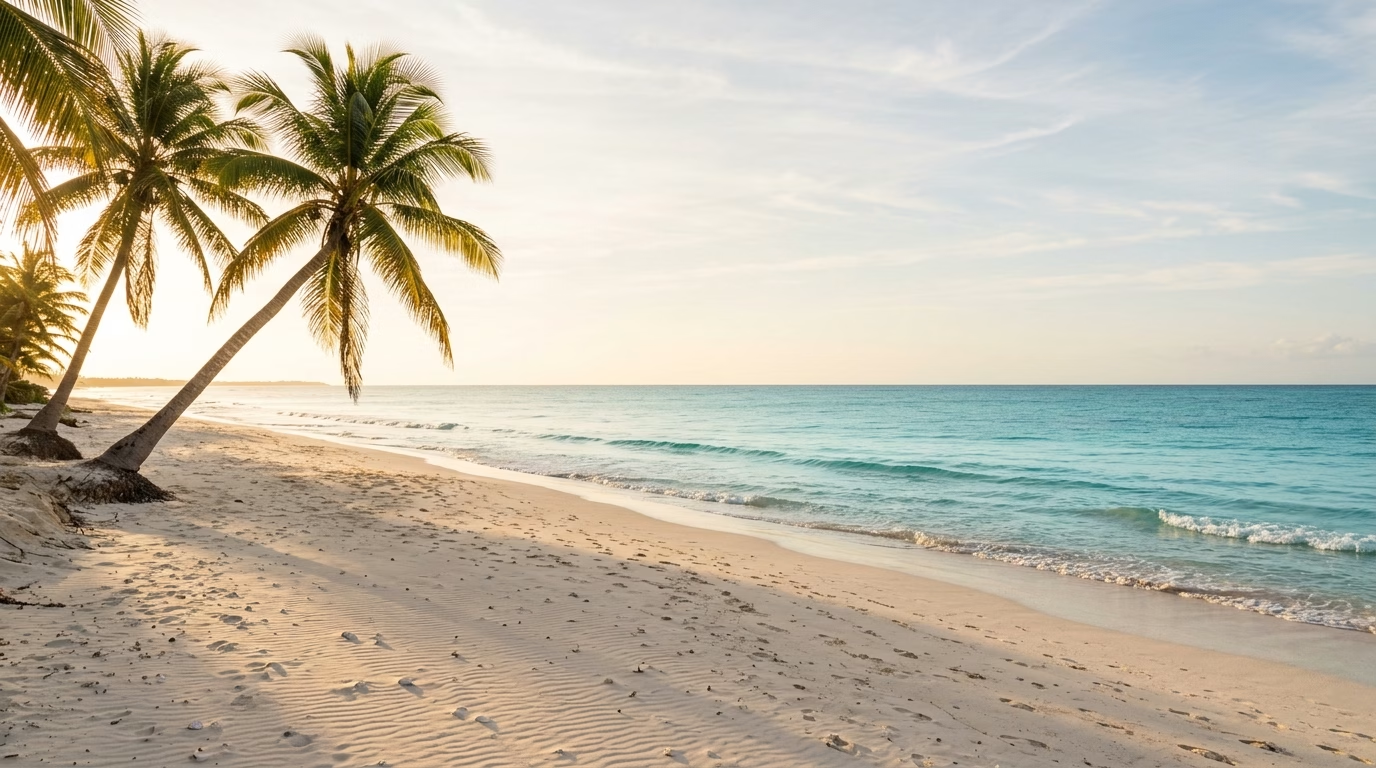
For most trips, November through April is a good time to go to Mexico. Much of the country is drier then, with warm beach days and cooler evenings in higher cities. It is the easiest window for combining places such as Mexico City, Oaxaca, Yucatán, and the Pacific coast in one trip.
Your best month depends on what you want from the trip. Mexico is large, and weather in Cancún can feel completely different from weather in San Miguel de Allende on the same day. A short flight from the US or Canada can also make a quick winter escape practical, especially when northern states and provinces are cold.
- November: Lower crowds after the Day of the Dead period. Beach weather is warm, and central Mexico is usually pleasant for walking tours and markets.
- December to February: Dry-weather trips, whale-watching areas, and an escape from a northern winter. Expect the biggest crowds around Christmas, New Year’s, and school breaks.
- March and April: Strong choices for beach time and city sightseeing. The trade-off is spring-break demand in Cancún, Playa del Carmen, Cabo San Lucas, and Puerto Vallarta.
- May and June: Better for value and fewer visitors before the wettest part of the year. Heat builds quickly in coastal and lowland areas, so schedule outdoor plans early.
- July to October: Suited to travelers who accept rain, humidity, and changing plans in return for quieter hotels. This is not the simplest period for Caribbean or Pacific beach trips, because tropical weather can disrupt flights, ferries, and boat excursions.
For food, museums, and colonial towns, aim for November, February, or March. For a resort-focused trip, late November through early April gives you the most dependable beach conditions. For lower rates and a more relaxed feel, May, early June, and parts of autumn can work well if you stay flexible.
Watch out for: Easter week and the Christmas-to-New-Year period can change the whole experience. Rooms, domestic flights, rental cars, and popular intercity buses can fill up, while beaches and historic centers become far busier than usual. A “quiet” destination on a normal week may not feel quiet during Mexican school holidays.
Reliable data matters when weather or crowds force a last-minute change. Set up your Mexico eSIM from Telekonek before you fly, with data plans that work in 200+ countries, so you can check forecasts, navigate to your hotel, and receive airline updates from the moment you land. For ideas beyond the usual resort route, these surprising facts about Mexico can help shape a more interesting itinerary.
Takeaway: November to April is a good time to go to Mexico for an easy all-round trip; choose May to October only when lower crowds outweigh weather uncertainty.
How Does Weather Change Throughout the Year in Mexico?
Mexico’s weather changes sharply by region. Your beach forecast can be hot and humid while your highland stop needs a jacket that same day. That range is why a good time to go to Mexico depends on your route, not just the month.
November through April is the dry season for much of the country. In Mexico City, Oaxaca, and San Miguel de Allende, you can expect daytime highs around 70–80°F. Nights from December through February can fall into the 40s or 50s°F, especially at higher elevations. Pack layers, not just summer clothes.
On the Caribbean and Pacific coasts, dry-season days usually reach the low to mid-80s°F. Cancún, Playa del Carmen, and Tulum still feel humid, often around 65–75%, even when rain is limited. Along the Pacific, Puerto Vallarta and Los Cabos are generally drier, but the sun feels intense by midday.
March through May brings the strongest heat before the rains. Mérida and other inland Yucatán towns can push above 95°F, with sticky air and little shade on archaeological sites. You will get a more comfortable day by visiting Chichén Itzá or Uxmal right at opening time, then returning to town before noon.
From roughly May or June through October, afternoon rain becomes common across central and southern Mexico. In Mexico City, a clear morning can turn into a heavy 30-minute storm by late afternoon. Daytime temperatures often stay near 70–75°F, but humidity rises and streets can flood quickly.
- Yucatán and Caribbean coast: June to October is hot, wet, and humid, often 75–85% after rain. Hurricane season runs from June through November, with the greatest disruption risk usually later in the season.
- Pacific coast: Summer rain makes Puerto Vallarta, Sayulita, and Oaxaca’s coast lush, but humidity can sit above 70%. Tropical storms can also affect roads and boat trips.
- Northern deserts: Baja California, Sonora, and Chihuahua can exceed 100°F in summer. Baja’s Pacific side is cooler, while the Sea of Cortez side feels much hotter.
Watch out for “rainy season” assumptions. Rain does not always mean all-day gray weather. You can still get bright mornings, but a canyon hike, ferry ride, or mountain drive may become unsafe after a storm. Keep your Telekonek data active for radar maps, road alerts, and same-day tour messages rather than relying on a hotel Wi-Fi forecast.
Takeaway: Choose dry months for easier multi-region travel, but expect real heat on the coasts and plan summer days around afternoon storms.
When Is a Good Time to Go to Mexico for Clear Caribbean Beaches?
If your trip is built around the Caribbean coast, seaweed matters as much as rain. Sargassum is a floating brown seaweed that drifts onto beaches from Cancún down through Playa del Carmen and Tulum. It smells strongly as it breaks down, and a heavy arrival can turn clear turquoise water murky for days.
Sargassum is seasonal rather than constant. Arrivals typically build from around April, peak through the late spring and summer months, and ease into the autumn. Amounts vary year to year and even beach to beach, so treat any forecast as a guide rather than a guarantee.
- Lowest risk: Roughly November through March, which overlaps neatly with the dry season. This is the clearest window for postcard water on the Riviera Maya.
- Higher risk: Late spring through summer, when arrivals are heaviest and hotel crews rake beaches each morning.
- Sheltered options: West-facing shores such as Isla Mujeres and parts of Cozumel, plus cenotes and lagoons inland, are far less affected when the open coast is covered.
- Different coast entirely: The Pacific side and Baja California Sur do not get Caribbean sargassum, so Puerto Vallarta, Sayulita, and Los Cabos stay an option in summer.
Watch out for: resort photos are rarely current. Check recent images and beach reports for your specific stretch of coast in the days before you travel, and ask the hotel directly what the beach looks like that week. If clear water is the whole point of the trip, book a flexible rate.
An all-inclusive booking does not protect you from this either. The rate covers food and drink, not beach conditions, so the season still decides what you swim in.
Takeaway: For clear Caribbean water, a good time to go to Mexico is November through March; move to the Pacific coast or an island shore if you are traveling in summer.
Which Events and Festivals Should You Consider in Your Travel Plans?
Festivals can turn a good time to go to Mexico into a trip with real local texture. They also bring sold-out buses, road closures, and higher room rates in a few specific places. Build your route around the celebration, rather than trying to squeeze one into a beach itinerary.
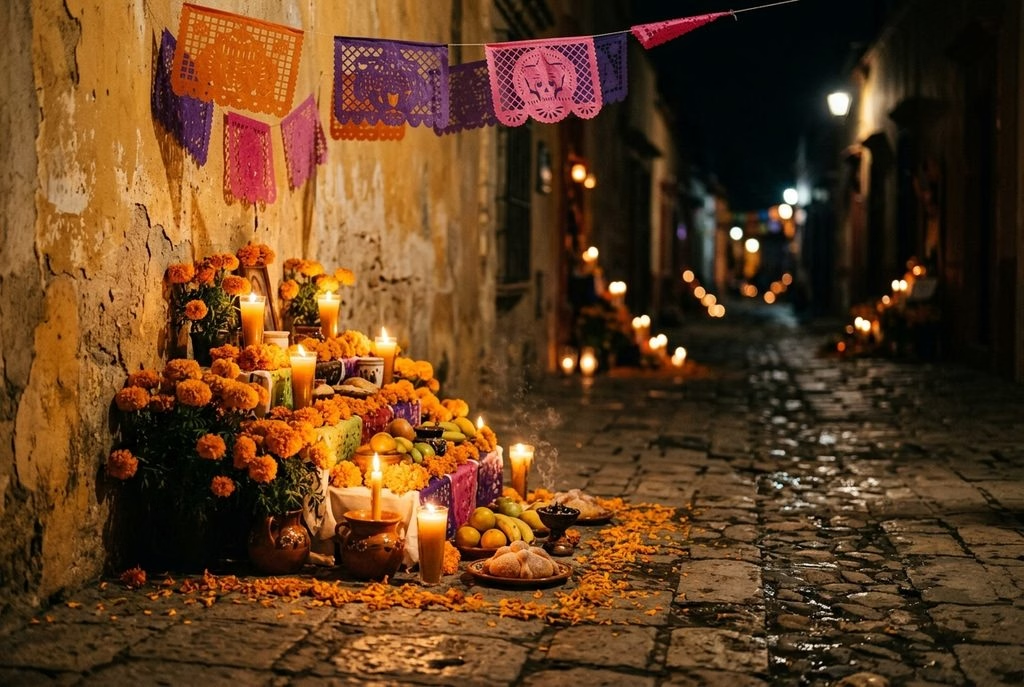
- Día de Muertos, late October through early November: Oaxaca, Mexico City, Pátzcuaro, and Mérida hold altars, cemetery vigils, parades, and food markets. Oaxaca is especially vivid, with marigold-lined streets and pan de muerto everywhere. Treat cemetery visits with care: these are family observances, not a costume event. Ask before taking photos, and do not assume every graveyard welcomes visitors.
- Las Posadas and Christmas, mid-to-late December: In towns such as San Miguel de Allende, Puebla, and Mexico City, processions recreate Mary and Joseph’s search for shelter. You may see candles, piñatas, ponche caliente, and neighborhood singing. Join only when invited, and expect restaurants and transport to run on reduced holiday hours around Christmas and New Year.
- Carnaval, February or March: Carnaval takes place before Lent, so its dates change each year. Mazatlán is known for large waterfront events, while Veracruz brings music and parades. It is a strong choice if you want a lively city break rather than a quiet coastal stay.
- Semana Santa, March or April: Holy Week is one of Mexico’s busiest domestic travel periods. Processions in Taxco and San Luis Potosí can be moving and visually striking, while beaches fill with Mexican families. Watch out: a “cheap” beach hotel can be far from the action, yet still leave you facing packed roads and fully booked local restaurants.
- Guelaguetza, usually July: Oaxaca’s major Indigenous cultural celebration features dance, music, textiles, and food from communities across the state. It is meaningful, but demand is intense. Confirm the official program before locking in flights because dates, ticket releases, and locations can change.
Keep your plans flexible during festival weeks. Download maps, save hotel and bus confirmations, and use your Telekonek eSIM to check last-minute parade routes or changes while you are out. For more useful context before visiting markets and traditions, read these Mexico facts that surprise first-time visitors.
Takeaway: Choose Día de Muertos for culture, Carnaval for energy, or Semana Santa for religious tradition—but reserve your key transport and rooms before committing to the festival city.
What Are the Price Trends for Traveling to Mexico?
Mexico can be excellent value, but prices move fast around school breaks, major holidays, and beach-season demand. For a clear budget, separate your trip into three costs: flights, rooms, and what you spend each day.
The highest prices usually hit from mid-December through early January and during spring break. On these weeks, nonstop flights to Cancún, Puerto Vallarta, Cabo San Lucas, and Mexico City can cost far more than nearby dates. A round-trip economy ticket from a major US airport may run about $350–$650 in quieter months, then rise to $650–$1,000 or more around Christmas and spring break in 2026.
Beach resorts see the sharpest jumps. In Cancún’s Hotel Zone, expect a solid mid-range room to sit around $140–$260 per night outside peak weeks. That same room can reach $250–$450 per night over holiday periods. All-inclusive rates need extra care: the advertised price is often per person, based on two adults sharing, and may not include airport transfers or added resort charges.
- Lower-priced months: May, June, September, and October often bring lower airfares and hotel rates.
- Middle-priced months: November, early December, late January, and early February offer a better balance of price and demand.
- Most expensive periods: Christmas through New Year, spring break, and the week around Easter can push up flights and beach stays.
Mexico City, Oaxaca, Guadalajara, and Mérida give you more room to control costs than resort corridors. In 2026, budget about $45–$85 for a clean central hotel room in these cities, $90–$170 for a comfortable mid-range stay, and more during busy weekends. In Oaxaca, a room near Santo Domingo or the Zócalo costs more than one a short taxi ride away, but that location can save you late-night transport costs.
Daily spending can stay reasonable once you are there. You can eat well on $20–$35 a day using markets, fondas, and casual restaurants. Add sit-down dining, cocktails, museum entries, rideshares, and tours, and a comfortable daily budget becomes $70–$130 per person. Beach destinations often cost 25–50% more for meals and drinks than inland cities.
Watch out for split-booking traps. A cheap flight into Cancún does not always mean a cheap trip if you then need a costly transfer to Tulum or a high nightly resort rate. Price the full route before you commit: airfare, transfer, room, food, and tours. Keep your Telekonek eSIM active from landing so you can use fare calendars, rideshare apps, and hotel messages without relying on expensive airport Wi-Fi.
Takeaway: For a lower-cost trip, target May, June, September, or October and base yourself in an inland city rather than a major resort zone.
Where Are the Best and Safest Destinations in Mexico During Peak Seasons?
For a peak-season trip, choose places where tourism infrastructure is dense, transport is simple, and you can avoid long road journeys after dark. No destination is risk-free, but the Yucatán Peninsula, Mexico City’s central neighborhoods, and Baja California Sur are usually easier places to build a practical first itinerary during a good time to go to Mexico.
Mérida, Valladolid, and the Yucatán interior are strong choices from November through April. Mérida’s Centro, Paseo de Montejo, and north-side neighborhoods are easy to explore by day, while Valladolid works well for cenotes and Chichén Itzá. Use registered taxis, hotel-arranged drivers, or reputable tour operators for cenotes outside town. Your Telekonek eSIM keeps maps, hotel details, and ride information available without relying on public Wi-Fi.
Cancún, Isla Mujeres, Playa del Carmen, and Tulum are convenient during winter and spring break, but they need more street smarts. Stay in well-reviewed hotels, use official airport transport, and keep nights centered on busy, established areas. In Tulum, avoid walking or cycling alone between the beach zone and town after dark; the road is poorly lit, and traffic moves fast.
- Easy beach logistics: Cancún’s Hotel Zone and Isla Mujeres. You have frequent transport, many staffed hotels, and clear tourist services.
- Culture plus a city base: Mexico City’s Roma Norte, Condesa, Polanco, and Coyoacán. Use app-based rides at night rather than hailing a car on the street.
- A quieter beach break: Los Cabos or La Paz in Baja California Sur. Choose daytime boat operators carefully and respect swimming warnings; strong surf and rip currents can be more immediate risks than crime.
Watch out for the moments when plans go wrong: spring-break nightlife, isolated beaches after sunset, and driving between towns at night. Do not carry or use illegal drugs. Do not accept rides from unmarked drivers. Avoid rural shortcuts suggested by a navigation app, especially after dark, and use toll roads where practical.
Some Mexican states have more serious security concerns than resort-focused routes. Do not treat a state border as a safety guarantee, either: conditions can change by highway, municipality, and time of day. Before moving beyond your planned tourist corridor, read the latest official guidance and ask your hotel which routes are appropriate that day. Save the hotel address offline and keep your connection active for route changes or an urgent ride request.
For a route that links cities, ruins, and coast without wasted days, use this 5-day Mexico itinerary.
Takeaway: During peak season, base yourself in established tourist areas, travel between destinations by day, and keep nights, transport, and beach plans deliberately simple.
How Can Current Travel Advisories Influence Your Travel Plans?
A travel advisory is not a blanket ban on Mexico. It is a risk guide that can change your route, transport choices, insurance coverage, and even which airport you use. Start with the US Department of State’s Mexico advisory before booking any nonrefundable hotel or domestic flight.
The US uses four levels: Level 1 means normal precautions, Level 2 means increased caution, Level 3 means reconsider travel, and Level 4 means do not travel. Mexico’s advice is issued state by state, not as one national rating. That matters because a beach stay in Yucatán has little in common with a road trip through a higher-risk border state.
- Do not treat a resort airport as proof that every nearby road is suitable. States such as Colima, Guerrero, Michoacán, Sinaloa, Tamaulipas, and Zacatecas have frequently faced the strongest US warnings. Confirm the current rating before routing through any of them.
- Avoid overnight driving in unfamiliar areas. Advisories often include restrictions or cautions around highways, rural roads, and travel after dark. A daytime flight or first-class intercity bus can be a better choice than a long self-drive transfer.
- Read the state page, not only the country summary. It can include rules for US government employees, such as limits on certain roads or municipalities. Those rules are not automatically binding on you, but they are useful signals about where risks are concentrated.
Other governments may describe the same area differently. The Government of Canada’s Mexico advice and the UK foreign travel guidance for Mexico can flag regional crime, protests, hurricane disruptions, or road conditions in a different format. Use them to spot practical details, then follow the entry and consular guidance that applies to your passport.
Watch out for insurance wording. An advisory does not usually cancel your flight or force a hotel refund. If you buy a policy after a warning is already public, cancellation claims tied to that known warning may be excluded. Read the policy’s “travel advisory,” “civil unrest,” and “medical evacuation” sections before paying.
For a good time to go to Mexico, build an itinerary that stays within the lower-risk states already chosen in your route, and keep a flexible backup flight or bus option. Save offline copies of reservations, the nearest consulate address, and local emergency numbers. With your Telekonek data active on arrival, you can pull up the latest advisory, use registered transport apps, and tell family about a route change without hunting for public Wi-Fi.
Takeaway: Match every overnight stop and road transfer to the current state-level advisory before you commit to nonrefundable bookings.
Is It a Good Time to Go to Mexico Right Now?
Whether it is a good time to go to Mexico right now depends on your state and your transport plan, not on the country as a whole. Risk is rated state by state, and those ratings can change after security incidents, road blockades, or severe weather.
Before paying for flights, read the current state-by-state advisory details and match them to every stop on your route, including any airport transfer or domestic bus connection. A resort may be in a lower-risk state while the fastest overland route crosses an area with a higher warning.
Season matters just as much as the advisory. If your dates fall between June and November, you are inside the Atlantic and eastern Pacific hurricane seasons. A named storm can disrupt flights into Cancún, Cozumel, Puerto Vallarta, Los Cabos, and Mexico City even when your hotel is outside the storm’s direct path. Buy flexible air tickets when possible, and keep one spare day before an important return flight.
- Go now if your route stays within well-used visitor areas, you have flexible plans, and you are comfortable following live local updates.
- Rethink the route if it depends on long self-drive legs, remote border areas, or states carrying “Reconsider Travel” or “Do Not Travel” guidance.
- Delay a beach-focused trip if an active tropical system is forecast near your airport or island ferry route. Travel insurance may not cover a storm that was already named when you bought it.
What often goes wrong is assuming an advisory only affects sightseeing. It can affect your insurer, rental-car route, night arrival plan, and ability to get help if a domestic flight is canceled. Save your hotel address offline, use official taxi stands or prearranged transfers, and tell one person at home your exact route.
Set up your Telekonek eSIM before departure so you can check airline alerts, advisory updates, and hotel messages as soon as you land. Keep offline maps downloaded too; mobile service can be patchy during storms or on intercity roads.
Takeaway: Mexico is a sensible trip when your chosen states have acceptable current guidance and your plans can absorb weather or transport changes.
What Is the Cost Range for a Week-Long Trip to Mexico?
For a seven-night trip, your total depends less on Mexico itself than on your route, room standard, and whether you travel in a busy holiday week. The figures below are practical 2026 planning ranges in US dollars. They assume you share a double room and eat a mix of street food, casual restaurants, and a few nicer meals.
Use the flight ranges covered earlier as a separate line item. Once you land, a realistic off-peak ground budget is about $550–$1,050 per person. During the peak weeks discussed earlier, plan on $900–$1,800 per person before flights. Picking a good time to go to Mexico is the single biggest lever on this number.
- Rooms: Budget $45–$85 a night off-peak for a clean, central guesthouse or basic hotel in Mexico City, Oaxaca, Mérida, or Valladolid. Expect $90–$180 in peak periods. Beach resorts in Cancún, Puerto Vallarta, and Cabo can push this well above $250 a night.
- Food: Set aside $25–$45 a day for tacos, mercados, cafés, and one sit-down meal. A nicer dinner with drinks can add $35–$70 per person, especially in Roma Norte, Condesa, or resort zones.
- Local transport: Allow $40–$100 for city rides, airport transfers, and buses. Mexico City can be inexpensive if you use Metro and Metrobús. Private airport transfers and late-night ride-hails raise the total quickly.
- Activities: Budget $80–$200 for museums, cenotes, guided food walks, archaeological sites, and one or two organized day trips. A private driver for a full-day excursion costs far more than a shared tour.
A value-focused week in Mexico City and Oaxaca might look like this: $420 for six shared-room nights, $230 for food, $85 for local transport, and $150 for activities. That is about $885 per person, plus your international flight and the domestic connection if you fly between cities.
A beach week has a different cost shape. You may spend less on museums and buses, but more on hotels, taxis, beach clubs, and meals near the water. For Cancún or Cabo, $1,200–$1,800 per person on the ground is a more comfortable peak-season target.
Watch out for: hotel rates often display a low nightly price before resort fees, taxes, breakfast, and extra-person charges. Also, paying in US dollars at tourist-heavy businesses can produce a poor exchange rate. Pay in pesos when the price is clearly posted, and use a card with no foreign transaction fee where possible.
Set up your Telekonek eSIM before departure so you can use maps, ride-hailing, and banking alerts immediately, rather than buying data at an airport counter. Keep a 10–15% cash buffer for tips, taxis, and small vendors that do not take cards.
Takeaway: For one week, budget roughly $550–$1,050 off-peak or $900–$1,800 in peak periods, excluding flights.
How Should You Plan Itineraries Based on Recommended Travel Times?
Your route should follow the weather rather than chasing every famous stop. A good time to go to Mexico becomes much easier to use when you limit each trip to one or two regions. Mexico City to Cancún is a domestic flight, not a quick road transfer.
Load maps, bus tickets, hotel addresses, and restaurant saves before each move. Your Telekonek eSIM is especially useful when a delayed flight changes your airport pickup or bus connection.
- November: Mexico City, Oaxaca, and Día de Muertos culture — 8 to 10 days. Start with three nights in Roma Norte or Condesa, where you can walk to Chapultepec Park, the Anthropology Museum, and many restaurants. Fly to Oaxaca City for four nights, then use one day for Monte Albán and another for the villages of Teotitlán del Valle or Santa María del Tule. End in Mexico City if your international flight leaves from there. Do not build a cemetery visit into a tight schedule around Día de Muertos; local access and crowd controls can change.
- January or February: Yucatán without summer heat — 7 to 9 days. Fly into Mérida and spend three nights near Centro or Paseo de Montejo. Continue to Valladolid for two nights, using it as a base for cenotes and Chichén Itzá, then finish with three nights in Playa del Carmen or Puerto Morelos. This route keeps drives short and gives you both colonial cities and Caribbean water. Watch out for a common mistake: Chichén Itzá is a full outing, so avoid booking an evening transfer the same day.
- March: Baja California Sur for whales and beach time — 6 to 8 days. Base yourself in La Paz for three or four nights, then add Todos Santos or Cabo San Lucas for the rest. Use La Paz for the Malecón, Balandra area, and boat trips when conditions allow. Whale activity is seasonal and tours depend on sea conditions, so keep one spare morning instead of making the trip hinge on a single departure.
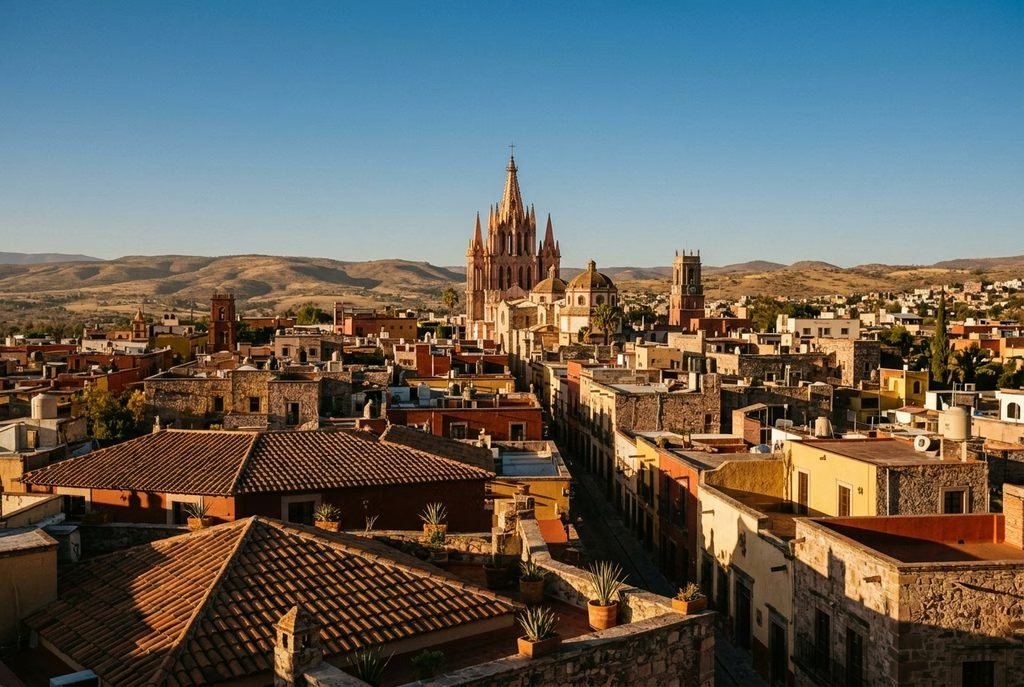
- Late April or early May: highlands before the wet season builds — 7 days. Combine San Miguel de Allende, Guanajuato, and Querétaro. These cities suit a slower trip of plazas, museums, food markets, and evening walks. Fly into Querétaro or Bajío when practical, then use daytime private transfers or established intercity buses between stops. Avoid arriving after dark, particularly if your hotel sits on a steep, narrow historic-center street.
For each route, give yourself a buffer night before your flight home. Domestic weather, road disruptions, and festival crowds can turn a simple same-day connection into a costly missed flight. Keep your Telekonek data active for live maps, airline notices, and messaging your hotel when plans shift. For the wider picture on regions and highlights, use this Mexico travel guide for 2026.
Takeaway: Build one region well, leave a buffer before departure, and match outdoor days to the season rather than forcing a cross-country itinerary.
Month by Month: Is This a Good Time to Go to Mexico?
Some months are easy calls and some depend entirely on where you are headed. Use this as a quick check against your dates before you book.
Is January a good time to go to Mexico? Yes, for dry weather almost everywhere. Beaches are clear of sargassum, highland cities are cool and comfortable, and whale season is underway in Baja. Prices stay high through the first week, then settle.
Is February a good time to go to Mexico? Yes, and it is one of the strongest all-round months. Dry, warm on the coast, mild inland, and Carnaval lands here in many years. Book early if your dates fall near a US or Canadian school break.
Is March a good time to go to Mexico? Yes for weather, with a caveat. Spring break brings crowds and higher rates to Cancún, Playa del Carmen, Cabo, and Puerto Vallarta. Inland cities stay far calmer.
Is April a good time to go to Mexico? Mostly yes, though two things collide. Semana Santa fills domestic transport and beaches, and sargassum arrivals often begin on the Caribbean coast. Yucatán heat also starts building.
Is May a good time to go to Mexico? Yes if value matters more than perfect beaches. Rates drop, crowds thin, and the rains have not fully arrived. Expect real heat inland and more seaweed on the Riviera Maya.
Is June a good time to go to Mexico? Mixed. Prices are low and the countryside turns green, but afternoon storms begin, hurricane season opens, and sargassum is often at its heaviest. Good for cities, weaker for a beach-only trip.
Is July a good time to go to Mexico? Yes for culture, not for guaranteed sun. Guelaguetza in Oaxaca is a genuine draw. Elsewhere expect humidity, daily rain, and storm risk on both coasts.
Is August a good time to go to Mexico? It is the hardest month for beach trips. Heat, humidity, rain, and peak hurricane risk all overlap. Highland cities such as Mexico City and Oaxaca stay workable.
Is September a good time to go to Mexico? Only with flexible plans. It is the quietest and cheapest month, but also the most active part of hurricane season. Keep spare days around your flights.
Is October a good time to go to Mexico? Increasingly yes as the month goes on. Rain eases, seaweed clears, and the end of October brings Día de Muertos preparations. Storm risk lingers early in the month.
Is November a good time to go to Mexico? Yes, and it is arguably the sweet spot. Dry weather returns, crowds have not peaked, water is clear, and Día de Muertos opens the month.
Is December a good time to go to Mexico? Yes for weather, expensive for timing. The first two weeks are excellent value with dry skies; from mid-December, flights, rooms, and buses jump sharply.
Takeaway: November, February, and early December give you the best mix of weather, clear water, and manageable prices.
How Can You Stay Connected During Your Trip to Mexico?
Reliable data matters in Mexico because you need it at the exact moment plans change: confirming a registered taxi, finding a bus platform, translating a menu, or messaging a hotel when a late flight shifts your arrival. It also keeps you off unfamiliar airport Wi-Fi for banking and travel bookings.
Install your Telekonek Mexico eSIM before you leave home. An eSIM is a digital SIM built into most newer phones, so you never open the SIM tray or hunt for a phone shop after landing. Telekonek plans work in 200+ countries, which helps when Mexico is one stop on a longer trip through North or Central America.
Install the eSIM while you still have stable home Wi-Fi. Keep your home line active for calls, texts, and two-factor codes, then set Telekonek as the line for cellular data after you land. Turn off roaming on your home line so it does not quietly use costly international data.
- Short city break: 3–5 GB usually covers maps, messages, ride-hailing, and light browsing for five to seven days.
- Two-week route: Choose 10–20 GB if you will use social media, make video calls, or research stops as you go.
- Heavy use: Download offline maps, music, and Spanish language packs before travel. Video uploads and cloud photo backups burn through data quickly.
Not sure which size fits your trip? This guide to how much data you need when traveling breaks the numbers down by activity.
Watch out for: confirm your phone is unlocked and eSIM-compatible before you fly. A carrier-locked handset cannot use a travel eSIM even with the right hardware, and a paid-off phone can still be locked. Activate at home, while you have Wi-Fi and time to check everything works.
Coverage is strongest in Mexico City, Guadalajara, Monterrey, Cancún, Mérida, Oaxaca City, and the main beach corridors. In mountain villages, remote stretches of Baja California, and jungle roads around Chiapas or Yucatán, signal can drop without warning. Save hotel addresses, bus tickets, and key screenshots before leaving town.
Takeaway: Install Telekonek before landing, download your offline maps, and arrive with data already working.
Key Takeaways
- November to April is a good time to go to Mexico for dry weather across most regions.
- November, February, and early December balance clear water, comfortable temperatures, and prices that have not yet spiked.
- Sargassum shapes Caribbean beach trips from roughly April into the autumn; switch to the Pacific coast or an island shore in summer.
- Peak pricing hits mid-December to early January, spring break, and Semana Santa. May, June, September, and October are the value months.
- Safety is state-level, so match every overnight stop and road transfer to current guidance rather than judging the country as a whole.
- Set up data before departure so forecasts, advisories, and transport changes are available the moment you land.
Frequently Asked Questions About Traveling to Mexico
What is the best overall time for your Mexico trip? For a first trip that mixes cities, ruins, and beaches, the drier months from November through April are a good time to go to Mexico. Your exact choice should follow your route: highland cities can have cool mornings, while coastal areas stay warm. Avoid assuming one forecast covers the whole country.
Can you visit during summer or hurricane season? You can, especially if lower prices matter more than perfect beach weather. Expect heavier afternoon rain, high humidity, and a greater chance of tropical storms on Caribbean and Gulf routes. Keep your first and last night near an airport during storm season, and choose reservations with flexible cancellation terms.
Is Mexico safe to visit? Your safety depends heavily on the state, neighborhood, and how you move between places. Use current government guidance for every state on your itinerary, not only your arrival airport. Stick to registered taxis or app-based rides, avoid driving after dark outside major tourist corridors, and keep valuables out of sight.
When should you go for an all-inclusive resort stay? Late November through early April gives you the most dependable beach weather and the least seaweed. Rates climb hardest over Christmas, New Year, and spring break, so early December and late January often deliver the same conditions for less.
What usually causes problems on a Mexico trip? Late-night road travel, unregistered transport, isolated ATMs, and weak phone service during a transfer cause more trouble than sightseeing in busy daytime areas. Withdraw cash inside a bank or shopping center when possible. Send your hotel address and transport details to someone you trust before changing cities.
How much spending money should you bring? Carry a small amount of pesos for tips, markets, local buses, and small food stands. Use a credit card at established hotels, restaurants, museums, and larger stores. Your bank may add foreign transaction fees, so check that before departure rather than discovering charges after a week of meals and rides.
Should you exchange dollars at the airport? Exchange only enough for your first transfer and a small meal. Airport exchange counters are convenient but often give a weaker rate than city banks or ATMs. Do not rely on US dollars being accepted outside resort areas, and never let a driver pressure you into an “easy” cash exchange.
Do you need to book everything before flying? Lock in your first hotel, airport transfer, and any limited-entry activity that anchors your route. Leave ordinary restaurant meals and free afternoons open, since rain, heat, and traffic can change your plans. Save screenshots of confirmations in case your signal drops.
How do you stay connected without wasting your first vacation hour? Install your Telekonek Mexico eSIM before you fly. You land with mobile data already working for maps, ride pickups, hotel messages, and advisory updates, instead of hunting for a SIM shop after a long flight.
Takeaway: Arrive with your address, offline maps, and data connection ready before you leave the airport.