
What Are the Key Differences Between Hoi An and Da Nang?
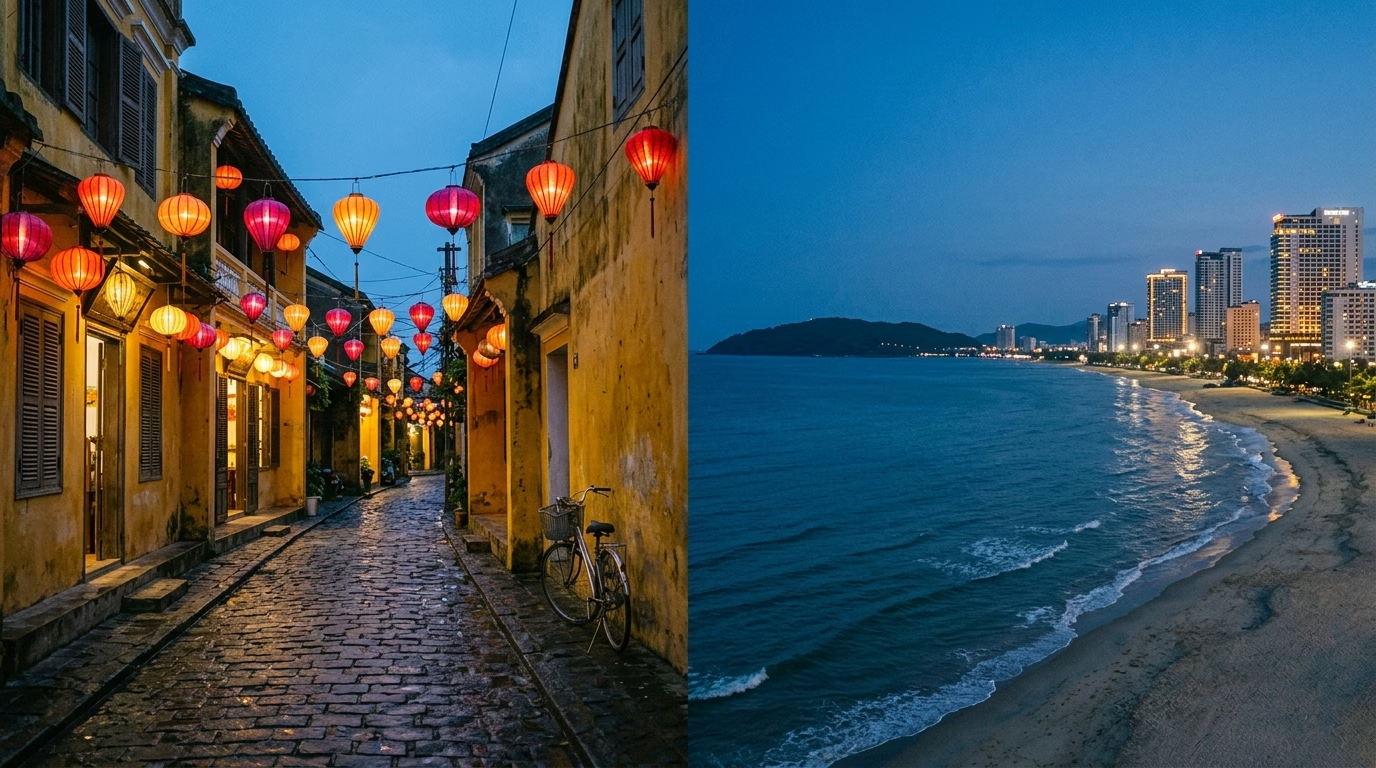
Hoi An and Da Nang sit close together on Vietnam’s central coast, but they give you two very different trips. In the Hoi An vs Da Nang decision, the choice is not about picking a better city. It is about choosing the pace you want when you wake up.
Hoi An is compact, historic, and made for slowing down. Its UNESCO-listed Ancient Town is built around narrow lanes, mustard-yellow shop houses, canals, temples, tailors, and silk lanterns. You spend more time walking, cycling, eating, and looking closely at small details. The best moments often happen after dark, when lanterns light the streets and the riverside becomes busy.
That beauty brings a trade-off. The Ancient Town can feel very crowded in the evening, especially near the Japanese Covered Bridge and the river. Stay patient, step a few blocks beyond the main lantern streets, and you will find quieter cafés and family-run food stalls. Hoi An suits you if you want heritage, relaxed days, and a place where you do not need a packed schedule.
Da Nang feels bigger, newer, and more active. It is a working coastal city with high-rise hotels, broad roads, long beaches, mountain viewpoints, malls, and a stronger local-city rhythm. My Khe Beach gives you room to swim or walk at sunrise, while central Da Nang offers more choice for late meals, bars, and everyday errands. You can base yourself here without feeling enclosed by a tourist district.
- Choose Hoi An for: old-town character, lantern-lit evenings, crafts, cooking, and a slower stay.
- Choose Da Nang for: beaches, city convenience, wider hotel choice, and a livelier modern feel.
- Use both if you can: the short distance between them makes it easy to combine heritage and coast in one trip.
The practical difference matters too. Da Nang is easier for navigating a larger city, ordering rides, and finding beach locations. Hoi An’s lanes can be confusing once you leave the main streets, and some drivers cannot enter the pedestrian core. Keep maps, ride bookings, and restaurant addresses available on your phone. A Vietnam eSIM from Telekonek installs before you fly and is live the moment you land in Da Nang; coverage extends across 200+ countries, which is useful if Vietnam is one stop on a longer route.
Watch out for: do not expect Da Nang’s beach energy to continue in Hoi An, or Hoi An’s preserved old-world mood to define Da Nang. Treat them as complementary places, not interchangeable day-trip backdrops.
Takeaway: choose Hoi An for atmosphere and history; choose Da Nang for beach-city comfort, then combine both for the fullest central Vietnam experience.
How Do You Get Between Hoi An and Da Nang?
Getting between Hoi An and Da Nang is simple, but the best choice depends on your bags, arrival time, and patience for local transport. The route is straightforward, yet traffic around beach roads and Da Nang International Airport can stretch a quick ride into a slower one.
A taxi or ride-hailing car is the easiest option. Use Grab to see the fare before you confirm, especially when leaving Da Nang after dinner or arriving with luggage. You can pay in cash or, if your account allows it, through the app. A car usually gives you door-to-door travel and avoids the problem of finding your hotel from a roadside bus stop.
Expect the trip to take roughly 45 to 90 minutes, depending on where you start. Da Nang’s airport, My Khe Beach, the city centre, An Bang Beach, and Hoi An Ancient Town are all different pickup points. A hotel near An Bang is normally quicker to reach than one on the far side of Hoi An’s rice fields.
Private transfers make sense after a flight. Your hotel can often arrange one, or you can book a car in advance through a reputable transport desk. This costs more than waiting for a Grab, but you get a fixed pickup point, room for suitcases, and no need to negotiate after a late landing.
- Taxi or Grab: Best for flexible departure times, couples, families, and hotel-to-hotel trips.
- Private transfer: Best when landing at Da Nang airport, carrying large bags, or arriving late at night.
- Public bus: Cheapest when operating on your needed route, but usually slower and less useful with luggage.
- Motorbike: Only practical if you already ride confidently in Vietnam and travel light.
Public transport needs extra care. Bus routes and operating hours can change, and older online guides may list services that no longer run as described. Ask your accommodation to confirm the current stop, timetable, fare, and whether you need small Vietnamese dong notes before you leave.
Watch out for the Ancient Town access area. Cars may not be able to leave you directly at your door during pedestrian-only periods. Share your hotel’s exact map pin with the driver, then expect a short walk over cobbled lanes. Keep your Telekonek data active so you can message the hotel, follow the pickup point, and avoid circling in the heat. If you have not set your line up yet, this walkthrough covers how to buy and install a Vietnam eSIM before you fly.
For the smoothest transfer between Hoi An and Da Nang, choose a car for comfort, confirm public buses locally, and allow extra time near airport and Old Town traffic.
What Are the Must-See Attractions in Hoi An?
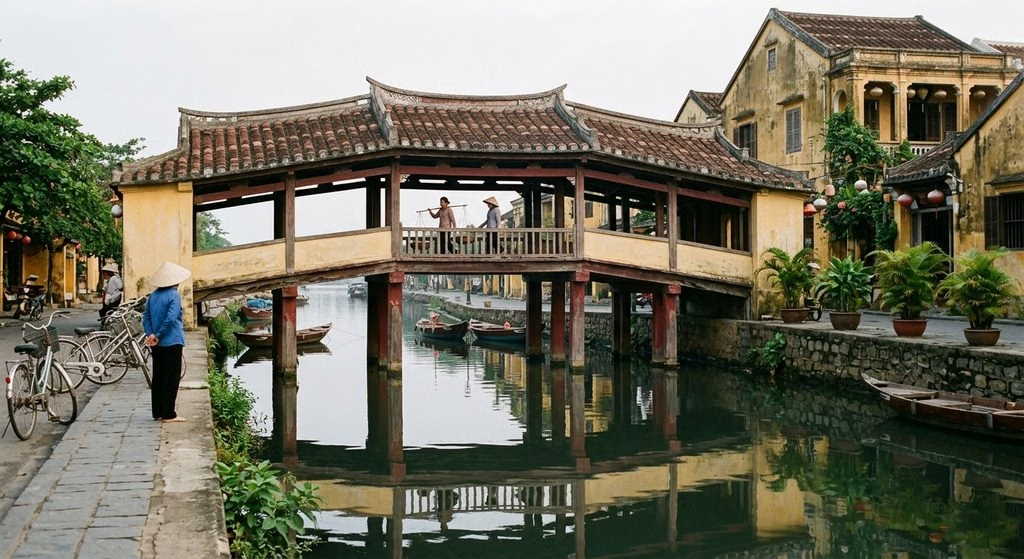
In Hoi An, the main sights sit close together, but each rewards a different pace. Give the Ancient Town a full late afternoon and evening rather than trying to rush it between day trips.
- Japanese Covered Bridge: Start here for Hoi An’s best-known landmark. This small wooden bridge links two old streets and reflects the town’s long history as a trading port. Conservation work can affect access or photo angles, so do not build your whole visit around walking across it. View it from both banks, then continue into the quieter lanes nearby.
- Old houses and assembly halls: Step inside at least one preserved merchant house and one Chinese assembly hall. Tan Ky Ancient House shows how trading families lived, while Fujian Assembly Hall brings you into a vivid courtyard of incense, dragons, and carved gates. These stops add meaning to the yellow façades you see outside.
- Hoi An Central Market: Visit in the morning, when produce, herbs, fish, and noodles move through the covered aisles. This is better for seeing daily life than for souvenir shopping. Keep your bag close in crowded lanes and ask before taking close photos of stallholders.
- Thu Bon River at dusk: Walk the waterfront as lanterns begin to glow. A short boat ride gives you a calmer view of the old buildings, but agree on the total price and trip length before stepping aboard. You do not need to pay for a boat to enjoy the river; the promenade is free and often more relaxing.
- Lantern-making or cooking class: Choose one hands-on experience instead of buying another generic souvenir. A lantern class gives you a useful, packable reminder of Hoi An. A cooking class often starts with a market visit and teaches dishes you can actually order later in town.
- Tra Que Vegetable Village: Rent a bicycle and head through the rice fields to this farming area just outside the center. The ride is gentle, and you get a welcome break from the busiest streets. Go early, before heat and tour groups build.
If your dates are flexible, check whether they fall near the 14th day of the lunar month. That is when the Ancient Town switches off its electric lighting and paper lanterns go onto the river. Our guide to the Hoi An Lantern Festival covers the dates and the best places to stand.
Watch out for the evening crush: the streets around the bridge and river can feel packed after sunset. You get better photos by arriving before dusk, exploring the side lanes first, then returning to the river once the lights come on.
Takeaway: Pair one historic landmark, one local-food or craft experience, and a dusk river walk for Hoi An’s most complete day.
What Highlights Should You Explore in Da Nang?
Da Nang gives you bigger landscapes and more modern landmarks than Hoi An. You trade Hoi An’s close-up history for mountain roads, long beaches, city views, and attractions that need a car or scooter.
- Marble Mountains: These five limestone hills rise from the flat coastal plain south of central Da Nang. Climb through caves, pagodas, and steep stone steps for views toward My Khe Beach and the city. Go early, because the caves get humid and the marble stairs become slippery after rain. Wear shoes with grip, not sandals.
- Son Tra Peninsula and Linh Ung Pagoda: Head north from the beach for Da Nang’s most dramatic coastal drive. Linh Ung Pagoda looks over the bay from the peninsula, while the road beyond gives you forest, sea cliffs, and wide city views. Keep your Telekonek data active for navigation here; signal can be less steady on quieter stretches, and weather can change quickly on the hill.
- My Khe Beach: This is the easy beach day that Hoi An’s river-centered old town cannot offer. You can swim, walk the broad sand, or book a beachfront café table without committing to a full day trip. Watch out for strong waves and warning flags, especially during wetter months. Do not assume calm water just because the beach looks busy.
- Dragon Bridge and the Han River: Walk the riverfront after sunset for Da Nang’s modern skyline, lit bridges, and casual seafood restaurants. The dragon-shaped bridge is the headline sight, but the riverside is more enjoyable when you wander south toward the cafés and illuminated waterfront. Check locally for any scheduled fire-and-water display before building your evening around it, since schedules can change.
- Museum of Cham Sculpture: This small museum is the best place to understand the Cham kingdom’s Hindu-influenced art. The carved sandstone figures give useful context before visiting My Son Sanctuary, which lies inland from Hoi An. You get a more focused history lesson here than you do among Hoi An’s merchant houses.
- Ba Na Hills and the Golden Bridge: This is Da Nang’s high-altitude, theme-park-style day out, reached by cable car rather than a historic walk. Go for the surreal bridge, mountain air, and huge views—not for an intimate local experience. Crowds, fog, and long waits can spoil photos, so leave early and use your phone to monitor the route and weather.
For smooth day trips, set up your phone before you leave Wi-Fi. Telekonek Vietnam data plans keep Grab rides, map pins, and last-minute attraction updates working from the moment you land.
Takeaway: Choose Da Nang for beaches, mountain viewpoints, and big modern sights; keep Hoi An for lantern-lit streets and slower heritage walks.
Where Should You Stay in Hoi An and Da Nang?
In the Hoi An vs Da Nang choice, your base shapes your whole trip. Stay in Hoi An when you want lantern-lit evenings, early bike rides, and a slower schedule. Stay in Da Nang when you want a broad beach, more hotel choice, and easy access to city restaurants.
In Hoi An, choose your area by how much quiet you need. The Ancient Town puts you closest to heritage streets, cafés, tailors, and the river. It suits a short first visit, especially when you want to walk home after dinner. Expect boutique hotels in restored-style buildings, small homestays, and a higher nightly rate than nearby neighborhoods.
- Ancient Town edge: Best for two or three nights and easy evening walks. Pick a property just outside the pedestrian core, around Cam Pho or near the river, so your car can reach the entrance with luggage.
- Cam Chau: Best all-round Hoi An base. You get rice-field views, family-run homestays, pools, and a short bicycle ride to both the Old Town and the coast.
- An Bang: Best for beach days. Small resorts, villas, and relaxed guesthouses sit near the sand, but you will need a ride for lantern evenings in town.
In Da Nang, My Khe Beach and An Thuong are the simplest choices for a first stay. You get high-rise beach hotels, serviced apartments, cafés, and plenty of places to eat within walking distance. This area works well when you want an elevator, a large breakfast buffet, a pool, and sea views rather than Hoi An’s intimate feel.
Choose Hai Chau when you prefer central-city life, local markets, and easier access to the Han River area. Choose Son Tra for a quieter stay near the peninsula, though you will rely more on rides for meals and evenings out. Da Nang covers every level, from basic rooms and apartment-style stays to full-service beachfront resorts; Hoi An leans more toward homestays, villas, and characterful boutique properties. Rates can change sharply around holidays and beach season, so treat fixed online price examples cautiously and check your exact dates.
Watch out for: a “Hoi An hotel” can be far from the Ancient Town, while a “Da Nang beach hotel” can sit across a busy road from the sand. Save your hotel pin before arrival, and keep your data active so you can message the property, use Grab, and confirm the correct entrance. This guide to getting a Vietnam eSIM sorted before departure covers compatibility and activation timing.
Takeaway: Base yourself in Cam Chau for Hoi An’s balance, or My Khe/An Thuong for Da Nang’s beach-hotel convenience.
How Do Hoi An and Da Nang Differ in Atmosphere and Experiences?
Hoi An feels like a place to wander without a plan. Da Nang feels like a city where you choose an activity, travel to it, then move on to the next. Both work well in one trip, but they create very different days.
In Hoi An, the atmosphere is close, quiet, and visual. The old streets narrow around shop houses, shrines, small courtyards, and the Thu Bon River. You notice lantern light, bicycle bells, incense, and the sound of people talking outside cafés. The strongest experiences are slow ones: a dawn cycle through the rice fields, a cooking class, browsing a tailor’s fabric books, or sitting by the river after dinner.
Watch out: Hoi An’s Ancient Town can feel more like a stage set than a peaceful old town between roughly sunset and late evening. The lanterns are beautiful, but the riverfront gets crowded with tour groups, vendors, and people stopping for photos. Walk two or three blocks away from the main riverfront streets for a calmer drink or dinner.
Da Nang has more space and more everyday city energy. Wide roads, apartment towers, office workers, beachgoers, and long stretches of sand give it a modern feel. Your best Da Nang days are usually active: a morning swim at My Khe Beach, a drive on Son Tra Peninsula, a climb in the Marble Mountains, then a meal and views near the Han River.
Nightlife follows the same divide. Hoi An is for lantern-lit walks, low-key cocktail bars, live music, and a relaxed final drink before returning on foot. Da Nang gives you beach clubs, rooftop bars, larger beer venues, late-night cafés, and more places where a night can stretch beyond a single street. It is the better base when you want variety after dark rather than a storybook setting.
- Choose Hoi An for: heritage streets, craft workshops, romantic evenings, cycling, and a slower rhythm.
- Choose Da Nang for: beach time, city dining, outdoor adventures, modern nightlife, and more room to spread out.
- Split your time if possible: use Da Nang for energetic days and Hoi An for evenings when you want to linger.
Da Nang’s districts are much farther apart than they look on a map. Do not assume you can walk from a beach hotel to a riverfront bar or mountain attraction comfortably in the heat. Keep your Telekonek data ready for Grab, map directions, and checking whether a venue is still open before you leave.
Local culture also lands differently. Hoi An puts you close to Central Vietnam’s trading-port history and traditional crafts, but its center is built around visitors. Da Nang feels less preserved and more lived-in: you see a working coastal city going about its daily routine alongside its tourism scene.
Takeaway: Pick Hoi An for intimate, heritage-rich evenings; pick Da Nang for bigger beaches, bigger views, and a more energetic night out.
What Are the Best Local Foods to Try in Hoi An and Da Nang?
Food is one of the clearest differences between Hoi An and Da Nang. In Hoi An, you eat dishes tied to the old trading town and its small lanes. In Da Nang, you get stronger, saltier central-coast flavors, bigger portions, and a much better seafood scene.
Start in Hoi An with cao lầu. You get thick noodles, sliced pork, crisp greens, herbs, crunchy crackers, and a small amount of rich broth. It is not a soup like phở, so do not expect a full bowl of liquid. Order it for lunch in or just outside the Ancient Town, then add lime and chili gradually.
Also try these Hoi An staples:
- White rose dumplings (bánh bao bánh vạc): small steamed rice-flour dumplings with shrimp or pork, topped with fried shallots. Share a plate as a snack before dinner.
- Chicken rice (cơm gà): shredded chicken over turmeric rice with herbs, pickled papaya, and broth. It makes an easy, filling midday meal after walking the historic streets.
- Bánh mì: a crisp baguette filled with pâté, meat, pickles, herbs, chili, and sauces. Ask for less chili if you need it; “a little” can still be fiery.
Look beyond lantern-lit restaurants for Hoi An’s best-value meals. Choose a busy daytime stall near the market area, where you can see bowls assembled quickly and ingredients turning over fast. Dinner in the Ancient Town is more about the setting, but you often pay more for the riverfront table than for the food itself.
In Da Nang, make mì Quảng your first meal. You get wide yellow noodles, a modest ladle of concentrated broth, herbs, peanuts, sesame rice crackers, and toppings such as chicken, pork, shrimp, or fish. Mix everything well before eating. The bowl should taste fragrant and intense, not soupy.
Then try bún chả cá, a fish-cake noodle soup that suits Da Nang’s coastal setting. For an evening meal, order bánh xèo: sizzling rice-flour pancakes filled with shrimp, pork, and bean sprouts. Wrap pieces in lettuce and herbs, then dip them in sauce rather than trying to eat the whole pancake with chopsticks.
Da Nang is also where you should plan a seafood meal. Around the beach districts, pick a restaurant where you can point to the fish, clams, squid, or prawns before they are cooked. Ask for the price and whether it is charged by weight before you choose. This prevents the most common seafood-bill surprise.
Watch out for menus aimed only at visitors. Photos can help, but a long bilingual menu with every Vietnamese dish imaginable rarely means the kitchen specializes in all of them. Pick places with a short menu built around one dish, or a seafood counter with clear prices. Data makes this easier: use maps to save a few food pins, translate ingredients, and check recent diner photos before you sit down.
Takeaway: Eat cao lầu and white rose in Hoi An, then save mì Quảng, fish-cake noodles, bánh xèo, and seafood for Da Nang.
What Should First-Time Visitors Know Before Traveling to Hoi An and Da Nang?
Hoi An and Da Nang are easy places to enjoy, but a few small habits will save you stress. The biggest daily risk is traffic, not violent crime. Motorbikes flow around pedestrians, even on narrow streets, so cross slowly and predictably rather than stepping backward or running.
Watch out for wet surfaces. Marble steps, riverside paths, and tiled hotel entrances get slick in heavy rain. Wear shoes with grip for sightseeing, and keep your phone in a waterproof pouch during sudden downpours.
- Carry small Vietnamese dong notes. Small food stalls, market vendors, and bicycle parking attendants may not take cards. Count change before walking away, especially in busy tourist areas.
- Use a bank ATM in a well-lit spot. Cover the keypad, decline unfamiliar “conversion” offers on the screen, and keep a second card separate from your wallet.
- Agree on services before they begin. This matters for cyclo rides, shoe repairs, street photos, and boat trips. Ask for the total price, not a vague “cheap” promise.
Dress with a little more care when entering pagodas and family-run businesses. Cover your shoulders and knees in temples, remove shoes where asked, and avoid pointing your feet toward altars. A calm greeting, a smile, and “cảm ơn” (“thank you”) go a long way.
Food hygiene is usually about turnover, not fancy décor. Choose busy stalls where dishes are cooked hot and locals are eating the same meal. For seafood in Da Nang, confirm whether the displayed price is per kilogram and ask whether cooking charges are added before ordering.
For entry procedures, do not rely on an old blog post or a social-media screenshot. Visa rules, permitted stay lengths, passport requirements, and airline document checks can change. Confirm your nationality’s current rules through Vietnam’s official immigration channels and your airline before paying for flights. Keep digital and paper copies of your passport, visa approval if needed, hotel address, and onward travel details.
Sort your data before departure, while you still have reliable Wi-Fi and access to email. You will want it as soon as you land for hotel directions, translation, maps, and messaging. Compare Telekonek Vietnam eSIM plans and install yours ahead of the flight rather than queueing at the airport.
Takeaway: Walk carefully, settle prices upfront, respect temple customs, and confirm current entry rules before you fly to Hoi An and Da Nang.
How Can You Stay Connected in Hoi An and Da Nang?
Reliable data makes the Hoi An to Da Nang route much easier. You will use it for Grab rides, hotel messages, map pins, restaurant hours, and changing weather. Telekonek eSIM data plans work in 200+ countries, so you can set up your Vietnam data before departure and keep your home SIM in the phone for important calls or verification texts.
Install your Telekonek eSIM while you still have stable Wi-Fi at home or at your departure airport. Download offline Google Maps for Da Nang, Hoi An Ancient Town, and the road between them as a backup. Save your hotel address in Vietnamese too, since a driver may recognize the written address faster than an English hotel name.
For a clear walkthrough of compatibility, installation, and activation timing, use this guide to buying and setting up a Vietnam eSIM. Your phone must be unlocked and eSIM-compatible. An unlocked phone can use a digital SIM from another provider; a carrier-locked phone cannot.
- Telekonek eSIM: Best when you want data working soon after landing. You avoid airport SIM queues and do not need to hand over your physical SIM card.
- Local physical SIM: Useful if your phone does not support eSIM or you specifically need a Vietnamese phone number. Buy from an official shop or a major retailer, not an unmarked street stall.
- Hotel and café Wi-Fi: Common in both places, especially around Da Nang’s beach hotels and Hoi An’s café-filled center. Treat it as a convenience, not your only connection.
Wi-Fi can be slow when a hotel is full, and it may drop in rooms far from the router. Public networks also make it harder to handle banking, passport details, or account logins safely. Use your Telekonek data for those tasks, then use Wi-Fi for large photo backups or streaming when the signal is strong.
Watch out for: do not activate data roaming on your home line by accident. In your phone settings, set Telekonek as the cellular-data line and turn off data roaming for your home SIM. If you need WhatsApp, your existing account normally keeps its usual number as long as you do not re-register it. This comparison of roaming and eSIM for WhatsApp explains the difference.
Keep a little data available for the evening journey back from Hoi An. Lantern-lit lanes can make map directions less obvious, and your driver may need a precise pickup pin outside pedestrian-only streets.
Takeaway: Set up Telekonek before you land, use Wi-Fi for backups, and reserve mobile data for maps, rides, messages, and secure tasks.
Frequently Asked Questions About Hoi An and Da Nang
Should you stay in Hoi An or Da Nang? Stay in Hoi An when your priority is heritage streets, lantern-lit evenings, tailors, and easy walks to dinner. Choose Da Nang when you want beach time, larger hotels, city dining, and a more flexible base for day trips.
You do not need to treat it as an either-or choice. A split stay lets you enjoy Hoi An after sunset without relying on a late ride, then use Da Nang for beach mornings and a smoother airport departure.
Can you see both places on a short trip? Yes, but avoid cramming both into a single rushed day. Give Hoi An one late afternoon through evening, since its riverside streets feel most atmospheric after dark, and leave Da Nang’s mountain and coastal sights for a separate day.
Which place is better for culture? Choose Hoi An for close-up history. You can move between old merchant houses, assembly halls, temples, food stalls, and the Thu Bon River on foot. Choose Da Nang for culture mixed with scale: pagodas, caves, and mountain viewpoints sit farther apart and need more transport.
Which place is better for beaches? Base yourself in Da Nang if swimming and sea views matter most. You get a long urban coastline, beachside hotels, and more room to spread out. From Hoi An, you can still reach An Bang Beach, but it feels more like a planned outing than stepping out of your hotel.
Is Hoi An too touristy? The Ancient Town can feel crowded around its busiest evening hours, especially on the main riverside lanes. You can make it calmer by arriving early, exploring side streets away from the bridge, or cycling beyond the center toward rice fields and villages.
What commonly goes wrong? You can underestimate humidity, rain, and the time needed to move between attractions. Do not schedule a tailor fitting, a cooking class, a beach afternoon, and a Da Nang outing on the same day. Keep one open block in your plan for weather changes or a second fitting.
Do you need cash? Carry some Vietnamese dong for small purchases, market snacks, and minor transport costs, even when your hotel and larger restaurants accept cards. Watch out for damaged or very large notes at tiny stalls, where change can be difficult.
Keep maps, hotel details, and ride-hailing apps ready before you land. Pick up a Telekonek Vietnam eSIM before your flight, so you can use data for Grab and translations instead of hunting for a SIM shop on arrival.