
How long is a flight to Thailand? From most US cities, plan on 18 to 28 hours door to gate, including at least one connection. No airline flies nonstop between the United States and Thailand, so your layover shapes the trip more than your departure airport does.
This guide breaks down flight times from New York, Los Angeles, Chicago, and other major cities. It also covers the fastest connecting hubs, 2026 fares, the Middle East airspace changes still affecting some routes, and Thailand’s new 30-day entry rule. Before you fly, set up your Telekonek Thailand eSIM so you have data the moment you land in Bangkok.
Key Takeaways
- How long a flight to Thailand takes from the US: usually 18 to 28 hours with one stop.
- No airline flies nonstop from the US to Thailand. The closest nonstop is Air Canada from Vancouver, at about 16 hours.
- The fastest one-stop routes connect through Seoul, Taipei, Tokyo, or Hong Kong. Gulf routings still face airspace restrictions in 2026.
- From September 15, 2026, US travelers get 30 days visa-free in Thailand, down from 60.
- Plan a 2- to 3-hour connection on one ticket, and complete your free Thailand Digital Arrival Card within three days before you land.
How Long Is a Flight to Thailand from the US?
How long your flight to Thailand takes depends more on your connection than on your departure airport. Every US itinerary includes at least one stop, and time on the ground adds up fast.
Look at the total trip time on your booking page, not just the hours in the air. A route with 17 hours of flying can easily become a 22-hour journey after a long layover.
- West Coast (Los Angeles, San Francisco, Seattle) to Bangkok: usually about 18 to 24 hours.
- Chicago, Dallas, or Atlanta to Bangkok: commonly about 21 to 27 hours.
- New York or Washington, DC to Bangkok: often about 22 to 28 hours.
- West Coast to Phuket: plan on roughly 22 to 27 hours, since Phuket often adds a second flight.
- East Coast to Phuket: expect about 25 to 32 hours, especially with two connections.
How Long Is a Flight to Thailand from New York?
How long is a flight to Thailand from New York? Usually about 22 to 28 hours in total. From JFK or Newark, the quickest options connect in Seoul, Taipei, Tokyo, or Hong Kong. A short, protected connection keeps you near 22 hours. A long layover can push the trip past 30 hours.
Routes through Doha or Dubai used to be popular from the East Coast. In 2026, check those itineraries closely, because airspace restrictions can add time with little warning.
How Long Is a Flight to Thailand from Los Angeles?
How long is a flight to Thailand from Los Angeles? From LAX, plan on about 18 to 24 hours, which makes Los Angeles one of the fastest US starting points. Routes via Hong Kong or Taipei are often the quickest, with total journeys near 18 to 20 hours when the layover is short. United flies from Los Angeles to Bangkok with a stop in Hong Kong. EVA Air, Starlux, and China Airlines connect through Taipei.
How Long Is a Flight to Thailand from Chicago?
How long is a flight to Thailand from Chicago? Expect roughly 21 to 26 hours. O’Hare has one-stop options through Tokyo with ANA, Seoul with Korean Air, and Taipei with EVA Air. You may also see routings through Gulf hubs, which currently carry more schedule risk.
Bangkok’s Suvarnabhumi Airport (BKK) is the simplest arrival point for long-haul trips. From there, you can take a domestic flight, train, or bus onward. Flying straight into Phuket, Chiang Mai, or Krabi may look easier, but it often means a second connection. If you plan to see several regions, this Thailand 7-day itinerary for first-timers shows how to move from Bangkok to the north and the beaches.
Watch out for misleading “one-stop” labels. Some itineraries require a terminal change, an overnight wait, or a connection that is too tight for a delayed inbound flight. You also cross the International Date Line. A Monday departure can mean a Wednesday arrival, so keep your first day in Thailand light.
Takeaway: How long your flight to Thailand takes from the US is usually 18 to 28 hours to Bangkok, plus a few more hours if you continue to the beaches or the north.
How Long Is the Flight to Thailand from Other Countries?
If you start outside the US, your trip can be much shorter, and several routes are nonstop. Use these scheduled nonstop times as a guide. How long the flight to Thailand actually takes can vary with winds, reroutes, and taxi time.
- London (Heathrow) to Bangkok: about 11.5 to 12 hours nonstop with EVA Air or Thai Airways. Reroutes around Middle Eastern airspace can add time.
- Sydney to Bangkok: about 9.5 to 10 hours nonstop with Thai Airways or Qantas.
- Manila to Bangkok: about 3.5 to 4 hours nonstop with Philippine Airlines, Cebu Pacific, or Thai Airways.
- Vancouver to Bangkok: about 16 hours nonstop with Air Canada, the only nonstop between North America and Thailand.
Takeaway: How long a flight to Thailand takes from the UK, Australia, or the Philippines is far shorter than from the US, and many of those routes are nonstop.
Why Are There No Nonstop Flights from the US to Thailand?
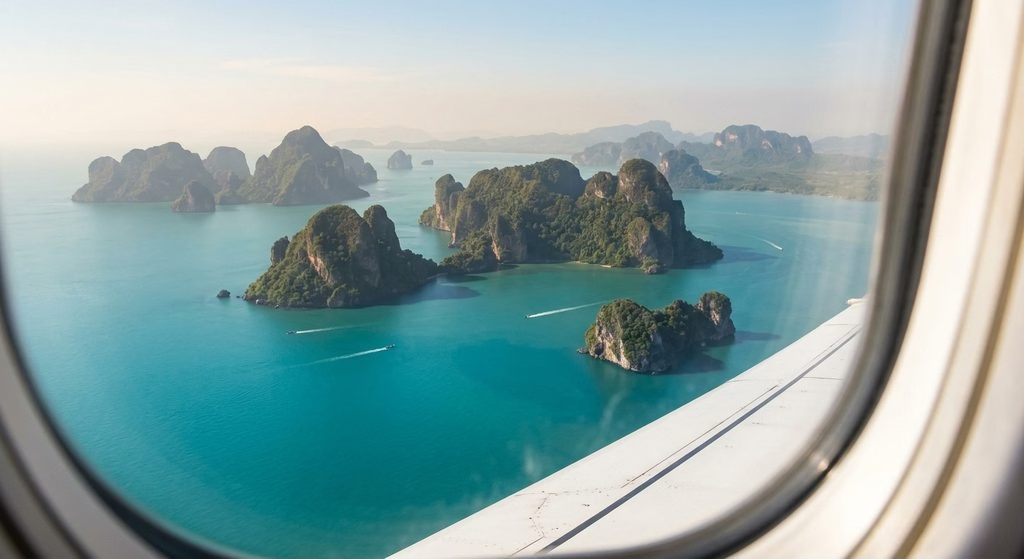
No airline currently flies nonstop between the United States and Thailand, whether US-based or foreign. Thai Airways once flew nonstop to Los Angeles and New York, but those routes ended years ago. Today, the closest option is Air Canada’s nonstop from Vancouver to Bangkok.
The main barrier is economics. A US–Bangkok nonstop would rank among the world’s longest commercial routes. It needs an ultra-long-range aircraft, extra crew, and enough premium passengers to fill it year-round.
Demand also swings with the seasons. Thailand draws many US leisure travelers, but bookings peak around winter holidays and school breaks. Connecting through a hub lets airlines combine passengers from many cities onto one flight to Bangkok.
- Nonstop service: simplest for you, but costly and hard for an airline to sustain.
- One-stop service: adds airport time, but gives airlines more ways to fill each flight.
- Two-stop service: can be cheaper, yet a missed first connection can turn a long trip into an exhausting one.
If you live in the Pacific Northwest, connecting through Vancouver gives you one long nonstop leg. Compare the total journey time with one-stop routes through Asia before you book.
Takeaway: How long a flight to Thailand takes from the US always includes a connection, because no nonstop route currently exists.
Which Airlines Offer the Fastest Routes to Thailand?
The quickest trips from the US are usually one-stop routes through East Asia. How long the flight to Thailand takes depends heavily on which airline hub you use. The best itinerary has a short, reliable connection, which is not always the lowest fare.
East Asian hubs sit on a more direct path from the US to Bangkok than Gulf or European hubs, which add backtracking.
- Korean Air via Seoul (ICN): often among the fastest from Los Angeles, Seattle, Atlanta, New York, and Chicago.
- EVA Air, Starlux, or China Airlines via Taipei (TPE): strong from West Coast cities, with a compact airport that makes connections easier.
- ANA or Japan Airlines via Tokyo: efficient from many major gateways. Check whether you use Haneda (HND) or Narita (NRT), because an airport change adds hours.
- Cathay Pacific or United via Hong Kong (HKG): competitive when the layover is short, and one of the quickest paths from Los Angeles.
- Singapore Airlines via Singapore (SIN): comfortable, but usually longer from the US because Singapore lies south of Bangkok.
Routes through Doha, Dubai, or Abu Dhabi can show attractive fares from East Coast airports. In 2026, give them extra scrutiny. Airspace restrictions around the Gulf can add time or cause short-notice changes.
Don’t judge a ticket by price alone. A cheaper fare may mean a 10-hour overnight layover, a separate-ticket connection, or extra fees for bags and seats. For the fastest practical trip, one protected ticket with a 2- to 3-hour connection is usually the better value.
Takeaway: For the shortest trip, choose a one-stop itinerary through Seoul, Taipei, Tokyo, or Hong Kong on a single ticket.
What Are Common Layover Points for Flights to Thailand?
Your layover airport can change how long your flight to Thailand takes far more than your first flight does. East Asian hubs keep the route direct. Gulf and European hubs can work, but they often add distance and airspace risk.
- Seoul Incheon (ICN): a common stop from Los Angeles, Seattle, New York, and other large gateways. A 2- to 3-hour connection keeps the trip near the faster end of the range.
- Taipei Taoyuan (TPE): a practical stop on routes from the West Coast. A long overnight layover, however, can turn a 20-hour trip into 28 hours or more.
- Tokyo Narita (NRT) or Haneda (HND): quick when both flights use the same airport. Watch out: landing at Narita and departing from Haneda means entering Japan and crossing the city. Allow several extra hours.
- Hong Kong (HKG) and Singapore (SIN): sensible one-stop gateways to Bangkok or Phuket. Singapore can add flying time, but it sometimes has better schedules for southern Thailand.
- Doha (DOH), Dubai (DXB), and Istanbul (IST): frequent on itineraries from the East Coast and central US. They route west before turning toward Thailand, so the trip is usually longer.
On a single ticket, aim for a connection of 2 to 3 hours. That gives you time to change gates, clear any transfer security check, and absorb a late arrival. On separate tickets, allow an overnight stop. If you plan to leave the airport during a long connection, read this guide to visa rules for short layovers first.
Plan data for your layover country too. A Thailand eSIM plan works in Thailand, not in Seoul, Taipei, or Tokyo. If you want mobile data for gate changes during a long connection, add a plan for that country or build a multi-country Telekonek plan that covers both stops.
Takeaway: Choose Seoul, Taipei, Hong Kong, or a same-airport Tokyo connection, and treat airport changes or Gulf routings as time risks.
How Has the Middle East Conflict Affected Flights to Thailand?
The Middle East conflict has changed the route map for some Thailand trips, even though Thailand itself is not involved. The fighting began on February 28, 2026. A ceasefire earlier in the year broke down in July, bringing new Gulf airspace restrictions. In June, the Tourism Authority of Thailand cut its 2026 long-haul arrivals target from 11 million to 10 million because of the disruption.
The main issue is airspace, not entry into Thailand. As of mid-September 2026, European aviation regulators have extended their Gulf flight warning to September 30. Flights through Gulf hubs may use set corridors, take longer paths, or change schedules at short notice.
- Gulf connections: routes through Dubai, Doha, or Abu Dhabi are the most exposed. Your flight may still operate, but timings can move.
- East Asian connections: Seoul, Taipei, Tokyo, Hong Kong, and Singapore routes avoid the region. They offer a more predictable path from the US.
- European connections: the Europe-to-Asia leg can still be rerouted around restricted airspace. Don’t assume a European stop avoids the problem.
Right now, how long your flight to Thailand takes can depend on routing more than on the advertised layover. A Gulf itinerary that looked fast when you booked may gain several hours after a reroute. A slightly pricier Seoul or Taipei connection on one ticket can be the smarter choice.
Watch out for separate tickets. If a schedule change on your first ticket makes you miss the second flight, you may have to pay for a new one yourself.
A longer flight path is not a sign that Thailand is unsafe. It usually reflects airline caution about airspace along the way. Still, avoid tight hotel transfers or domestic flights on arrival day if your routing passes through an affected region.
Takeaway: Choose an East Asian connection on one ticket and leave a buffer after arrival, since Gulf airspace changes can add hours.
What Do Flights to Thailand Cost in 2026?
Your fare can swing widely with season, routing, and flexibility. Price is also tied to how long the flight to Thailand takes: the cheapest ticket often adds an overnight layover or a less direct hub.
Use these rough ranges for a round-trip economy ticket from the US to Bangkok. They are budgeting guides, not live quotes. Fuel costs and Gulf rerouting have pushed some 2026 fares higher, so always check current prices.
- May to June and September to mid-October: roughly $750–$1,150 from the West Coast, and $900–$1,350 from Chicago, New York, and other cities.
- March to April and late October: roughly $950–$1,500. These shoulder months can offer good weather for the price.
- November to February: often $1,250–$2,000 or more, as dry-season demand and the holidays push fares up.
- Last-minute holiday travel: $2,000–$3,000 is possible for late December or early January.
Los Angeles, San Francisco, and Seattle usually give you the most routing choices. From a smaller airport, a domestic positioning flight can add $150–$400 and another connection. Price the full trip from your home airport before booking a separate domestic leg.
Watch out for “cheap” separate-ticket itineraries. A low fare to Seoul, Tokyo, or a Gulf hub may leave you unprotected if the first flight is late. You may have to collect bags, clear immigration, and buy a new onward ticket.
Outside the holiday peak, start tracking fares four to six months ahead. Book when a one-stop itinerary fits your budget and has a connection you can realistically make.
Takeaway: Budget about $900–$1,500 outside peak season, and pay a little more for one protected ticket with a sensible connection.
How Should You Prepare for Possible Travel Disruptions?
How long your flight to Thailand ends up taking can stretch fast when one leg runs late. A delayed first flight can turn a tight connection into a missed hotel night in Bangkok.
- Buy a fare you can change. Read the fare rules before you pay. A change-fee waiver helps less if you still owe a large fare difference.
- Book the full route on one ticket. This gives you the best chance of being rebooked through to Thailand after a cancellation.
- Keep the first night flexible. Choose a Bangkok hotel rate you can cancel up to a day or two before arrival. Avoid nonrefundable airport transfers tied to an exact landing time.
- Insure the costs you can’t absorb. Look for trip delay, missed connection, medical, evacuation, and baggage delay cover. Check how long a delay must last before the policy pays.
Save your booking reference, passport scan, insurance assistance number, and hotel address on your phone and on paper. Install your airline’s app before departure and turn on flight alerts. During a disruption, rebook in the app first, because airport service lines grow within minutes.
Watch out: Don’t cancel your original booking after a delay unless you already have a confirmed replacement. Once you cancel, the airline may treat the change as your choice.
Takeaway: Book one ticket, build in connection time, insure big losses, and keep your key documents available offline.
How to Stay Connected When You Land in Thailand
After a trip this long, working data matters as much as a working bank card. You may need it to message your hotel, order a Grab ride, or pull up your arrival card. Install your Thailand eSIM at home over Wi-Fi, and it connects when you arrive.
Telekonek Thailand plans run on the AIS and TrueMove H networks, with 5G where available. Your home SIM stays in your phone, so your US number can still receive bank codes and texts.
- Before you leave: confirm your phone is carrier-unlocked. On an iPhone, go to Settings, General, About, and check that Carrier Lock says “No SIM restrictions.”
- After you land: select the eSIM for mobile data and turn on data roaming for that line. The eSIM needs roaming enabled to connect.
- To avoid surprise charges: turn off data roaming on your US line and switch off cellular data switching.
- For weak-signal areas: download offline Google Maps for Bangkok, Phuket, or Chiang Mai before you leave Wi-Fi.
For most one- to two-week trips, 5–10GB covers maps, Grab, LINE, messaging, and social media. Choose more, or an unlimited plan, if you stream video, work remotely, or share a hotspot. This guide on how much data you need when traveling can help you pick the right amount.
Because Telekonek covers 200+ countries, you can add your layover country or your next stop from the same account.
Takeaway: Install your eSIM before you fly, confirm your phone is unlocked, and turn on roaming for the eSIM line when you land.
What Entry Rules Apply When You Fly to Thailand?
How long the flight to Thailand takes can feel even longer if a document problem stops you at check-in. Airline staff can refuse boarding if your documents don’t meet Thailand’s rules.
Thailand changed its visa-free stay on September 15, 2026. US citizens, along with UK, Canadian, and Australian nationals, can now stay up to 30 days visa-free, down from 60. You can apply once for a 30-day extension at a Thai immigration office for 1,900 baht. If you entered before September 15, you keep the stay you were granted.
- Passport: at least six months of validity on arrival and at least one blank page.
- Thailand Digital Arrival Card (TDAC): complete the free form on the official Thailand Digital Arrival Card portal within three days before arrival, counting your arrival day. Ignore lookalike sites that charge a fee.
- Onward travel: immigration can ask for proof you will leave within your permitted stay. A return flight or a ticket to Laos, Vietnam, or Singapore works.
- Proof of funds: officers can ask to see 10,000 baht per person or 20,000 baht per family, or the equivalent in another currency.
- Health rules: Thailand does not normally require COVID-19 testing or vaccination proof. A yellow fever certificate may be required if you have recently been in a country with yellow fever risk.
Screenshot your TDAC confirmation and keep it with your hotel booking, onward ticket, and passport scan in one phone folder. If Thailand is one stop on a longer regional trip, see how to stay connected across Southeast Asia.
Planning more than 30 days, or coming to work, study, or work remotely? Apply for the right visa on the official Thailand e-Visa portal before you fly.
Takeaway: Fly with a six-month-valid passport, a completed TDAC, and an onward ticket inside your 30-day stay.
How Long Is a Flight to Thailand? Frequently Asked Questions
How long is a flight to Thailand from the US? Expect about 18 to 30 hours, including your connection. West Coast routes are shortest. Departures from the East Coast or smaller cities take longer.
How long is a direct flight to Thailand? There is no nonstop flight from the US. From Vancouver, Air Canada’s nonstop takes about 16 hours. From London, nonstop flights take about 11.5 to 12 hours, and from Sydney about 9.5 to 10 hours.
How long is the flight to Thailand from New York City? Usually 22 to 28 hours with one stop. A long layover can push it past 30 hours.
How long is the flight to Thailand from Los Angeles? About 18 to 24 hours. Routes through Hong Kong or Taipei are usually the quickest.
Which connection is fastest? Seoul, Taipei, Tokyo, or Hong Kong are usually the most direct from the US. Gulf connections add distance and currently carry more schedule risk.
Should you choose the cheapest ticket? Not automatically. A lower fare can mean a very long layover, a self-transfer, or an airport change. Look for “separate tickets,” “self-transfer,” or a bag recheck before you pay.
How much layover time do you need? On one ticket, aim for 2 to 3 hours. On separate tickets, plan an overnight stop.
How long can you stay in Thailand without a visa? From September 15, 2026, US citizens get 30 days visa-free, with one 30-day extension available for 1,900 baht.
Will you have internet when you land? Yes, if you install your Thailand eSIM before departure and turn on roaming for that line after landing. Add a plan for your layover country if you want data during the connection too.
No matter how long your flight to Thailand takes, you shouldn’t spend your first hour hunting for Wi-Fi. Get your Thailand eSIM from Telekonek before you board, and you can book a ride and message your hotel the moment you reach the gate.