
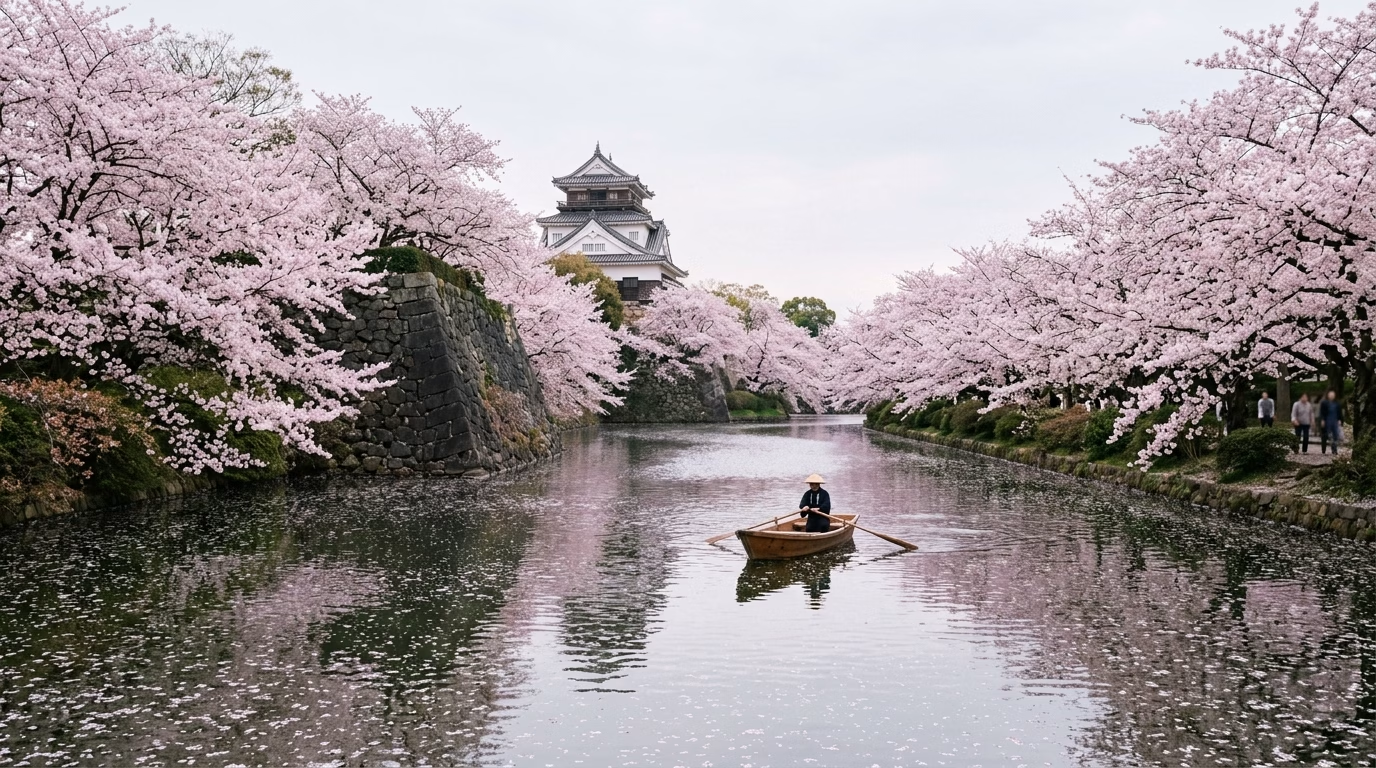
Japan has no single, nationwide sakura event. When people search for the Japan cherry blossom festival, they usually mean one of hundreds of local matsuri, or simply hanami: the tradition of sitting under the trees with food and friends. That distinction matters more than ever, because one of the country’s most famous blossom events has now been cancelled for good.
This guide covers what changed at Fujiyoshida, when each region blooms, which events still run, what things cost, and how to plan around the crowds.
Why Fujiyoshida Cancelled Its Cherry Blossom Festival
In February 2026, the city of Fujiyoshida in Yamanashi Prefecture cancelled its cherry blossom festival at Arakurayama Sengen Park. The reason was overtourism. Nothing was wrong with the trees.
That park is the source of one of Japan’s most photographed images: a five-storey pagoda, pink blossoms, and Mount Fuji in a single frame. The festival had run for a decade. It pulled roughly 200,000 visitors a year into a city of fewer than 50,000 residents.
Mayor Shigeru Horiuchi said the city acted to protect the dignity and living environment of its citizens. Residents had reported chronic traffic jams on narrow roads, heavy littering, trespassing on private property, and visitors climbing fences and standing on rooftops for photos.
The pressure was national, not just local. Japan welcomed about 42.7 million foreign visitors in 2025, an all-time high helped along by a weak yen.
The cancellation did what it was meant to do. Between 1 April and 19 April 2026, the park recorded 215,663 visitors. That is down about 7% from the 2024 record of 232,052, and city officials called the season the calmest in years.
- The park is still open. You can walk in and see the blossoms. What ended was the organised programme.
- The extras are what you lose. Food stalls, evening illumination, stage events, and temporary traffic controls all came with the festival.
- Expect crowds anyway. Cancelling the event did not remove the view, and the view is what people come for.
- Treat any replacement as unconfirmed. Do not build a travel day around a substitute programme until the city announces one.
The practical lesson is simple. Plan around a viewing area, not a festival name. Keep a second park or town in reserve, and check local notices on the morning you travel. A Telekonek Japan eSIM keeps you online for those notices, rail updates, and maps, with data plans covering 200+ countries.
Takeaway: One famous event ended permanently. Sakura season did not.
When Do Cherry Blossoms Bloom Across Japan?
Sakura season moves south to north as a slow wave. It usually opens in Okinawa in late January or February and finishes in Hokkaido in early May.
Forecasts are revised repeatedly through spring, sometimes more than a dozen times in a single season. Use an early forecast to choose a region. Do not use it to lock in a non-refundable hotel for one specific picnic day.
- Late January to February: Okinawa. The local kanhizakura variety is a deeper pink and blooms months ahead of the mainland.
- Late March: Fukuoka, Hiroshima, Osaka, Kyoto, Tokyo. The busiest window. A warm spell can shorten it fast.
- Early April: Kanazawa, Nagano, Sendai. A useful second chance if central Japan has already peaked.
- Mid to late April: Aomori and Hirosaki. Northern Honshu, known for castle-moat views.
- Late April to early May: Sapporo and Hokkaido. The last stop, and the quietest.
Learn the difference between first bloom and full bloom. First bloom means a few flowers have opened on an official sample tree. Full bloom, the photo-ready stage, usually follows about a week later and holds for roughly another week in calm weather.
Rain, strong wind, or a sudden warm spell can cut that short. A flexible route beats a fixed date. Many travellers start in Tokyo or Kyoto, then ride north to Sendai or Aomori as the wave moves.
Takeaway: Follow the wave north. Late March in Tokyo and Kyoto, April in Tohoku, early May in Hokkaido.
Which Japan Cherry Blossom Festival Events Still Run?
Treat every event as a separate local decision. A festival running in one town tells you nothing about the next town. Fujiyoshida is the clearest proof of that.
The Hirosaki Cherry Blossom Festival remains the biggest name still on the calendar. It runs at Hirosaki Castle Park in Aomori Prefecture, typically from around 17 April to 5 May, and it is one of Japan’s great late-season destinations.
- Hirosaki, Aomori Prefecture. Blossom-lined moats, rowboat rentals, evening illumination, and Hirosaki Castle. Plan it as a northern trip in its own right, not a Tokyo day trip.
- Ueno Park, Tokyo. Over a thousand cherry trees and heavy foot traffic. Programmes, stall zones, and lantern schedules are set year by year, so check the current notice.
- Arakurayama Sengen Park, Fujiyoshida. Open for viewing, but the organised festival is finished. No stalls, no illumination, no crowd management.
- Informal hanami. Most sakura viewing in Japan has no festival at all. Riversides, temple grounds, and neighbourhood parks fill up on their own.
Watch for outdated event pages. A recurring festival name does not guarantee the same dates, vendors, or night access this year. Never build a train transfer or a hotel night around fireworks or illuminated trees unless the organiser has confirmed them.
Hirosaki needs real planning. You travel to Aomori Prefecture first, then reach Hirosaki locally, then allow half a day for the grounds. Long-distance buses fill an awkward gap in the rail network here, so it helps to understand how the Japanese bus system works before you go.
Takeaway: Hirosaki is the strongest remaining large-scale event. Verify everything else against a current organiser notice.
How Bloom Times Vary Across Japan’s Regions
Latitude, altitude, coastal weather, and tree variety all shift the timing. Missing peak bloom in Tokyo does not end your trip. It just moves it.
- Okinawa and the far south. First to bloom, months before Honshu, with a different tree variety and a deeper colour.
- Kyushu, Shikoku, western Honshu. Fukuoka, Hiroshima, Okayama, and Kyoto usually open before the north. Coastal warmth can turn a bud-stage report into a good viewing day within three days.
- Tokyo, Yokohama, the Kanto plain. Easy to reach, but warm and flat. The best window can last only a few days before rain scatters the petals.
- Central mountains. Nagano, Takayama, and higher towns run later than nearby lowland cities. Elevation buys you time.
- Tohoku and Hokkaido. The late finish. Hirosaki anchors Aomori, and Hokkaido extends the season after Honshu is done.
Be careful with the word “peak.” It means many flowers are open, not that every tree looks its best. One park can hold early trees, full trees, and bare trees at the same time.
Petal fall has its own appeal, especially along moats and canals where the water turns pink. It is just not what you want if you came for clean pink canopies in photographs.
Book three to five nights in one region instead of arriving for a single perfect day. If blossoms open early, spend a spare day in a higher town nearby. If cold weather delays them, fill the time with temples, markets, and museums.
Takeaway: Go north and uphill for a second chance. Lowland cities bloom first and fade fastest.
Tickets, Costs and Viewing Rules
Most sakura viewing in Japan is free. Public parks, riverbanks, and castle grounds are open during normal hours, and no ticket exists to buy.
Festivals add paid layers around that. Evening illumination, castle keeps, formal gardens, reserved seating, boat rentals, and food stalls usually carry their own charges. Confirm the current fee on the official park, city, or castle page rather than a travel blog.
- Free viewing. You can walk the main paths. It does not guarantee picnic space.
- Paid grounds. A park can be free while its castle, garden, or night programme charges separately.
- Reserved areas. More common at large events. A reservation covers a table or an entry time, not a better view.
- Food stalls. Convenient, small portions, and priced well above the nearest convenience store.
Two things catch travellers out. First, never buy a “festival ticket” from a reseller unless the venue itself sends you there. Free public viewing needs no ticket at all. Second, evening illumination often has a last-entry time well before the lights go off, so arriving after dinner can leave you outside the gate.
Viewing rules protect the trees and keep paths open during the busiest weeks. Stay on marked paths. Do not climb trees or pull branches into a shot. Never spread a picnic sheet across a main walkway. Carry out every cup, skewer, and tray. At crowded sites, staff may close an entrance or move you on rather than let a group block a route.
Takeaway: Assume free viewing, then verify each paid extra and its last-entry time on the official page.
How Overtourism Is Reshaping Sakura Season
Tourism supports a lot of what makes spring travel work: food stalls, regional trains, small hotels, and guides in towns that see few overseas visitors the rest of the year. Hirosaki runs a large seasonal event partly because visitors spend there.
The strain is just as real. Tokyo’s major parks, Kyoto’s canal walks, and castle grounds can turn a quiet picnic into a slow-moving photo queue. Fujiyoshida is what happens when that pressure lands on a small city with narrow roads.
Expect more restrictions, not fewer. Other Japanese destinations have already closed viral photo spots, put up view-blocking screens, and introduced entry fees. Access rules, opening hours, and evening programmes can all change with little notice.
- Go at the quiet edges of the day. Early morning gives you better light, emptier paths, and a calmer visit.
- Pick a smaller site. A neighbourhood riverside spreads your spending and takes pressure off the headline parks.
- Keep pathways clear. No sheets, tripods, suitcases, or strollers across narrow paths, bridges, station exits, or cycle lanes.
- Carry your rubbish out. Public bins overflow on peak weekends. Bring a small bag and hold it until you find the right disposal point.
- Leave the trees alone. Do not shake branches for falling petals, climb trunks, pick blossoms, or hang bags from limbs.
Noise matters too. Hanami includes food and drink, but a public park is not a private party space. Keep voices down near homes, temples, and memorial grounds, and follow posted rules on alcohol, music, drones, and ground sheets.
Much of this is standard Japanese etiquette rather than sakura-specific rule-making. If this is your first trip, the wider ground rules on queuing, quiet carriages, cash, and shoes are worth reading in this guide to Japan for first-time visitors.
Takeaway: Treat sakura as a shared local tradition. Go early, leave no trace, and move on when a park is full.
How to Plan Your Hanami Trip
Start with a flexible route and two possible viewing areas along the bloom wave. Keep at least one open day so you can move your park visit when the flowers actually arrive.
Choose accommodation with a clear cancellation policy. A room beside a famous park looks convenient, but it traps you in one crowded area if the timing shifts. Staying near a major rail station gives you an early train to somewhere quieter.
- Save the essentials offline. Screenshot hotel details, rail bookings, park rules, and the nearest station name in Japanese characters.
- Check each event separately. One cancellation does not close a season, and one old listing does not confirm this year’s stalls or illumination.
- Book transport after you set a backup. Reserve long-distance trains once your route is fixed, but avoid tying every night to a single forecast.
- Pack for a long outdoor day. Light waterproof layer, comfortable shoes, a portable battery, and a compact ground sheet where rules allow it.
Spring evenings run much colder than the sunny afternoon photos suggest. Bring a layer you can carry all day.
Before you fly, check the entry rules for your passport and your travel insurance cover. Keep digital and paper copies of your passport, insurance, and accommodation address separate from your main bag. For emergencies in Japan, dial 110 for police and 119 for fire or ambulance.
Takeaway: Book flexible stays, hold a second blossom area in reserve, and keep park and rail information on your phone.
How to Stay Connected in Japan During Sakura Season
Reliable data is what turns a rigid plan into a flexible one. Bloom reports change, parks reach capacity, and platforms fill up. Your Telekonek Japan eSIM gets you online the moment you land, with no airport SIM counter queue.
Install it before departure while you still have stable home Wi-Fi. Your phone needs to be unlocked and eSIM-compatible. Keep the activation details saved offline as well.
- Use data for live decisions. Check platform changes, search same-day bloom updates, and find a quieter park when your first choice is packed.
- Download maps first. Save Tokyo, Kyoto, Osaka, or your next stop for offline use. Offline maps help in tunnels, but live data handles route changes.
- Keep a translation tool ready. Download Japanese in Google Translate. Camera translation makes menus and temporary signs easy.
- Use rail tools. Japan Travel by NAVITIME and SmartEX help with routes and Shinkansen planning as you move between cities.
A travel eSIM beats a physical tourist SIM during spring crowds. You skip the shop, keep your home number active, and avoid juggling a tiny card. Just turn off roaming on your usual SIM so you do not pick up a surprise bill.
One limit to plan around: a data eSIM does not give you a Japanese phone number or standard voice calls. Save hotel addresses in Japanese, keep booking confirmations offline, and make sure your travel companion has a separate connection. A single hotspot for a whole group fails the moment one battery dies after an evening illumination.
Your Telekonek eSIM also works beyond Japan, with data plans covering 200+ countries, so a layover or a second destination needs no new setup. It pairs well with the travel apps worth installing before a Japan trip.
Takeaway: Install before departure, download maps and translation, and use live data to adjust when crowds or timing shift.
Frequently Asked Questions
Was Japan’s whole cherry blossom season cancelled? No. Fujiyoshida cancelled one festival at Arakurayama Sengen Park in February 2026. Sakura viewing continues across public parks, riversides, temple grounds, and castle towns nationwide.
Which Japan cherry blossom festival was cancelled, and why? The Fujiyoshida event near Mount Fuji, after a decade of running. The city cited overtourism: traffic congestion, littering, trespassing, and crowds that overwhelmed a town of under 50,000 residents.
Can you still visit Arakurayama Sengen Park? Yes. The park and the pagoda view remain open. You will not find festival stalls, evening illumination, or extra crowd management, and the site still gets busy at peak bloom.
What is the largest cherry blossom festival still running? Hirosaki Cherry Blossom Festival at Hirosaki Castle Park in Aomori Prefecture, usually mid-April into early May. It is a late-season event, so it works well after Tokyo and Kyoto have finished.
Do you need a ticket for hanami? Usually not. Public park viewing is free. Castle keeps, formal gardens, boat rentals, and some night programmes charge separately, so check the official page for the site you plan to visit.
How do you avoid the worst crowds? Arrive soon after a park opens, or go on a weekday. Skip the most photographed bridge or entrance and walk ten minutes further along the same route.
What happens if rain or wind hits at full bloom? Light rain is fine, and petals on a moat can be beautiful. Strong wind strips blossoms quickly, so keep a spare morning free rather than saving your only sakura outing for the last day.
What is the right hanami etiquette? Carry out all rubbish. Do not shake branches, climb trees, fly drones where prohibited, or block a busy walkway with a picnic sheet. Keep voices low near homes and shrines.
Is sakura season a good time for a first trip to Japan? It is popular for a reason, but it is also the most crowded and expensive window of the year. Read the full first-time visitor guide to Japan before you commit, then decide whether spring or a quieter season suits your trip.
Takeaway: Treat a cancelled event or a missed peak as a reason to change location, not to cancel your sakura day.