
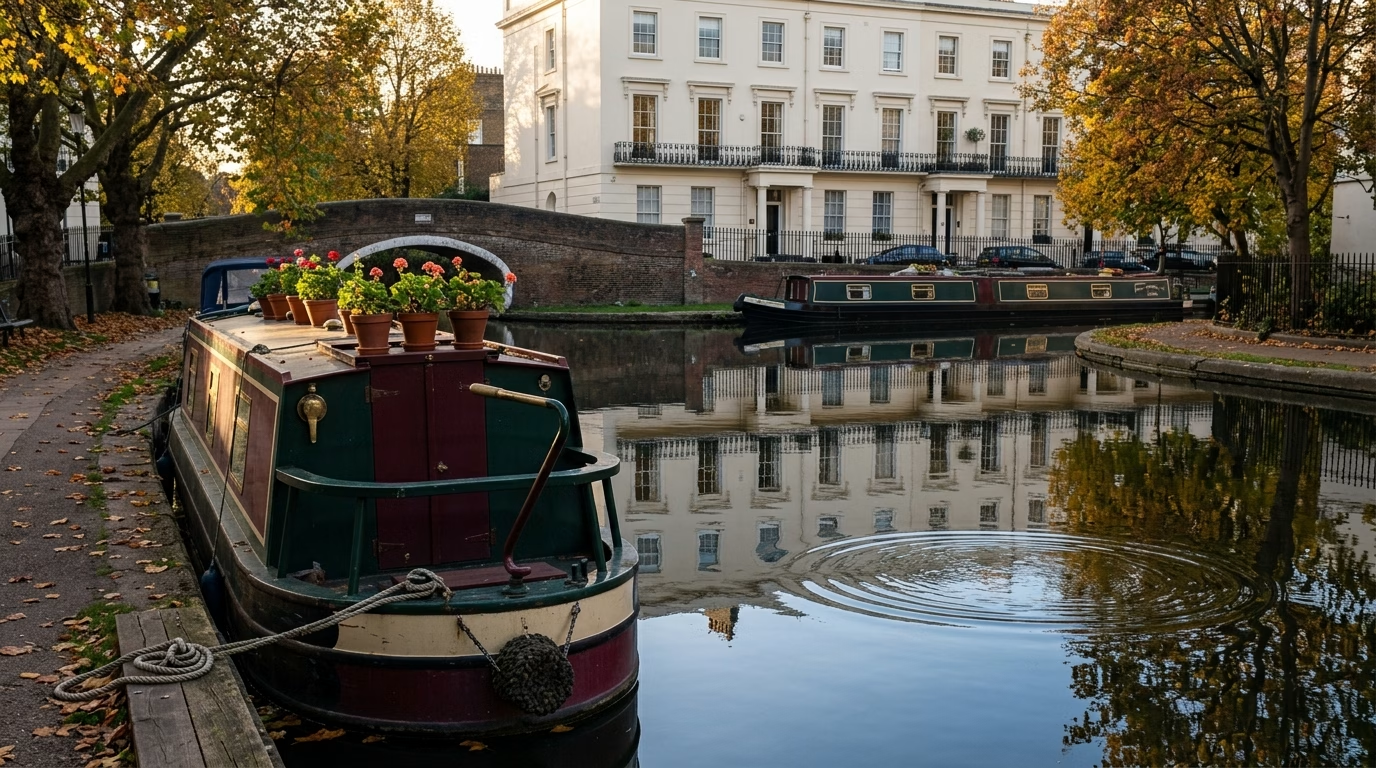
Little Venice London is the calm waterside pocket where the Regent’s Canal meets the Grand Union Canal near Paddington and Maida Vale. You come for narrowboats, leafy towpaths and pale stucco terraces that feel a long way from the city’s traffic and glass towers, even though Oxford Circus is fifteen minutes away.
This guide covers how to get there, what to actually do, where to eat and drink, the walking routes worth taking, and when to go for the quietest version of the canal.
Key Takeaways
- Warwick Avenue station on the Bakerloo line is the quickest way in — the canal is a five-minute walk
- Rembrandt Gardens is the classic view: open water, moored boats, white terraces behind
- A boat trip to Camden Lock is the standout activity; walk back toward Paddington instead of paying twice
- Give it two to four hours, not a full day — it is a neighbourhood, not an attraction zone
- Weekdays in May, September or early October give you the best light and the most space
What Is Little Venice and Why Is It Famous?
Little Venice is not a separate borough or a neatly marked district. Think of it as the canal junction and the streets around it, shaped by water, boat life and grand 19th-century homes. The name evokes Venice’s canals on a much smaller scale, though nobody agrees on who used it first. It is often linked to the poet Robert Browning, who lived nearby on Warwick Crescent.
The waterways are far older than the nickname. London’s canals were built from the late 18th century into the 19th to move coal, grain and timber before the railways took over. What began as working infrastructure became one of west London’s most peaceful public landscapes.
That contrast is why Little Venice in London stands out. A short distance away, Paddington is busy with trains, hotels and commuters. Along the water, you get moored canal boats with flowerpots, painted doors and small decks. The pace changes fast, especially on weekday mornings when the towpath belongs to dog walkers and cyclists rather than sightseeing groups.
- Historic character: working canals turned into a residential and leisure area.
- Classic London scenery: water, curved bridges, Victorian-era terraces, boat-lined banks.
- A quieter mood: far less intense than central sightseeing zones, still fully connected to the city.
- A useful starting point: the canals lead onward to other parts of London, so this is more than a photo stop.
Watch out for: the area looks compact on a map, but it is easy to drift along the towpath and lose track of where you are. Canal paths narrow near bridges, with cyclists passing close. A United Kingdom eSIM from $3.50 means you can check your route, opening hours or a shifting boat timetable without hunting for public Wi-Fi.
Takeaway: Little Venice is famous because historic working canals meet elegant west London streets, creating a genuine escape just beyond the centre.
Where Is Little Venice London?
Little Venice sits on the north-west edge of central London, between Paddington, Maida Vale and St John’s Wood. You are still close to major sights, but the streets turn residential the moment you leave the main roads.
Aim for the water near Rembrandt Gardens, beside Warwick Avenue and Blomfield Road. From there you can walk south-east along the canal toward Paddington Basin or north-west toward Kensal Green. Paddington Station is roughly a 15- to 20-minute canal-side walk; Regent’s Park is about 25 minutes on foot through quieter back streets.
- Warwick Avenue Underground: the simplest arrival. It is on the Bakerloo line and the canal is about five minutes south along Warwick Avenue. Ideal from Oxford Circus, Piccadilly Circus and Soho.
- Paddington Station: best if you arrive on the Elizabeth line, Heathrow Express, National Rail or several Underground lines. Follow signs toward Paddington Basin, then take the towpath west. Scenic, but narrow and muddy after rain.
- Marylebone and Baker Street: take the Bakerloo line toward Harrow & Wealdstone and get off at Warwick Avenue. Easier than a taxi through the one-way streets around Edgware Road.
- Victoria or King’s Cross St Pancras: change to the Circle or Hammersmith & City line for Paddington, then walk. Allow extra time with luggage, since Paddington is large and its exits are spread out.
From Heathrow, the Elizabeth line to Paddington is the least stressful rail option, especially with a suitcase. Once you are connected, the Transport for London journey planner gives you live service changes, platform details and step-free routes.
Watch out for: “Little Venice” is not a station name, and map pins often land on a nearby street rather than the water. Set your destination as “Warwick Avenue Station” for the shortest walk, or “Rembrandt Gardens” to arrive straight at the most photogenic stretch.
Contactless cards and mobile wallets work across the Tube and buses, so you do not need a paper ticket. Keep your phone charged — the canals have few obvious signs, and one quick map check saves you walking the wrong way toward Edgware Road. If you are moving around the city a lot, our guide to the best apps for public transport in Europe covers what to install before you land.
Takeaway: arrive at Warwick Avenue for the quickest canal access, or walk from Paddington when you want the journey to be part of the experience.
Things to Do in Little Venice
Start at the broad pool by Rembrandt Gardens, where the two canals meet and moored narrowboats create the classic view. Cross the small footbridge near Warwick Avenue, then follow the water toward Paddington. This is the strongest spot for photos: open water, boat reflections, white terraces behind you.
A canal boat ride is the standout activity in Little Venice, London. Take a trip through the Regent’s Canal toward Camden Lock, passing the long waterside stretch beside Regent’s Park and London Zoo. It is far slower than the Tube, which is the point — you see the city from an angle the road never gives you.
- Boat trip to Camden: best as a half-day outing. Explore Camden Market on arrival, then return by Tube rather than paying for a second boat journey.
- Short canal cruise: better when you want the water without surrendering most of the day. Departure times and fares shift by season, so arrive with time in hand.
- Walk to Paddington Basin: the free alternative. Follow the towpath south-east for modern waterside buildings, floating cafés and the contrast between old canal life and new Paddington.
For something more unusual, look for a performance at the Puppet Theatre Barge, a small theatre inside a converted barge near the canal junction. Shows are often aimed at children, though the setting lands for adults too. Seats are limited and the enclosed space gets warm during busy school-holiday performances.
Watch out for: towpaths are narrow, uneven in places and shared with cyclists. Keep bags and children away from the water’s edge, especially near bridges where sightlines are poor. Live boat departures and the route back from Camden are exactly the kind of thing you want data for.
Season changes the mood completely. Spring and summer bring more boats, fuller gardens and outdoor activity around the water. The Canalway Cavalcade has traditionally been linked with the early-May bank-holiday period, with decorated boats, food and performances, but treat future dates as unconfirmed until announced. Autumn is quieter and better for photos; winter canal walks are peaceful, though daylight fades early and some boat services run less often.
Takeaway: pair a canal ride toward Camden with a towpath walk back to Paddington for the best water-level views.
Cafes and Pubs in Little Venice
The food scene around Little Venice is small and local rather than packed with destination restaurants, and that is part of the appeal. You can have a canal-side lunch, then move to a proper neighbourhood pub without walking more than ten minutes.
The Summerhouse, on Blomfield Road, is the pick when you want the water in view. Its pale blue-and-white dining room and terrace suit a slow lunch after a canal walk. Go for the seafood, particularly the fish dishes, or share a bottle of wine if you have claimed an outside table. Prices sit at the upper end for the area, with shellfish and wine pushing the bill higher — check the current menu before you commit.
Watch out: canal-side tables are limited, and this is a restaurant rather than a quick coffee stop. Arrive for an early lunch instead of assuming you can walk in at peak weekend hours.
Café Laville is the better-value, more casual canal-view option. It sits above the Regent’s Canal near the Maida Hill end, with large windows looking straight down onto passing boats. The menu leans Italian — pasta, pizza, coffee, simple breakfast plates. A pasta lunch costs noticeably less than a waterside seafood meal, so it works when you want the view without a long formal meal.
For a classic pint, head to The Warwick Castle on Warwick Avenue. It has the warm, lived-in feel that polished canal bars usually lack: dark wood, a local crowd, and a useful stop before or after Rembrandt Gardens. Order a cask ale or a simple pub lunch, then walk back to the water in a few minutes.
If you want a more theatrical old-London pub, take the short walk to The Prince Alfred in Maida Vale. The Victorian interior is the reason to come — screened wooden booths and separate bar spaces that make a rainy afternoon drink far more memorable than a standard central-London stop.
- Canal-view meal: The Summerhouse
- Relaxed coffee or pasta stop: Café Laville
- Unfussy local pint: The Warwick Castle
- Historic pub atmosphere: The Prince Alfred
Keep your Telekonek eSIM active before you set out. These places sit close together, but finding the right entrance matters around the canals, where a venue can be above street level or hidden behind a towpath turn.
Takeaway: pair Café Laville for lunch with The Warwick Castle for a pint, or choose The Summerhouse when the canal view is the main event.
Walking Routes Through Little Venice
For a first walk through Little Venice, London, follow the water from Rembrandt Gardens to Paddington Basin. It is an easy, mostly flat route of about a mile, taking 25 to 35 minutes with photo stops. Start beside the broad canal pool, then take the towpath south-east as moored narrowboats give way to modern basins, footbridges and the glass buildings around Paddington.
This route suits you when you want classic canal scenes without committing to a long walk. Shoot back toward the boats from the quieter stretches near the pool, then save the wider city shots for Paddington Basin. Early morning gives you calmer water and fewer runners.
- Best for: a short walk before or after a train at Paddington.
- Photo stop: the contrast between painted boats and Paddington’s newer waterfront architecture.
- Finish: Paddington Station, where you can continue into central London without retracing your steps.
For a more residential version, leave the towpath near the pool and walk along Blomfield Road and Warwick Avenue. You get white stucco terraces, mature plane trees and glimpses of water between gardens. Less dramatic than the canal edge, but it feels like a lived-in Maida Vale neighbourhood.
The longer, quieter option heads north-west along the Grand Union Canal toward Kensal Green. Allow 45 to 60 minutes for a relaxed out-and-back before the surroundings turn industrial. This is the route for boat detail: chimney pots, roof gardens, painted nameplates and the everyday work of life on the water.
Watch out: towpaths are shared routes, not private promenades. Cyclists appear silently around blind bends, and the surface gets slick after rain. Keep bags and children away from the canal edge where there is no railing.
Keep an offline map ready, since towpath entrances are easy to miss and occasional works push you onto nearby streets. Do not rely on a single canal exit when you are aiming for a timed train or a restaurant booking.
Takeaway: walk to Paddington for variety, choose Blomfield Road for the terraces, and head north-west for the quieter boat-life scenes.
How Little Venice Compares to Other London Neighbourhoods
Little Venice in London suits you when the centre starts to feel too loud. You trade famous landmarks and packed pavements for water, houseboats and residential streets where a slow hour feels normal.
It is not London’s most dramatic neighbourhood, and that is the point. Your visit feels like stepping into a lived-in corner of the city rather than ticking off an attraction zone.
- Versus Paddington: Paddington gives you stations, hotels, offices and the busy canal redevelopment around the Basin. Little Venice is softer and older. Stay near Paddington for fast rail links; spend time in Little Venice when you want the day to slow down.
- Versus Notting Hill: Notting Hill has colourful houses, Portobello Road, shopping and a strong weekend crowd. Little Venice has few shops and no market buzz. Choose Notting Hill for browsing, Little Venice for a quiet waterside meal.
- Versus Marylebone: Marylebone is polished and walkable, built around independent shops on the High Street. Little Venice has less retail but more open water and fewer reasons to keep checking your map.
- Versus Camden: Camden turns the canal into an event — market stalls, music, crowds, nightlife. Little Venice shows the same canal at its calmest, with moored boats and towpath views instead of noise.
- Versus Shoreditch: Shoreditch is late nights, street art and changing restaurant openings. Little Venice is an early-evening place. Bring a book, take a long lunch, linger by the water.
The common mistake is expecting a full day of attractions within a few blocks. Little Venice works best as a two- to four-hour stop, or as the quiet part of a day that also takes in Paddington, Regent’s Park or Camden. It has a residential rhythm, so keep voices low near moored boats and do not treat every boat as a photo prop.
Those calm streets also make you lose track of time. Keep your data on for live directions, opening hours and a quick check of your next booking before you leave the canal.
Takeaway: choose Little Venice when you want London’s canal life without Camden’s crowds, Notting Hill’s shopping or Shoreditch’s late-night pace.
What Makes Little Venice Feel Different
The most personal part of Little Venice is not a landmark. It is the sense that you have found a working waterside neighbourhood. Mooring ropes, planted boat roofs, bicycles and handwritten signs make the canal feel lived in rather than staged.
Slow down near the boats and look for small details — painted names, window boxes, tiny book exchanges on the towpath. These are private homes, so keep your camera pointed toward the water and never step onto a boat without an invitation.
Try a canal-side sketch or photo walk. Bring a small notebook, or use your phone to collect details rather than only wide shots. Changing reflections, curved bridges and boat paintwork give you far more character than a standard London skyline photo. Early evening is especially good, when lights start appearing in cabin windows.
- A quiet solo break: sit in Rembrandt Gardens with a takeaway coffee and watch boats work through the junction.
- A creative afternoon: walk one short stretch, then focus on a single theme — doors, flowers, ropes, reflections, canal wildlife.
- A local-feeling meal: take a table near the water at The Summerhouse, then walk the long way back along Blomfield Road.
- A family stop: pair the canal with a boat trip or an easy walk toward Paddington rather than trying to fill a whole day here.
Community events do happen around London’s canals, but programmes, dates and locations change. Do not build your visit around an event listing unless you have checked it shortly before travelling — one of the more useful things to confirm on your phone while you walk.
Watch out for the common mistake: treating the towpath as an outdoor gallery with no rules. It is narrow, cyclists use it, and boat residents need clear access to gates and moorings. Pause at wider points, keep noise down, and let faster walkers pass.
Takeaway: give the canal an unhurried hour, notice the details, and treat it like someone’s neighbourhood rather than a film set.
The Best Time to Visit Little Venice
For the best balance of weather, light and breathing room, visit Little Venice London in late April, May, September or early October. You get greener canal banks and softer light than winter, without the busiest summer crowds.
Spring is especially good for walking. The trees around Rembrandt Gardens leaf out and the narrowboats look their brightest against fresh green banks. Bring a light waterproof layer — London showers arrive quickly and the towpath stays slippery afterwards.
Summer gives you the longest days and the best odds of sitting outside at The Summerhouse or taking a boat trip without a coat. It is also the busiest stretch, particularly on sunny Saturdays and Sundays from late morning. Arrive before 10am for quieter photos, or after 5pm once day visitors head back toward Paddington.
- March to May: spring colour, cooler walks, fewer people. Expect changeable weather.
- June to August: boat rides, outdoor tables, long evenings. Expect crowded towpaths and limited terrace seating.
- September to October: the strongest overall window — calm walks, golden light, more space.
- November to February: a quiet, local feel. Choose it for pubs and short walks, not outdoor lingering.
Autumn is the clear winner if you care about photographs. Low afternoon light catches the water and the painted boats while the surrounding trees turn yellow and copper. Aim for a weekday between 2pm and sunset, when the canal is far calmer than on a clear weekend.
Winter has its own appeal, but be realistic. Light fades early, wind funnels along the open water, and damp benches are not inviting. Pair a 30-minute canal walk with a booked lunch or pub stop rather than treating this as an all-day outdoor destination.
You may find older online references to canal festivals or one-off waterside events. Dates and venues change, so do not plan around an event unless its current details are confirmed. Check the live forecast and transit updates before leaving your hotel — changing rain and Tube disruption matter far more here than a rigid itinerary.
Takeaway: choose a weekday in May, September or early October, and arrive early or late for the quietest version of the canal.
Staying Connected in Little Venice London
Little Venice is quiet by London standards, but you still need data for maps, boat updates, restaurant hours and the walk back to your hotel. The towpath feels tucked away from the city, and several bridges and entrances are easier to find with a map pin than a street sign.
Set up your United Kingdom eSIM before your flight. Plans start at $3.50 and work across 200+ destinations on the same eSIM, so you land with maps and messages ready instead of queueing at an airport SIM counter. An eSIM is a digital SIM built into most recent phones, which means your usual physical SIM stays in place for calls and banking codes.
If London is one stop on a wider trip, the Europe eSIM covers 35 countries on a single plan from $4.00, so you are not buying data country by country. Our Europe eSIM guide walks through plans, setup and coverage.
- Light use: a smaller plan covers maps, WhatsApp, transport directions and opening hours.
- Daily use: more data if you post canal photos, stream audio on walks, book rides or make video calls.
- Heavy use: downloading video or tethering a laptop burns through a day’s data faster than you expect.
Coverage across central London is strong on 4G and 5G, but signal drops in the deeper Tube tunnels and under some canal bridges. Download offline maps before you leave your accommodation, saving Little Venice, Warwick Avenue, Paddington and your next stop such as Camden or Regent’s Park. That covers you if the signal dips beside the water or your phone switches networks slowly while you walk.
Treat public Wi-Fi as a backup rather than your main plan. You will find it in cafés, pubs, hotels and the larger transport hubs around Paddington, but it is unreliable beside the water itself. A café password often only works while you are seated, and busy places slow to a crawl at lunchtime.
Watch out for public Wi-Fi login pages. They often need a text message, email confirmation or browser pop-up. Rely on Wi-Fi alone and you can end up stuck outside with no way to load the page — awkward when you need a rail platform, a ride or a canal-boat departure point.
Turn off automatic app updates and cloud photo backup on mobile data. Your phone quietly uses a lot while you photograph narrowboats and waterside terraces. Download playlists, podcasts and any London tickets on secure hotel Wi-Fi instead. For banking, passport details and booking confirmations, use your own mobile data rather than an open network.
Takeaway: activate your eSIM before arrival, save offline London maps, and treat canal-side Wi-Fi as a helpful extra rather than your only connection.
Little Venice London: Frequently Asked Questions
Is Little Venice accessible for wheelchairs and pushchairs? The streets around Warwick Avenue and Rembrandt Gardens are mostly level, and you can enjoy the canal junction without using the towpath at all. Towpaths themselves are narrow, uneven, muddy after rain and interrupted by steps or awkward bridge ramps. For the smoothest visit, stay on Blomfield Road and the paved paths near the gardens, and ask about boarding access before booking a boat trip.
Can you take a guided tour? Yes. Canal boat trips are the simplest guided option, especially toward Camden — you get commentary without navigating the towpath yourself. Walking tours often include Little Venice, but confirm the meeting and finishing points first, since some routes continue well beyond the canal.
How long should you allow? Give yourself 45 to 60 minutes for the canal pool, Rembrandt Gardens and a relaxed look at the boats. Allow two to three hours if you add lunch or walk to Paddington Basin. A boat journey needs more, since canal travel is slow and departures may not suit a tight schedule.
Are there public toilets? Do not count on finding them beside the water. Use facilities at a café, pub, station or larger attraction before starting a longer canal walk. This catches out visitors expecting a park-style visitor area; Little Venice is a residential neighbourhood and a working waterway.
Is Little Venice safe after dark? The surrounding streets are residential and well used, but the towpath is not a smart late-night shortcut. Light is limited, surfaces are uneven, and some stretches are empty. After dinner, use the main streets around Warwick Avenue or head back toward Paddington rather than following the canal.
Can you bring children or a dog? Yes, but keep children close beside the unfenced water and at bridge edges, and keep dogs on a lead near moored boats, cyclists and narrow sections. Treat the canal as a real transport route and a residential space, not a fenced attraction.
Do you need mobile data while you are there? More than you might expect — live boat updates, the nearest street exit, opening hours. Set up a Telekonek eSIM before you fly and you will have data for maps and messages without spending your arrival looking for a SIM shop.