
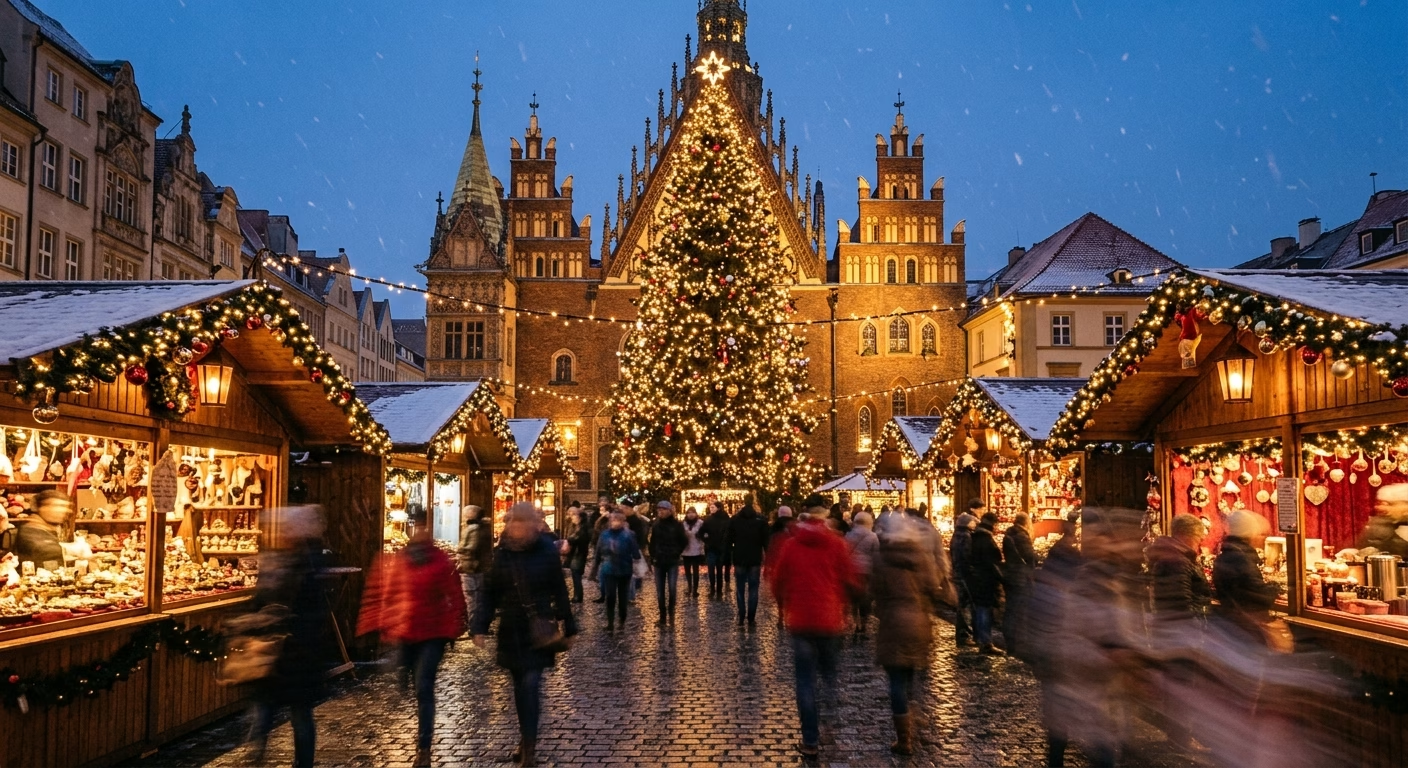
The Munich Christmas markets open for 2026 on Friday, 20 November and run through Thursday, 24 December. The main Christkindlmarkt fills Marienplatz and Rindermarkt with more than 130 stalls, and several smaller markets run on their own dates across the city.
This guide covers the confirmed 2026 dates and hours, which markets are worth your evening, what to eat and drink, how to move between them, and how to stay online while you do it. Set up your Germany eSIM before you fly so maps and messages work the moment you land.
Key takeaways
- Christkindlmarkt at Marienplatz: 20 November to 24 December 2026, closed on Totensonntag (22 November).
- Residenz Christmas Village runs longer at the front end: 16 November to 22 December.
- Weekday mornings are calm; Friday evening and Saturday are the busiest windows.
- Walk the old-town cluster — most central markets sit within 15 minutes of each other.
- Keep a hot drink’s mug deposit receipt until you decide whether to return the mug.
What Are the Must-Visit Christmas Markets in Munich?
Munich’s Christmas markets are not one single event. You can build an evening around grand city-center lights, handmade gifts, live music, and smaller squares with a more local feel. The Münchner Christkindlmarkt at Marienplatz remains the classic first stop for most visitors.
Start with the main Marienplatz market when you want the full picture-postcard Munich experience. You get the city’s historic core, the Glockenspiel overhead, more than 130 wooden stalls, and the biggest mix of ornaments, gifts, snacks, and hot drinks. A 25-metre Christmas tree stands at the centre of the square. It is popular because you can arrive without a detailed plan and still find plenty to browse.
The Kripperlmarkt, the nativity market in front of St. Peter’s, is probably the largest of its kind in Germany. Stalls sell complete nativity scenes, individual figures, and every component for building one. Even if you are not buying, the large oriental and alpine scenes are worth ten minutes of your evening.
The Christmas village at the Residenz is the more elegant stop on many market routes. Set in the courtyard of the former royal palace and running 16 November to 22 December 2026, it has a quieter, more traditional feel than Marienplatz. Focus on decorative gifts and artisan-style stalls here, then use it as a breather before returning to the louder central streets.
Also make room for a smaller neighborhood market, especially if you are in Munich for more than one night. These tend to attract residents buying an after-work drink or meeting friends, rather than visitors rushing through a checklist. You get a calmer look at the season, even if the selection is smaller.
- Choose Marienplatz for the landmark setting and widest choice.
- Choose the Kripperlmarkt for nativity craftsmanship you will not find at home.
- Choose the Residenz village for a refined setting and a slower browse.
- Choose a neighborhood market for a more local evening.
Watch out for: exact stall lists and layouts change each season, so do not assume a stall you saw in an older guide will return. Save each market location in your map before leaving your hotel, since Munich’s old-town lanes can make a short walk feel confusing after dark.
Takeaway: Visit Marienplatz for Munich’s essential market scene, then add one smaller or themed market for a more personal night out.
When Do the Munich Christmas Markets Open in 2026?
The municipal Munich Christmas Market runs from 20 November to 24 December 2026 at Marienplatz and Rindermarkt. It is organised by the City of Munich’s Department of Labor and Economic Affairs, and the dates were published early in the year, so you can book flights and hotels around them with confidence.
Daily hours follow a consistent pattern:
- Monday to Saturday: 10:00 to 21:00.
- Sunday: 10:00 to 20:00.
- 24 December: 10:00 to 14:00. Plan Christmas Eve as a morning visit, not an evening one.
- 22 November: closed for Totensonntag, the German day of remembrance, even though the market season has already started.
Other markets keep their own calendars. The Residenz Christmas Village runs 16 November to 22 December, opening daily at 11:00 and closing at 21:00. The Sendlinger Tor market is expected to run 20 November to 22 December on similar hours. The ice rink at Karlsplatz/Stachus stays open well past the markets, into early January.
That variation matters more than it may seem. A market can close earlier on Christmas Eve, end days before the city-center market, or shut entirely on a remembrance day. A flight arriving late on a Sunday can leave you with far fewer open stalls than you expected.
Watch out for: “Munich Christmas markets” is a broad label, not one ticketed event with one timetable. The Marienplatz dates do not automatically cover every smaller market around the city. Check the individual organiser’s page for anything outside the old-town core, and take a screenshot once you have it.
Takeaway: Build your trip around 20 November to 24 December, then confirm the smaller markets separately — several start earlier and finish sooner.
What Local Foods and Drinks Should You Try at the Markets?
Food is a major part of the Munich Christmas markets, so arrive hungry rather than treating dinner as an afterthought. Start with a small savory dish, then work toward sweets and a hot drink. That order keeps you from filling up on gingerbread before trying the dishes that are harder to find at home.
- Bratwurst in a Semmel: A grilled sausage in a crusty bread roll. Add mustard, stand at a tall table, and eat it straight away. It is quick, filling, and ideal when cold hands make a sit-down meal feel like too much work.
- Kartoffelpuffer: Crisp potato pancakes, usually served with applesauce or a savory dip. Choose these when you want a vegetarian snack with real substance. Ask for them freshly fried; a batch left sitting loses its crunch fast.
- Schupfnudeln with sauerkraut: Finger-shaped potato noodles, pan-fried with cabbage and often bacon. A strong cold-weather plate: richer than a sausage but easier to carry than a full restaurant meal.
- Käsespätzle: Soft egg noodles with melted cheese and fried onions. It is Bavaria’s answer to mac and cheese, though heavier and more rustic. Share one portion if you still want room for dessert.
For sweets, look for gebrannte Mandeln, warm almonds coated in caramelized sugar and cinnamon. Follow the smell rather than buying the first bag you see. Lebkuchen is another classic: a soft spiced gingerbread, often shaped like a heart and iced with a message. Buy it as a souvenir, though the decorative hearts are made to hang rather than to eat.
Drink Glühwein, hot mulled red wine with citrus and spices, when you want the traditional market ritual. Choose Kinderpunsch, a hot fruit punch without alcohol, if you want warmth without wine. Some stalls also serve Feuerzangenbowle, a stronger punch made with a flaming sugar loaf; it is memorable, but not a smart first drink on an empty stomach.
Watch out for the mug deposit. Your hot drink comes in a souvenir mug at most stalls, with a refundable deposit added to the price. Keep the receipt and return the mug to get it back. If you want to keep the mug, simply walk away with it. Use your Telekonek data to translate ingredients or check dietary terms before ordering, especially for dishes that may contain pork, bacon, cream, or alcohol.
Takeaway: Order a bratwurst or potato pancakes first, save room for roasted almonds, and keep your Glühwein mug receipt until you decide whether to return it.
Are There Any Special Events or Performances to Look Out For?
Marienplatz carries the season’s headline program, and several fixtures return every year. Advent music plays from the Neues Rathaus balcony, the Krampus run brings hundreds of costumed figures through the square, and the Himmelswerkstatt gives children a craft workshop inside the decorated Ratstrinkstube.
The Krampuslauf is the one to plan around. Around 300 Krampuses, Perchten, and Klause run through the city centre — the 2026 run is scheduled for 13 December from 15:00 to 17:00, and it draws up to 50,000 onlookers. Arrive early and pick a spot with an exit route, because the square compresses quickly.
Other events worth fitting around your market visit:
- Balcony Advent music: Short brass and choir sets from the town hall. These work well after your food stop, when the lights are on and you are not rushing between stalls.
- Himmelswerkstatt: Children aged six to twelve dress as angels and make Christmas decorations. Places are limited and registration is recommended, so book before you travel.
- Guided market tours: The City of Munich runs 90 to 120-minute guided walks covering the market’s history and Bavarian Christmas customs, typically on Friday afternoons.
- Church concerts near the old town: Munich’s central churches offer a quieter, more formal break from the busy streets. Buy tickets only after confirming venue and start time.
Watch out for last-minute changes. Outdoor music can move, shorten, or cancel because of rain, high winds, or extreme cold. Save the event details on your phone before leaving your hotel, then refresh the listing shortly before heading to Marienplatz. Screenshots help too, especially when the square is crowded and you need to find the correct entrance or meeting point.
For a smooth evening, plan one “anchor” event and leave the rest flexible. Arrive early enough to browse, eat, and claim a good standing spot before music begins. Trying to schedule several performances across Munich can turn a festive night into a cold dash between transit stops.
Takeaway: Anchor your evening on the balcony music or the 13 December Krampus run, then let the rest of the night stay loose.
How Do Munich’s Christmas Markets Compare to Other German Cities?
Munich gives you the broadest Christmas-market trip of the three. You can begin at Marienplatz, then move into a smaller neighborhood setting without leaving the city. That range suits you if you want grand old architecture, Bavarian food, handmade gifts, and a less rushed second stop on the same evening.
Cologne feels more dramatic at first sight. Its main market sits beside Cologne Cathedral, so the huge Gothic backdrop does much of the work. Choose Cologne when you want a large, high-energy market scene and a city break built around the Rhine, cathedral views, and several central markets close together.
- Munich: Best for variety. You can pair Marienplatz with smaller markets and Bavarian-style food stops. It feels like a full city experience, not just one famous square.
- Cologne: Best for visual impact and big-city buzz. Cathedral-side photos are hard to beat, but expect dense crowds around the central stalls.
- Nuremberg: Best for tradition. At the Hauptmarkt you get the classic postcard image: red-and-white stall awnings, gingerbread, and a strong focus on old-fashioned Christmas goods.
Nuremberg is the more focused choice. You visit for the famous Christkindlesmarkt atmosphere, buy seasonal treats and ornaments, then explore the compact old town. Munich is better when you want your market visit to sit alongside museums, beer halls, palace grounds, and a broader choice of evening plans.
Watch out for the common mistake: do not expect every German market to feel equally intimate. Cologne’s cathedral area can feel like a major event, while Nuremberg’s narrow central square becomes crowded quickly. Munich’s advantage is flexibility: if Marienplatz feels packed, you have more reason to change neighborhoods rather than ending the night early.
If you are stringing several cities together, a regional Europe eSIM covers the whole route on one plan instead of a new SIM at every border. Confirm each city’s official programme before buying intercity train tickets around a specific opening ceremony or performance, since only the dates are fixed this far out — the event calendars are not.
Takeaway: Pick Munich for a flexible, multi-market Bavarian city break; Cologne for cathedral-scale spectacle; and Nuremberg for the most traditional single-market experience.
What Are the Best Times to Visit the Christmas Markets?
For the calmest visit, make Marienplatz your first stop on a Tuesday, Wednesday, or Thursday, arriving near the 10:00 opening. You will have more room to look at ornaments, order food without a long queue, and photograph the Neues Rathaus before the square fills up.
Friday evenings and most of Saturday are the busiest periods. Local shoppers, office workers, and weekend visitors tend to arrive after dark, when the lights are at their best. That atmosphere is memorable, but expect slow-moving crowds around the most popular food stalls and narrow paths between the wooden booths.
- Best for shopping: Early weekday afternoon. Go straight to gift stalls first, then stop for food later.
- Best for photos: About 30 to 45 minutes before sunset — which in Munich in December falls around 16:00. You get daylight on the buildings, then the market lights begin to show.
- Best for festive energy: Weekday evening, roughly after work but before the late rush. A better balance than Saturday night.
- Best for families: Earlier in the day, when children can see displays without shoulder-to-shoulder crowds.
Sunday can feel deceptively busy, and the market also closes an hour earlier at 20:00. Many visitors treat it as their main sightseeing day, especially around Marienplatz and the old town. Use Sunday for a slower meal or a less central market, rather than trying to buy delicate gifts at the main square.
Watch out for one common mistake: do not arrive at the main market only at 19:00 or 20:00 because you want the lights. With a 21:00 close, you may spend much of your visit waiting for drinks, squeezing through the crowd, and missing stalls as closing time approaches.
Your phone matters most at peak times. Keep your Telekonek eSIM active so you can message your group, save a pin for your hotel, and switch plans if Marienplatz becomes too packed. Crowds can split people up quickly near the food stands and transit entrances.
Takeaway: Visit Marienplatz on a Tuesday through Thursday, arrive at opening for shopping, and return near sunset only if you want the lights and can handle crowds.
How Can You Easily Get Around to the Different Markets?
Munich’s central market area is easy to cover on foot. Start at Marienplatz, then use the old town’s pedestrian streets rather than taking transit for every short hop. The walk from Marienplatz to Odeonsplatz along Theatinerstraße takes about 10 minutes, while Sendlinger Tor is roughly 10 to 15 minutes south via Sendlinger Straße.
This walking plan works best in daylight or early evening, before the streets become packed. You see more decorated storefronts, can stop for a drink without losing your bearings, and avoid waiting on a crowded platform for a one-stop ride.
- Marienplatz: Use the Marienplatz U-Bahn and S-Bahn station. Follow signs for the Rathaus or city-center exits, not just the nearest staircase.
- Odeonsplatz and the Residenz area: Take the U3 or U6 to Odeonsplatz, or walk from Marienplatz through the old town.
- Sendlinger Tor area: Use Sendlinger Tor station, served by several U-Bahn lines, or walk south from Marienplatz.
- Markets farther from the center: Use Munich’s U-Bahn, tram, and bus network rather than a taxi. A tram often leaves you closer to a square or park entrance than an underground station does.
For ticketing, use the official MVV fare network or the MVGO app. Your fare depends on the zones you cross, so check the route before you buy. If you are only moving around the center, do not accidentally choose an airport-inclusive ticket just because it appears first in an app. Our roundup of the best apps for public transport in Europe covers what to install before you land.
Watch out for station exits. Marienplatz is large underground, and the wrong exit can put you on the opposite side of the square. Save each market pin in your map app before leaving your hotel. With your Telekonek eSIM active, you can check live departure changes, find the correct exit, and reroute when a tram is delayed.
Do not drive between central Munich Christmas markets. Old-town streets are restricted, parking garages fill early, and a 12-minute walk can become a 25-minute car trip once you include garage access and traffic. Use a taxi only for a late return to a hotel outside the rail and tram core.
Takeaway: Walk the old-town cluster from Marienplatz, then use the MVV network for markets beyond the center.
What Are Some Safety Tips for Visiting the Christmas Markets?
The Munich Christmas markets are generally easy to enjoy, but the busiest lanes can feel tightly packed after dark. Keep your phone, wallet, and passport in an inside jacket pocket or a zipped cross-body bag worn in front. Do not leave a phone on a standing table while you order Glühwein or take photos.
Use one payment card and only the cash you expect to spend that evening. Keep a second card and your passport back at your accommodation. Crowds at Marienplatz can compress quickly near popular stalls, so agree on a meeting point before you split up. The base of the Neues Rathaus is easier to identify than “near the food stalls.”
Watch out for slick ground. December rain, slush, and spilled drinks can make cobblestones and tram-platform edges slippery. Wear shoes with a grippy sole, not smooth fashion boots. Take off wet gloves before handling hot cups, and give yourself time on stairs and curb edges.
Cold air can hide how much alcohol you have had. Eat before your second hot drink, switch to water between alcoholic drinks, and avoid carrying an open cup through the densest parts of the market. If you have food allergies, ask before ordering rather than assuming a sausage, sauce, or baked item is allergen-free. A simple German phrase helps: “Ich habe eine Allergie gegen …” means “I have an allergy to …”
For urgent help, call 112 for an ambulance or fire emergency and 110 for police. Save both before you travel. Keep your hotel address, travel insurance details, and emergency contacts available offline. With your Telekonek data active, you can also open maps quickly, message your travel companion, or translate a problem without hunting for public Wi-Fi.
Stay aware when leaving the market too. Follow marked pedestrian crossings, especially around central tram and bus stops, and do not step into a bike lane while looking at lights or directions. If this is your first trip into the Schengen Area in a while, read up on the new biometric border system before you fly — the passport desk process has changed.
Takeaway: Carry less, wear shoes that handle wet cobblestones, save 112 and 110, and keep your phone charged for a safer market evening.
How to Stay Connected While Visiting Munich’s Christmas Markets?
Reliable data matters at Munich’s Christmas markets. You will use it for maps, transit updates, stall locations, translation, and sending photos before your hands get too cold. Set up your Telekonek eSIM before you fly, so your phone connects shortly after landing without hunting for a SIM shop.
Telekonek eSIM data plans work in 200+ countries, which is useful if Munich is one stop on a wider Europe trip. An eSIM is a digital SIM built into most newer phones. You install it by scanning a QR code, then keep your usual number active for calls and texts if your phone supports dual SIM.
- Use Telekonek for daily data: Turn on the Telekonek line for mobile data and set it as the default data SIM. Turn off data roaming on your home line to avoid an unexpected carrier charge.
- Download maps before heading out: Save central Munich in Google Maps or Apple Maps while on hotel Wi-Fi. Offline maps still show your location, even if a packed square slows your connection.
- Keep key apps ready: Download the MVV or MVGO app for Munich public transport and the Deutsche Bahn app if you are arriving by train. Add your hotel address and “Marienplatz” to saved places.
- Use messaging instead of regular texts: WhatsApp, iMessage, and Signal use data. They are handy when your group separates in the crowd near the Neues Rathaus.
Free Wi-Fi may appear in hotels, cafés, museums, stations, and some public areas, but do not count on it inside the market itself. Coverage can be weak when hundreds of phones are trying to upload videos at once. Public networks also may require a browser sign-in, which is frustrating when you are outside in the cold.
Watch out for: a video call, automatic photo backup, or endless social-media uploads can burn through data faster than expected. Set photo backup to Wi-Fi only, download playlists before you leave your accommodation, and use low-data mode during a long market evening. Carry a small power bank too; cold weather drains batteries quickly.
Before you enter the busiest lanes, send your group a live location and agree on the same meeting point mentioned earlier. With Telekonek data active, you can reroute around crowds, check the next U-Bahn, and share the best Glühwein photo while it is still warm.
Takeaway: Install your Telekonek eSIM before departure, use Wi-Fi as a bonus rather than a plan, and save offline maps for a smoother Munich market night.
Frequently Asked Questions About Munich’s Christmas Markets
When do the Munich Christmas markets run in 2026? The main Christkindlmarkt at Marienplatz and Rindermarkt runs 20 November to 24 December 2026, closed on 22 November for Totensonntag. Hours are 10:00 to 21:00 Monday to Saturday, 10:00 to 20:00 on Sunday, and 10:00 to 14:00 on Christmas Eve.
Is Munich worth visiting for Christmas markets? Yes, if you want a city break as well as market time. Marienplatz gives you the classic historic-center setting, while Munich also lets you add museums, beer halls, and day trips between market visits. Plan two or three nights rather than treating the city as a quick evening stop.
Which market should you choose if you only have one evening? Start at Marienplatz. It is the simplest choice for a first visit because it sits in the old town and is easy to pair with a walk through nearby pedestrian streets. Choose a smaller market only when you already know you prefer a quieter mood over the big landmark backdrop.
Are Munich’s markets better than Nuremberg or Cologne? It depends on the trip you want. Munich works well when you want several different market moods in one large city. Nuremberg is more focused on its famous traditional market, while Cologne makes the cathedral part of the experience. Do not try to judge all three from one crowded Saturday night; each feels more enjoyable on a weekday afternoon.
What should you eat beyond sausage and gingerbread? Look for Käsespätzle, soft egg noodles with melted cheese and fried onions, when you need a proper cold-weather meal. Try roasted almonds for a snack, and share a warm apple pastry or Schmalznudel, a fried dough specialty, for dessert. Stall menus change by season, so treat any one dish as a good find rather than a guarantee.
Can you manage the markets without speaking German? Yes. You can point at food, use card-payment prompts, and rely on map apps for directions. Learn “bitte” (please), “danke” (thank you), and “zahlen, bitte” (the bill, please) for a smoother order. Watch out for cash-only stalls, especially when buying a small snack or drink.
What commonly goes wrong? Visitors underestimate how much time coats, crowds, and payment lines add. Give yourself one main food stop and one shopping stop, rather than trying to cross the city at peak time. Keep fragile ornaments in a padded bag, and ask whether a drink comes with a refundable mug deposit before you walk away.
How much should you budget for an evening? For 2026, allow roughly €25–€45 per person for a hot drink, a filling meal, a sweet snack, and a small gift. Your total rises quickly if you collect souvenir mugs or buy handmade decorations. Track spending as you go, since several small purchases can feel invisible in the cold.
Takeaway: Download maps and transit details before you fly, then set up a Telekonek eSIM for Germany so you can navigate, translate menus, and avoid searching for a SIM-card shop on arrival.