
Odd Facts About Mexico: What Surprises First-Time Visitors?
Mexico rewards you for looking past the postcard. You may arrive for tacos, beaches, and ancient ruins, then find a country shaped by volcanoes, underground rivers, masked wrestling heroes, and a capital built on a former lake.
These odd facts about Mexico are not random trivia. They explain what you see and feel on the ground. A street can sink unevenly because Mexico City stands on soft lakebed soil. A swim stop in Yucatán may lead you into a cenote, a limestone sinkhole connected to a huge underground water system. In Michoacán, a volcano famously appeared in a farmer’s field during the 20th century.
Mexico’s history also refuses to fit into one neat story. Indigenous civilizations built major cities long before Spanish colonization. Spanish language, Catholic traditions, African influences, and hundreds of living Indigenous communities then added further layers. That mix shows up in food, festivals, music, markets, and even the way a local neighborhood celebrates its patron saint.
- Geography: You can cross deserts in the north, cloud forests in the south, high volcanic plateaus inland, and Caribbean coastlines in one country.
- Food: Corn, chile, cacao, vanilla, and tomatoes all have deep roots here, but regional cooking changes sharply from Oaxaca to the Yucatán Peninsula.
- Culture: Día de Muertos is not Mexico’s version of Halloween. It is a family-centered remembrance tradition with regional customs and long Indigenous roots.
- Daily life: Lucha libre masks, brightly painted alebrijes, and mariachi bands can feel theatrical, yet each has a real cultural history behind it.
For your first trip, treat these facts as clues for choosing where to go. Mexico City makes the country’s lakebed history, museums, and modern energy easy to see. Oaxaca gives you food and craft traditions. Yucatán puts Maya sites and cenotes within day-trip range.
Watch out for: Mexico is not a single experience, and “Mexican culture” can be too broad to mean much. Avoid assuming that a custom in Cancún, Guadalajara, and a small village in Chiapas will look the same. Ask before photographing ceremonies, market vendors, or people in traditional dress.
Having data makes these discoveries easier, especially when you need museum details, map pins, Spanish translations, or a last-minute bus update. Set up your Mexico eSIM from Telekonek before you fly, with data plans that work in 200+ countries, so you are not hunting for a shop after a long flight.
Takeaway: Mexico’s strangest facts make more sense when you see them as living parts of its land, history, and everyday culture.
1. How Did a Volcano Appear in a Mexican Cornfield?
Parícutin is often called the world’s smallest volcano, but that label is not quite right. Its real claim is better: you can visit one of the youngest volcanoes on Earth whose birth was watched and recorded from day one.
On 20 February 1943, the ground split open in a cornfield near the village of Parícutin in Michoacán. Ash, steam, and stones burst from the field, then built a steep cinder cone. A cinder cone is a volcano made from loose lava fragments thrown out during eruptions.
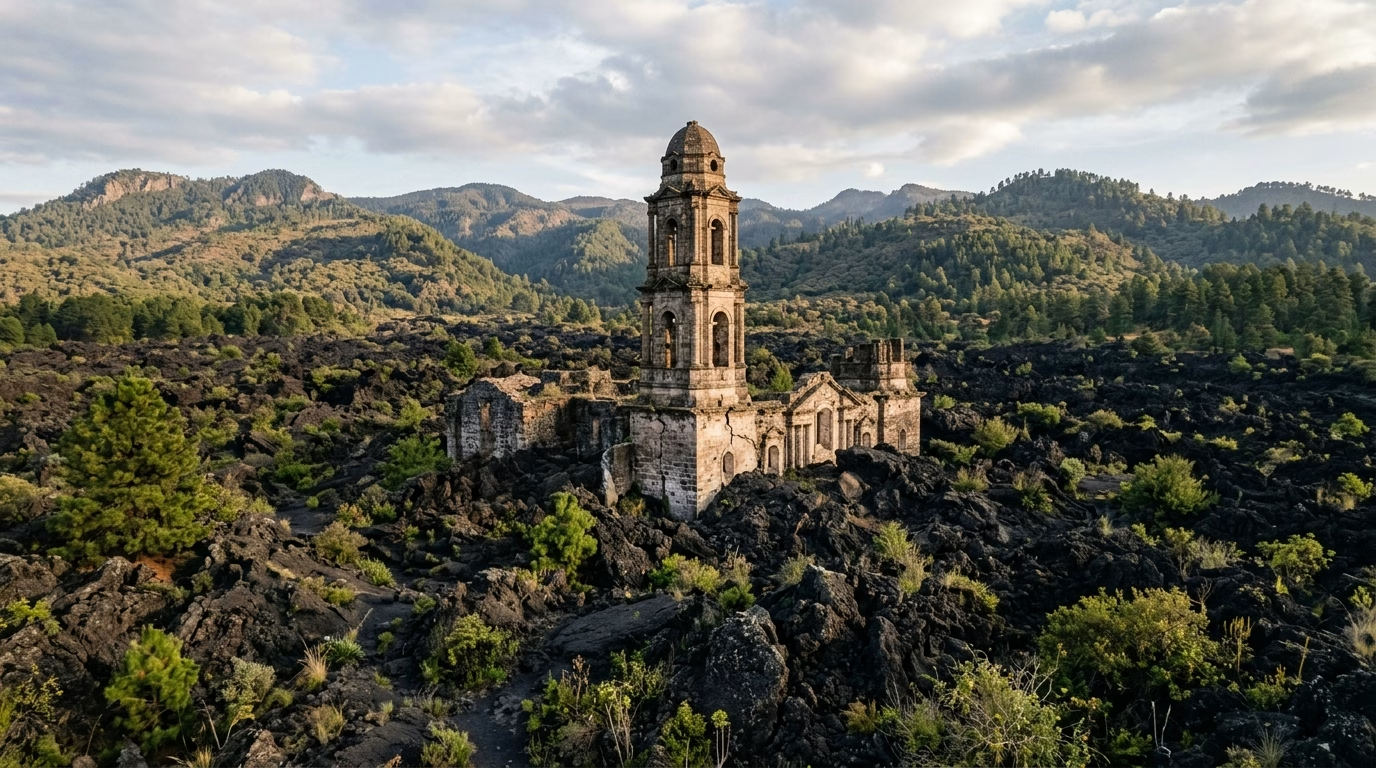
Over the next nine years, Parícutin rose roughly 424 metres above the surrounding land. The eruption ended in 1952, but not before lava and ash swallowed the nearby villages of Parícutin and San Juan Parangaricutiro. You can still see the old church of San Juan Parangaricutiro, with its lower walls buried and parts of its tower standing above the black lava field.
This is one of the odd facts about Mexico that feels unreal until you stand there. The landscape shifts quickly from cultivated fields and pine forest to sharp, dark volcanic rock. New plants have slowly taken hold in cracks in the lava, while the wider region still supports farms, forests, and Purépecha communities.
You normally reach the lava fields from Angahuan, a Purépecha village west of Uruapan. Local guides can arrange hikes or horse rides across the rough terrain. A horse is easier on the long, uneven lava route, but walking gives you more time to notice how hostile-looking rock has become a living landscape again.
Watch out for: loose volcanic rock is harder to cross than it looks. Wear closed shoes with grip, bring more water than you expect, and do not rely on a signal once you leave the village. Download offline maps and have your Telekonek data line active before heading into the highland back roads; coverage can fade around the lava fields.
Parícutin fits best into a longer Michoacán stop rather than a rushed day trip from Mexico City. Allow extra time for Angahuan’s local guides and the return drive.
Takeaway: Go to Parícutin for the half-buried church and black lava landscape, but treat it as a real highland hike, not a roadside photo stop.
2. How Many UNESCO World Heritage Sites Are in Mexico?
Mexico has 36 UNESCO World Heritage Sites as of 2026, the highest total of any country in the Americas. That puts an astonishing range of places under one official heritage list: Maya cities, colonial streets, whale nurseries, volcanic islands, and even a modern university campus.
The total includes 28 cultural sites, six natural sites, and two mixed sites, where nature and human history are inseparable. The newest addition is the Wixárika Route through Sacred Sites to Wirikuta, a living pilgrimage landscape across north-central Mexico.
- Ancient cities and archaeology: Teotihuacan near Mexico City, Chichén Itzá in Yucatán, Palenque in Chiapas, Monte Albán above Oaxaca, Uxmal, El Tajín, Xochicalco, Paquimé, and the caves of Yagul and Mitla. These sites show how different Mexico’s pre-Hispanic cultures were; they were never one single civilization.
- Colonial towns and routes: Mexico City and Xochimilco, Oaxaca, Puebla, Guanajuato, Morelia, Zacatecas, Querétaro, Tlacotalpan, Campeche, San Miguel de Allende, and the Camino Real de Tierra Adentro trade route. You can also find protected religious landmarks, including the Popocatépetl monasteries, Sierra Gorda missions, Atotonilco Sanctuary, Hospicio Cabañas, and the Padre Tembleque Aqueduct.
- Modern Mexican heritage: Luis Barragán House and Studio in Mexico City, plus the Central University City campus of UNAM. Barragán’s bold walls, light, and gardens make a strong contrast with the country’s pyramids and churches.
- Living landscapes: The Agave Landscape of Tequila, the Wixárika sacred route, Calakmul’s Maya city and tropical forest, and the Tehuacán-Cuicatlán Valley. These places connect local food, belief, farming, and biodiversity.
- Natural wonders: Sian Ka’an, El Vizcaíno Whale Sanctuary, the Islands and Protected Areas of the Gulf of California, Monarch Butterfly Biosphere Reserve, El Pinacate and Gran Desierto de Altar, and the Revillagigedo Archipelago.
Watch out: a UNESCO label does not mean every place is an easy day trip. Revillagigedo is far offshore and requires a serious liveaboard expedition. Calakmul is deep in Campeche’s forest, while the monarch reserves have seasonal access. Build your route around regions instead of trying to collect sites across the country.
Keep your Telekonek data active for offline maps, museum hours, and navigation when signs become sparse outside major cities.
These are among the most revealing odd facts about Mexico: one country protects 36 world-class places, yet each tells a completely different Mexican story.
Takeaway: Choose two or three UNESCO sites in one region, not a rushed cross-country checklist.
3. What Makes Mexican Cuisine So Unique?
One of the most delicious odd facts about Mexico is that you can eat a completely different food culture without ever leaving the country. You will find corn at its center, but not as a simple side dish. Corn becomes tortillas, tamales, atole, pozole, sopes, tlacoyos, and hundreds of regional forms of masa.
The key is nixtamalization. You soak dried corn in water mixed with lime, then rinse and grind it into masa. This old technique improves flavor, makes the dough workable, and helps your body absorb more nutrients. A fresh tortilla from a busy tortillería tastes soft, warm, and slightly earthy; it bears little resemblance to a packaged flour tortilla.
You will also notice that Mexican cooking treats chiles as ingredients, not merely heat. A poblano can taste mild and green, while a dried ancho brings sweetness and raisin-like depth. Smoky chipotle, sharp chile de árbol, and fruity guajillo can each appear in the same sauce. In mole, chiles may be ground with spices, seeds, nuts, dried fruit, and sometimes chocolate, creating a layered sauce rather than a chocolate dish.
- Central Mexico: Try tacos al pastor, where pork is roasted on a vertical spit and served with pineapple, onion, cilantro, and salsa.
- Oaxaca: Order tlayudas, large crisp tortillas topped with beans, cheese, cabbage, and grilled meat, or sample one of the region’s famous moles.
- Yucatán: Look for cochinita pibil, pork seasoned with achiote and sour citrus, traditionally cooked underground.
- Jalisco: Eat birria, slow-cooked meat in a rich chile broth, often with tortillas for dipping.
Cooking methods tell as much of the story as the ingredients. You may see food steamed in corn husks, grilled on a comal, wrapped in banana leaves, or cooked in an earth oven. These methods come from Indigenous traditions that continued alongside Spanish ingredients such as pork, cheese, wheat, and cinnamon.
Watch out for the “Mexican food” menu trap: tourist areas can flatten everything into nachos, burritos, and mild salsa. Instead, choose a stall or small restaurant with a short menu and a line of local diners. Ask for “¿cuál es la especialidad?”—what is the specialty? Use your Telekonek data to save the address, translate a menu, and check opening hours before crossing town for a morning-only dish like barbacoa.
For a route that connects food stops with major sights, use this 5-day Mexico itinerary through cities, ruins, and Caribbean beaches.
Takeaway: Order the regional specialty, add salsa slowly, and make fresh masa your first food priority.
4. What Are the Unusual Traditions in Mexico?
Some of the most memorable odd facts about Mexico come from traditions that turn everyday streets into places of memory, ceremony, and playful competition. These customs are not staged for visitors. You will often be watching family, faith, Indigenous heritage, and local pride happening at once.
Day of the Dead is the best-known example, but it is often misunderstood. It is not Mexico’s version of Halloween. Families make ofrendas, or home altars, with candles, marigolds, favorite foods, photographs, and water for relatives who have died. The goal is remembrance, not fear.
In Mexico City, public displays can be huge and crowded, while towns in Michoacán and Oaxaca often feel more personal. You may see families cleaning graves, sharing food, and staying late in cemeteries. Watch out: never treat a cemetery visit as a costume party or photograph grieving families without clear permission.
Oaxaca offers another unusual tradition through the Guelaguetza. The word describes reciprocal giving: you help your community now, and your community helps you later. The festival brings together dance groups from different parts of Oaxaca, each wearing regional clothing and performing local music. It is colorful, but its deeper point is mutual support rather than spectacle.
For a smaller and stranger event, look for Oaxaca City’s Night of the Radishes. Local growers carve oversized radishes into detailed scenes, including markets, myths, animals, and historic moments. The carvings are temporary because radishes wilt quickly, which makes the event feel more like a one-night folk-art show than a museum exhibition.
On the Gulf Coast, the Voladores de Papantla ceremony is even more dramatic. Five performers climb a tall pole. One stays at the top playing flute and drum, while four others descend upside down on ropes in slow circles. The ritual has Indigenous roots and is tied to prayers for rain and fertility.
- Do: ask before photographing dancers, altars, or ceremonial performers.
- Do: carry some cash for crafts and food bought directly from local families.
- Do not: assume every public celebration is open for close-up filming.
These events can change street access and transport schedules with little notice. Keep your Telekonek data active for maps, translation, and checking local updates while you move between celebrations.
Takeaway: Mexico’s most unusual traditions make the most sense when you watch respectfully, ask first, and let the community set the tone.
5. How Are Luchadores Different from Regular Wrestlers?
Lucha libre is not simply Mexico’s version of pro wrestling. It is one of the country’s most theatrical traditions: a fast, loud contest where athletic skill, comic timing, heroes, villains, and family loyalties all matter.
The first difference you notice is the mask. A luchador’s mask is not a costume accessory. It is an identity. Its colors, shapes, and symbols create a character that can be noble, frightening, funny, mysterious, or all four at once. Many famous wrestlers protect their real names and faces for years.
That makes a máscara contra máscara match especially serious. The losing wrestler must remove the mask in public and reveal their identity. Another high-stakes format is máscara contra cabellera, mask against hair, where the loser is unmasked or has their head shaved. The crowd treats these moments as major drama, not a casual gimmick.
- Técnicos are the heroes. You will usually see clean moves, bright gear, and crowd support.
- Rudos are the rule-breakers. You can expect cheating, taunting, and plenty of boos.
- Mini luchadores are skilled wrestlers in a separate division, not children performing for laughs.
- High-flying moves are central. Luchadores often use ropes, speed, and aerial attacks more than the heavy power style you may expect.
Matches move quickly, often with teams of two or three. The referee may seem less strict than you expect, because part of the fun is watching rudos bend the rules and técnicos fight back. You do not need fluent Spanish to follow it. The cheers, whistles, mask colors, and exaggerated reactions make the story clear.
Lucha libre also reaches beyond the ring. You will see its masked figures on market stalls, murals, T-shirts, toys, and street art. The mask has become a symbol of Mexican pop culture, mixing Indigenous visual traditions, comic-book energy, and working-class entertainment. It is one of those odd facts about Mexico that makes more sense once you hear a whole arena roar for a masked hero.
Watch out for: souvenir masks vary wildly in quality. Cheap versions are fun for photos, but can be hot, stiff, and poorly stitched. If you want one you can actually wear, look for breathable fabric, eye openings that sit flat, and laces or elastic that do not pull at your ears.
Use your Telekonek data to pull up venue directions, match listings, and ride options before you go. Signal can get crowded around popular events, so save your return route and accommodation address offline too.
Takeaway: Luchadores are athletes, folk heroes, and living characters whose masks carry real pride and meaning.
6. Why Does Yucatán Have Cenotes Instead of Rivers?
Mexico’s sinkholes are not all the same. In the Yucatán Peninsula, many are part of a natural limestone landscape. Rainwater absorbs carbon dioxide from the air and soil, becomes mildly acidic, and slowly dissolves the rock below your feet.
Over thousands of years, this creates caves, tunnels, and underground rivers. When a cave roof becomes too thin, it falls in and forms a cenote. Some cenotes are open pools with sunlight and vines. Others look like ordinary jungle until you descend into a dark cavern with clear water.
That is one of the stranger odd facts about Mexico: much of Yucatán has very few surface rivers because water flows underground instead. The Chicxulub impact, linked to the asteroid that ended the age of dinosaurs, also helped shape the peninsula’s fractured limestone and its ring of cenotes.
Not every collapse is a beautiful swimming spot. In May 2021, a huge sinkhole opened beside a home in Santa María Zacatepec, Puebla. It began at roughly five metres across, then expanded dramatically over the following days. Images of the house perched at its edge travelled worldwide.
Officials restricted access because the ground remained unstable. Heavy rain may have played a role, but sinkholes can also be worsened when groundwater is pumped out faster than nature can replace it. Water pressure supports underground spaces; when it changes, weak soil and rock can give way.
- Yucatán cenotes: usually natural limestone collapses, often safe only at managed sites with stairs, life jackets, and marked swimming areas.
- Urban or farming-area sinkholes: can involve leaking pipes, loose soil, rain, and groundwater extraction. Treat these as hazards, not attractions.
Watch out for: do not follow a map pin to an unstaffed “cenote” on private land. Some have no safe entry, no lifeguard, and poor phone signal below ground. Download your route and keep your Telekonek eSIM active before leaving the highway, then choose a regulated cenote with clear rules and equipment.
Takeaway: Mexico’s sinkholes reveal an underground water world, but a fresh collapse is a danger zone—not a photo stop.
7. Why Is Mexico City Sinking?
Mexico City is sinking because it was built on the former Lake Texcoco, but the lake is only the beginning of the story. The Mexica capital, Tenochtitlan, stood on islands, canals, and chinampas within the lake system. After the Spanish conquest, much of that water was drained to limit flooding and make room for a growing colonial city.
Under today’s streets sits a deep layer of soft clay, rich in water and easy to compress. Mexico City now needs enormous amounts of water for its roughly 22-million-person metro area. When groundwater is pumped from below, the clay loses support and compacts. Ground that drops in this way does not spring back when rain returns.
Some parts of the city sink by several centimetres each year, while other areas move far less. The uneven part matters most. One block can settle faster than the next, twisting pipes, cracking pavements, and leaving a staircase or doorway noticeably out of level.
- Metropolitan Cathedral: On the Zócalo, you can see why engineers have spent decades stabilizing this huge colonial church. Its foundations sit in soft former lakebed.
- Palacio de Bellas Artes: Near Alameda Central, the white-marble building famously sank enough that its lower floors ended up closer to street level than intended.
- Flood risk: A sinking city has a harder time moving stormwater away. Heavy summer rain can quickly overwhelm roads and underpasses, especially in low-lying eastern districts.
This is not a strange historical problem frozen in the past. It affects daily travel. A sudden downpour can slow traffic, disrupt bus routes, and make sidewalks around the Centro Histórico slippery or puddled. Keep your route open on your phone with your Telekonek data line, particularly when you are crossing the city after rain or changing plans around an evening storm.
Watch out for: Do not mistake tilted floors and uneven paving near the Zócalo for poor maintenance alone. Much of it reflects gradual movement below ground. Wear shoes with grip, leave extra time after rain, and avoid assuming a short walk is step-free.
For a wider look at how to fit the capital into your route, use this Mexico travel guide for 2026 alongside your day-by-day plans.
Takeaway: Mexico City sinks because groundwater pumping compresses the old lakebed beneath it, changing streets, buildings, and storm travel in real time.
8. What Unique Wildlife Can Be Found in Mexico?
Mexico’s wildlife is as varied as its landscapes. You can move from whale-rich Pacific waters to high volcanic grasslands, mangrove lagoons, desert scrub, and humid southern rainforest within one country.
One of the strangest odd facts about Mexico is that a real-life “walking fish” survives in the canals of Mexico City. The axolotl is actually a salamander. It keeps its feathery external gills and aquatic body into adulthood, rather than changing into a land animal.
You may see axolotl images on souvenirs around Xochimilco, but do not expect a wild sighting from a trajinera boat. Wild axolotls are critically endangered, and their habitat faces pressure from pollution, invasive fish, and shrinking wetlands. Choose conservation-focused visits rather than buying or handling live animals.
- Vaquita: This small porpoise lives only in the northern Gulf of California. You cannot responsibly book a “vaquita tour”; the species is critically endangered and protected from disturbance. Its decline is tied largely to entanglement in illegal gillnets.
- Volcano rabbit: This tiny rabbit, also called zacatuche, lives in high-altitude bunchgrass near central Mexico’s volcanoes. You are unlikely to spot one, even on a hike, because it is shy and habitat is limited.
- Mexican beaded lizard: This heavy-bodied reptile has black-and-yellow bead-like scales and venom. You may find it in dry forests of western and southern Mexico, but you should never approach, feed, or try to pick it up.
- Monarch butterfly: Every winter, millions gather in oyamel fir forests in Michoacán and the State of Mexico after migrating from Canada and the United States. Monarchs are not endemic to Mexico, but the overwintering spectacle is one of the country’s great wildlife experiences.
For monarch reserves, your visit works best with a local guide because access paths and viewing areas can change with weather and butterfly activity. Cold mornings often mean butterflies cluster silently in trees. As the sun warms the forest, you may see them lift off in waves.
Watch out for: a rare animal is not a photo prop. Keep your distance, stay on marked trails, skip flash photography, and avoid wildlife attractions that let you hold animals. A close selfie can stress an animal or spread disease.
Use your Telekonek data to keep maps, translation, and reserve information available when you head beyond city coverage.
Takeaway: Mexico’s most unusual animals are often rare and fragile, so the best sighting is one that leaves their habitat undisturbed.
9. What Natural Wonders Can You See in Mexico?
Mexico’s natural scenery feels unusual because you can change worlds in a single day. You can swim through a limestone cave in the morning, cross bright Caribbean water by afternoon, and watch the sun fall behind dry mountains at night. These landscapes are more than pretty backdrops. They shape where you stay, how you get around, and what you need to pack.
On the Yucatán Peninsula, cenotes are the headline act. At Dos Ojos near Tulum, you can float beneath cave ceilings and shafts of blue light. Gran Cenote, closer to Tulum town, is easier for a quick swim but can feel busy by late morning. For a quieter, more local-style stop, look beyond the famous coast-side names toward cenotes near Valladolid, where you can pair a swim with a day around the city.
Watch out: cenotes are not public pools. Many ban regular sunscreen, require a shower before entering, and limit cameras or life jackets in certain areas. Bring cash, a towel, and water shoes. Save offline directions before leaving town, since rural roads and cenote entrances are often poorly signed. A five-day Mexico route helps you connect these stops without wasting a day backtracking.
For open water, skip the idea that every great beach means a resort strip. Balandra, outside La Paz in Baja California Sur, is known for its shallow turquoise bay and pale sandbars. You go for calm water and desert-meets-sea views, not beach clubs. On the Caribbean side, Isla Holbox gives you sandy lanes, low-rise hotels, and long shallows, while the Riviera Maya offers easier transport and more services.
- Balandra: a half-day swim and photos; bring shade, food, and enough water.
- Holbox: slower beach days; expect sandy streets and fewer polished conveniences.
- Tulum coast: combining beaches, cenotes, and ruins; expect heavier traffic and higher prices.
Then there are landscapes that do not resemble a beach holiday at all. At Hierve el Agua in Oaxaca, mineral-rich water has built white rock formations that look like frozen waterfalls. In Chiapas, Sumidero Canyon rises sharply above the Grijalva River, making a boat ride feel far removed from Mexico’s coastal image. These are the kinds of odd facts about Mexico that make the country hard to reduce to one postcard.
Your Telekonek data is especially useful here for navigation, changing access rules, and sharing your location before you leave paved roads. Download maps in advance, because signal can weaken around caves, canyons, and remote beaches.
Takeaway: Build your route around one cenote, one coast, and one inland landscape to see Mexico’s real geographic range.
10. What Are the Most Interesting Myths and Legends of Mexico?
Some of the best odd facts about Mexico live in its stories. These legends are not dusty museum material. You will hear them in school lessons, see them in murals, spot them on street art, and catch their echoes in songs, markets, and place names.
La Llorona, or “the Weeping Woman,” is Mexico’s most famous ghost story. In many versions, a grieving mother wanders near rivers and canals, crying for her lost children. The tale has Indigenous and colonial roots, and its meaning changes by region: it can be a warning to children near water, a story about grief, or a symbol of the pain left by conquest.
In Mexico City, you may encounter La Llorona through seasonal performances around Xochimilco. Treat those shows as theatre rather than an ancient ceremony, and confirm the current schedule online. A Telekonek connection helps when you need ticket details, a rideshare after dark, or a map back from the canals.
The volcanoes east of Mexico City also carry a love story. Popocatépetl is commonly described as a warrior, while Iztaccíhuatl, with her long reclining silhouette, is his sleeping beloved. One popular version says the warrior returned from battle to find her dead, then kept watch beside her forever. When Popocatépetl sends up smoke, many people still say he is mourning or remembering her.
You can see why the legend stuck when the air is clear: Iztaccíhuatl’s peaks resemble a woman lying on her back. Popocatépetl remains an active volcano, though, so do not treat a viewpoint or hiking plan as fixed. Check official access alerts before heading toward the national park, especially during ash emissions.
Another foundational story explains Mexico City’s eagle-and-cactus symbol. Mexica tradition says an eagle perched on a prickly-pear cactus showed where a new capital should rise. That image became tied to Tenochtitlan and later appeared on Mexico’s flag. You will see it everywhere, from coins to government buildings, but it represents a living national symbol, not just an old legend.
- At the National Museum of Anthropology: look for Mexica objects and symbols that give these stories historical context.
- At Teotihuacan: avoid assuming every pyramid story is Aztec. The city was already ancient when the Mexica arrived and gave it the name meaning “place where gods were born.”
Watch out for: souvenir sellers often blend Maya, Mexica, Aztec, and colonial stories into one vague “ancient Mexican” tale. Ask which culture and region a story comes from. Mexico has many Indigenous traditions, not one single mythology.
Takeaway: Mexico’s legends make more sense when you connect each story to its landscape, people, and place of origin.
11. How Do Festivals Reflect Mexico’s Cultural Diversity?
You can see Mexico’s cultural diversity most clearly when a festival takes over a town square, churchyard, market, or neighborhood street. These celebrations mix Indigenous language, food, dance, music, and community customs with Catholic feast days introduced during Spanish rule.
That blend is one of the most revealing odd facts about Mexico. You may hear a brass band play outside a colonial church, then watch a dance whose steps, masks, and symbols reach back far before the conquest.
In Oaxaca, you can experience the Guelaguetza, a major celebration of the state’s many Indigenous communities. You will see regional dress, hear Zapotec and Mixtec languages, and taste foods that change from one valley or mountain region to another. The word guelaguetza refers to reciprocal giving, so the event is about shared responsibility as much as performance.
In Veracruz, Carnaval brings a different side of Mexico into view. You get Caribbean-influenced rhythms, dancing, parades, and a coastal party atmosphere shaped by Indigenous, Spanish, and African heritage. It feels far removed from the quieter religious processions you may encounter in central Mexico.
- For Indigenous roots: Look for community festivals in Oaxaca, Chiapas, Michoacán, and the Yucatán Peninsula. You will often find local textiles, native languages, and regional ceremonial food.
- For colonial-era faith traditions: Attend a local patron-saint celebration or Holy Week event. You may see processions, flower carpets, candles, and church bells rather than a concert-style festival.
- For pure street energy: Choose Carnaval in coastal cities, where music, costumes, and late nights matter more than formal ceremony.
Watch out for: a festival is not always designed around visitor schedules. Streets can close with little warning, buses may divert, and restaurants can fill before evening events begin. Download offline maps, save your hotel address, and keep your Telekonek data active so you can reroute, translate signs, or message your driver when plans shift.
You should also treat ceremonial moments with care. Ask before photographing dancers, altars, church interiors, or anyone preparing an offering. Buying food or crafts directly from local stalls is usually a better way to take part than pushing toward the front for a photo.
Takeaway: Mexico’s festivals let you see Indigenous and Spanish influences living together, not separated behind museum glass.
12. Why Is Mexican Art So Varied and Vibrant?
Mexican art feels so varied because it does not come from one single tradition. It grows from thousands of years of Indigenous knowledge, Spanish colonial influence, African heritage, Catholic imagery, political struggle, and bold city life.
Start with pre-Hispanic work. At places such as Teotihuacan, Maya cities, and the museums of Mexico City, you can see painted ceramics, stone carvings, featherwork, and gods shaped in clay. These were not simply decorations. Pots marked burials, murals told sacred stories, and carved figures carried political and religious meaning.
Pottery alone shows Mexico’s range. In Puebla, Talavera pieces use glossy white glaze with deep blue, yellow, and green patterns. In Oaxaca, black barro negro pottery gets its dark shine from careful polishing before firing. In Chihuahua, Mata Ortiz potters make finely painted vessels with detailed geometric designs. Each style uses local clay and techniques, so a bowl can tell you where it came from.
The twentieth century brought Mexican muralism, one of the country’s most influential art movements. Diego Rivera, José Clemente Orozco, and David Alfaro Siqueiros put huge public paintings on government buildings, schools, and cultural spaces. Their work made art available outside private galleries and tackled revolution, inequality, labor, Indigenous identity, and Mexico’s complicated history.
In Mexico City, you can see this scale at the Palacio de Bellas Artes and in murals around the historic center. Frida Kahlo’s intensely personal paintings offer a different side of modern Mexican art: smaller in size, but packed with pain, identity, nature, and symbolism.
Today, street art keeps the conversation moving. Neighborhoods such as Roma, Condesa, Doctores, and parts of Centro Histórico can change block by block. You may find giant portraits, Aztec-inspired animals, feminist messages, football references, or tributes to disappeared people. Keep your Telekonek data active as you walk: saved map pins help, but murals disappear, move, or get painted over quickly.
Watch out: not every brightly painted souvenir is locally made. Ask the seller where it was produced and who made it, especially with textiles, pottery, and beadwork. Cheap copies can borrow Indigenous designs without supporting the communities that created them.
Takeaway: Mexican art is vibrant because it treats the past as a living source, not a display behind glass.
13. What Is Mexico’s Official Name?
Mexico is not officially called Mexico. The country’s formal name is Estados Unidos Mexicanos, the United Mexican States. It is one of the odd facts about Mexico that hides in plain sight, printed on passports, coins, government buildings, and official documents you may handle on your trip.
The name reflects how the country is built. Mexico is a federal republic of 32 entities: 31 states plus Mexico City, which has its own status as the capital. That federal structure is not just paperwork. Rules on alcohol sales, museum closing days, protected-area access, and public holidays can differ from one state to the next.
The word “Mexico” also does triple duty, which trips up plenty of visitors:
- Mexico the country.
- Mexico City (Ciudad de México, or CDMX), the capital.
- State of Mexico (Estado de México), a separate state that wraps around much of the capital.
Watch out for: a bus ticket, hotel booking, or map pin that says “México” may mean the city, the state, or the country. Check the airport code and the municipality before you book. Toluca (TLC) sits in the State of Mexico and is a long transfer from central CDMX, while Mexico City International (MEX) is far closer to where most visitors stay.
The name also explains a piece of the flag. The eagle and cactus at its center come from the Mexica founding story of Tenochtitlan, the city that became today’s capital. Green, white, and red carry independence-era meanings, and the coat of arms in the middle is what separates the Mexican flag from Italy’s at a glance.
Takeaway: Mexico is formally the United Mexican States, so confirm whether a booking means the country, the capital, or the surrounding state before you pay.
14. How Many Languages Are Spoken in Mexico?
Spanish is what you will hear most, but Mexico has no single official language written into federal law. Instead, the state recognises 68 Indigenous language groupings, spanning roughly 364 regional variants, as national languages with the same standing as Spanish. For many travellers this is the most surprising entry on any list of odd facts about Mexico.
Millions of people speak an Indigenous language at home. The largest include Nahuatl, spoken across central Mexico and the source of words you already use, such as chocolate, tomato, avocado, and chili. Others you may encounter on the ground:
- Maya (Yucatec): widely spoken across the Yucatán Peninsula. Place names such as Chichén Itzá and Uxmal are Maya, not Spanish.
- Zapotec and Mixtec: common across Oaxaca, and one reason a market town two valleys away can feel like a different country.
- Tzotzil and Tzeltal: spoken in the Chiapas highlands around San Cristóbal de las Casas.
- Otomí and Totonac: found in central Mexico and the Gulf Coast, including the region around the Voladores ceremony.
This matters practically. In some highland and peninsula communities, Spanish is a second language rather than a first, and older residents may prefer their own. A translation app is useful, but it will not cover most Indigenous languages, so patience and a few polite Spanish phrases go further than a phone screen.
Watch out for: do not call an Indigenous language a “dialect.” They are full languages with their own grammar and literature, and the term is often heard as dismissive. Ask which language a community speaks rather than assuming.
Language also shapes what you can read on the road. Museum labels and transit signs are usually Spanish-only outside major tourist sites, so keep a translation app loaded and your data line active when you are decoding a bus schedule or a market sign.
Takeaway: Spanish gets you a long way, but Mexico is a multilingual country where 68 Indigenous languages are still spoken every day.
15. Where Does Your Money Go When You Travel in Mexico?
Mexico’s unusual landscapes, living traditions, and regional food do more than make great stories. They create jobs that stay close to the places you visit. A cenote guide in Yucatán, a family-run mezcal palenque near Oaxaca, a mask maker near Mexico City, and a cook selling tamales at a market all depend on visitor spending in different ways.
Your money has a bigger effect when it reaches local hands. A large resort can be convenient, but an independently owned hotel, neighborhood restaurant, licensed guide, or community cooperative usually keeps more of each peso in the area. That matters in smaller towns near archaeological sites and natural attractions, where tourism can be a major source of income.
- Food: Choose busy mercados and small fondas, then pay in cash when requested. Your meal supports growers, tortilla makers, cooks, and market vendors rather than only a hotel chain.
- Crafts: Buy directly from artisans when possible. Handwoven textiles, alebrijes, pottery, and embroidery take real skill and time; extremely cheap “souvenirs” are often factory-made imports.
- Nature: Use licensed guides and regulated entrances for cenotes, whale watching, and protected areas. Fees can fund local work and conservation, while unregulated trips may put you and fragile ecosystems at risk.
- Culture: Pay for museums, workshops, and community-led experiences instead of treating ceremonies as free photo opportunities.
There is a trade-off. Popular places can bring income, but too many visitors can push up rents, strain water supplies, and leave communities handling more waste. This is especially clear in beach towns and around heavily photographed cenotes. You can reduce pressure by staying longer in one area, visiting outside peak midday hours, carrying a refillable bottle, and not entering a swimming site that has closed for weather or conservation.
Good mobile data also shapes where your spending goes. With your Telekonek data plan active, you can find official ticket pages, confirm a guide’s meeting point, translate a menu, and use map directions without relying on a resort concierge. That gives you more confidence to spend beyond the standard tourist strip.
Takeaway: Treat Mexico’s remarkable places as living communities, and spend directly, respectfully, and with enough time to make your visit count.
How Can Travelers Stay Connected in Mexico?
The odd facts about Mexico are much more useful when you can follow them beyond a museum label. Data helps you find a community-run cenote, confirm a lucha libre card, translate a market menu, or message a driver when your bus arrives late.
For most trips, set up your Telekonek Mexico eSIM before departure. Telekonek plans work in 200+ countries, which is useful if Mexico is one stop in a wider North or Central American route. You install the eSIM while you still have stable home Wi-Fi, then turn on its data line after landing.
An eSIM is a digital SIM built into many newer phones. Your regular number can stay active for calls and verification codes, while Telekonek handles mobile data. That means WhatsApp, Google Maps, Uber, DiDi, Google Translate, and restaurant bookings work without swapping a tiny plastic card at the airport.
- Short city break: 3–5 GB usually covers maps, messages, ride-hailing, and light browsing for five to seven days.
- Two-week route: Choose 10–20 GB if you will use social media, make video calls, or research stops as you go.
- Heavy use: Download offline Google Maps, music, and Spanish packs before travel. Video uploads and hotel Wi-Fi backups burn through data quickly.
Not sure which size fits your trip? This guide to how much data you need when traveling breaks the numbers down by activity.
Watch out for: confirm that your phone is unlocked and eSIM-compatible before you fly. A carrier-locked phone cannot use a travel eSIM, even if it has the right hardware. Install and activate at home, while you still have Wi-Fi and time to check that everything works.
Coverage is strongest in Mexico City, Guadalajara, Monterrey, Cancún, Mérida, Oaxaca City, and the main beach corridors. In mountain villages, remote stretches of Baja California, and some jungle roads around Chiapas or Yucatán, signal can drop without warning. Save hotel addresses, bus tickets, and key screenshots to your phone before leaving town.
Takeaway: install Telekonek before landing, download your offline maps, and land with data already working.
What Are Some Frequently Asked Questions About Mexico?
Is Mexico safe to visit? Yes, many trips go smoothly, but safety depends heavily on where you go and how you move around. Stick to established tourist areas, use app-based rides or official taxi stands, and avoid long-distance night driving. In Mexico City, keep your phone out of sight near crowded Metro entrances and busy markets. In beach towns, do not leave bags unattended while you swim.
Carry a second payment card separately from your wallet. Use bank ATMs inside airports, supermarkets, or bank branches during daytime hours. If an area feels quiet, poorly lit, or confusing after dark, leave rather than trying to save a few pesos on transport.
When is the best time to go? For much of the country, November through April brings drier weather and easier sightseeing. Mexico City, Oaxaca, and central highland towns are especially pleasant then, although evenings can turn cool at altitude. The Caribbean coast and Yucatán are hotter and more humid, while rain can interrupt outdoor plans from roughly late spring through autumn.
Day of the Dead season brings remarkable public altars and processions, but also fuller hotels and buses in places such as Oaxaca, Pátzcuaro, and Mexico City.
Do you need to speak Spanish? You can manage in major hotels, airports, museums, and popular resort areas with little Spanish. Your trip becomes much easier outside those zones if you learn a few basics: hola, gracias, cuánto cuesta (how much is it), and la cuenta, por favor (the bill, please). Save your hotel address and key destinations offline, including accents, so a driver can read them.
What should you prepare before flying? Check your passport validity and entry rules for your nationality before booking. Bring some pesos for small food stalls, tips, and local buses, but use a card for hotels and larger restaurants. Pack sunscreen, insect repellent for coastal and jungle areas, and shoes with grip for wet stone at ruins or cenotes.
What commonly goes wrong? You may underestimate travel times. Mexico is huge, and a map can make a six-hour bus ride look short. Also, do not drink tap water unless your accommodation clearly confirms it has been filtered. Choose sealed bottled water or refill from a trusted filtered station.
Download maps and messages before departure, then add your Telekonek eSIM plan so you can call a ride, translate a menu, and check changing plans from the moment you land. Takeaway: keep your plans flexible, your valuables close, and your phone connected from touchdown.