
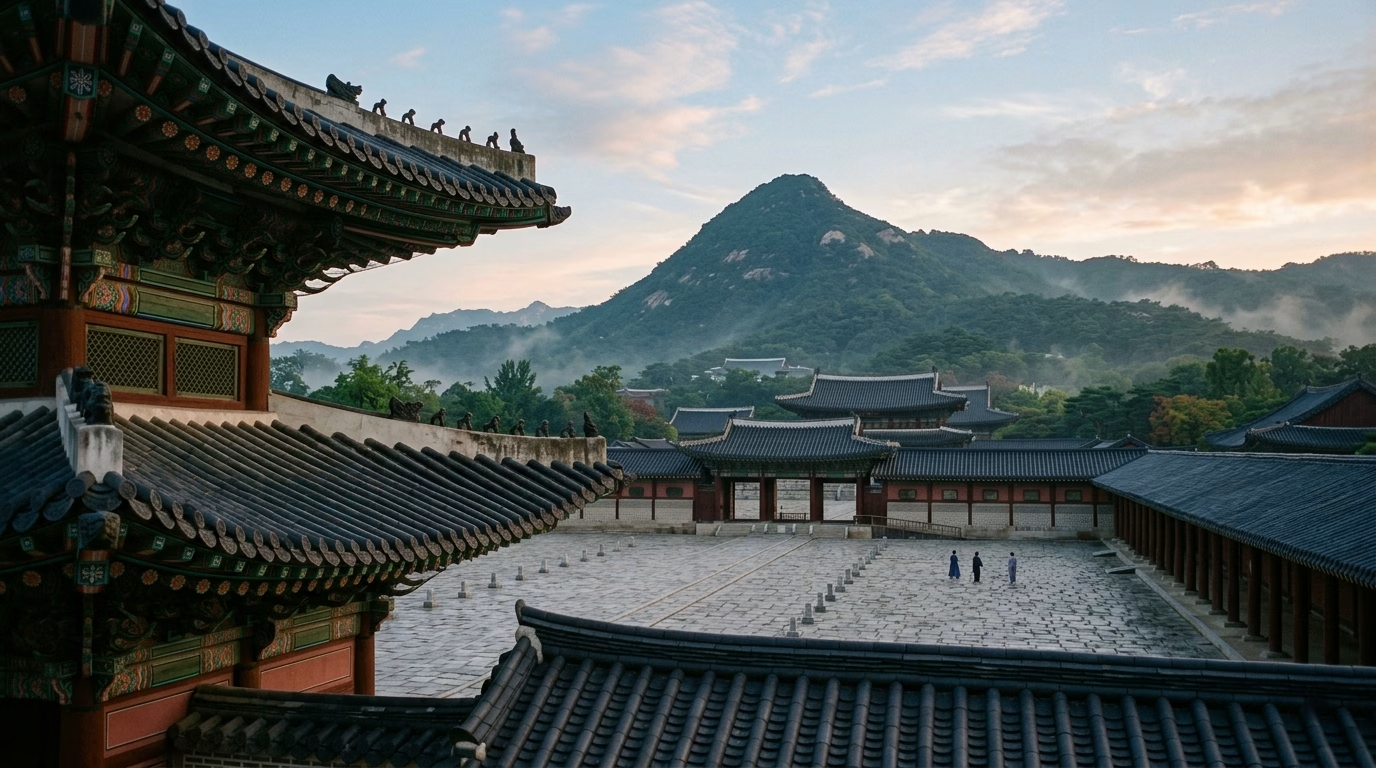
This South Korea travel guide covers the decisions that actually shape your trip: entry paperwork, the transport you will use daily, the food worth routing around, and how to stay online from the moment you land.
South Korea Travel Guide: Key Takeaways
- Confirm your visa and K-ETA status on official Korean sites within 72 hours of departure.
- Seven days across Seoul, Gyeongju, and Busan is the strongest first-trip route.
- A T-money card plus Naver Map or KakaoMap handles nearly all local transport.
- October gives you the best walking weather; July is the hardest month for long outdoor days.
- Install your Telekonek eSIM at home so maps and translation work the minute you land.
Understanding Travel in South Korea: Entry Rules and Current Advisories
Entry rules change by passport, trip length, and reason for travel. Before paying for flights, use the official Korea Visa Portal to confirm whether you need a visa. Check again within 72 hours of departure, because an undated South Korea travel guide can still show expired rules.
K-ETA rules have changed several times in recent years. If your passport qualifies for visa-free entry, confirm your current K-ETA status through the official K-ETA website. Avoid look-alike application sites that add high service fees or collect unnecessary personal details.
- Passport: Check the validity required by your airline and by Korean immigration before departure.
- Arrival details: Keep your first accommodation’s address and phone number available offline.
- Onward travel: Carry proof of your return or onward ticket in case you are asked.
- Medication: Confirm restrictions before packing controlled prescriptions, especially stimulants or strong pain medicine.
Health rules are the other item to recheck rather than assume. Review current notices from the Korea Disease Control and Prevention Agency shortly before you fly. Your airline may also apply document checks based on your departure country or recent travel.
South Korea is straightforward to navigate, but large demonstrations can disrupt central Seoul. Around Gwanghwamun, City Hall, and Yeouido, road closures may delay buses and taxis even when subway service continues. Leave the area if crowds tighten or police barriers appear.
Save 112 for police and 119 for fire or ambulance. Near the DMZ, follow every posted boundary and tour instruction. Access can change with little notice because of military activity or political tension.
Reliable data matters when an alert changes your route or you need to show a reservation. Set up your Telekonek eSIM for South Korea before departure; Telekonek data plans work across 200+ countries. Keep screenshots of your passport page, insurance policy, hotel address, and entry approval in a locked folder.
Watch out for: unofficial K-ETA pages, stale health advice, and protest-related road closures. Use official portals, and recheck requirements 72 hours before flying.
Takeaway: Start your South Korea travel guide planning on official Korean websites, and verify visa, K-ETA, and health rules just before departure.
Must-See Attractions and Hidden Gems across South Korea
Most of the attractions in a South Korea travel guide sit inside Seoul. Build in at least one stop that does not. Start in Seoul with Gyeongbokgung Palace, where restored halls sit against Bugaksan Mountain. Arrive near opening for quieter courtyards, then walk to the National Folk Museum and Seochon’s narrow lanes.
Bukchon Hanok Village looks close on a map, but its steep streets take time. Keep your voice low, because families still live there. Visitor access can be limited in residential lanes, so follow posted signs rather than an old itinerary.
Outside Seoul, choose stops that add something different instead of repeating another shopping district:
- Gyeongju: Explore the royal tombs around Daereungwon, then see Donggung Palace and Wolji Pond after sunset. Bulguksa Temple adds a quieter morning beyond the historic center.
- Busan: Pair cliffside Haedong Yonggungsa Temple with Gamcheon Culture Village. Gamcheon is more photogenic, while the coastal temple gives you open sea views and fewer souvenir streets.
- Jeju Island: Climb Seongsan Ilchulbong for broad eastern views, or walk a marked Jeju Olle Trail section for a slower look at villages and lava coastlines.
- Incheon: Go beyond the airport with Chinatown, Songwol-dong’s painted streets, and the waterfront at Songdo. This Incheon guide for families helps you choose practical stops.
The genuine hidden gems in a South Korea travel guide sit further south. Suncheon Bay Wetland Reserve draws far fewer tour groups, and its reed fields and broad tidal landscape feel a long way from Seoul. Nearby Naganeupseong Folk Village offers traditional homes without Bukchon’s heavy foot traffic.
Andong’s Hahoe Folk Village is another strong cultural detour. You get tiled homes, thatched roofs, and views from Buyongdae Cliff. Stay overnight in Andong if you can, since a rushed day trip leaves little time beyond the village entrance.
Watch out for Jeju weather. Strong wind or rain can cancel boat trips and close exposed hiking routes. Save one indoor option, such as a museum or local market, and avoid building a whole day around Udo Island.
Download offline map areas before mountain or coastal outings. Your Telekonek eSIM keeps live directions, weather alerts, and translation ready when trail signs are only in Korean.
Admission fees, opening hours, and palace programs change by season. Confirm them on the attraction’s official page the morning of your visit.
Takeaway: Pair Seoul and Jeju with one quieter stop — Gyeongju, Suncheon, or Andong — for a far richer trip.
Getting Around South Korea: Public Transport Explained
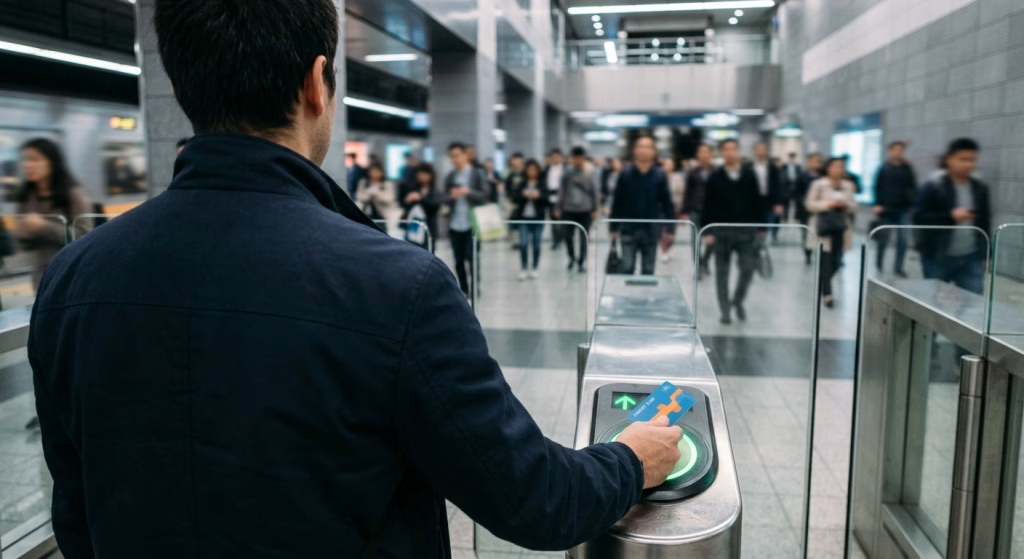
Transport is the part of a South Korea travel guide you use every single day. Your easiest setup is a rechargeable T-money card for subways and local buses. Buy one at a convenience store showing the T-money logo, or from selected station machines. Add credit in won, since some top-up points take cash only.
Tap the card when you enter and when you leave subway gates. On buses, tap again before getting off. Missing the second tap can trigger a higher fare or block the transfer discount.
- Seoul: Use the numbered and colored subway lines. Line 2 serves Hongdae, Gangnam, and Jamsil, while Line 1 has several branches.
- Busan: Line 1 connects Busan Station, Nampo, Seomyeon, and the route toward Beomeosa. Line 2 works well for Haeundae and Gwangan.
- Incheon: Combine the AREX airport railway with Seoul’s network. Local buses fill the gaps between Songdo and the older port area.
- Daegu, Daejeon, and Gwangju: Smaller rail networks make buses more important. Check the stop number carefully, because nearby stops may serve opposite directions.
Install Naver Map or KakaoMap for route planning. Both show Korean bus stops, live arrival estimates, station exits, and walking routes more clearly than apps built around Western map data. Keep your Telekonek eSIM active, because changing platforms without live directions is an easy mistake.
Subway signs usually include English, but station names appear with slightly different spellings between apps. Match the station number and line color instead. Also check the final destination shown on the platform, especially on branched routes such as Seoul Line 1.
For KTX and other intercity trains, use KorailTalk or buy at a staffed station counter. Reserved seats give you more comfort and reliable journey times. Intercity and express buses cost less and reach places without convenient rail links.
KOBUS and TxBus cover many long-distance bus routes. Online payment can fail with an overseas card or require extra account steps. If that happens, use the departure terminal’s machine or counter rather than retrying payment repeatedly.
Watch out for rush hour. Seoul trains get very crowded around major office hubs on weekday mornings and evenings. Large suitcases are awkward at Gangnam, Seoul Station, and long transfer corridors, so look for the elevator symbol before leaving the platform.
Last-train times change by line, direction, and day. Check your app before an evening meal rather than assuming the subway runs after midnight. One late taxi across Seoul can erase several days of public transport savings.
Takeaway: Load a T-money card with cash, tap on and off, and navigate with Naver Map or KakaoMap.
Cultural Etiquette: What Every Visitor Should Know
Etiquette is where a South Korea travel guide saves you the most awkwardness for the least effort. A small bow and a clear “annyeonghaseyo” work for most greetings. You do not need a deep, formal bow. During a handshake, support your right forearm with your left hand.
Age and job rank shape Korean speech and social order. A new acquaintance may ask your age earlier than you expect. You can answer broadly if you prefer, then use family names with titles until you are invited to speak more casually.
Keep Papago ready for polite phrases and menu questions. Your Telekonek eSIM keeps translation available when a restaurant has no Wi-Fi and no English menu.
At the table
- Wait for the cue: At a group meal, let the oldest person or the host begin first. In casual restaurants, a brief pause is usually enough.
- Use shared dishes carefully: Take small portions from banchan, the side dishes placed around the table. Use serving utensils when they are provided.
- Keep chopsticks off the rice: Never leave them standing upright in a bowl. That arrangement is linked with funeral rites.
- Leave bowls on the table: Unlike in several neighboring countries, lifting your rice bowl toward your mouth is not standard Korean table manners.
- Do not tip by default: Restaurants, cafés, and taxis charge the stated amount. A tip may confuse staff unless a venue clearly welcomes it.
When someone pours you a drink, hold your glass with both hands. Return the gesture by pouring with your right hand while your left supports your wrist or forearm. You can decline alcohol politely by saying “gwaenchanayo,” meaning “no, thank you” or “it’s okay.”
Watch the entrance at traditional restaurants, hanok stays, temple lodgings, and private homes. A raised floor or a shoe shelf means you should remove your shoes. Wear clean socks, since bare feet can feel too casual in shared indoor spaces.
On subways, keep calls short and your voice low. Avoid priority seats when the carriage is busy, even when one looks empty. Eating a full meal aboard urban trains also draws attention, so finish it before passing the gate.
At a jjimjilbang bathhouse, wash fully before entering the communal pools. Bathing areas are separated by sex, and swimwear is generally not worn. Keep the small towel out of the water, and confirm tattoo rules at the front desk, because policies vary.
Watch out: Seoul nightlife feels informal, but pouring your own drink or using an older host’s first name can still seem abrupt. Follow the table’s lead rather than copying fast-moving scenes from Korean television.
Takeaway: Greet with a small bow, use both hands, remove shoes at marked thresholds, and follow your host’s pace.
Culinary Delights: A Food Lover’s Guide to South Korea
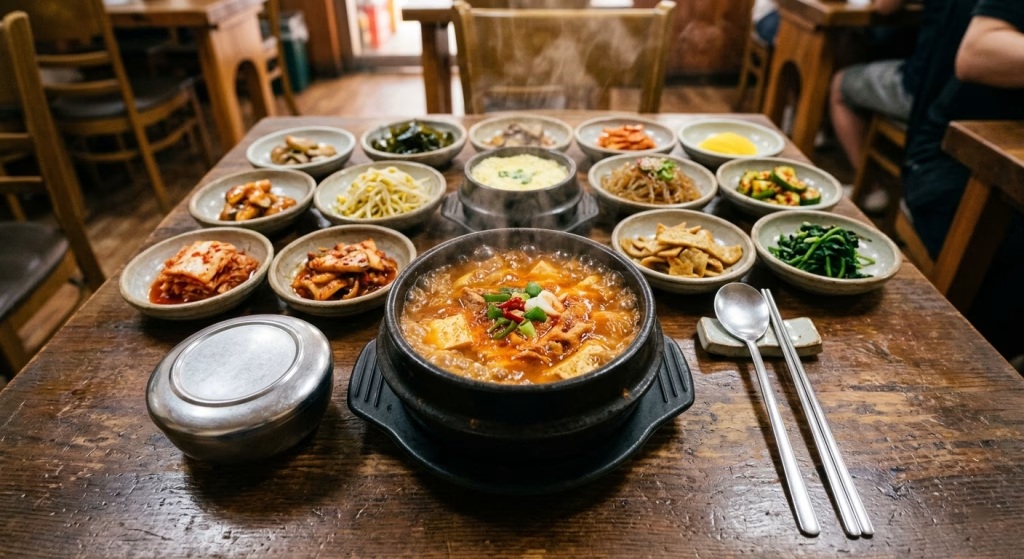
Korean meals reward you for ordering by region, not from one long checklist. A South Korea travel guide that lists dishes without regions sends you to the wrong city for each one. Use this section to match every stop with its strongest local plate.
- Seoul: Try seolleongtang, a mild ox-bone soup, or kalguksu, knife-cut noodles. Gwangjang Market is known for crisp bindaetteok mung-bean pancakes, while Mangwon Market offers a less hectic street-food crawl.
- Busan: Order dwaeji gukbap, a pork-and-rice soup you season at your table. Around Jagalchi Market, choose grilled fish or raw seafood after confirming the full price before ordering.
- Jeonju: Look for Jeonju-style bibimbap, served with carefully arranged vegetables and gochujang. The hanok village is convenient, but side streets beyond its busiest lanes feel calmer.
- Gyeongju: Sample ssambap, rice and small dishes wrapped in leafy greens. Finish with hwangnam-ppang, a small pastry filled with sweet red-bean paste.
- Jeju: Try grilled black pork and gogi-guksu, noodles topped with pork. Coastal restaurants also serve abalone porridge, a gentle breakfast after an early start.
- Andong: Share jjimdak, braised chicken with glass noodles in a sweet-savory sauce. Portions are large, so ask whether the smallest size suits your table.
For a quick street-food meal, look for tteokbokki, fish-cake skewers, hotteok, and seaweed rice rolls called gimbap. At a covered market, circle once before buying. You can compare portion sizes and find stalls cooking fresh batches.
Watch out for spice assumptions. “Not spicy” can still mean noticeable chili heat. Ask for an maepge haejuseyo, meaning “please make it not spicy,” but understand that premixed sauces cannot always be changed.
Small restaurants may use tablet menus or handwritten Korean signs. Save dish names in Hangul, and keep data active through your Telekonek eSIM for menu photos, map listings, and allergy translations. Naver Map carries more useful Korean restaurant listings than street-name searches alone.
Banchan side dishes arrive with the meal, so wait before ordering extra food. At barbecue restaurants, confirm whether a minimum meat order applies before you sit down. Also check whether the displayed amount is per serving or for the whole plate.
Takeaway: Eat Seoul’s market snacks, Busan’s pork soup, Jeonju’s bibimbap, and Jeju’s black pork — and confirm portions before ordering.
South Korea Travel Guide Itineraries: 3 to 14 Days
Build your route in one direction instead of returning to Seoul between every stop. Activate your Telekonek eSIM before departure so train updates, maps, and hotel messages stay available during transfers.
- Three days — Seoul only: Spend day one around Gwanghwamun, Seochon, and Insadong. Use day two for Hongdae and the Han River, then choose Suwon or Incheon on day three.
- Five days — Seoul and Busan: Give Seoul three full days. Take an early KTX from Seoul Station on day four, then stay near Seomyeon for easy subway access across Busan.
- Seven days — Seoul, Gyeongju, and Busan: Use days one to three for Seoul. Sleep in Gyeongju on day four, then continue south for three nights in Busan.
- Ten days — add Jeonju and Jeju: Spend three nights in Seoul, one in Jeonju, one in Gyeongju, and two in Busan. Fly from Busan’s Gimhae Airport to Jeju for your final three nights.
- Fourteen days — slow the pace: Allow four nights in Seoul, two in Jeonju, two in Gyeongju, three in Busan, and three in Jeju. This leaves room for markets, coastal walks, and weather delays.
For a Seoul day trip, Suwon gives you Hwaseong Fortress and a traditional market without changing hotels. Line 1 takes roughly an hour from central Seoul, though express and local services stop differently.
Incheon works better when you want waterfront spaces, Chinatown, or a family-focused outing. Allow a full day, because Songdo and the older port area sit far apart. Pick one area rather than rushing between both.
Gyeongju deserves an overnight stay instead of a hurried day trip from Busan. Singyeongju Station sits outside the historic center, so your arrival still needs a local bus or taxi before sightseeing begins.
Watch out for Jeju connections: never schedule a Jeju flight and an international departure from Incheon on the same day. Weather or domestic delays can break that plan, and transferring between Seoul’s airports adds several more steps.
Reserve KTX seats for Friday evenings, Sunday afternoons, and national holidays as soon as your dates settle. Choose morning departures between cities so hotel check-in does not consume your best sightseeing hours.
Takeaway: For a first trip, the seven-day South Korea travel guide route — Seoul, Gyeongju, Busan — gives you the most with the least wasted travel time.
Seasonal Travel Tips: When to Visit South Korea
Season shapes a South Korea travel guide more than any other single factor. Spring, from March through May, gives you mild days, flowering parks, and busy sightseeing routes. Seoul moves from about 5°C in March toward 20°C or higher in May, while evenings stay cool.
Cherry blossoms usually open first around Jeju and Busan, then reach Seoul later. Bloom dates shift every year, so avoid building your whole trip around one predicted weekend. Jinhae Gunhangje is the best-known blossom festival, but confirm its schedule for your travel year.
Watch out for yellow dust and poor air quality in spring. Keep a KF94 mask handy and check a live air-quality app before hiking Bukhansan or walking the Seoul City Wall.
- Summer, June through August: Expect heat, heavy humidity, and frequent rain. The jangma rainy season usually affects late June and July, and typhoons can disrupt coastal plans later in summer.
- Best summer activities: Spend hot afternoons inside the National Museum of Korea, COEX, or Busan’s museums. Visit beaches such as Haeundae early, before the sand and the subway fill up.
- Festival option: The Boryeong Mud Festival normally runs during summer. Confirm current dates before reserving a train or hotel, since schedules shift.
Summer is the hardest season for long city walks. A forecast showing 28°C feels much hotter once humidity rises. Keep your Telekonek data active for rain radar, heat alerts, and sudden train changes during coastal storms.
Autumn, from September through November, is the strongest all-around choice. You get clearer skies, lower humidity, and comfortable walking weather. October foliage draws heavy weekend traffic to Seoraksan, while Naejangsan gets especially busy later in the season.
Visit mountain parks on a weekday and take the first practical bus. Chuseok can close smaller restaurants and fill intercity trains, so check the holiday calendar before fixing your route.
Winter, from December through February, suits you if you want snow, skiing, and fewer outdoor crowds. Seoul can fall below freezing, while Pyeongchang resorts such as Yongpyong hold better snow than the capital.
Winter festivals, including the Hwacheon Sancheoneo Ice Festival, depend on weather and ice safety. Confirm the event is running before making the long bus trip, and keep an indoor alternative near Seoul in reserve.
Takeaway: Choose October for comfortable touring, avoid July for long outdoor days, and treat blossom or snow dates in any South Korea travel guide as flexible.
Staying Connected: Mobile Data and eSIM in South Korea
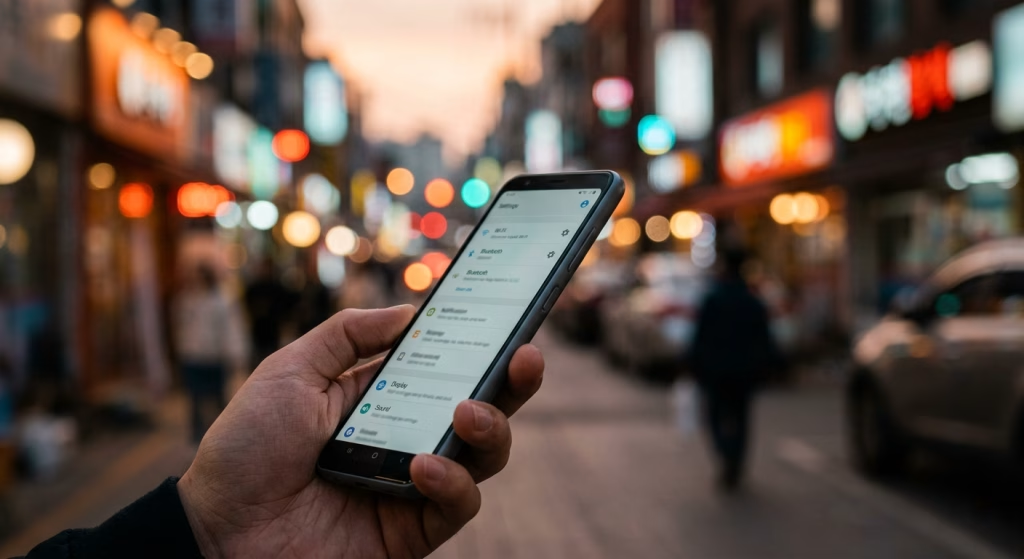
Maps, translation, bookings, and messaging all live on your phone here, so data is the one item in this South Korea travel guide worth sorting before you fly. A Telekonek eSIM for South Korea lets you activate service before you land. Telekonek data plans also work across 200+ countries, so the same setup covers your next trip.
Your Telekonek line runs on KT in South Korea. Coverage is strong across Seoul, Busan, Incheon, Jeju City, and the main KTX corridors. Expect a weaker signal on mountain trails, on smaller islands, and inside thick-walled guesthouses.
Install your eSIM at home, while you still have dependable Wi-Fi:
- Check your phone first: Confirm it supports eSIM and is carrier-unlocked before you buy.
- Install early, activate on arrival: Add the eSIM at home, then leave the line switched off until you land.
- Set the data line: Enable the Telekonek line for mobile data once you arrive.
- Protect your home line: Turn off data roaming on it. See these iPhone data roaming settings for the exact steps.
- Keep your home number live: Leave your physical SIM active for bank codes and messages, but expect your home carrier to charge for calls and texts.
Watch out for services that demand a Korean number. A data plan gives you internet, not a local phone number. Some restaurant queue systems, delivery apps, and booking forms ask for one, and identity checks often reject prepaid numbers anyway. Use your hotel’s number where a form requires a local contact, and book through websites rather than number-gated apps.
Public Wi-Fi is common at airports, major stations, hotels, cafés, and many subway areas. Networks may require a sign-in page or drop when you move between stations. Treat it as backup only, and avoid banking, passport uploads, or card purchases over open Wi-Fi.
Offline maps help, but Naver Map and KakaoMap work best with live data, since opening hours and routing change through the day.
If your eSIM connects but data does not load, restart your phone and check that the correct line handles mobile data. Leave automatic network selection enabled; manual switching can strand you on a weaker signal.
Takeaway: Install your Telekonek eSIM at home, disable home-line data roaming, and treat public Wi-Fi as backup only.
Common Mistakes First-Time Visitors Make in South Korea
South Korea feels easy until one small detail breaks your plan. These are the gaps a South Korea travel guide usually skips, and they cost more time than the main journey.
Picture your first evening in Seoul. Your map shows a restaurant five minutes away, but the pin sits behind a large building. Copy the Korean name from the booking page into Naver Map or KakaoMap, then match the storefront photo before walking.
Subway exits cause the next round of lost time. Two exits can sit on opposite sides of an eight-lane road, and the nearest elevator may be several corridors away. Check your exit number before leaving the platform, especially with luggage or a stroller.
- At Incheon Airport: An airport bus is often simpler than a rail trip that needs a crowded subway transfer, particularly when your hotel sits several blocks from a station.
- At cafés and restaurants: A touchscreen kiosk may reject a foreign card or show limited English. Photograph the item you want and show it to the counter staff. Keep some won for smaller shops and older machines.
- On KTX trains: Large luggage spaces fill before departure. Reach the platform early, and use a cabin-size bag that fits overhead where you can.
- In hotel rooms: A wide-angle photo hides a tight floor plan. Check the listed room size and recent guest photos before booking a Seoul stay, especially if you are opening two large suitcases.
Markets create a smaller problem: you finish a snack and find no public bin nearby. Carry a sealable bag until you reach your hotel or a proper waste station. Do not leave cups beside a full bin.
Late nights create another trap. You can lose track of time in Hongdae or Euljiro and miss the last convenient subway connection. Check the final route before ordering another round, then set your taxi pickup pin on a main road rather than inside a narrow alley.
You will also get more help when your request is short and specific. Show a saved Korean address, train number, or menu photo instead of explaining the whole problem in English. A screenshot still works in an underground passage with weak reception.
Takeaway: Save your hotel address, key map pins, and booking screenshots before each outing, and keep your Telekonek eSIM plan for South Korea active for live directions and translation from the moment you land.