
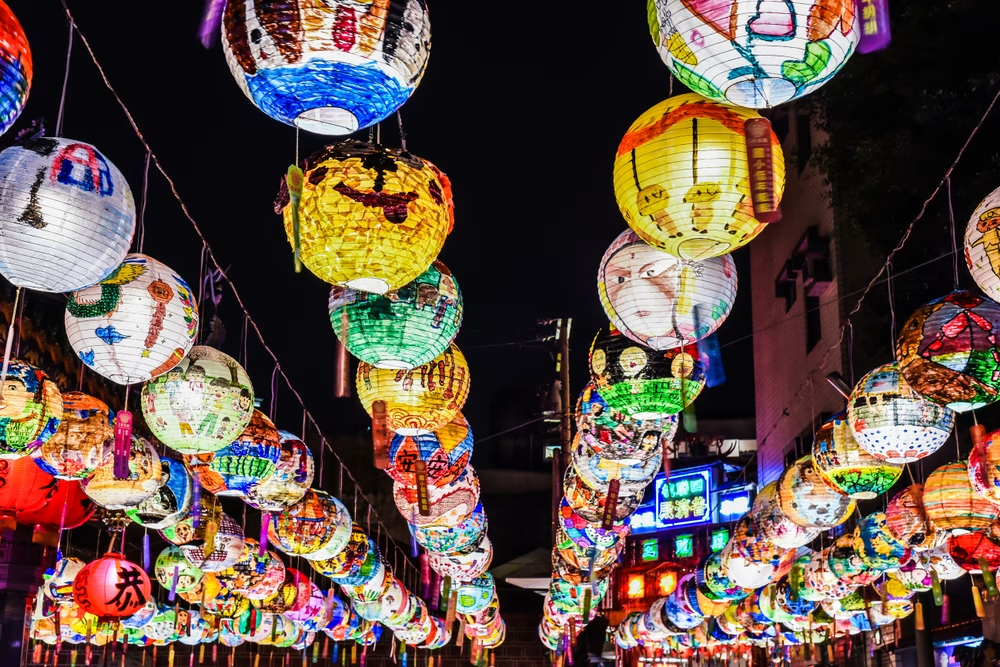
The Taiwan Lantern Festival closes out Lunar New Year with large-scale lantern installations, folk performances and fireworks. Unlike most festivals, it does not have a fixed home: the national event tours the island, hosting in a different county each year, which means planning around it starts with working out where it is going next.
Dates and Location
The festival falls on the 15th day of the first lunar month, so the date shifts each year. The main event usually runs for around two weeks either side of that.
- 2026: Chiayi County, 3 to 15 March. This edition has passed.
- 2027: Miaoli County, February. Confirm exact dates with the Taiwan Tourism Administration closer to the time, as they are typically announced a few months ahead.
Because the host county changes annually, accommodation and transport patterns change with it. Do not assume advice written for a previous year still applies.
The Three Events People Confuse
Search results tend to blur these together, and they are genuinely different experiences happening in different places around the same time of year.
Taiwan Lantern Festival (the national event)
The touring headline festival, formalised in 1990 and run with government backing. Expect enormous themed lantern installations, often built around the zodiac animal of the year or a local cultural theme, alongside stages, craft workshops and food stalls. This is the one with the biggest budget and the widest appeal, and it is family-friendly and largely free to attend.
Pingxi Sky Lantern Festival
This is the one in the photographs. Held in Pingxi District, New Taipei, participants write wishes on paper sky lanterns and release them into the valley in coordinated mass launches across two nights. It is roughly 45 minutes from Taipei by train on the Pingxi branch line.
Two practical warnings. It gets extremely crowded, and the branch line becomes a bottleneck. Work out your return journey before you go, and expect long queues at the station afterwards. Going early in the day gives you the village itself without the crush.
Yanshui Beehive Fireworks Festival
Held in Yanshui, Tainan, and not a lantern festival at all, though it falls in the same period and gets swept up in the same searches. Racks packed with thousands of bottle rockets are fired directly into the crowd, and participants wear helmets, thick jackets and gloves as protection. The tradition originates in a local legend about driving away disease.
Take the safety equipment seriously. This is not a spectator event in the ordinary sense, and injuries happen. If you want lanterns rather than adrenaline, this is not the one.
Where the Tradition Comes From
The lantern festival traces back over 2,000 years to Han Dynasty China, marking the first full moon of the lunar year and the close of New Year celebrations. It began with Buddhist ceremony, where lanterns symbolised enlightenment.
In Taiwan the lanterns came to represent hope and good fortune, with families lighting handheld lanterns while larger public displays lit the streets. The sky lantern tradition in Pingxi has a more practical origin: villagers in the hills once used them to signal that it was safe to return home after bandit raids.
The modern national festival was formalised in 1990 and has grown into a major event on Taiwan’s cultural calendar, with themes that change annually and installations from both traditional craftsmen and contemporary artists.
Lantern Craft
Traditional lanterns are built from rice paper stretched over bamboo, light enough to glow through and flexible enough to shape. Larger installations use metal frames for structure and increasingly use LED lighting rather than open flame.
Hand-painting and calligraphy carry much of the detail, with designs drawing on zodiac animals, folklore and historical figures. The festival runs design competitions, which is part of why the installations have grown steadily more ambitious. Workshops at the main event let visitors make their own on a smaller scale.
Planning Your Visit
- Use public transport. Parking at the main site is limited and roads congest badly. Taiwan’s rail network is good and the festival is always planned around it.
- Weekdays over weekends if you want to actually see the installations rather than the backs of other people’s heads.
- Go after dark, arrive before it. The lanterns need night to work, but arriving in daylight lets you get oriented before the crowds build.
- Book accommodation early. The host county is often not a major tourist centre and its hotel stock is limited. This is the single thing most likely to catch you out.
- Dress for cold evenings. February in Taiwan is mild by day and genuinely chilly at night, particularly in the hills around Pingxi.
Street food is part of the experience at every one of these events, so arrive hungry rather than eating beforehand.
Staying Connected
Between a touring festival site you have never visited, a crowded branch railway line and evening events that run past the last convenient train, this is a trip where live maps and transport times matter. Crowds of this size also put heavy load on local networks.
A Taiwan eSIM from Telekonek installs before you leave home and activates on landing, running alongside your existing SIM so your usual number stays reachable. Coverage spans 200+ countries if Taiwan is one stop on a longer trip.
Taiwan is one of several destinations covered in our guide to lantern festivals around the world.