
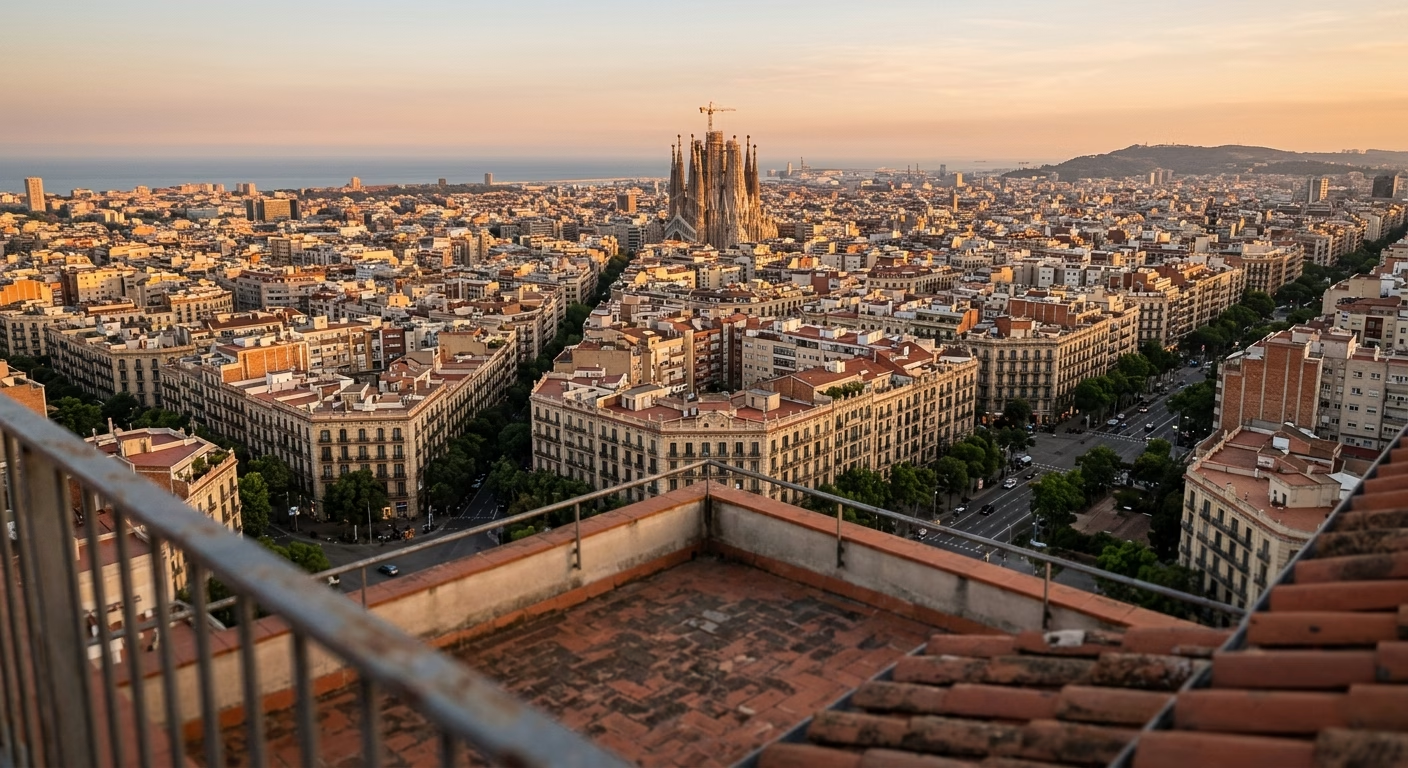
Most guides to the things to do and see in Barcelona tell you to visit La Sagrada Família and stop there. This one gives you the number on the ticket, the day it costs nothing, and the two facts that changed in 2026 and are still wrong on almost every other page.
Three things worth knowing before you plan anything:
- 2026 is Gaudí’s centenary year. A hundred years after his death, the Sagrada Família is completing its Tower of Jesus Christ, and demand is the highest it has ever been. Timed slots go days ahead.
- Park Güell nearly doubled in price. Entry to the Monumental Zone went from €10 to €18 in early 2026. Guides quoting €10 are out of date.
- The tourist tax jumped on 1 April 2026. Catalonia doubled the regional rate and Barcelona added a €5 municipal surcharge on top, charged per person, per night.
Prices below are the official ones, current at the time of writing. Book direct where you can — resellers add €5 to €15 for the same entry.
2026 prices at a glance
| What | 2026 price | Note |
|---|---|---|
| La Sagrada Família (basic, with audio app) | €26 | €36 with tower lift; under 11s free |
| Park Güell Monumental Zone | €18 | €13.50 ages 7–12 and over-65s; 95% of park free |
| Casa Batlló | from €29 | Dynamic pricing; under 12s free |
| Casa Milà (La Pedrera) | from €29 | Roughly €22 ages 7–17 |
| Metro single, Zone 1 | €2.90 | Fares rose 3.5% in January 2026 |
| T-casual, 10 rides | €13 | Shareable between people — not valid to the airport |
| Airport metro ticket | €5.90 | Separate ticket, one way |
| Hola Barcelona pass | €18.70–€43.60 | 2 to 5 days, airport metro included |
| Tourist tax | €6–€12 pppn | By accommodation type, plus 10% VAT |
Two people in a four-star hotel for four nights pay roughly €67 in tourist tax alone before a single ticket. Budget for it as a line item, not a rounding error.
Map of everything below
Every stop in this guide, pinned. Open it on your phone and the whole list travels with you.
15 things to do and see in Barcelona
1. La Sagrada Família
Gaudí’s basilica is the one sight that justifies its queue. The interior is built as a stone forest: columns branch into the ceiling and the stained glass shifts the whole room from cool blues in the morning to reds by late afternoon. Go in the last two hours of daylight for the western windows.
Study the Nativity façade before you go in — it is dense, joyful, and carved under Gaudí’s own supervision. Then walk to the Passion façade, which is deliberately stark by comparison. Check the official price list before booking anywhere else.
Tickets are timed and there is no meaningful walk-up option in 2026. Keep the QR code where you can reach it fast — a Telekonek Spain eSIM means your ticket, your slot time, and your metro route are all on a phone that is already online when you come up the stairs at Sagrada Família station.
Watch out: shoulders covered, no hats inside the nave, and arrive inside your slot window. Late arrivals get turned away.
2. Park Güell
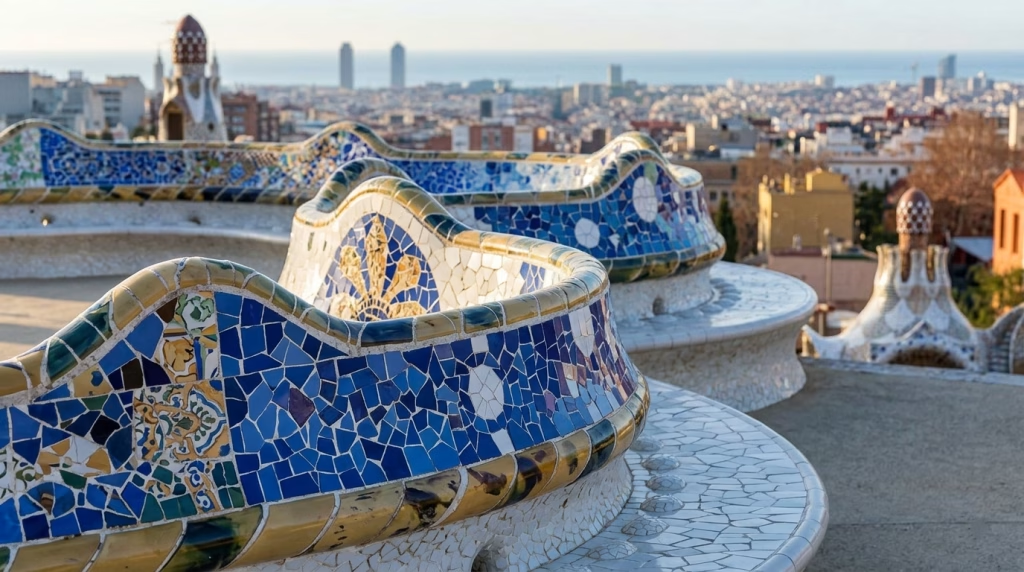
Uphill in Carmel, with the whole city and the sea laid out below. The ticketed Monumental Zone holds the mosaic lizard, the tiled serpentine bench, and the Hypostyle Room, where tilted columns lean like a grove.
Here is the part worth knowing: about 95% of the park is free. The woodland paths and the Calvary viewpoint cost nothing. If €18 for the Gaudí core does not fit your day, the free zone is still a genuinely good hour.
Watch out: book the 9:30am slot. Midday in summer on an exposed hillside is punishing, and slots sell out days ahead in season.
3. Casa Batlló
The dragon house on Passeig de Gràcia — scaled roof, bone-like columns, a façade that looks liquid in the right light. Pricing is dynamic, so the same ticket costs less booked three weeks out than three days out. Under-12s go free, which makes it the better Gaudí house for families.
4. Casa Milà (La Pedrera)
Four hundred metres from Casa Batlló, and a completely different building: a stone wave with no straight lines and a rooftop of chimney sculptures that look like sentries. If you only do one modernist interior, this is the one with the better roof. Both on the same morning is entirely doable.
5. The Gothic Quarter and the Roman wall
Free, and the oldest layer of the city. Sections of the Roman wall of Barcino still stand around Plaça Nova, and the street grid near the cathedral is still following lines drawn two thousand years ago. Detour to Plaça Sant Felip Neri, a small square with shrapnel scars on the church wall from the Civil War.
6. Santa Maria del Mar and El Born
The most beautiful church in Barcelona is not the famous one. Santa Maria del Mar was built by the port workers and merchants of the fourteenth century, and it feels it: broad, plain, honest, with none of the royal show. Sit for ten minutes.
Around it, El Born gives you medieval lanes, Carrer de Montcada’s stone merchant houses, and the Born Cultural and Memorial Centre, where excavated streets from the city as it stood before 1714 sit under a market hall roof.
7. Museu Picasso
Five linked medieval palaces holding the artist’s formative Barcelona years — the work he made before he was Picasso, which is more interesting than it sounds. Free on Thursday afternoons and the first Sunday of the month, but slots open exactly four days ahead and go within minutes. Under-18s are always free with ID.
8. MNAC and the Montjuïc museums
The National Art Museum of Catalonia holds the world’s best collection of Romanesque murals, lifted wholesale from Pyrenean churches and rebuilt inside the palace. Free every Saturday from 3pm and the first Sunday of the month. The building is enormous, so even the free slots stay manageable.
9. Montjuïc Castle and the cable car
A 1751 fortress on the hill above the port, with a hard history — military prison, torture site, and the place President Lluís Companys was executed in 1940. You can walk the grounds and take in the harbour view without paying; the exhibit inside charges entry. The Telefèric de Montjuïc climbs 750 metres to reach it and is worth doing at least one way.
10. Gràcia’s squares
Gràcia was a separate town until 1897 and has never quite agreed to stop being one. The pleasure is not a sight, it is a circuit: Plaça del Sol for a drink outside, Plaça de la Virreina for the church and quieter benches, Plaça de la Vila de Gràcia for the clock tower. Carrer de Verdi for independent shops and the neighbourhood cinema.
Come at 7pm on a weekday when families, students, and dog walkers fill the squares. Buy something if you take a table, and keep the volume down late — people live above these squares.
11. Barceloneta’s back grid
Skip the beachfront promenade and cut into the tight streets behind Passeig de Joan de Borbó. Laundry on balconies, old seafood counters, and Plaça del Poeta Boscà by the neighbourhood market. This is the working port city, not the postcard.
Watch out: Barceloneta is a bag-theft hotspot. Nothing unattended on the sand, ever, not for one swim.
12. Bogatell beach
Barceloneta beach is the closest and the most crowded. Walk or ride L4 north to Bogatell and you get more room, a calmer local crowd, and space to actually read. Nova Icària sits between the two and works if you want Port Olímpic restaurants within reach.
13. Mercat de Sant Antoni — and the real Pinotxo
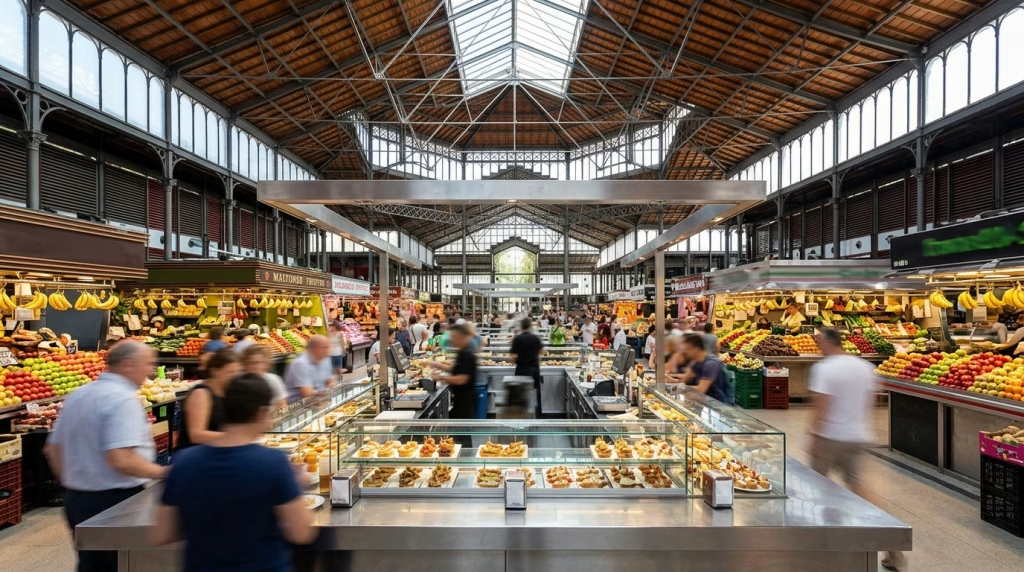
This is the entry most guides get wrong. Bar Pinotxo is no longer in La Boqueria. The legendary market counter left its century-old home and reopened inside the restored Mercat de Sant Antoni, where Jordi Asín and his family now run it. Plenty of pages still send people to La Boqueria to look for it, and they do not find it.
Go to Sant Antoni instead. The 1882 iron market hall reopened in 2018 after a nine-year restoration, the aisles are wide, the vendors are selling to locals rather than posing for photos, and the chickpeas with blood sausage at Pinotxo are the reason to arrive between 11:30am and 1pm before the lunch crush. On Sunday mornings the streets around the market fill with second-hand books, comics, and collectible cards.
14. Parc de la Ciutadella and Jardins de Laribal
Ciutadella sits beside El Born with a monumental fountain, a lake, and lawns wide enough to disappear on. Buy bread, cheese, and fruit from a neighbourhood shop rather than a snack stand and sit away from the fountain.
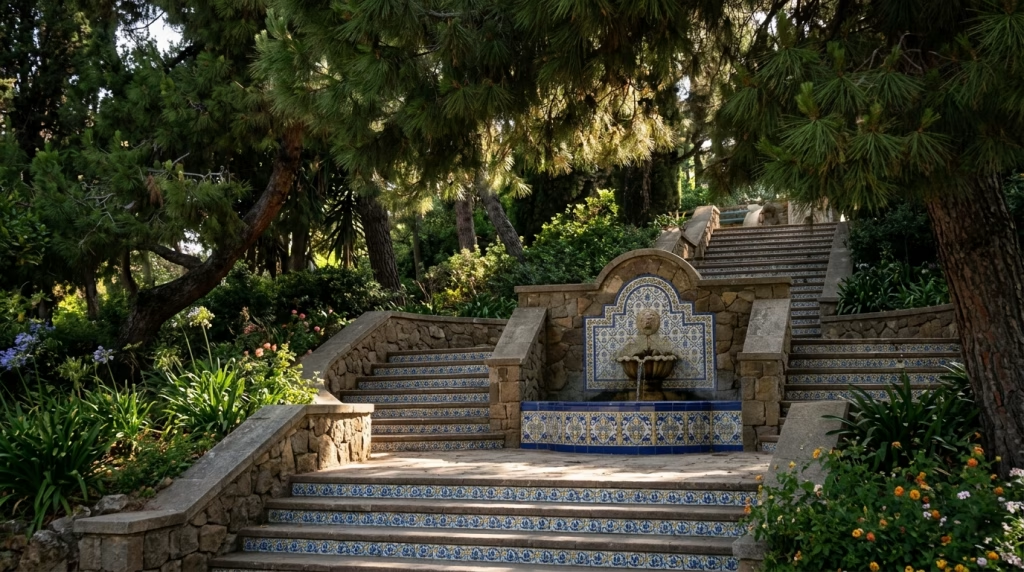
For something quieter, the Jardins de Laribal on Montjuïc give you tiled stairways, shaded terraces, and views, with a fraction of the people. Wear shoes with grip; the steps get slick after rain.
15. Cementiri de Poblenou and Els Encants
The Poblenou cemetery holds “The Kiss of Death,” a marble sculpture of a winged skeleton kissing a young man, and almost nobody is there. Walk out through Poblenou’s old factory streets toward the sea afterwards.
Then Els Encants near Glòries, under its mirrored canopy: old posters, ceramics, records, lighting, furniture. It closes Tuesdays, Thursdays and Sundays, so check the day. Go with a clear sense of what fits in your suitcase — a bargain lamp stops being a bargain once you price the shipping.
Free things to do in Barcelona
Barcelona’s free-museum system is genuinely generous and almost nobody uses it properly, because the slots differ by venue. The pattern is worth learning:
- First Sunday of the month, free all day: MNAC, Museu Picasso, CCCB, Museu del Disseny, Museu Frederic Marès, Museu Marítim, MUHBA Plaça del Rei, Monestir de Pedralbes, and the Mies van der Rohe Pavilion.
- MNAC: also free every Saturday from 3pm.
- MACBA: free Saturdays from 4pm — not Sundays. This is the one people get wrong.
- Museu Picasso: also free Thursday afternoons. Book four days ahead, at 10am sharp.
- Always free, no conditions: La Virreina Centre de la Imatge, Arts Santa Mònica at the foot of La Rambla, La Capella near Plaça Reial, Palau Robert, and Fabra i Coats.
A single Saturday afternoon across MNAC and MACBA saves you over €30. Check current times on the city council’s museum listing before you go.
One caveat: the three big Gaudí sites do not participate. Sagrada Família, Park Güell, and Casa Batlló have no free days for visitors. Budget for those separately.
Beyond museums: every beach, the whole Gothic Quarter, Ciutadella, the Montjuïc gardens, the Poblenou cemetery, and 95% of Park Güell cost nothing at all.
What to eat
Catalan cooking runs on good produce, olive oil, seafood, and slow-cooked comfort food. Order several plates to share rather than treating every meal as three courses.
- Pa amb tomàquet — toasted bread rubbed with ripe tomato, garlic, oil, salt. The table starter everything else follows.
- Bombes — fried potato balls stuffed with meat, spicy sauce and aioli on top. Invented in Barceloneta; La Cova Fumada still claims them.
- Escalivada — smoky roasted aubergine and peppers, often with anchovies.
- Esqueixada — cold salt cod salad with tomato and onion. The right order on a hot day.
- Crema catalana — citrus and cinnamon custard under burnt sugar.
Look for the menú del día at lunch: three courses with bread, a drink, and dessert for around €16 at somewhere like La Pubilla in Gràcia. It is the single best-value meal in the city and it disappears after about 3:30pm.
For sparkling wine and cured meat standing shoulder to shoulder, Can Paixano near the port — but check the day, because it closes Saturday through Monday. La Cova Fumada in Barceloneta does not hand out menus and the queue can run an hour; go at opening.
Watch out: paella is Valencian, not Barcelona’s dish, and a giant pan displayed outside a restaurant is a warning sign. Look for a short menu, daily specials, and locals eating at local hours.
Getting around, and the ticket trap
The metro is your default. L2 for Sagrada Família, L3 for Plaça Catalunya, Liceu and Gràcia, L4 for Barceloneta and the waterfront, L1 for Arc de Triomf and Plaça d’Espanya. Transfers between modes are free for 75 minutes on one validation.
The trap: the T-casual — the ten-ride card most visitors buy — does not work on the L9 Sud airport line. People buy it at the airport machine and hit the barrier. You need the separate €5.90 airport ticket, or a Hola Barcelona pass, which includes the airport run. Confirm current fares on the TMB fares page.
Rough rule: staying two to four days without the airport metro, buy a T-casual and share it. Flying in and out with heavy use, the Hola Barcelona pass wins.
Buses fill the gaps the metro leaves — bus 24 up to Park Güell, bus 150 for Montjuïc Castle. Both save you a climb. For live departures and the right station exit in the old city’s lanes, a working connection matters more here than in most European capitals; our guide to the best transport apps in Europe covers what to install before you fly.
How long do you need?
One day: Sagrada Família first thing, Passeig de Gràcia for one modernist house, lunch in Gràcia, sunset from Montjuïc or the beach, dinner in Poble-sec or El Born.
Three days — and yes, three is enough for a first trip. You will see the major Gaudí sites, the Gothic Quarter and El Born, one museum, one beach, and eat well, without sprinting. Day two pairs Park Güell with Gràcia and ends in El Born; day three gives Montjuïc the whole day. What three days will not give you is unstructured time, which is the thing people miss most.
Five days: add a waterfront day from Barceloneta out to Poblenou, then spend day five on the quieter list — Ciutadella, Sant Antoni, a small gallery, or simply going back to whichever neighbourhood you liked. Resist adding a day trip just because the calendar has room.
The mistake to avoid: one timed attraction per half-day, maximum. Sagrada Família, Park Güell, and a major museum each swallow more time than the ticket suggests once you add getting there, security, and actually looking.
Practical notes
Late spring and early autumn give you the best balance of weather and crowds. July and August make the long Eixample blocks genuinely tiring. Winter is quiet and good for museums, with short days.
Pickpocketing is the real risk, not violent crime. Crowded metro entrances, La Rambla, Plaça de Catalunya, and beach access points are where it happens. Zipped cross-body bag worn in front, nothing on an outer café table, nothing hanging on a chair back.
Pay in euros when a card terminal offers to convert to your home currency — the terminal’s rate is worse than your bank’s. Cards work almost everywhere, including metro machines; carry a little cash for a market stall or a neighbourhood bar.
Set your data up before you fly rather than hunting for a shop after landing. In Spain, Telekonek runs on Orange and Movistar, so you are on two of the country’s main networks rather than a single fallback, and plans reach 200+ countries if Barcelona is one stop on a longer European route. Heading elsewhere in the country afterwards? Our Spain travel guide covers regions, trains, and timing.
Frequently asked questions
What is the number one thing to see in Barcelona?
La Sagrada Família, and it is not close. Nothing else in the city delivers the same effect on a first visit, and 2026 is the centenary year, which makes it a particularly good time to go.
What shouldn’t you miss?
Beyond the Gaudí sites: Santa Maria del Mar, an evening in Gràcia’s squares, and a market that is not La Boqueria. Those three do more to explain the city than any museum.
Is three days enough for Barcelona?
Yes for a first visit. You will cover the headline sights, two or three neighbourhoods, and eat properly. You will not have slow time, and you will probably want to come back.
What are the best neighbourhoods to explore?
El Born for medieval lanes and evening energy, Gràcia for squares and local routine, Barceloneta for the port and seafood, Sant Antoni for markets, Poblenou for old industry turning into something else.
Are there free activities in Barcelona?
A lot. Most major museums are free on the first Sunday of the month, MNAC is free Saturday afternoons, MACBA Saturday from 4pm, and La Virreina, Arts Santa Mònica and La Capella are always free. Add the beaches, the Gothic Quarter, and most of Park Güell.
Do you need mobile data in Barcelona?
Constantly — timed-entry QR codes, live bus arrivals, the correct metro exit, restaurant hours that change without warning. Install a Spain eSIM before you leave home and you are online the moment you land.
Takeaway: book the three paid Gaudí sites before you travel, build the rest of your days around the free windows, and give yourself one afternoon with nothing in it.