
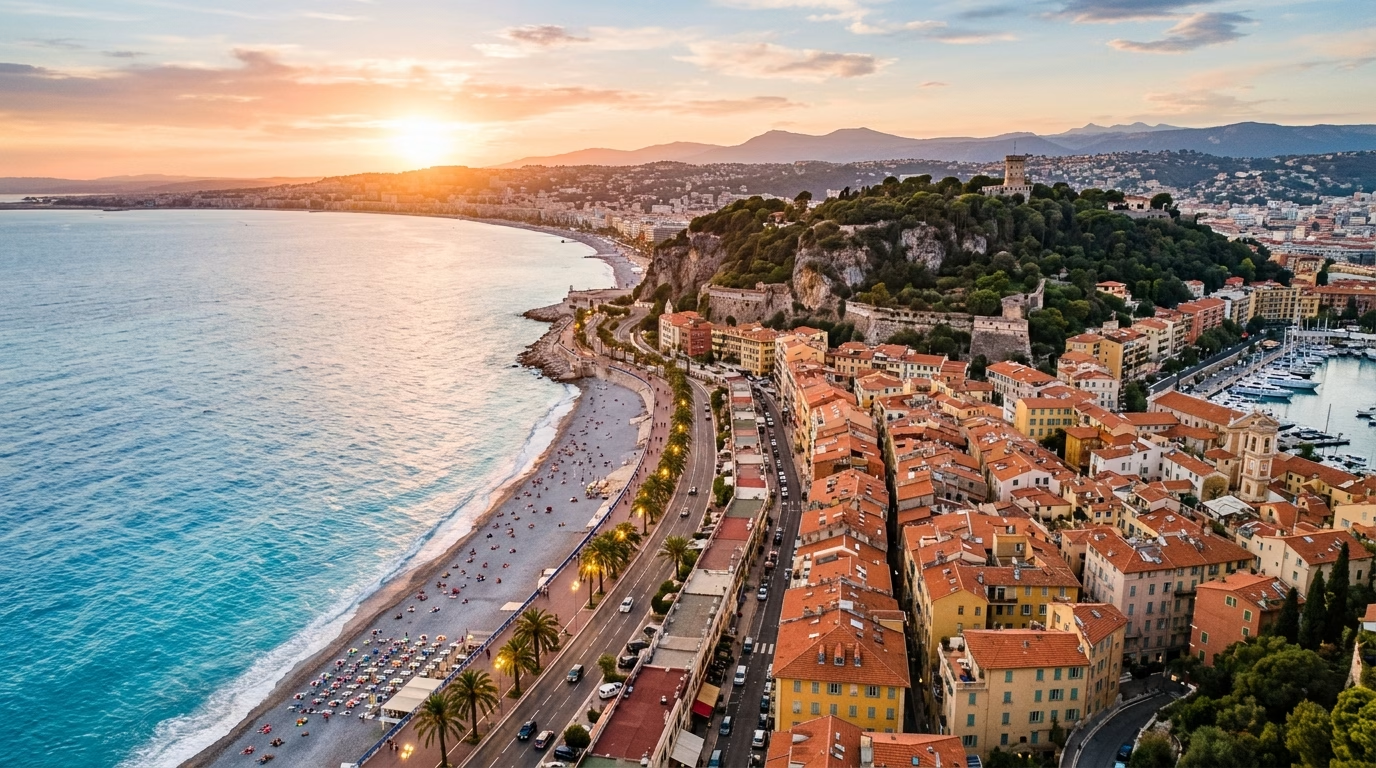
Nice packs a Mediterranean beach city, a dense Italian-flavored old town, and a string of Riviera day trips into a few walkable square kilometers. The best things to do in Nice, France range from a sunrise walk along the Promenade des Anglais to hot socca eaten standing up near the port, and you can cover most of them without renting a car.
This guide covers the top sights, family stops, free days, food, hidden corners, when to go, and how to stay connected with a France eSIM so your maps and tickets work from the moment you land.
What Are the Top 10 Things to Do in Nice, France?
For a first visit, these are the 10 things to do in Nice, France travelers should put at the top of their list. The best order depends on your energy, weather, and how much you enjoy hills, museums, or long lunches.
- Walk the Promenade des Anglais. Follow the famous seafront path beside the Baie des Anges, from the airport side toward the old town. Go early for quieter views, or near sunset for the best light on the water.
- Climb Colline du Château (Castle Hill). Take the stairs or lift up for broad views over the red roofs of Vieux Nice, the port, and the curved bay. You will not find a standing castle, but the park, waterfall, and viewpoint make the climb worthwhile.
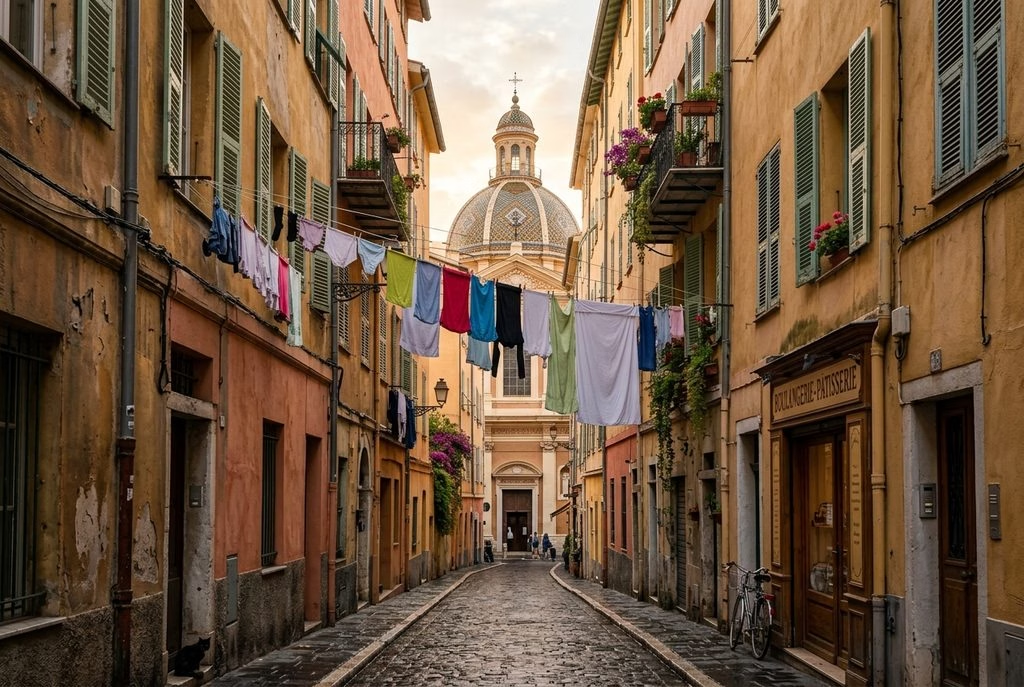
- Get lost in Vieux Nice. Walk the narrow lanes around Cours Saleya, Rue Droite, and Place Rossetti. This is the part of Nice for faded shutters, baroque churches, gelato stops, and small shops that feel far removed from the wide seafront boulevard.
- See the flower market at Cours Saleya. Browse flowers, produce, herbs, and Provençal goods in the old town market area. Arrive in the morning, then stay nearby for coffee before the streets become busy.
- Visit the Musée Matisse. Head to Cimiez for works by Henri Matisse, whose years in Nice shaped much of his later art. Pair your visit with the olive grove and Roman ruins in the same peaceful hilltop area.
- Explore the Musée Marc Chagall. Spend time with Chagall’s large biblical paintings and stained-glass work. This museum feels more focused and quieter than a large city gallery, making it a good break from beach crowds.
- Swim or lounge at the beach. Nice’s shoreline is mainly smooth pebbles, not soft sand, but the water can be strikingly clear. Bring water shoes and a towel with padding; bare feet on hot stones are a common first-day mistake.
- Watch the boats at Port Lympia. Walk east from Castle Hill to see yachts, fishing boats, and the colorful buildings around the harbor. Continue toward the coast for a less crowded alternative to the Promenade des Anglais.
- Ride or walk up to Mont Boron. This green hill gives you a different angle on the city, port, and Cap Ferrat coastline. Keep your maps loaded before you start, since the paths and roads around the hill can feel confusing after dark.
- Take a day trip along the Riviera. Use Nice as your base for places such as Èze, Villefranche-sur-Mer, Menton, Cannes, or Monaco. Reliable data matters when checking platform changes and return routes; Telekonek eSIM data plans work in 200+ countries, so you can sort out travel details without hunting for café Wi-Fi.
Watch out for: trying to fit every museum, hill, and beach stop into one day. Group Vieux Nice, Castle Hill, the port, and the Promenade together; save Cimiez and the art museums for a separate half-day.
Takeaway: Start with the Promenade, Vieux Nice, and Castle Hill, then choose museums, beaches, or a Riviera day trip to match your travel style.
What is Nice, France Best Known For?
Nice stands apart from much of France because you experience a Mediterranean city with a strong Italian edge. In Vieux Nice, narrow lanes, ochre façades, shuttered windows, and baroque church domes feel closer to Liguria than to Paris. The local identity is called Nissart, and you will see it in the Niçoise dialect, food, music, and proud local symbols.
The city’s position between the Alps and the sea shaped that identity. You can move from the grand Belle Époque buildings along the waterfront to the tightly packed old town in minutes. That contrast is the point: elegant resort life sits directly beside a working, historic Mediterranean quarter.
For architecture, focus on these places rather than trying to photograph every landmark from the Promenade:
- Place Masséna: the city’s dramatic central square, marked by red façades, arcades, and the Fontaine du Soleil. Come after dark when the square’s public art lights up.
- Cours Saleya and Vieux Nice: this is where Nice feels least polished and most local. Look above street level for painted façades, small balconies, and the carved details around church doors.
- Russian Orthodox Cathedral: a striking reminder of the wealthy winter visitors who shaped Nice’s resort era. Dress modestly and allow extra time for security or worship services.
- Le Negresco: even without staying there, the famous pink-domed hotel helps explain Nice’s long association with Riviera glamour and art-filled hotels.
Nice also has a serious art story. Henri Matisse spent key years here, drawn by the clear coastal light, while Marc Chagall’s work has a dedicated museum in the city. Visit the Matisse Museum in Cimiez for a quieter, more personal view of the artist’s world; pair it with the nearby Roman ruins and olive groves instead of treating it as a quick indoor stop.
Watch out: Vieux Nice is beautiful, but it is easy to mistake it for a film set and miss its real rhythm. Go in the morning, when delivery scooters, bakers, and residents still set the pace.
Nice is best known for blending Riviera elegance, Italian-flavored local culture, and art shaped by exceptional Mediterranean light.
Are There Family-Friendly Activities in Nice?
Nice works well with children because you can mix short indoor stops with space to run around. For family-friendly things to do in Nice, France, focus on places that do not demand a full day or a long bus ride.
Start at Parc Phoenix, near the airport in western Nice. You can spend a few hours among tropical plants, ponds, birds, and small animal areas, then let younger children reset in the open park space. The huge greenhouse is especially useful during a hot afternoon or a rare rainy day.
Check the current opening hours and entry rules before leaving your hotel, as these can change by season. Save the park map and your return tram route in advance, since the grounds are large enough to make a quick exit harder than expected.
For an active indoor option, head to the Musée National du Sport at Allianz Riviera. You can find sports objects, Olympic stories, football history, and displays that hold attention better than a traditional painting gallery. It is a strong choice for school-age children who need more than another historic building.
Pair it with a stadium visit only if a match or tour fits your dates. Watch out: Allianz Riviera is outside the compact center, so do not assume you can walk there easily with tired children. Check the route and allow extra time for the return journey.
Cimiez gives you a low-pressure history lesson. At the Musée d’Archéologie de Nice-Cimiez, you can turn Roman ruins into a simple challenge: spot the arena, baths, roads, and stones that are nearly 2,000 years old. Bring water and a snack, then let your children explore the surrounding olive-grove area at their own pace.
For a calmer cultural stop, choose the Musée National Marc Chagall. The bold blue, red, and yellow paintings are easier for children to react to than dense historical displays. Keep the visit short—around an hour is often enough—and ask your children to pick one picture they would hang in their room.
- Best for under-8s: Parc Phoenix, plus a pebble-beach break.
- Best for sporty children: Musée National du Sport and the Allianz Riviera area.
- Best for curious school-age children: Cimiez’s Roman remains.
- Best for a quiet, air-conditioned hour: Musée National Marc Chagall.
At the beach, remember that Nice has smooth stones rather than soft sand. Pack water shoes, because bare feet on hot pebbles and slippery shoreline rocks can end a beach stop quickly. Download tickets, maps, and opening details before setting out so you can change plans without a family meltdown.
Takeaway: Build one active stop, one shaded or indoor stop, and a short beach break into each family day in Nice.
What Are Some Free and Budget-Friendly Activities?
You can fill a full day in Nice without paying for a major attraction. The key is to use the city’s public spaces well, then spend only on food, coffee, or transport when it improves the day.
- Swim at a public beach. The beaches along the Baie des Anges are free to access. Bring water shoes or sturdy sandals, since Nice has large pebbles rather than soft sand. Skip the private beach clubs if you are watching your budget; you pay for the sunbed, shade, and service, not the sea.
- Walk the port and Cap de Nice. Start at Port Lympia, where fishing boats sit beside yachts, then continue toward Coco Beach and the rocky shoreline. This is quieter than the Promenade des Anglais and gives you a closer look at the headland villas and clear water.
- Spend time in Jardin des Arènes de Cimiez. This calm public garden sits beside Roman ruins and olive trees in the Cimiez neighborhood. Bring a bakery lunch and use it as a low-cost break from the busy center. You can view the outdoor ruins and garden without needing to turn the stop into a museum visit.
- Explore Vieux Nice with no route in mind. Wander through Rue Droite, Rue du Marché, and the lanes around Place Saint-François. Look up at the painted shutters, laundry lines, and baroque façades rather than rushing between landmarks.
- See Place Garibaldi after dark. The square is especially good in the evening, when its ochre buildings glow under the streetlights. Buy one drink if you want to sit at a terrace, or simply walk through on your way between the port and old town.
- Take a self-guided art and architecture walk. Combine the Belle Époque façades near Boulevard Victor Hugo with the bright buildings around Place Masséna. Save the spots in your map before leaving your accommodation. With your Telekonek eSIM working in the background, you can follow walking directions without hunting for café Wi-Fi.
Watch out for “free” beach days that become expensive. Bottled water, beach-club loungers, and waterfront snacks add up quickly. Fill a reusable bottle before heading out, pack fruit or a sandwich, and keep a light layer for late-afternoon wind off the water.
For a simple budget plan, make one paid choice per day: a museum, a sit-down meal, or a local bus ride to a farther neighborhood. Let the rest of your day be walks, viewpoints, gardens, churches during open hours, and time by the sea. That balance leaves room in your budget for the food-focused stops later in your trip.
Takeaway: In Nice, your best low-cost day is a public beach swim, a port walk, a Cimiez picnic, and an evening wander through Place Garibaldi.
How Do Local Festivals Impact Visiting Nice?
Local festivals can turn ordinary sightseeing into some of the most memorable things to do in Nice, France. You do not just see the city’s seafront and old lanes; you see them filled with costumes, music, flowers, and local traditions.
Nice Carnival is the biggest example. You can watch giant papier-mâché figures, decorated floats, and parades that lean into satire and spectacle. The flower-themed celebrations add a more Riviera-style scene, with blooms thrown from passing floats. You will get a much stronger sense of Nice’s playful Nissart identity than you would from a museum visit alone.
You should expect central areas to feel busier during Carnival, especially around parade routes and the Promenade des Anglais. Barriers, road closures, and crowds can make a short walk take much longer than usual. Check live maps, revised opening hours, and event notices while you are out rather than trusting the plan you made that morning.
The Nice Jazz Festival brings a different mood. You can pair an evening performance with a late dinner in the center, then walk back through streets that stay lively after dark. Even if you do not buy a concert ticket, you may notice more music, full terraces, and a more social energy across the city.
- For Carnival: choose accommodation within walking distance of the center if parades are your priority. You avoid relying on crowded transport after the event.
- For jazz and cultural events: reserve popular dinner times earlier than you normally would, particularly near the old town and seafront.
- For free atmosphere: look for public music and cultural programming around major city celebrations, rather than assuming every event requires a ticket.
- For calmer days: visit museums, Castle Hill, or the port earlier, then return to the center once the event crowds build.
Watch out for unconfirmed schedules. Annual events do not always use the same dates, routes, entry rules, or ticket setup. Do not base your whole trip on an old blog post or social-media reel. Save official event pages and venue details to your phone before leaving your hotel.
Festivals also change the value of your trip. A room may cost more during a major event, but you gain an evening activity and a real view of local culture without needing to plan a separate day trip. If you prefer quiet beaches and easy restaurant bookings, choose dates outside the largest celebrations.
Takeaway: Time your visit around a festival for Nice at its most vivid, but confirm current schedules and build extra time into every central-city plan.
What Is the Best Way to Get Around Nice for Sightseeing?
Nice is compact enough to explore in layers. Walk the center and seafront, then use trams for the longer stretches between the airport, port, museums, and hillside areas. For most things to do in Nice, France that visitors can reach in a few days, you do not need a car.
The tram is your best tool for saving time. Line 1 runs through the central city, linking areas around Gare Thiers, Jean Médecin, Place Masséna, the Old Town edge, Garibaldi, and the port-side end of town. Line 2 is the useful airport line, running beneath the center toward the Port Lympia area. Check routes, service changes, and the current ticket rules in the official Lignes d’Azur journey planner before leaving.
Buy and validate your ticket before boarding where required. Inspectors do check, and “you did not understand the machine” is not a useful defense. Airport tram arrangements can have separate rules for travel only between the terminals and Grand Arénas, so confirm the fare that applies to your full journey rather than assuming the airport segment covers central Nice. If you want the ticketing and routing apps worth installing before you land, see our guide to the best apps for public transport in Europe.
- Best for the airport: Tram Line 2. It avoids traffic on the Promenade des Anglais and is usually simpler than a taxi during busy arrival times.
- Best for Old Town and the port: Walk from Place Masséna through Cours Saleya, then continue toward Place Garibaldi. The distance is manageable, but cobbles and narrow lanes make rolling luggage annoying.
- Best for Cimiez: Use a bus or tram-and-bus combination rather than walking uphill from the center. Save your steps for the Roman ruins and museum grounds.
For a satisfying walking loop, start at the Jardin Albert I end of Place Masséna, cross into Vieux Nice, follow the lanes toward Place du Palais de Justice, then emerge near Place Garibaldi. From there, continue to Port Lympia or turn back via the edge of Castle Hill. Use live directions rather than a screenshot: the shortest map route can send you up steep stairs or through pedestrian-only passages that are awkward with a stroller.
Biking works best along the water. Use the broad Promenade des Anglais cycle path for an easy, mostly flat ride between the airport side and central Nice. Public bike docks are handy for short one-way rides, but inspect the brakes, saddle, and tire pressure before unlocking. A bike is less pleasant inside Vieux Nice, where pedestrians, café terraces, delivery scooters, and cobbles slow you down.
Watch out for: Nice’s hills look close on a map. Routes toward Mont Boron, Cimiez, and Castle Hill can involve sharp climbs, exposed sun, and staircases. Take transit uphill, then walk downhill; your feet will thank you later.
Takeaway: Walk the center, ride trams for cross-city journeys, and rent a bike only for the flat seafront route.
Where Are the Best Local Markets and Food Recommendations?
Cours Saleya, beside the Old Town, is the food market to put at the center of your Nice itinerary. Come in the morning for Provençal vegetables, fragrant herbs, olives, goat cheese, citrus fruit, and stalls selling ready-to-eat local snacks. The market format changes on some days, so confirm that morning’s hours and whether food vendors are trading before you cross town.
Buy a few items for a simple picnic, then eat near the sea or in the shady lanes of Vieux Nice. Look for pissaladière, a flat tart with slow-cooked onions, anchovy, and olives, plus fougasse, the local bread often filled with olives or cheese. Fresh produce is best for lunch; do not expect market fruit to survive all day in a hot beach bag.
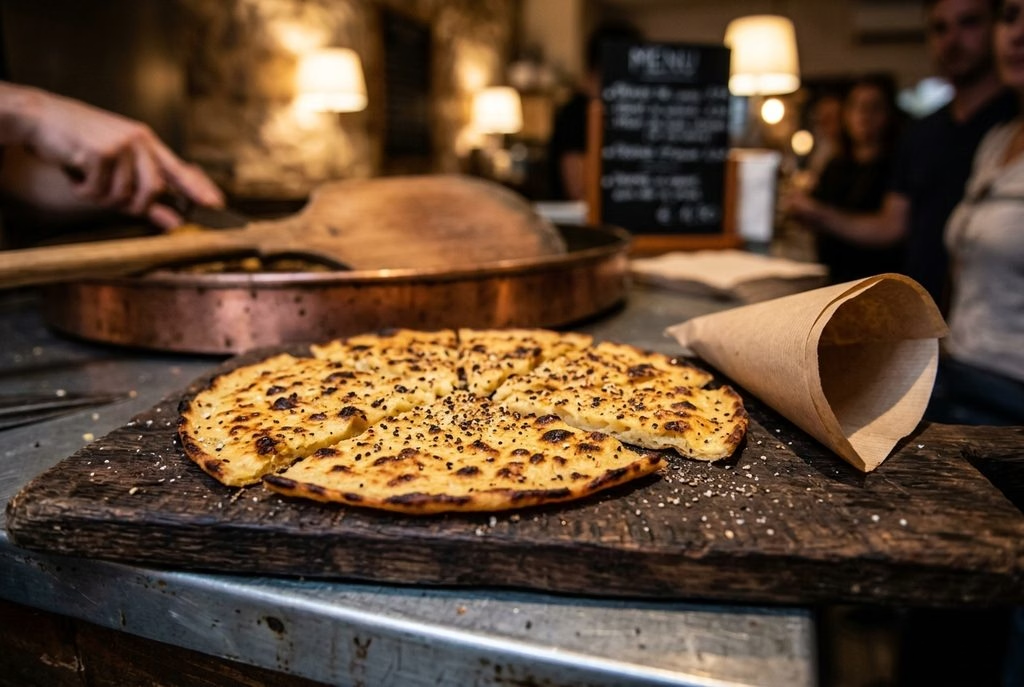
For the essential street-food stop, join the queue at Chez Pipo near the port for socca. This thin chickpea pancake is baked in a very hot oven, then cut into pieces and eaten with black pepper. It is cheap, fast, and most satisfying straight from the oven rather than packed for later.
Lou Pilha Leva, in the Old Town, is another useful casual stop when you want Niçois dishes without a formal dinner. Order socca, pissaladière, or tourte de blettes, a sweet-and-savory Swiss chard tart that surprises many first-time visitors. It sounds unusual, but it is a real local specialty, not a novelty made for tourists.
- For a classic sit-down meal: Acchiardo, in Vieux Nice, is known for traditional Niçois cooking. Choose daube niçoise, a slow-cooked beef stew, if you want something deeper than beach-day snacks.
- For a compact, old-school lunch: seek out a proper pan bagnat. This round sandwich combines tuna, egg, tomato, olive oil, and raw vegetables. It should be well soaked with olive oil, not served dry like an ordinary deli sandwich.
- For a special dinner: La Merenda is a tiny, well-known address for regional dishes. Seats are limited, so treat it as a planned meal rather than a place to wander into at peak dinner time.
Watch out for tourist-menu shortcuts. A place with glossy photo boards, an oversized menu, and staff urging you in may be convenient, but it rarely gives you the sharp flavors of a focused Niçois kitchen. A shorter menu featuring socca, pan bagnat, daube, petits farcis, or salade niçoise is usually a better sign.
For salade niçoise, expect tuna, egg, tomatoes, olives, and seasonal raw vegetables. You may see arguments about exact ingredients, especially potatoes and green beans. Do not chase a single “correct” version; choose a restaurant that treats the vegetables carefully and serves the dish fresh.
Save market stalls, restaurant pins, and opening-hour updates in your map before lunch. Those details matter most when you are navigating the Old Town’s tight lanes, where a missed turn can mean arriving after a small kitchen has stopped serving.
Takeaway: Start at Cours Saleya, eat hot socca at Chez Pipo or Lou Pilha Leva, then reserve one traditional Niçois dinner for a fuller taste of the city.
What Hidden Gems Are Worth Visiting in Nice?
Move beyond the Promenade and Old Town for a quieter side of Nice. These places show you Roman ruins, hillside gardens, working-class streets, and sea views without the busiest crowds.
Cimiez is the best place to start. Take the tram or bus uphill to this calm residential district, then walk between the Roman arena, archaeological museum area, and the gardens beside the Franciscan monastery. The olive grove is especially good for a slow lunch break, with views over the city rather than the beach.
The nearby Cimiez Cemetery is a peaceful stop if you enjoy art and history. You can find elaborate family tombs and the graves of major artists, but treat it as a cemetery, not a photo stop. Keep your voice low and check access rules before going.
For a different kind of viewpoint, head to Mont Boron, east of the port. Its wooded paths lead toward quieter overlooks across the Baie des Anges and toward Cap Ferrat. This is one of the better things to do in Nice, France that visitors often miss, because it requires a little uphill walking.
- Choose Mont Boron for pine trees, walking paths, and wide sea views.
- Choose Parc du Vinaigrier for a more local hillside feel and views toward Villefranche-sur-Mer.
- Choose the Gairaut Canal area for residential Nice, small gardens, and a glimpse of the city away from the coast.
Watch out for the hills. These areas can feel close on a map, yet steep streets and limited shade make them harder than expected in summer. Wear shoes with grip, carry water, and download your route before setting off. Live bus directions are genuinely useful here when you decide to cut a walk short and need the nearest stop.
For an unusual indoor detour, look for the Musée de Préhistoire de Terra Amata, near the port-side end of town. Its exhibits focus on very early human settlement and make a sharp contrast with Nice’s Belle Époque image. It is a good choice when the beach weather turns windy or wet.
Finish around Rue de France and the streets west of the main tourist center. You will find a more everyday rhythm: bakeries, small cafés, and local shopping without the packed lanes of Vieux Nice. Check current museum access and transit before committing, since smaller sites can change hours seasonally.
Takeaway: Visit Cimiez for history, Mont Boron for views, and Terra Amata for a side of Nice most beach-focused itineraries miss.
What Are the Best Times to Visit Nice and What to Bring?
For the best balance of warm weather, manageable crowds, and outdoor time, aim for April to June or September to October. Spring brings mild days for Castle Hill, Cimiez, and the Old Town without the hardest summer heat. Early autumn keeps the sea warm enough for a swim while making long waterfront walks more comfortable.
July and August suit you if beach time is the priority. Expect strong sun, busy pavements around the Promenade des Anglais, and higher demand for rooms near the sea. Plan museums, market browsing, or a long lunch for the middle of the day, then save the beach and viewpoints for morning or late afternoon.
Winter is quieter and can be a smart choice for galleries, food, and day trips. You will need a light rain layer and warmer clothes for evenings, especially when wind comes off the sea. Do not assume the Riviera is always hot: a bright winter afternoon can feel mild, then turn chilly once the sun drops behind the hills.
- April to June: Pack a light jacket, compact umbrella, trainers with grip, sunglasses, and a small day bag. Temperatures can shift quickly between a sunny beach and shaded Old Town lanes.
- July to August: Bring high-SPF sunscreen, a hat that stays on in sea breezes, a refillable water bottle, swimwear, and loose clothing. A thin overshirt helps with sun protection and air-conditioned museums.
- September to October: Add a light sweater and a rain shell. You can still spend full days outdoors, but sudden showers can interrupt coastal walks.
- November to March: Pack layers, closed shoes, a compact umbrella, and one smarter outfit for dinner. Beach clothing alone will leave you cold after dark.
Keep a few essentials in your day bag rather than at your hotel: a portable charger, photo ID, payment card, any prescription medicine, and a reusable bottle. Nice’s stone streets and stairways can be hard on flimsy sandals, so wear supportive shoes for hill districts and save lighter footwear for flat seafront days.
Watch out for: Mediterranean sun can feel harmless when a breeze is blowing. You can burn during a long lunch at Cours Saleya or a walk along the water without noticing. Reapply sunscreen, carry water, and check the live forecast before committing to a coastal walk or museum-free day.
Takeaway: Visit in late spring or early autumn for the easiest sightseeing weather, then pack layers, sun protection, sturdy shoes, and charged phone power.
How to Stay Connected While Exploring Nice?
Reliable data makes a real difference while you explore Nice. You will use your phone for tram directions, beach access points, museum tickets, restaurant hours, and last-minute weather checks before heading up to a viewpoint.
Set up your Telekonek France eSIM before departure, while you still have stable Wi-Fi and time to read the installation steps. Telekonek offers eSIM data plans that work in 200+ countries, which is useful if Nice is one stop on a longer Riviera or European route. Make sure your phone is unlocked and supports eSIM before buying a plan. If you are crossing borders on the same trip, our Europe eSIM guide covers multi-country coverage and setup.
After installation, keep your normal SIM active only if you need its phone number for texts or bank codes. Set Telekonek as your mobile-data line, then turn data roaming off on your home SIM. Turn it on for the Telekonek line if your phone requires that setting for travel data.
- Download offline maps: Save central Nice, Cimiez, the port, and the airport area in Google Maps before leaving your accommodation. Maps still work when signal drops in narrow Old Town lanes.
- Save key addresses: Screenshot your hotel address, door code, and booking reference. Stone buildings and tight streets can make GPS drift around Vieux Nice.
- Use data for transport changes: Check live tram and bus information before setting out. This matters most in the evening, during rain, and when festival crowds change your usual route.
- Keep a backup charging option: A small power bank is more useful than it sounds. Navigation, photos, ticket screens, and a bright phone display can drain a battery quickly on a full beach-and-city day.
Watch out for public Wi-Fi. You may find free connections in cafés, hotels, and public areas, but do not rely on them for a timed museum entry, a taxi pickup, or a payment verification code. Avoid logging into banking apps on open Wi-Fi unless you use your mobile data instead.
Data also helps you make smarter food plans. Check whether Cours Saleya is running its food market format before walking over, and save a few nearby lunch spots in your map app. For the best things to do in Nice, France on a short stay, those small live updates prevent wasted cross-city walks.
If you need calls, use WhatsApp, FaceTime Audio, Signal, or another internet calling app over your data plan. Keep your home number available for urgent SMS messages, but do not assume ordinary calls are included with a data-only eSIM.
Takeaway: install your eSIM before you fly, make it your data line, and download offline maps for stress-free days across Nice.
Frequently Asked Questions About Visiting Nice
How many days do you need in Nice? Give yourself three full days for a first visit. That lets you cover the waterfront and Old Town, add Castle Hill and a museum, then spend a slower day around Cimiez, the port, or a beach. With only one day, stay central rather than rushing to every sight. The best things to do in Nice, France sit close together, but the heat, hills, and pebble beaches make packed schedules tiring.
Is Nice a good base for the Riviera? Yes, especially if you want restaurants, museums, evening walks, and easy city transport rather than a quiet resort. Stay near Jean Médecin, Place Masséna, or the Old Town edge for the simplest access to tram stops and walkable dinner options. Choose the Port Lympia area if you prefer a calmer feel, but check the walk back from late dinners; uphill streets and poorly marked shortcuts can be frustrating after dark.
Do you need reservations for restaurants? Reserve dinner for Friday and Saturday, particularly in Vieux Nice and along the seafront. For a more local, lower-cost meal, eat your main lunch earlier and use the Old Town for an aperitif or snack at night. Many kitchens keep firm service hours, so arriving at 14:30 or 22:30 can leave you with limited choices. Keep a saved map list of two backup places near where you are staying.
Can you visit Nice without speaking French? You can manage well with basic English in central areas, hotels, museums, and visitor-facing restaurants. A few French phrases still help at market stalls: “bonjour,” “s’il vous plaît,” and “l’addition” go a long way. Do not assume a market vendor takes cards for a small purchase. Carry a little cash and ask before ordering food by weight.
What catches visitors out most often? Nice’s public beaches are pebbly, not sandy. Bring water shoes, a towel you do not mind placing on stones, and sun protection. Also watch your belongings around packed tram doors, busy market lanes, and the promenade at sunset. Keep your phone in a zipped pocket or cross-body bag, rather than on a café table or exposed in a back pocket.
What should you do if rain or strong wind changes your plans? Swap the beach for a museum, a long lunch, or market browsing, then check conditions again later. Mediterranean weather can shift quickly, and a bright morning does not guarantee a comfortable sea day. Avoid treating a forecast as fixed; use it to choose between the waterfront, hill walks, and indoor stops.
Grab a France eSIM before you fly so you can check opening hours, route changes, and weather without hunting for a SIM shop on arrival. Telekonek eSIM plans give you practical data for those day-to-day decisions while you move around Nice. Takeaway: plan three days, wear water shoes, reserve key dinners, and keep your phone secure and connected.