
Figuring out how to get to Sapa is the first real task of any northern Vietnam trip — the town sits high in the mountains near the Chinese border, and the last stretch from Hanoi is long. This guide covers every route (sleeper bus, overnight train, private car), what each costs in 2026, where you actually board in Hanoi, which operators to book, how to get around once you arrive, and when to go.
Key Takeaways
- Three ways to get to Sapa from Hanoi: sleeper bus (fastest, cheapest), overnight train to Lào Cai plus a transfer (steadier sleep), or a private car (most control).
- The “Sapa train” actually ends in Lào Cai — budget another 45–70 minutes up the mountain.
- 2026 ballpark: sleeper bus ~250,000–500,000 VND; train berth ~350,000–900,000+ VND; Lào Cai–Sapa transfer ~60,000–150,000 VND.
- Confirm your boarding pin the day before. Bus pickup points are scattered across Hanoi, and “hotel pickup” often means a shuttle to a bus office.
- Best months to visit: late September–November or March–April for the best balance of views and trail conditions.
- Get connected first: set up a Telekonek Vietnam eSIM before you go, so maps and pickup messages work when fog and transfers shift your plans.
Exploring the Beauty of Sapa: A Traveler’s Dream
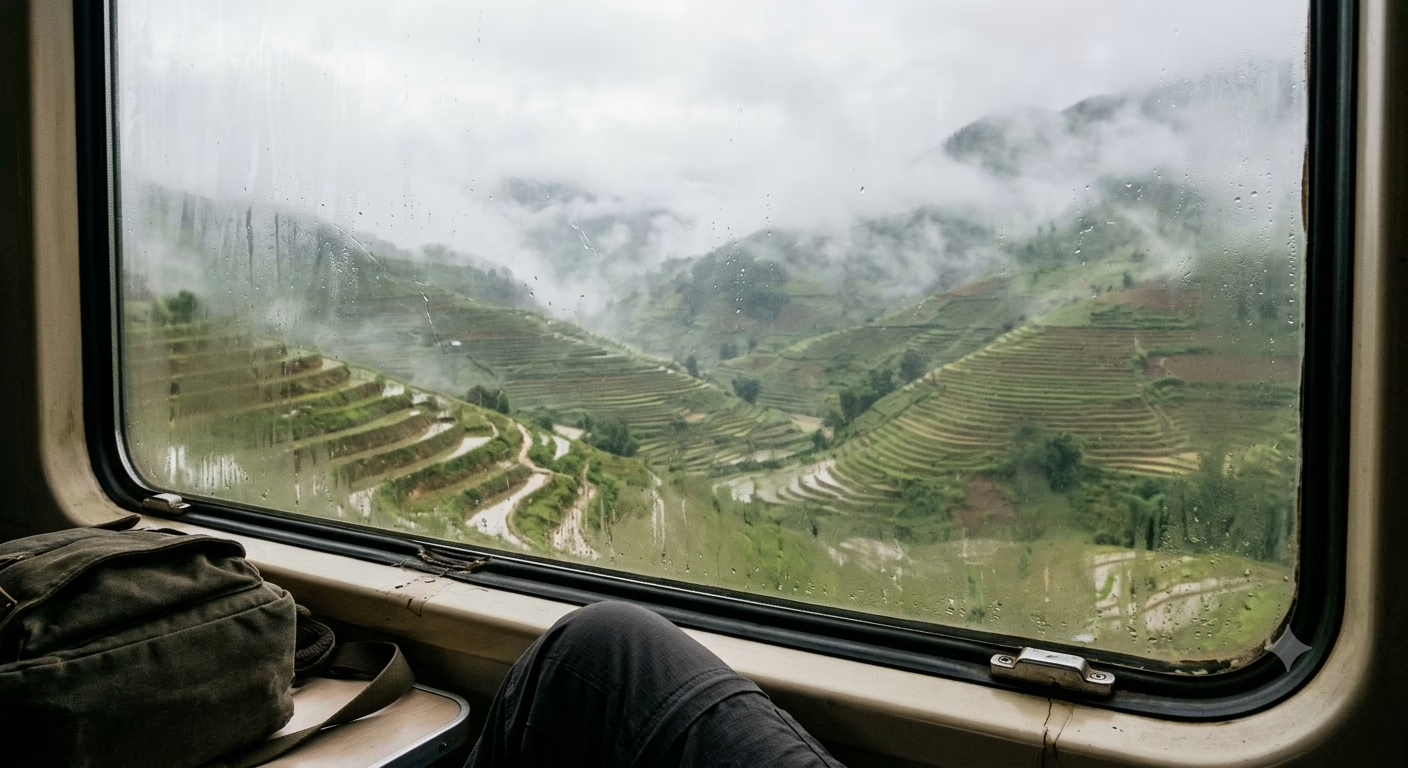
Sapa sits high in Vietnam’s northwest mountains, close to the Chinese border. You come for sharp green ridgelines, valley fog that rolls in fast, and rice terraces that look hand-carved into the hills. On clear mornings, the light hits the Hoàng Liên Sơn range and everything turns bright, almost unreal. By afternoon, clouds can drop low enough to hide whole villages.
The big draw is the mix of landscape and living culture, in one compact area. Sapa town is the base, but the real magic starts 10–30 minutes outside it. You’ll pass H’Mông, Dao (Red Dao), and Giáy communities selling indigo-dyed textiles, herbal bath bundles, and hand-stitched bags. The best moments aren’t in a souvenir shop. They’re on narrow paths between terraces, where water buffalo block the trail and kids shout hello from a doorway.
There’s also a “choose your own pace” feel that keeps Sapa on travelers’ lists. You can do an easy viewpoint loop around Cát Cát Village (popular, busy, but close), or go deeper into the Muong Hoa Valley for longer walks past Lao Chải and Tả Van. If you want a big-ticket view without a trek, the Fansipan cable car (from Sun World) gets you near Vietnam’s highest peak. On weekends and Vietnamese holidays, lines can stretch long, so the earlier you go, the better.
Watch out for a common letdown: Sapa is not “quiet mountain village” once you’re in town. The center can feel like a busy resort strip, with karaoke and construction. If you want the terrace-and-river feel, sleep outside town in Tả Van or along Muong Hoa Road. Expect a wider price spread in 2026: simple homestays around 300,000–700,000 VND/night, and comfortable lodges around 1,200,000–3,000,000 VND/night, depending on views and season.
How you get to Sapa matters because the last stretch is mountainous, and plans change fast with the weather. Reliable data helps when your bus drop-off shifts, fog delays a trek, or you need to message a homestay on a back road. A Telekonek Vietnam eSIM works in 200+ countries, so you can set up service before you arrive and keep maps and messages running.
If you want a head start on what to do once you’re there, use this guide to things to do in Sapa in 2026, then come back here for the step-by-step routes.
Takeaway: Sapa is a mountain base with big scenery and living hill-tribe culture—stay outside the town center for the views, and keep data ready for weather and transport surprises.
How to Get to Sapa from Hanoi: Best Routes
You’ve got three practical ways to get to Sapa from Hanoi: a direct sleeper bus (fast and cheap), a train to Lào Cai (classic and steady), or a private car/van (most control). Your choice mostly comes down to how well you sleep on the road, and how much flexibility you want once you hit the mountains.
Before you book anything: lock in your data. You’ll use maps to find the right pickup point in Hanoi’s Old Quarter, message your hotel in Sapa, and share your live location if a bus drops you outside town. With a Telekonek Vietnam eSIM, you can land in Hanoi and be online right away without hunting for a shop.
Option 1: Direct sleeper bus / “cabin bus” (Hanoi → Sapa). Expect 5.5–7 hours depending on traffic and weather. Prices usually sit around 250,000–450,000 VND (2026 range) for a standard sleeper, and 400,000–700,000 VND for a newer “cabin” style with more privacy.
- Best for: budget travelers, anyone who wants one ticket and no transfers.
- What it’s like: reclining bunks, a mid-ride stop for toilets and snacks, and drop-off in Sapa town or a partner office.
- Watch out for: pickup points can be scattered across Hanoi. Some operators do “hotel pickup,” but it may mean a minivan to a highway meeting point. Screenshot your ticket and confirm the exact pin by message before you step outside.
Option 2: Overnight train (Hanoi → Lào Cai) + transfer (Lào Cai → Sapa). The train leg is typically 7.5–9 hours overnight. Then you’ll do a road transfer up to Sapa: 45–70 minutes for roughly 60,000–150,000 VND per seat in a shared shuttle or minibus (private cars cost more).
- Train cost (2026 range): about 350,000–900,000+ VND depending on seat vs. sleeper and the carriage quality.
- Best for: lighter sleepers who prefer rails to mountain roads, and anyone who wants to arrive early.
- Watch out for: Lào Cai station arrivals can be chaotic at dawn. Drivers will call out “Sapa” and quote tourist prices. Have your transfer arranged, or agree on a price before you load bags — and message your hotel or shuttle contact the moment you step onto the platform.
Option 3: Private transfer (Hanoi → Sapa by car/van). Expect 5–6.5 hours door-to-door. Prices vary a lot with vehicle size and season, but a realistic 2026 ballpark is 2,500,000–4,500,000 VND for a sedan and 3,500,000–6,500,000 VND for a private van.
- Best for: families, small groups splitting the cost, or anyone prone to bus sickness.
- Why it’s worth it: you control stops (toilets, food, photos) and can time the drive to avoid Hanoi rush hour.
- Watch out for: confirm whether the quote includes highway tolls and any “waiting time” if you stop for long lunches. Get it in writing in your chat. Ask for a driver used to the Lào Cai–Sapa mountain section, and check the seat belts work.
Quick rule of thumb: take a cabin bus for value, the train for a calmer night, or a private car for the smoothest logistics—and keep your data running so pickups, transfers, and last-minute changes don’t turn into guesswork.
Where You Board in Hanoi: Pickup Points and Stations
Where you leave from depends more on your ticket than on the transport type. Hanoi is spread out, and a bus office in the Old Quarter can sit 30 minutes from a highway departure hub at rush hour. Read the boarding address on your confirmation rather than heading to a station by assumption.
Direct buses usually collect passengers from operator offices around the Old Quarter, Hoàn Kiếm, or the wider central district. Some services use pickup points near My Dinh Bus Station in western Hanoi instead.
- Old Quarter pickup: convenient from Hoàn Kiếm Lake, Tạ Hiện Street, or the French Quarter. Expect narrow streets and little room for a coach to wait.
- My Dinh area: more practical from Cầu Giấy, My Dinh, or the National Convention Centre. A poor choice from the Old Quarter in peak traffic.
- Operator office: usually the most reliable meeting point. Arrive 20–30 minutes early and look for the company sign, not just a bus parked on the street.
Watch out for “pickup” wording. It does not always mean your hotel door. Send your hotel name and a map pin through the booking contact the day before, then ask for the exact pickup time and vehicle plate. Hanoi addresses get confusing when an office sits inside an alley or behind a shopfront.
Trains leave from Hà Nội Railway Station (Ga Hà Nội) at 120 Lê Duẩn. Do not go to Long Biên or Gia Lâm station unless your ticket names one of them. Use the main Lê Duẩn entrance and check the board for your platform. A taxi or ride-hailing car is the easiest way there with luggage — allow extra time in rain or the evening rush.
Private cars are the simplest logistically. Your driver normally collects you from your hotel, apartment, or Nội Bài airport. Give a precise entrance name, not only a street address. Large hotels may have several gates, and Old Quarter properties often sit on streets where cars cannot stop for long.
Takeaway: Confirm the exact boarding pin the day before—bus pickups vary, trains use Ga Hà Nội, and private cars should meet you at a named entrance.
Taking the Overnight Train: A Unique Adventure
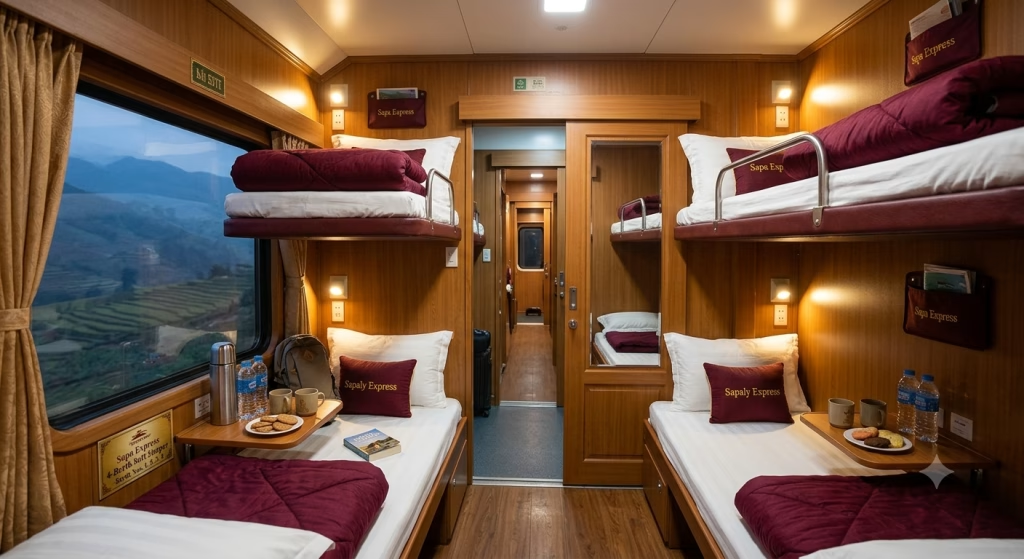
The “overnight train to Sapa” is really an overnight train to Lào Cai, then a final road transfer up to Sapa town. It’s slower than the best express buses, but it’s steadier. You get a real bed, fewer sharp turns, and a calmer start to your first morning in the mountains.
Typical timing (2026): Hanoi to Lào Cai is usually about 7.5–9 hours overnight. Most trains leave Hanoi in the evening and arrive early morning. From Lào Cai station to Sapa, expect 45–70 minutes by minivan or taxi, depending on traffic and fog on the mountain road.
Book the right station in Hanoi. You want Hà Nội Railway Station (Ga Hà Nội), 120 Lê Duẩn, not a random “train office” in the Old Quarter. Keep your booking email, car number, and berth number saved offline, so you can pull up your boarding details at the gate and message your Lào Cai transfer when you roll in.
Choose your class based on how well you sleep around strangers. Prices move a lot by season and day, but these ranges are realistic for 2026:
- Hard seat / soft seat: cheapest, but you’ll arrive tired. Good only if you truly can’t sleep lying down. Expect roughly 250,000–450,000 VND.
- 6-berth “hard sleeper”: basic bunks, thinner mattresses, more noise. A common budget pick. Roughly 400,000–750,000 VND.
- 4-berth “soft sleeper”: the sweet spot for most travelers. Thicker mattress, fewer people, better chance of real sleep. Roughly 700,000–1,200,000 VND.
- Private/shared tourist cabins (varies by operator): nicer bedding and décor, sometimes a snack. Comfort is better, but value depends on the night. Often 1,200,000–2,500,000+ VND.
Amenities are simple. Expect a pillow and blanket, a charging outlet that may be loose, and toilets that get rough by morning. Bring wet wipes, tissues, hand sanitizer, and earplugs. If you’re sensitive to light, add an eye mask. The best trick is packing a small daypack for the cabin so you don’t wrestle your main bag in the narrow aisle.
What goes wrong: people get caught out by the Lào Cai arrival logistics. The station can be chaotic at dawn, with drivers calling out destinations. Decide your transfer before you board in Hanoi. If you’re meeting a hotel shuttle, confirm the exact pickup point (some meet outside the main gates, others in the parking area), so you can send your live location and avoid getting pulled into the wrong van.
Food is hit-or-miss. Some trains have a trolley with instant noodles and snacks, but you should plan to bring your own: bánh mì, fruit, and water. Eat lightly if you get motion sick—Lào Cai to Sapa has tight bends once the sun comes up.
If your goal is to wake up and head straight into the terraces, the train is a strong setup. After you check in, you can jump straight into your plan without losing half your day to road fatigue.
Takeaway: Book a 4-berth soft sleeper, plan your Lào Cai-to-Sapa transfer before you depart, and sort your data ahead of time so you can coordinate the handoff fast at dawn.
Buses vs. Trains: Which Is Right for You?
Picking between a bus and a train to Sapa is really a comfort vs. control decision. Both start in Hanoi, but the “feel” of your first day in the mountains can be totally different. Use this as your quick filter before you book.
Takeaway: Choose bus for speed and simplicity; choose train if you want a steadier night and a real bed.
- Fastest door-to-door: Bus (often 5.5–7 hours to Sapa town, depending on traffic and roadworks).
- Smoothest ride: Train (Hanoi → Lào Cai is steadier), then a 45–70 minute road transfer up the mountain.
- Lowest total hassle: Bus (one booking, one ride), unless you hate tight sleeper cabins.
Bus: what you gain. You step off in or near Sapa town and you’re done. That matters when it’s cold, wet, and foggy and you don’t want to negotiate another transfer at 5:30 a.m. Most sleeper buses pick up around the Old Quarter (streets like Trần Quang Khải or near Hoàn Kiếm) and drop at a bus office on Điện Biên Phủ in Sapa or sometimes along the main road outside town.
Bus: what goes wrong. Sleeper “beds” can be short. If you’re tall, you’ll end up curled. Also, drivers sometimes do a mid-ride pickup near the Nội Bài airport area, which can add time. Keep your daypack with valuables on you, not in the under-bus luggage bay.
Train: what you gain. You get a more stable night and less motion sickness on the long stretch. If you book a soft-sleeper cabin, you can actually lie flat, and you’ll usually arrive in Lào Cai early enough to grab a coffee and organize your transfer without the pressure of highway stops. The train is also a good choice if you’re traveling with a bigger suitcase, since train luggage feels less chaotic than bus storage.
Train: what goes wrong. The “Sapa train” ends in Lào Cai, not Sapa. If you arrive and the minivans are packed, you may wait—or pay more for a taxi—especially on weekends or around Vietnamese holidays. In winter fog, that final mountain road can be slow and queasy.
Tip: Use your data on arrival to book a transfer up to Sapa and share your live location with your hotel, so you don’t get “dropped somewhere close.”
Money and comfort: a realistic 2026 snapshot. Prices move with season and day of week, but your budget usually looks like this:
- Sleeper bus Hanoi → Sapa: expect roughly 300,000–500,000 VND.
- Train Hanoi → Lào Cai (berth): often 350,000–900,000+ VND depending on cabin and demand.
- Lào Cai → Sapa transfer: usually 60,000–150,000 VND by shared van, or more by private taxi.
The train can look cheaper at first glance, but add the transfer before you decide. A 600,000 VND berth plus a 120,000 VND shared van becomes 720,000 VND — at which point a 500,000 VND cabin bus with one ticket and no negotiation may be the better buy.
So which should you choose?
- Choose a bus if you want the simplest “one-and-done” ride, you sleep anywhere, and you care most about getting to Sapa town fast.
- Choose a train if you value a steadier night, you’re prone to motion sickness, or you want the classic overnight travel feel—even if it adds a transfer.
If you’re building your itinerary next, map your arrival time to what you want to do first in town (sunrise viewpoint, market, or an easy village walk).
One-line takeaway: Bus gets you to Sapa town faster; train gets you a calmer night, but you’ll still need the Lào Cai road leg.
Set up your Telekonek Vietnam eSIM before you travel so your pickup messages, transfer booking, and hotel check-in work even in foggy arrivals.
Which Operators to Book
Reliability here means more than arriving on time. You want a clear pickup address, a working support number, assigned seats or berths, and a sensible plan if Hanoi traffic delays departure. Treat the notes below as a booking guide — schedules and vehicle types change by season.
- Sapa Express — the default direct bus. A well-known Hanoi–Sapa coach service with a straightforward booking process and an official booking website, which is safer than an unverified social-media listing. Expect a central Hanoi pickup or office check-in, and confirm the exact address on your voucher the day before.
- Inter Bus Lines — cabin-style comfort. Sensible when you want more personal space than a standard sleeper. Check whether your ticket is a single cabin, double cabin, or open berth before paying. A “VIP” label does not always mean a fully private cabin.
- Sao Viet — frequent departures. Useful when your preferred departure is full, especially on weekends. Prioritize a ticket with a named Hanoi boarding point and a confirmed Sapa drop-off; some departures end at an office outside the central lake area.
- Vietnam Railways — the most predictable route. Take the overnight train to Lào Cai when you prefer rails to mountain-road sleeping. You still need the road transfer, so confirm that connection before boarding in Hanoi. A lower berth is easier with heavy luggage.
- Private tourist carriages. Carriages marketed under names such as Chapa, King Express, or Laman offer upgraded bedding and staff help, though quality varies by carriage. Buy only through the carriage’s verified site, your hotel, or a reputable agency. Your ticket should state the train number, carriage number, berth, and Hanoi station.
Booking procedure: book buses through an official operator site where you can, then save the confirmation offline. Send your Hanoi hotel address through the operator’s chat channel if pickup is included. For trains, match the passport name on your ticket exactly and arrive at Ga Hà Nội at least 45 minutes early.
Watch out for copied booking pages and vague “Hanoi city pickup” promises. Ask for the exact boarding location, departure time, luggage policy, and Sapa arrival point in writing.
Takeaway: Book direct where an official site exists, and get your boarding point and drop-off confirmed in writing before you pay.
What You’ll See Along the Way
The standard route is more practical than picturesque at first. Buses and private cars spend most of the trip on the Nội Bài–Lào Cai Expressway, where the views are lowland farms, roadside towns, and distant hills.
The scenery changes after Lào Cai. The road climbs toward Sapa, and steep green slopes replace the flat Red River valley. Sit on the left side of a northbound bus for more open valley views on this final stretch — though tinted windows, rain, and night departures can hide most of it.
The train gives you the best slow landscape view, if you travel in daylight. The railway follows parts of the Red River valley toward Yên Bái and Lào Cai, past riverbanks, small farms, and mountains building on the horizon. Overnight trains save you a daytime block, but you’ll wake close to Lào Cai and miss the route’s best stretch.
- Direct bus: fastest, but not a sightseeing trip. Treat the rest stop as a bathroom and snack break.
- Day train to Lào Cai: calmer views and more room to move around, followed by the mountain transfer.
- Private car: your only realistic option for photo stops. Ask before booking whether stops are included and how long you can stay.
A proper scenic detour needs more time. Mù Cang Chải and Khau Phạ Pass are famous for vast rice-terrace landscapes, but they are not a quick roadside stop on the expressway journey. Add at least a full day, ideally an overnight stay, rather than squeezing them into a transfer.
Silver Waterfall, Trạm Tôn Pass, and the Ô Quy Hồ mountain road sit west of Sapa toward Lai Châu. Visit them after you check in, not on arrival from Lào Cai — clouds often close the high pass in the afternoon, so check the mountain forecast before hiring a car or motorbike.
Watch out for “scenic stop” promises from drivers. A coffee stop beside the expressway is not a viewpoint. Confirm the stop name, extra driving time, entrance fees, and whether you can leave luggage in the vehicle.
Takeaway: Take the direct route for speed, and save the real mountain scenery for Sapa itself or a separate Mù Cang Chải or Ô Quy Hồ outing.
Navigating Local Transportation in Sapa
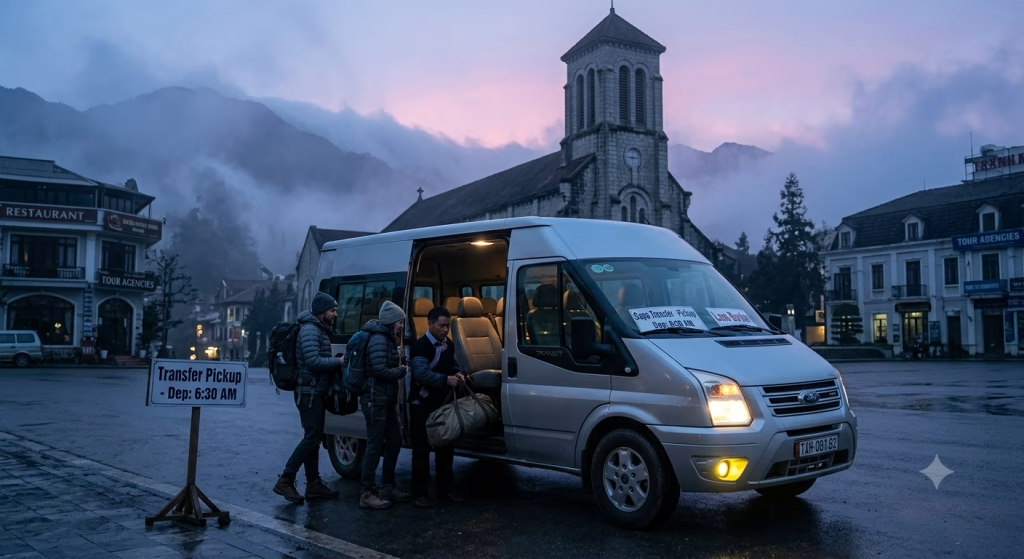
Sapa town is small enough to walk, but the places you came for sit outside it. Think terraced valleys (Mường Hoa), high passes (Ô Quy Hồ), and village trails that start 10–30 minutes from the center. The good news: you can mix transport day by day. The key is choosing what matches the weather, your legs, and how comfortable you are on mountain roads.
Takeaway: Plan on walking in town, then use a ride (or a guide) to reach the real trailheads.
Trekking (your default “transport” in Sapa). For villages like Lao Chải and Tả Van, trekking is the whole point. A popular day is a downhill walk from Sapa town toward the Mường Hoa Valley, then a ride back from Tả Van. Expect slippery clay paths after rain, especially on steep sections near rice terraces. Keep your data on so you can pin your homestay on maps and message your driver when you’re ready for pickup.
Watch out for: fog can hide trail forks fast. Download an offline map before you leave town, and carry a real rain jacket even if the morning looks clear.
Takeaway: Trek early, finish before late-afternoon fog, and always have a pickup point saved on your phone.
Taxis and motorbike taxis (xe ôm): best for short hops. From Sapa center to Cat Cat Village, you’re usually looking at a quick 10–15 minute ride. For a restaurant run or a hotel move with bags, a regular taxi is the easiest. For solo travel, a xe ôm is often cheaper and faster in traffic, but you need a helmet and you should agree on the price before you move. A map pin saves you trying to pronounce a village name.
Watch out for: drivers may quote “per person” prices that double what you expected. Confirm “total price” and whether it includes the return.
Takeaway: Use taxis for luggage and comfort; use xe ôm for quick solo rides—confirm the full fare first.
Motorbike rental: most freedom, most risk. Renting a semi-auto bike in Sapa is common, especially for viewpoints like Ô Quy Hồ Pass (the road toward Lai Châu). Expect roughly 120,000–200,000 VND/day in 2026 for basic bikes, more for bigger manuals. Check brakes, horn, lights, and tire tread before you pay. Take photos of existing scratches, and ask what the deposit is (cash or passport is sometimes requested—avoid leaving your passport if you can).
Watch out for: mountain fog plus gravel patches on corners. If you can’t see ahead, don’t pass, and don’t chase sunset views.
Takeaway: Rent a bike only if you’re confident on steep roads; test the brakes before you leave the shop.
Guided tours and private drivers: best value when weather turns. If the forecast looks wet, a guide can turn a messy day into a good one by choosing safer paths and timing. Private car hires also make sense for families or groups doing a loop (waterfalls, viewpoints, then back to town). You’ll want data for last-minute changes—Sapa plans shift with fog—so keep your connection ready for quick WhatsApp/Zalo messages and live location shares.
Takeaway: When visibility is bad, trade “freedom” for a guide or driver and you’ll see more, not less.
Before you head out each morning, make sure your maps load and your ride apps can verify you. If you haven’t set it up yet, lock in mobile data before you go so your transport plan doesn’t fall apart when Wi‑Fi drops.
Takeaway: In Sapa, connection equals control—sort your data first, then pick the ride that matches the day.
Staying Connected in Sapa: Mobile Data and eSIM Options
Sapa is not the place to “figure out data later.” Fog can drop in fast, and vans don’t always stop where you expect. You’ll use Google Maps for trailheads, WhatsApp/Zalo to coordinate with guides, and translation apps for homestay check-ins. Having reliable mobile data matters for the bigger question of how to get to Sapa—because your last-mile logistics change a lot once you hit the mountains.
Coverage is best in Sapa town and along the main valley roads toward Lao Chải–Tả Van. It gets patchier on higher routes like Ô Quy Hồ Pass, and in tucked-away villages where hills block signal. When the weather turns, even a “short ride” can become a long wait. That’s when you’ll be glad you can message your driver, pin your location, and download an offline map before you leave town.
Your simplest setup is a Telekonek Vietnam eSIM you install before you travel. You land connected, keep your home SIM active for banking texts, and you don’t waste time hunting for a shop after an overnight bus. The plans also work in 200+ countries, which helps if Vietnam is one stop on a longer trip and you don’t want to reset your phone plan at every border.
- Best for smooth arrivals: Telekonek eSIM (set up before Hanoi, data works as soon as you land).
- Best if you need a local phone number: a physical Vietnamese SIM (useful for some local calls, less important if you use Zalo/WhatsApp).
- Worst idea in Sapa: relying on café Wi‑Fi for navigation (it’s common, but it’s not dependable once you leave town).
If you still want a physical SIM, buy it in Hanoi (Old Quarter) or at Nội Bài Airport before you head north. In Sapa town, you’ll find small phone shops around the central area near Sapa Market and along main streets, but stock and English help vary. Expect to show your passport for registration. Ask staff to set the SIM as your data line, and test a web page before you leave the counter. For the full setup walkthrough, see where to buy an eSIM for Vietnam travel.
Watch out for two common problems: data that “looks active” but doesn’t work (APN settings are wrong), and plans that throttle hard after a small daily cap. Do a quick check in your phone settings to confirm the eSIM is selected for cellular data, and keep “data roaming” on for that eSIM line (it sounds scary, but it’s how travel eSIM data works).
Two quick habits that save you in Sapa: download Google Maps offline for Sapa + Mường Hoa Valley, and screenshot your hotel name in Vietnamese. If you’re planning treks, keep your guide’s number saved and message them your pickup pin while you still have strong signal. Map apps also recalculate constantly on twisting mountain roads and drain your battery fast, so keep a small power bank in your daypack.
Takeaway: Set up your eSIM before you leave Hanoi so you’ve got working data the moment Sapa logistics get messy.
Timing Your Visit: When to Travel to Sapa
Sapa’s weather decides what your trip feels like. It can be blue-sky perfect at 9:00 and cold fog by lunch. Timing matters even more if you’re trekking, because muddy trails and low visibility turn “easy village walks” into slow, slippery slogs.
Before you lock dates, sort your connectivity. You’ll lean on live radar, road updates, and guide messages when conditions change fast in the mountains.
Best overall window: late September to November (autumn). You get the most reliable combo of clear views and comfortable hiking temps. Days are often crisp, and nights can feel cold in homestays, especially in higher villages. It’s also prime photo season because visibility can be excellent across Mường Hoa Valley and up toward Fansipan on the clearest mornings.
Another strong window: March to April (spring). The hills start to turn green again, and you’ll often get mild daytime weather for longer treks. Expect more “four seasons in a day” swings, though. Pack a light rain layer and plan earlier starts so you’re off exposed ridges before afternoon cloud builds.
Rice terrace timing (what most people really want): terrace color changes by week, not month, and it varies by valley and elevation. Use this as a practical guide (typical patterns, not a promise):
- Late May to June: “water season,” when terraces look like mirrors after flooding and planting. Stunning in sun, but showers can be frequent.
- July to August: deep green terraces. Also the wettest stretch in the north; leeches can show up on damp trails after heavy rain.
- Late September to early October: golden harvest color. This is peak demand for guides and the most booked-up homestay dates. Harvest dates shift by village, so don’t assume every terrace turns gold on one exact date.
When to avoid (or plan around): June to August. This is monsoon season in the north. Landslides and road closures can happen on mountain routes, and fog can erase your views for days. If these are your only months, choose shorter valley treks (Lao Chải–Tả Van routes) and keep a buffer day so a washed-out afternoon doesn’t ruin your whole plan. With working data, you can reroute quickly, message your driver, and pivot to indoor stops in Sapa town.
Winter (November to February) works if you prefer quiet streets and cool weather over wide panoramas. Expect atmospheric fog and drizzle instead of views. December and January can feel close to freezing at night, and rare cold snaps bring frost or even snow near Fansipan.
Peak crowds: October, November, and holiday weeks. Weekends can feel jammed in Sapa town, with traffic bottlenecks around the lake area and hotel check-ins that drag. Prices jump too (expect mid-range rooms to swing from roughly 900,000–1,600,000 VND/night in shoulder weeks to 1,600,000–3,000,000+ VND/night in peak weeks, depending on view and heating, 2026 ranges). If you hate crowds, arrive midweek and trek early morning before tour groups hit trailheads.
Festivals (worth timing, but book smart): Lunar New Year (Tết) brings closures and sold-out transport. You’ll see a different side of town, but you must pre-book your Hanoi–Sapa ride and confirm meals at your stay. Local highland markets also get livelier on weekends; if you’re planning your activities, use the ideas in Things to Do in Sapa, Vietnam: A Mountain Travel Guide for 2026 to match your dates to what’s actually running.
Watch out for this common mistake: booking your bus/train based on “typical weather” and then realizing a cold snap or heavy fog has hit. In Sapa, conditions can swing hard overnight. Keep your plans flexible, and check visibility, confirm pickup points, and adjust your trekking route the night before.
Takeaway: Aim for late September–November or March–April, and keep one flexible day so Sapa’s weather doesn’t run your schedule.
Packing Essentials for Your Journey to Sapa
Sapa packing is all about layering and traction. Even in warm months, mornings can feel chilly in the valleys, and nights in town can dip fast. Then the sun pops out and you’re suddenly hiking in short sleeves. Pack so you can add or remove one layer in 30 seconds, without digging your whole bag apart.
Clothing (build a simple layer system) works better than one heavy jacket. Aim for pieces you can wear in town, on a motorbike, and on a muddy trail.
- Base layer: 2–3 quick-dry T-shirts (cotton stays wet and cold when fog rolls in).
- Warm layer: one light fleece or thin sweater (evenings can feel like “winter” after rain).
- Outer layer: a packable rain jacket with a hood (expect sudden showers in the mountains).
- Bottoms: 1 trekking pants + 1 comfy pants for town/homestay; add leggings/thermals if you travel Dec–Feb.
- Socks: 3–4 pairs; bring at least one thicker hiking pair for wet days.
- Warm extras: beanie or buff + thin gloves (great for early starts, especially if you ride a motorbike taxi).
Takeaway: Pack layers, not bulk, so you’re ready for cold fog and warm sun in the same day.
Footwear is your make-or-break item in Sapa. Trails around Lao Chải–Tả Van and other valley routes turn slick after rain, and the clay mud grabs smooth soles. If you only bring fashion sneakers, you’ll feel every step and slide on descents.
- Best choice: light hiking shoes or trail runners with deep tread.
- Second pair: sandals or easy slip-ons for homestays (many have wet floors and shared bathrooms).
- Optional but smart: gaiters (short ones) if you hike in peak rainy months; they keep grit and mud out.
Watch out for: “Waterproof” shoes still soak from the top in heavy rain. Bring fast-dry socks and accept that feet get wet sometimes.
Takeaway: Prioritize grip over looks—mud is the real Sapa challenge.
Hiking and daypack gear keeps you comfortable when plans change mid-trail. Sapa treks often include surprise river crossings, steep steps, and humid climbs that feel harder than the distance suggests.
- Daypack (15–25L): with a rain cover or a simple dry bag inside.
- Water: 1–1.5L bottle; add electrolytes if you sweat easily.
- Trekking poles: optional, but they save knees on long downhill sections (especially after rain).
- Sun + bug protection: small sunscreen, hat, and insect repellent. Cloud cover doesn’t stop UV at this elevation.
- Mini first-aid: blister plasters, bandages, antiseptic wipes, and pain relief.
- Cash: small notes for drinks, trail snacks, and village stops. ATMs are easier to find in Sapa town than in Mường Hoa Valley, so don’t rely on one payment method.
Takeaway: A light daypack with rain protection and blister care makes trekking days smoother.
Sleep and homestay essentials matter more than you think. Many homestays are cozy, but sound travels, floors can be cool, and bathrooms can be basic—especially in damp weather.
- Earplugs: roosters and early kitchens are part of the deal.
- Lightweight sleep layer: long-sleeve top and pants you don’t hike in (staying dry at night helps you warm up).
- Small microfiber towel: dries fast in humid rooms.
- Headlamp: useful for nighttime bathrooms or early starts when power flickers.
Watch out for: clothes can take forever to dry in foggy weather. Don’t plan on “washing and drying overnight” unless it’s a clear, sunny day.
Takeaway: Pack for damp air and shared spaces—sleep quality affects your hike the next day.
Tech and documents are about staying flexible when the mountains don’t cooperate. Fog can hide views, and rain can shift your route from a high pass to a valley walk in minutes.
- Power: a 10,000–20,000mAh power bank (cold and constant photos drain batteries fast).
- Cables + charger: one set only, kept in a “grab pocket.”
- Water protection: zip bags for phone and passport, especially on wet trekking days.
- Offline backups: download your Sapa area maps in Google Maps before you leave Hanoi.
If you want ready-made trek ideas and what each area feels like, pair this packing list with your itinerary so your gear matches your plan (valley villages vs. higher viewpoints).
Takeaway: Protect your power and your papers—rain is the main risk, not cold.
One last practical move: sort your connectivity before you head into the hills. Set up your Telekonek Vietnam eSIM while you still have stable Wi‑Fi, then download offline maps and save your hotel and guide contacts. With data working the moment you arrive, you’re not hunting for a SIM shop when your bus drops you outside town in fog.
Takeaway: Activate data early, then rely on maps + messages to handle Sapa’s fast-changing weather and pickups.
Frequently Asked Questions About How to Get to Sapa
Do you need a special permit to visit Sapa? Standard visitors travel from Hanoi to Sapa without a separate permit. Your main requirement is the correct permission to enter Vietnam on your passport. Border-area routes and remote villages can bring extra checks, so confirm current entry rules with Vietnam’s immigration authority or your embassy before you fly.
Can you visit Sapa as a day trip from Hanoi? You can, but it’s rarely a good use of your time. A direct bus takes roughly six hours each way, leaving little beyond a rushed town visit. Stay at least one night, ideally two, so you can see Mường Hoa Valley or trek without turning the trip into a transport day.
Which option is best for first-time visitors? A direct daytime bus, for the simplest logistics. You skip the Lào Cai transfer and arrive close to Sapa town in daylight, which makes finding your hotel easier. Choose the overnight train only if sleeping on a train appeals more than sleeping on a bus.
How far ahead should you book? For ordinary weekdays, a few days ahead gives you more choice of departure times and berth positions. For Friday departures, Vietnamese public holidays, and rice-season weekends, book as soon as your Hanoi dates are fixed. Save the confirmation as a screenshot — reception is patchy on the mountain approach.
Can you bring a suitcase on the bus? Yes, but a large hard case goes in the lower luggage hold, not beside your sleeper seat. Keep your passport, medication, rain layer, charger, and one warm layer in a small day bag. Luggage collection in Sapa can be hurried, so attach a visible tag and check you have the right case before the bus pulls away.
What should you do on arrival? Tell your hotel your expected arrival time and ask whether its entrance is reachable by car. Some stays sit down narrow, steep lanes where a coach can’t stop. Arrange a short taxi pickup or get clear walking directions before departure, especially for evening arrivals in fog. Avoid booking a Sapa-to-Hanoi bus on the same day as an international flight — traffic and weather make that connection stressful.
Takeaway: Confirm your pickup point, hotel access, and return buffer before you leave Hanoi.