
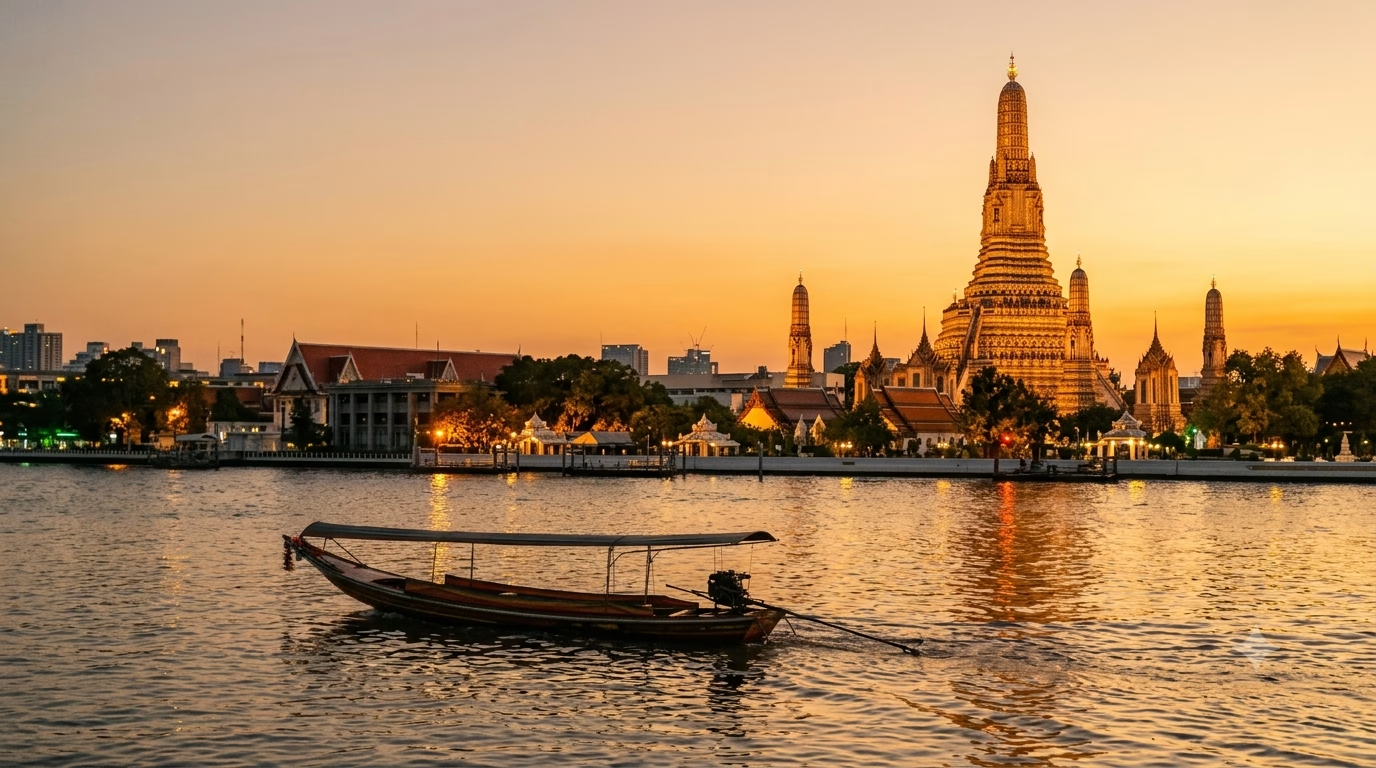
Day 1: Arrival in Bangkok – Embrace the Vibrant Capital
Your Thailand 7-day itinerary begins at either Suvarnabhumi Airport or Don Mueang Airport. Activate your Telekonek Thailand eSIM before landing. Reliable data helps you follow rail directions, translate addresses, and order a Grab without airport Wi-Fi.
Telekonek also offers eSIM data plans that work in 200+ countries. That becomes useful when Thailand forms one stop on a longer trip through Asia.
- From Suvarnabhumi: The Airport Rail Link reaches Phaya Thai in about 30 minutes. The fare is 45 baht, and trains generally run from 5:30 a.m. until midnight.
- From Don Mueang: The SRT Red Line reaches Krung Thep Aphiwat Central Terminal in about 20 minutes. Expect a fare below 50 baht, followed by MRT or taxi travel to your hotel.
- By taxi: Expect roughly 350–550 baht from either airport to central Bangkok in 2026. Suvarnabhumi taxis add a 50-baht airport fee, plus any expressway tolls.
Rail is faster during the evening rush, especially between 4:30 and 7:30 p.m. A taxi makes more sense with heavy bags or after midnight. Watch out: ignore unsolicited rides inside arrivals and use the official taxi queue or your app’s marked pickup point.
For easy transport, stay near a BTS Skytrain station. The Eastin Grand Hotel Sathorn connects directly to Surasak BTS and usually costs 4,000–7,000 baht nightly in 2026. The ibis Styles Bangkok Silom, around 2,000–3,500 baht, places you near Sala Daeng BTS and Silom’s food stalls.
For river views, Riva Arun Bangkok often runs 3,500–7,000 baht. Its Old Town setting is atmospheric, but reaching the airport or modern shopping districts takes longer than staying beside the BTS.
Keep your first afternoon light. Visit the Jim Thompson House near National Stadium BTS for Thai architecture and silk history; admission is usually around 200 baht. Allow about 90 minutes, and arrive before the final guided entry near closing time.
At dusk, take the BTS to Saphan Taksin and ride a public boat toward Ratchawong Pier. Fares generally stay below 40 baht. Walk from the pier to Yaowarat Road, where dishes such as peppery noodles, grilled squid, and mango sticky rice commonly cost 60–200 baht.
Do not pack major temples into your arrival day. Heat, jet lag, and Bangkok traffic can turn an ambitious schedule into a rushed one; tomorrow gives you proper time for Wat Pho and Wat Arun.
Day 1 takeaway: use airport rail, stay beside the BTS, and finish with a relaxed river ride and dinner in Chinatown.
Day 2: Bangkok’s Cultural Treasures – Temples and Markets
Start at Wat Pho when the gates open around 8 a.m. You will beat both the tour groups and Bangkok’s midday heat. Foreign admission is about 300 baht in 2026 and includes the famous 46-meter Reclining Buddha.
Allow 90 minutes for the main chapel, courtyards, and rows of gold Buddha images. Wear clothing that covers your shoulders and knees, and choose shoes you can remove easily. A massage at Wat Pho’s traditional school costs roughly 350–600 baht, but it can add an hour to your morning.
Walk to Tha Tien Pier and take the short cross-river ferry to Wat Arun. The ride costs only a few baht and gives you a clear view of its porcelain-covered tower. Admission is about 200 baht in 2026, with opening hours usually from 8 a.m. to 6 p.m.
Climb only as high as you feel comfortable. The upper steps are steep, narrow, and awkward on the way down. Keep both hands free rather than carrying a drink or using your phone on the stairs.
Cross back to Tha Tien, then walk about 10 minutes to Sanam Chai MRT station. Take the Blue Line directly to Kamphaeng Phet; the journey takes roughly 35 minutes and costs around 40–50 baht. Exit 2 brings you straight into Chatuchak Weekend Market.
Chatuchak’s full market runs mainly on Saturday and Sunday, generally from 9 a.m. to 6 p.m. If Day 2 falls on a weekday, move this block to your nearest weekend. Use Pak Khlong Talat flower market near Sanam Chai as the weekday replacement.
- For food: Try grilled pork skewers, coconut ice cream, or mango sticky rice for about 40–100 baht.
- For shopping: Note the numbered section and nearest gate before leaving any stall. The lanes quickly look alike.
- For a calmer meal: Walk to Or Tor Kor Market across Kamphaeng Phet Road. Prepared dishes usually cost 60–180 baht.
Watch out for anyone near the temple district claiming a major sight is “closed today.” Confirm opening hours online instead of accepting an offered tuk-tuk tour. Your Telekonek Thailand eSIM keeps MRT directions, translations, and Grab access working without relying on public Wi-Fi.
Takeaway: Reach Wat Pho at 8 a.m., cross to Wat Arun before lunch, then enter Chatuchak through Kamphaeng Phet MRT Exit 2.
Day 3: Explore the Floating Markets and Ayutthaya
Keep both stops in Ayutthaya rather than crossing Bangkok to Damnoen Saduak. That famous market sits southwest of Bangkok, while Ayutthaya lies north. Combining them can mean five hours in traffic.
Leave Bangkok around 7 a.m. Trains from Hua Lamphong or Krung Thep Aphiwat reach Ayutthaya in roughly 60–90 minutes. Third-class seats cost about 20 baht, while reserved air-conditioned seats may cost 250–350 baht in 2026.
- Train: Cheapest and usually faster than road traffic. Use Grab or hire a tuk-tuk after arriving.
- Minivan: Departures from the Mo Chit area cost roughly 100–150 baht and take 90 minutes or longer.
- Private driver: Expect 2,500–4,000 baht for a full day. This offers the easiest temple-to-temple travel.
Start at Ayothaya Floating Market, about ten minutes by car from the historic island. This is a purpose-built cultural market, not an old canal village. You visit for boat rides, wooden walkways, snack stalls, and staged performances.
The market usually opens around 9 a.m. Admission and boat packages can total 100–300 baht in 2026. Try grilled river prawns, coconut pancakes, or mango sticky rice, but save room for Ayutthaya’s signature dishes later.
By 11 a.m., continue to Wat Mahathat and its Buddha head wrapped in tree roots. Walk next to Wat Ratchaburana, then take a tuk-tuk to Wat Phra Si Sanphet. Individual temple tickets generally cost 50–80 baht for foreign visitors.
Finish at Wat Chaiwatthanaram around 4:30 p.m., when the lower sun softens the heat. A tuk-tuk usually costs 250–400 baht per hour; agree on the route, waiting time, and total price before leaving.
For lunch, order boat noodles at Pa Lek Boat Noodles near the historic park. Small bowls cost about 20–40 baht, so two or three make a normal meal. Pick up roti sai mai—thin roti wrapped around colorful sugar threads—from a stall along U Thong Road.
Watch out: Ayutthaya Station sits across the river from the main ruins. Do not accept the first vague “temple tour” offer without a fixed price and named stops. Keep your Telekonek Thailand eSIM active for Grab pickup points, live train details, and map checks.
Takeaway: Pair Ayothaya Floating Market with four central ruins, then return to Bangkok after sunset.
Day 4: Transition to Chiang Mai – The Gem of Northern Thailand
Flying gives you the most useful time in Chiang Mai. Flights from Bangkok take about 75 minutes and leave from both Suvarnabhumi and Don Mueang. Expect one-way fares of 1,000–3,500 baht in 2026, before checked-bag fees.
Choose a morning flight around 9 a.m. after the long Ayutthaya day. Your Telekonek Thailand eSIM lets you check your departure terminal, receive airline alerts, and arrange your airport ride without hunting for Wi-Fi.
- Flight: Fastest and best for this seven-day schedule. Allow four hours door to door, including airport time.
- Overnight train: Takes roughly 10–14 hours from Krung Thep Aphiwat Central Terminal. An air-conditioned sleeper usually costs 900–1,700 baht in 2026.
- Bus: Usually costs 550–1,000 baht and takes 10–12 hours. You save money but may arrive tired and stiff.
Watch out for separate baggage charges. A cheap flight can jump by 500–1,000 baht after adding a 20-kilogram suitcase. Pay online before reaching the airport counter.
Chiang Mai International Airport sits close to the center. An official airport taxi to the Old City usually costs around 150–200 baht and takes 15–25 minutes. Ride-app pickup points can change, so follow the zone shown in your app rather than waiting outside the first exit.
Base yourself according to your evening plans:
- Old City: Stay near Tha Phae Gate for temples, cafés, and easy walking. POR Thapae Gate commonly runs 1,800–3,200 baht per night in 2026.
- Night Bazaar: Choose Chiang Mai Marriott for more comfort, often 4,500–8,000 baht. You can walk to Chang Klan Road in minutes.
- Budget stay: Green Tiger House near the north side of the Old City generally costs 1,200–2,500 baht. You get a quieter base away from the busiest market streets.
Start your first evening at Tha Phae Gate around 5 p.m. Walk east along Tha Phae Road, browse Warorot Market before stalls close, then continue south toward the Chiang Mai Night Bazaar. The full route takes about 25 minutes without stops.
The Night Bazaar along Chang Klan Road usually runs from late afternoon until about 11 p.m. Explore Kalare Night Bazaar and Anusarn Market for crafts and food. Budget 60–150 baht for noodles, grilled sai ua sausage, or mango sticky rice.
On Sunday, use the Walking Street on Ratchadamnoen Road instead. Road closures begin near Tha Phae Gate during the afternoon, so request your ride to the moat and walk the final blocks.
Day 4 takeaway: Fly north, stay near Tha Phae Gate or Chang Klan Road, and spend your first Chiang Mai evening walking the markets.
Day 5: Discover Chiang Mai – Temples and Elephant Sanctuaries
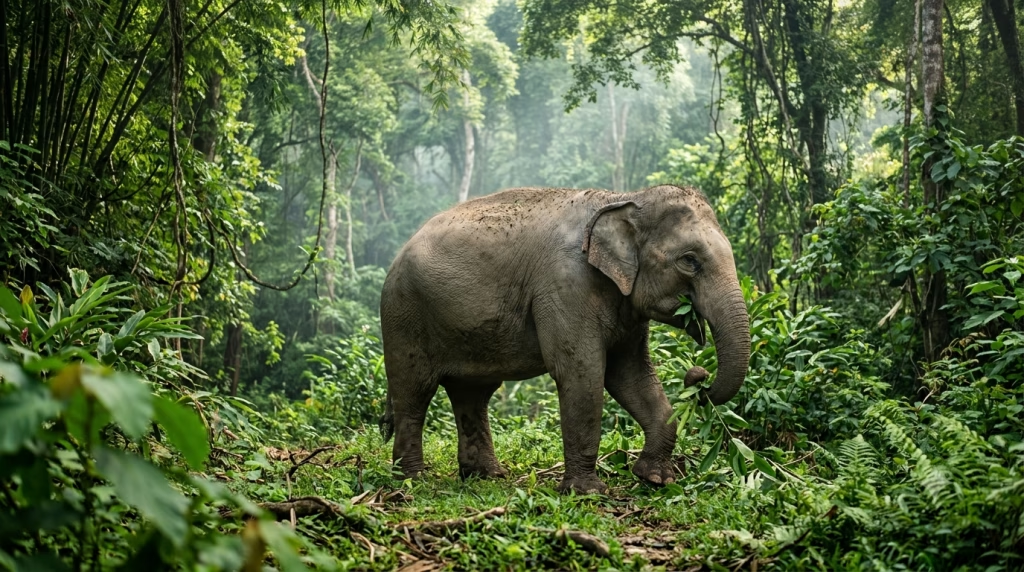
Make elephants the morning focus, then explore Chiang Mai’s Old City temples after the heat begins to ease. This order keeps Day 5 of your Thailand 7-day itinerary realistic rather than rushed.
Choose a half-day program at Elephant Nature Park or ChangChill. Both focus on observation, food preparation, and learning about rescued Asian elephants. Expect to pay roughly 2,500–3,500 baht in 2026, usually including lunch and hotel transfers.
- Typical pickup: 7–8 a.m. from central Chiang Mai.
- Typical return: 1–2:30 p.m., depending on the sanctuary and traffic.
- Bring: Closed shoes, insect repellent, sunscreen, and clothes that can handle mud.
Watch out for “sanctuary” labels. Skip any program offering riding, tricks, painting, or forced bathing. Close-contact washing may look harmless, but repeated tourist sessions can stop elephants from choosing when to rest or leave the water.
Use your Telekonek Thailand eSIM to confirm pickup messages because rural meeting points can change. Keep the sanctuary’s phone number and your hotel address saved offline as well.
After lunch, start at Wat Chedi Luang in the Old City. Its partly ruined 15th-century chedi once held the Emerald Buddha, now housed in Bangkok. Allow 45–60 minutes and expect foreign admission around 50 baht in 2026.
Walk about ten minutes west to Wat Phra Singh, known for classic Lanna roofs and detailed gold decoration. The main image, Phra Singh Buddha, gives the temple its name. Admission is generally around 40 baht, although access rules can change during ceremonies.
For sunset, take a red songthaew up Doi Suthep to Wat Phra That Doi Suthep. A shared return ride commonly costs 120–250 baht per person, while a private Grab can cost 500–800 baht. The drive takes 30–45 minutes each way outside heavy traffic.
Climb the 306-step naga staircase or use the small funicular. Cover your shoulders and knees, remove your shoes before entering prayer halls, and keep your feet pointed away from Buddha images. Avoid loud conversations when monks or local families are praying.
Takeaway: Reserve an observation-led elephant visit, then allow three unhurried hours for Wat Chedi Luang, Wat Phra Singh, and Doi Suthep.
Day 6: Adventure Awaits – Trekking in Northern Thailand
Keep Day 6 outdoors, but match the route to your fitness and tomorrow’s flight south. Northern Thailand’s heat and steep forest paths can turn a short walk into a tiring day.
- Easy: Walk the Monk’s Trail from the western edge of Chiang Mai to Wat Pha Lat. The shaded climb takes about 45–60 minutes each way. Use Grab to reach the trailhead near Chiang Mai University, and return before the midday heat.
- Moderate: Join a Doi Inthanon day tour with the Ang Ka boardwalk, waterfalls, and Kew Mae Pan Nature Trail. Tours usually run from 7 a.m. to 6 p.m. and cost 1,500–2,500 baht in 2026.
- More demanding: Choose a guided Mae Wang trek with several hours of forest walking and a Karen village lunch. Expect 1,800–3,000 baht, including central hotel pickup. Confirm the walking time because “full-day trek” can mean anything from two to six hours on foot.
Kew Mae Pan covers roughly three kilometers, with stairs, roots, and exposed ridge sections. A local trail guide is normally required. The trail often closes from June through October for forest recovery, so use the shorter Ang Ka boardwalk during rainy season.
Before paying for any tour, ask for the group size, elevation gain, meal plan, and return time. Also confirm whether national park admission is included. Doi Inthanon admission for foreign adults is commonly around 300 baht, with separate vehicle and trail-guide charges.
- Wear: Grippy trainers or hiking shoes, quick-dry clothing, and a light rain shell.
- Carry: Two liters of water, sunscreen, insect repellent, tissues, and 500–1,000 baht in cash.
- Save: Your hotel address, guide’s number, and route screenshot before leaving Chiang Mai.
Your Telekonek Thailand eSIM helps you share your pickup point and follow weather updates. Mountain coverage can still fade inside valleys, so download an offline map rather than relying on live navigation.
Watch out for: burning season, usually at its worst from February through April. Poor air can hide mountain views and make hard climbs unpleasant. Check Chiang Mai’s hourly air-quality reading that morning, then switch to kayaking at Huay Tung Tao or an indoor cooking class if levels are unhealthy.
Day 6 takeaway: Pick the Monk’s Trail for flexibility, Doi Inthanon for scenery, or Mae Wang for a longer guided challenge.
Day 7: Beach Bliss in Phuket or Krabi – Relaxation or Adventure
Take the earliest direct flight from Chiang Mai to Phuket or Krabi. Flight time is about two hours, while Bangkok connections can consume five to seven hours. Expect one-way fares of 1,800–5,000 baht in 2026, plus 500–1,200 baht for checked luggage.
- Choose Phuket for convenience: You get more flights, a wider hotel range, and easier backup plans during rough weather.
- Choose Krabi for scenery: You get limestone cliffs, quieter beaches, and quick access to Railay and Phra Nang.
Keep your Telekonek Thailand eSIM active during the transfer. You can track flight changes, order Grab, and message your hotel before leaving the terminal.
From Phuket Airport, Nai Yang Beach takes about 10 minutes by car. Kata and Karon usually take 60–90 minutes, depending on traffic. An airport taxi to the southern beaches costs roughly 800–1,200 baht in 2026.
Nai Yang works best for one final, easy night. Rooms at Nai Yang Beach Resort generally cost 1,200–3,000 baht, while Dewa Phuket often runs 2,500–6,000 baht. After checking in, swim near Sirinat National Park and eat grilled seafood along the beachfront road.
For more energy, stay near Kata Beach and walk to Karon Viewpoint before sunset. Skip a same-day Phi Phi boat tour. Check-in deadlines, road traffic, and marina transfers make that plan too fragile after a morning flight.
Krabi Airport sits about 35–45 minutes from Ao Nang. Shared vans generally cost 150–250 baht, while a private taxi costs around 600–900 baht. Panan Krabi Resort usually runs 2,500–5,500 baht in 2026; simpler rooms nearby often cost 1,000–2,000 baht.
From Ao Nang, take a long-tail boat to Railay for roughly 100–200 baht each way. Walk through Railay East to Phra Nang Cave Beach, then return before dark. Boats may wait until enough seats sell, so allow extra time instead of counting on a fixed departure.
Watch out from May through October: rough seas can cancel boats with little warning. Keep your beach day on Phuket or Ao Nang rather than forcing an offshore trip. Red warning flags also mean you should stay out of the water.
This final stop keeps your Thailand 7-day itinerary balanced: choose Phuket for a smooth finish or Krabi for one last adventure.
Takeaway: Fly early, stay near your chosen beach, and save island-hopping for an extra day.
Staying Connected on Your Thailand 7-Day Itinerary
Reliable data matters throughout your Thailand 7-day itinerary. You will need it for Grab pickups, airline alerts, Google Maps, translation, and last-minute weather checks.
A Telekonek Thailand eSIM avoids airport SIM queues and keeps your physical SIM slot free. Telekonek also offers eSIM data plans that work in 200+ countries, which helps if Thailand is part of a longer Asian trip.
For seven days, choose your data allowance by how you use your phone:
- 5–10GB: Enough for maps, Grab, messaging, email, and light social media use.
- 15–30GB: Better for frequent video uploads, hotspot use, or daily video calls.
- “Unlimited” data: Read the speed terms. Some plans slow down after a daily high-speed limit.
Install your eSIM while you have stable Wi-Fi. Label it “Thailand,” select it for mobile data, and enable data roaming for that line. Keep your home SIM active only if you need bank codes or text messages.
Watch out for automatic roaming charges. Turn off “cellular data switching,” which can silently move data back to your home line when reception drops. On dual-SIM phones, leave calls and texts on your usual number but route all data through Telekonek.
Thailand’s main mobile networks include AIS and True, with dtac services operating under the True group. Coverage is usually strong in Bangkok, Chiang Mai, Phuket, Krabi, and Ayutthaya. Reception can fade on island boat trips, around Railay’s cliffs, and along remote Doi Inthanon trails.
Download an offline Google Maps area before trekking or boarding a speedboat. Save your hotel address in Thai as a screenshot too. That helps when a driver cannot open a map link or your signal disappears.
A physical tourist SIM remains useful if your phone does not support eSIM. Airport packages commonly cost about 299–699 baht in 2026 for 8–15 days. You must show your passport because Thai SIM cards require registration.
Airport counters offer easy setup but often charge more than official city shops. Convenience-store SIMs may look cheaper, yet staff cannot always complete passport registration or fix phone settings. Do not remove your home SIM unless you have stored it securely.
Test your connection before leaving the terminal or hotel Wi-Fi. Open a map, load a webpage, and confirm that Grab can find your location.
Takeaway: Use 10GB for normal travel, disable data switching, and save offline maps before northern treks or island transfers.
Tips for First-Time Travelers in Thailand – Culture and Etiquette
Respect in Thailand often comes through small gestures. Greet older hosts or temple staff with a light wai: press your palms together near your chest and bow slightly. Add “khrap” with male speech or “kha” with female speech to make greetings and thanks more polite.
- Keep your voice low: Shouting during a dispute usually makes the problem harder to solve. Stay calm, smile, and explain what you need.
- Do not touch anyone’s head: The head holds special cultural importance, including a child’s head.
- Watch your feet: Never point your soles toward a Buddha image or another person. Do not step over food, bags, or anyone sitting on the floor.
Remove your shoes when you see footwear lined up outside a temple, massage room, or small guesthouse. Inside temples, sit with your feet tucked behind you. Never climb onto a Buddha platform for a photograph, even when no barrier blocks access.
Give monks extra space. If you use female speech, avoid touching a monk or handing him an item directly. Place the item on a table or let a male companion pass it across. Priority seats on Bangkok trains may also be reserved for monks.
Thailand’s monarchy must be treated respectfully. Avoid jokes or critical comments about the royal family, including online posts. Lèse-majesté laws carry serious penalties. Never step on a dropped banknote to stop it blowing away because Thai currency carries the king’s image.
At shared meals, use the serving spoon rather than your own spoon to take food from communal plates. Your fork usually pushes food onto your spoon; it is not normally placed in your mouth. Chopsticks are mainly used for Chinese-style noodle dishes.
Tipping is modest rather than automatic. Check restaurant bills for a 10% service charge before adding more. For good service, leave 20–50 baht at a casual restaurant or 50–100 baht after a massage. Keep small notes because street stalls and songthaew drivers may struggle to change 1,000-baht bills.
Watch out: Thailand restricts e-cigarettes and vaping products. Importing or carrying one can lead to confiscation, fines, or further legal trouble. Leave vaping devices and cartridges at home rather than assuming airport duty-free rules apply.
Takeaway: Keep your voice calm, your feet away from sacred objects, and your shoes ready to remove. Save the Telekonek Thailand eSIM plans before flying, so you can translate signs, confirm local rules, and reach your hotel without searching for a SIM shop.