
Day 1: Arrival in Vancouver – A Warm Welcome to Winter
Land in Vancouver and you get winter without the deep-freeze. It’s often wet-cold rather than prairie-cold, with temperatures around 0–8°C in winter. Dress for rain first, then add warmth: a waterproof shell, a light down layer, and shoes that can handle slush. Your first win is getting your phone sorted before you even leave YVR.
At Vancouver International Airport (YVR), skip the long taxi line and take the Canada Line straight into the city. It runs from YVR–Airport Station to Waterfront Station in about 25 minutes. Expect roughly CA$9–$11 from the airport because of the airport add-fare. Use tap-to-pay with a credit card or mobile wallet, or buy a Compass Ticket at the machines.
Having reliable data matters on Day 1 because you’ll be navigating platforms, checking real-time transit, and booking last-minute dinner in busy neighborhoods. With Telekonek, you can activate your eSIM before you land and step off the train with maps and messages working. Telekonek also offers eSIM data plans that work in 200+ countries, which is useful if your flights connect through the US or you’re extending this trip later. Set up your plan here: Canada eSIM travel data.
Drop bags, then go straight for a winter-friendly “Vancouver classic”: the Seawall around Stanley Park. In winter it’s calmer, and the forested paths feel moody in the best way. If rain is heavy, swap the Seawall for the Vancouver Aquarium area and short loops near Second Beach where you can duck back to transit quickly.
For a warm-up with views, book an evening slot at Grouse Mountain. The Skyride gondola gets you above the rain line on some days, and the lodge up top is a cozy reset after flying. Watch out: fog and wind can shut the gondola with little notice, so keep a backup plan like Granville Island Public Market for hot food and browsing under cover.
Dinner should be close and comforting. Three easy winter picks:
- Miku (Waterfront): sushi with warm dishes like miso black cod; great if you’re staying downtown. Expect CA$60–$120/person depending on sake and tasting menus (2026).
- Jam Cafe (Cambie or Kitsilano): next-morning plan for huge brunch plates. Go early to avoid long waits, especially weekends.
- Phnom Penh (Chinatown): famous for garlic chicken wings and butter beef. Lines move, but they can still be long in the evening.
Where you sleep matters in winter because you’ll be doing early starts to Whistler tomorrow. Aim for Downtown (walkable) or Yaletown (easy transit). Expect CA$180–$320/night for solid mid-range hotels in 2026, higher on weekends and event nights. Practical options include Pinnacle Hotel Harbourfront (harbor walks right outside) and The Burrard (often better value, simple rooms, good location).
Watch out for Day 1 mistakes: Vancouver winter rain soaks jeans fast, and wet feet will wreck your next-day mountain plans. Buy cheap waterproof gloves or a compact umbrella at a Shoppers Drug Mart if you didn’t pack them. Also, don’t rely on free café Wi‑Fi for navigation—get Telekonek running so you can pivot fast if weather shifts.
Takeaway: Use Day 1 to settle in fast—train downtown, a short winter walk or Grouse views, a hot meal, and Telekonek data set up for a smooth Whistler start.
Day 2: Whistler – Skiing and Snowboarding Extravaganza
Day 2 is your “big mountain” day in this 7 day itinerary for Canada winter adventures. Whistler Blackcomb is two mountains linked by the Peak 2 Peak Gondola. It’s huge, and it can feel overwhelming if you don’t pick a plan. Start early, because lift lines build fast after 9:30am on weekends and powder days.
Getting there and timing it right matters. The Sea-to-Sky Highway (BC-99) is stunning, but winter storms can turn it slow. If you’re driving, leave Vancouver around 6:30–7:30am for the smoothest run. Expect about 1.5–2 hours in good conditions, longer if it’s dumping snow. Keep your Telekonek Canada eSIM live before you leave the city, so you can check road conditions, parking, and lift status without hunting for Wi‑Fi.
On-mountain strategy by skill level saves your legs and your mood. Use this as a simple route map:
- True beginners: Stay on Whistler Mountain’s Olympic Station area (gentler greens). Book a morning lesson so you learn faster and avoid peak crowds mid-day.
- Intermediates: Lap long cruisers off Emerald Chair (Whistler) or Solar Coaster (Blackcomb). These zones keep you moving without the steep “gotcha” pitches.
- Advanced: Head higher when visibility is good. If clouds roll in, drop lower into the trees for contrast and safer navigation.
Lessons and rentals are easiest when you lock them in the night before. In winter 2026, expect CA$60–$100/day for skis/board + boots, and CA$15–$25/day for a helmet. A first-timer group lesson often lands around CA$150–$250 depending on dates. Pick up gear after 4pm if the shop offers it. You’ll skip the morning rush and be ready for first chair.
Watch out for this: Whistler weather flips fast. You can start with clear skies in the village and hit whiteout at the top. Pack clear-lens goggles, a neck tube, and a thin backup glove liner. Also, keep your phone warm in an inside pocket. Cold kills batteries fast, and you don’t want your maps or ride plans dying at 2,000 meters. Telekonek data makes it easy to pull trail maps, message your group, or call a rideshare without relying on crowded lodge Wi‑Fi.
Après and nightlife is part of the day, but keep it simple. For a lively, easy win, aim for Whistler Village Stroll spots where you can walk home in boots. If you’re staying late, set a meeting point that’s obvious even in snow—like outside the Olympic Rings. One bad move here is splitting up with “see you later” and no signal plan. Message your group while you still have good coverage, and drop a pinned location before you head inside.
Takeaway: Pick your mountain zones by skill level, grab rentals the night before, and keep Telekonek data on so weather, meetups, and road changes don’t derail your best ski day.
Day 3: Winter Wonderland in Banff National Park
Day 3 is your long move day: Whistler to Banff. It’s the kind of transfer that can quietly eat your trip if you don’t lock it in. The fastest, least stressful play is fly Vancouver (YVR) to Calgary (YYC), then drive into Banff. Flights are often 1 hour 30 minutes in the air, but give yourself half a day once you add the Whistler-to-Vancouver leg, airport time, and the final drive.
From Whistler, budget 2.5–4 hours to reach YVR depending on snow and traffic. If you’re driving, winter tires are a must on BC highways. If you’re taking a shuttle, grab an early departure so you’re not landing in Calgary after dark. With Telekonek’s Canada eSIM already active, you can keep your shuttle updates, gate changes, and weather radar in one place without hunting for airport Wi‑Fi.
From Calgary, Banff is an easy 1 hour 30–2 hours drive on the Trans‑Canada Highway (Hwy 1). If roads are dry, it’s simple. If it’s snowing, it can feel like a different country. Watch for sudden whiteouts near Canmore and wildlife on the shoulders around dusk.
- Rental car: Best for flexibility and sunrise stops. Ask for M+S tires (or winter tires if available) and keep washer fluid topped up.
- Shuttle: Less hassle if you don’t want to drive in storms. It’s also nice after a travel day when your legs are cooked.
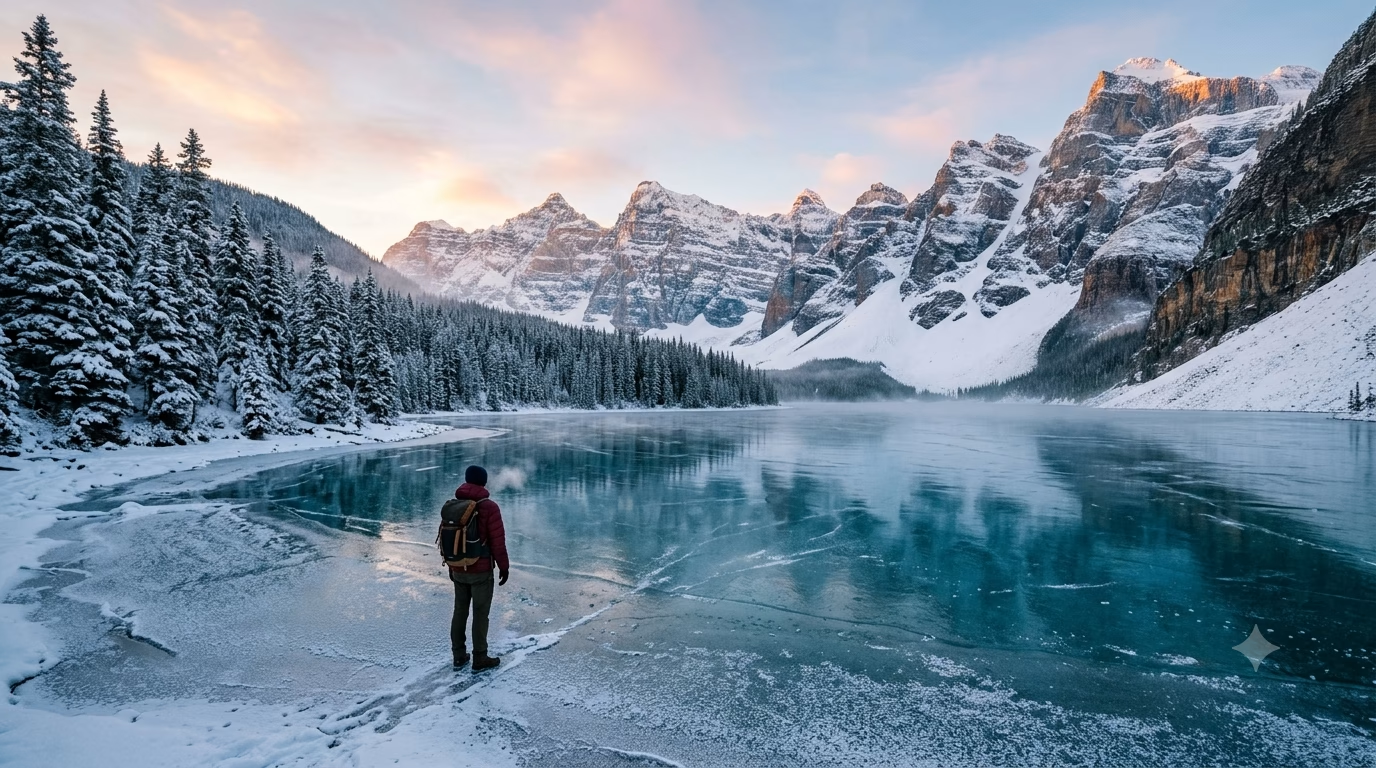
Once you’re in Banff, aim straight for Lake Louise if the light is good. In winter, the lake is a frozen postcard, and the backdrop feels unreal. If you’re here near the Ice Magic timeframe (covered later), even the build-up week can be busy. Park early, or you’ll circle while the sun drops behind the peaks.
For snowshoeing, keep it simple and scenic. Lake Louise Lakeshore is beginner-friendly and flat, with big views even if you only walk 30 minutes. If you want a classic climb, Johnston Canyon is the popular pick, but it can get slick and crowded mid-day. Start before 9am, and bring traction (microspikes) even if you’re snowshoeing—packed paths turn to ice fast. Use Telekonek data to check trail reports and closures before you commit, because weather can flip plans in an hour.
Sleep somewhere that feels like a reward. In Banff town, look at the Moose Hotel & Suites (often CA$250–$450/night in 2026) for walkable dinners and rooftop hot pools. If you want quieter nights, Lake Louise Inn can be more practical for early starts (often CA$200–$380/night), but rooms vary—double-check you’re not booking a long walk from parking in deep cold.
Watch out for: the “quick stop” effect. You’ll think you can squeeze in Lake Louise, a snowshoe, and Banff Avenue dinner on arrival day. In winter, daylight is short and roads slow. Pick one main outdoor stop, then go straight to a hot meal.
Takeaway: Fly into Calgary, drive carefully into Banff, do one Lake Louise or snowshoe highlight, then end the day in a lodge you’ll actually want to stay in.
Day 4: Thunderous Snowy Adventures in Jasper
Day 4 pushes deeper into the Rockies. The Icefields Parkway (Hwy 93) from Banff to Jasper is only about 290 km, but in winter it’s a full, slow day. Expect 3.5–5 hours of driving in good conditions, longer if it’s actively snowing or windy. Fuel up before you leave Banff or Lake Louise. Services are limited in winter, and some stops close early.
Watch out for one thing: your phone can lose signal for long stretches on the parkway. Download offline maps before you roll, and keep your booking emails and trail notes saved. With a Telekonek Canada eSIM already running, you’ll connect quickly when coverage returns in Jasper town, which makes last-minute dinner or tour changes much easier.
For a “thunderous” winter adventure, book an ice walk on Maligne Canyon. In deep winter, the trail drops into a frozen slot canyon with icefalls and blue ice walls. Guided ice walks usually take 2–3 hours and often include ice cleats (metal grips that strap to your boots). Expect roughly CA$90–$160 per adult (2026 range) depending on group size and gear. Go guided if it’s your first time. The canyon has icy pinch points where a wrong step turns into a slide.
If you want skis instead, Marmot Basin is Jasper’s main hill. It’s quieter than the mega-resorts, and that’s the point. You get wide runs, shorter lines, and a more relaxed base area. A common plan is:
- Morning: warm-up laps on green/blue groomers (good visibility days feel effortless here).
- Midday: move higher if the wind is calm; if it’s gusty, stay lower where trees cut the exposure.
- Afternoon: finish early enough to drive back before dark glare ice forms on access roads.
For dinner in Jasper town, aim for places that handle winter crowds smoothly. Jasper Brewing Co. is reliable for a casual, warm meal (think pizza and hearty mains), and Famoso is a solid back-pocket option for quick Neapolitan-style pizza when you’re tired and hungry. If you want a nicer sit-down, book ahead in peak weeks (late Dec–Feb). With Telekonek on your phone, you can lock a reservation while you’re still thawing out in your hotel lobby.
Wildlife is a real Jasper winter highlight, but you need to do it safely. Your best odds are around dawn and dusk on plowed roads near town, when animals conserve energy and come closer to easy forage.
- Where you’ll often spot them: elk around town sites and open valleys; bighorn sheep on roadside slopes; occasionally moose near willow-heavy areas.
- How to do it right: stay in your car if an animal is close to the road, use hazard lights only if you’re safely pulled over, and never block a lane.
- What goes wrong: people walk up for photos and trigger a charge—elk can be aggressive in winter. Give them a huge buffer.
Takeaway: Jasper rewards you when you plan for long distances, patchy signal, and early darkness—then choose one big hit (Maligne ice walk or Marmot Basin) and build the rest of the day around it.
Day 5: Ice Magic Festival in Lake Louise
Day 5 is your “pure winter postcard” day in this 7 day itinerary for Canada winter adventures. You’re back at Lake Louise for the Ice Magic Festival, where pro carvers turn huge blocks of ice into sculptures right on the lakefront. The vibe is part art show, part winter tailgate. You’ll see teams working with chainsaws and chisels, then finishing details with small hand tools. It’s loud, cold, and weirdly hypnotic.
How to time it: Ice Magic is typically a weekend event in late January or early February. The lakefront gets busiest late morning through mid-afternoon, when carving is in full swing and the light is best for photos. Get there early. Lake Louise parking can fill fast on festival weekends, and the access road backs up before lunch.
Keep your phone ready for quick changes. Festival updates, shuttle notes, and parking alerts can shift with weather. With your Telekonek Canada eSIM already active, you can pull live updates without hunting for lodge Wi‑Fi.
- Watch the carvers up close: Stand near the roped-off zones by the shoreline for the best view of finishing work.
- Night viewing (if offered): Some years include evening lighting that makes the sculptures look unreal against the dark mountains.
- Photo tip: Use 2x zoom for details. Wide shots work best from the skating area looking back toward the Château.
After the sculptures, do the classic: ice skating on Lake Louise. When conditions allow, the rink is plowed right on the lake. Rentals are often available at the Lake Louise Lakeshore area (availability can sell out on busy weekends). If you already have skates, bring them. You’ll save time and usually CA$20–$40 in rental fees (expect 2026 pricing to vary by operator and demand).
Watch out for this: the lake is colder than it looks, and wind cuts across it. Your toes will go numb fast if you’re in thin socks. Wear one warm pair. Doubling socks can cramp boots and make you colder.
Warm up properly after skating. Your easiest hot chocolate is at the Fairmont Château Lake Louise lobby café area. It’s pricier, but you’re paying for heat, seating, and that window view. For something quicker, check the Lake Louise Ski Resort base area cafés if you’re heading that way later. Use Telekonek to check hours and bus timing before you commit, because winter closures and early last runs can strand you with a long wait in the cold.
Takeaway: Hit Ice Magic early, skate right after, then claim a hot chocolate seat before the afternoon crowds roll in.
Day 6: Exploring Quebec City’s Winter Carnival
Day 6 swaps the Rockies for Québec’s biggest winter party. Québec City’s Winter Carnival (Carnaval de Québec) is usually late January into mid-February, and the action clusters around Old Québec. Your “anchor” is Bonhomme’s Ice Palace, which is often set up near Parc de la Francophonie and the Parliament area. Go early afternoon for shorter lines and better light for photos. Then circle back after dark when the LEDs and projections make it feel like a snow-globe set.
Start with the classic Carnival trio: ice canoe, snow slides, and night shows. Ice canoe is the one people underestimate. Teams run and paddle through broken ice on the St. Lawrence, and wind off the river cuts harder than the temperature suggests. Keep your Telekonek Canada eSIM on so you can check event times and detours on the fly without hunting café Wi‑Fi. It saves you from showing up after a heat is done.
For family-friendly wins, pick activities where you can warm up fast between bursts of cold. Look for:
- Snow slides (glissades): fast, easy, and great even if you’re not a skier. Go right when they open to avoid long waits.
- Bonhomme meet-and-greets: best for kids, and the photos are a solid souvenir without buying more stuff.
- Indoor breaks in Old Québec: pop into the Musée de la civilisation when hands start to sting. It’s close enough to jump back into the street energy after 60–90 minutes.
Food is part of the Carnival strategy, not just a treat. You want quick, hot, and snackable so you don’t lose momentum. Go for maple taffy on snow (tire d’érable) if you see a line moving fast. Then do a proper warm-up meal nearby. In Old Québec, Café du Monde is a reliable sit-down option for comfort food with a view, while Le Chic Shack is an easier, faster stop for burgers and poutine when you’re running on a tight event schedule. Expect CA$20–$35 per person for a casual meal in 2026, more if you add drinks.
Watch out for the “slush trap” in Old Québec. The prettiest streets—like around Petit-Champlain and the lower town—can turn into ankle-soaking puddles by late afternoon. Waterproof boots matter more here than extra layers. Also, battery drain is real in sub-zero air. Keep your phone warm in an inside pocket, and use Telekonek for quick check-ins instead of leaving your screen blazing for long stretches.
To keep logistics simple, save the official program page and map so you can pivot if weather shifts closures: Carnaval de Québec official site. For your data setup before you land in Québec City, use Telekonek’s Canada eSIM so your tickets, maps, and transit info work the moment you step outside.
Takeaway: Build Day 6 around the Ice Palace area, eat hot snacks often, and plan one indoor museum break so the Carnival stays fun instead of feeling like a cold endurance test.
Day 7: Winter in Toronto – An Urban Adventure
Day 7 is your city-day reset in this 7 day itinerary for Canada winter adventures. Toronto can feel like a wind tunnel in winter, especially near the lake. Expect roughly -10°C to 2°C in 2026, with damp gusts that cut through thin gloves. Plan your day like a loop of warm indoor hits, short outdoor walks, then a food stop to thaw out.
Start downtown with the Royal Ontario Museum (ROM) or the Art Gallery of Ontario (AGO). ROM is best if you want big, easy-to-navigate galleries and “wow” exhibits in under two hours. AGO is better if you want a calmer pace and a warm, bright building to hide from the grey. Use your Telekonek Canada eSIM to pull up live transit times and avoid long platform waits in the cold, especially on Line 1 during delays.
For a winter-only outdoor moment that’s actually worth the numb fingers, aim for The Bentway (skating trail under the Gardiner) or Nathan Phillips Square (classic city-hall rink). Skating is usually free if you bring skates, and rentals are often available on-site for a fee (expect roughly CA$15–$25 in 2026). Watch out: both rinks can close or go to limited hours when it’s warm or raining. Check conditions before you travel across town.
If your dates line up, Toronto’s best winter vibe comes from festivals and light walks. The Toronto Light Festival in the Distillery District (typically January–March) is short, walkable, and pairs perfectly with a hot drink. Another solid cold-weather plan is a quick hop to St. Lawrence Market for lunch. Go for a peameal bacon sandwich (Carousel Bakery is the classic stop) and warm up inside before your next move.
For dinner, pick a neighborhood so you’re not zig-zagging across the city in slush:
- Chinatown (Spadina Ave): dumplings and noodles, fast seating, great value on a cold night.
- Koreatown (Bloor St W): BBQ and stews that warm you up fast; lines can spike after 7pm.
- Queen West: trendier rooms and cocktails, but expect higher bills and longer waits.
Watch out for a classic Toronto winter fail: your phone battery drops fast outside. Keep it in an inner pocket and use low-power mode. With Telekonek’s Canada eSIM already set, you can keep maps, reservations, and ride options working without hunting for Wi‑Fi.
Takeaway: Build Toronto as warm indoor anchors plus one outdoor “winter moment,” then finish with a neighborhood dinner you can reach by subway fast.
Staying Connected in Canada: Mobile Data and eSIM Options
In this 7 day itinerary for Canada winter adventures, your phone is more than photos. You’ll use it for weather alerts, road closures, ski lift updates, and ride pickups when it’s too cold to wait outside. Canada is big, and you’ll hit real dead zones on mountain roads like the Icefields Parkway. So you want a setup that still works when plans change fast.
Your three main ways to get data are: local SIM, roaming, or an eSIM. Roaming is the “it works instantly” option, but it can also be the most expensive. A physical SIM can be fine in cities, but it’s annoying if your phone has no SIM tray access or you’re landing late and shops are closed. A Telekonek eSIM is the cleanest move for a multi-stop winter route, because you can install it before you fly and land connected.
Local SIM cards in Canada: you’ll usually see big carrier brands in airports and malls, plus smaller flanker brands in electronics shops. The catch is that prepaid “tourist-friendly” plans can still feel pricey in Canada. In 2026, expect rough ranges like CA$40–CA$75 for 20–50GB for a month, often plus tax and a SIM fee. If you only need a week, you may still have to buy a full month, and returns are not a thing once it’s activated.
eSIM basics (no jargon): an eSIM is a digital SIM that you add with a QR code or in an app. You keep your physical SIM in your phone, and you just switch data over to the eSIM. Telekonek also helps if your trip doesn’t stop at Canada. Staying connected matters on winter routes, and Telekonek offers eSIM data plans that work in 200+ countries, so you’re not redoing setup every time you cross a border on future trips.
What to pick for this route (cities + mountains):
- Light user (maps + messages): 3–5GB for 7 days if you download offline maps in advance.
- Normal user (social + bookings): 8–12GB for 7 days, especially if you post ski days and short videos.
- Heavy user (hotspot + video): 15–25GB for 7 days, or expect to hunt Wi‑Fi a lot.
Watch out for two common problems: First, cold drains batteries fast. If your phone dies, your “plan” dies with it, so carry a 10,000–20,000 mAh power bank and keep your phone in an inner pocket. Second, don’t assume lodge Wi‑Fi will save you. At ski resorts and older mountain hotels, Wi‑Fi can slow to a crawl at 7–10pm when everyone streams and uploads.
Quick setup checklist before you fly:
- Confirm your phone supports eSIM (most newer iPhones and many Androids do).
- Install your Telekonek Canada eSIM on hotel Wi‑Fi at home, not in an airport queue.
- Turn on “Wi‑Fi calling” if you want your regular number to work better indoors.
- Download offline areas in Google Maps for Vancouver, Banff/Lake Louise, Jasper, Québec City, and Toronto.
Final tip: on move days, switch your phone to Low Power Mode and pre-load directions while you still have service. Grab an eSIM before you fly—Telekonek has affordable data plans that save you from hunting for SIM shops after a late winter landing.