
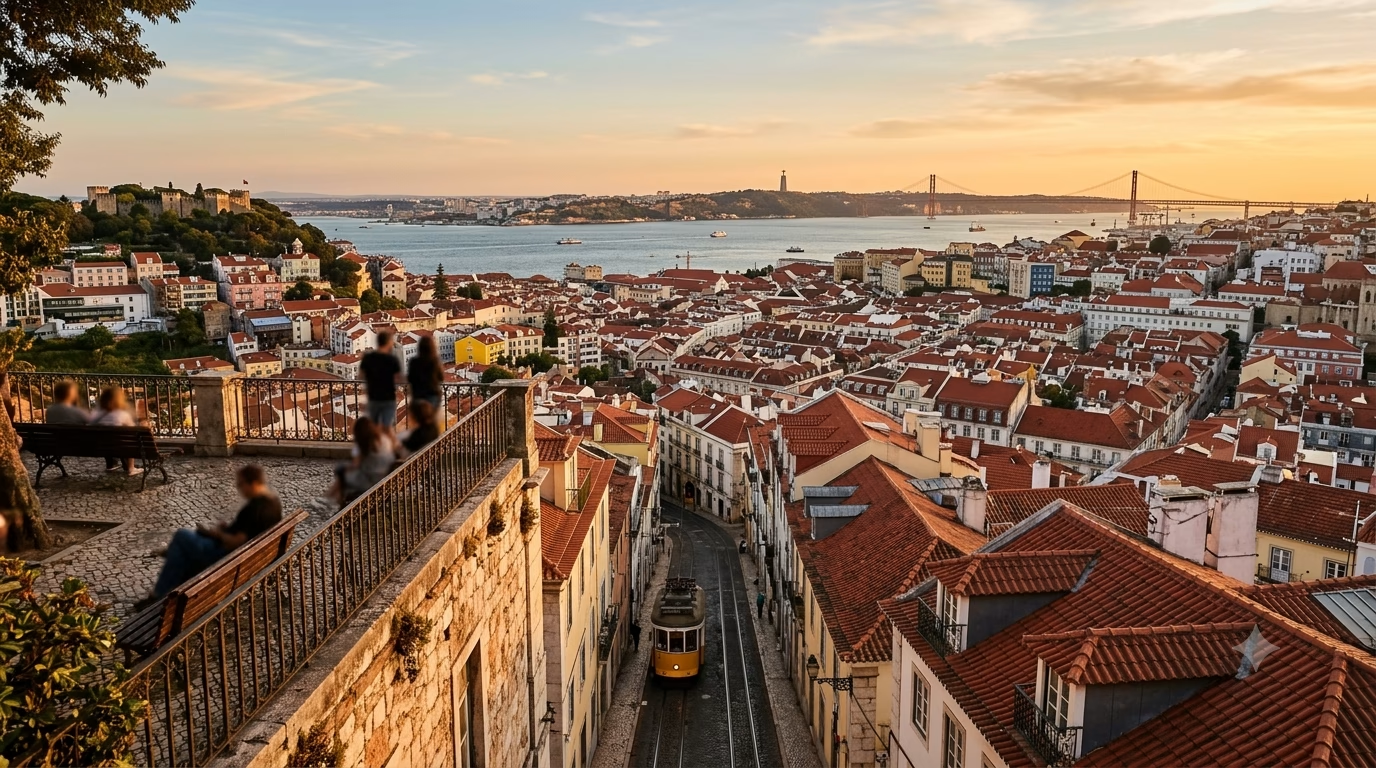
Day 1-2: Exploring the Charm of Lisbon
Start your 10 day itinerary for Portugal in Lisbon, where hills, tilework, and river light do the heavy lifting. Give yourself two full days so you’re not sprinting up cobblestones. You’ll use maps constantly here, especially in Alfama’s alley maze and along the Belém waterfront. That’s why it helps to land with data already working—Telekonek Portugal eSIM plans activate before you arrive, and Telekonek eSIM data plans work in 200+ countries if Portugal is one stop on a longer route.
Day 1: Old Lisbon (Alfama + viewpoints + classic street life). Start early at Castelo de São Jorge for the city-wide views, then walk downhill into Alfama. Don’t try to “cover” Alfama—pick a few anchors and wander between them. Aim for Miradouro de Santa Luzia for the tiled panels and river view, then Miradouro das Portas do Sol for a wider sweep of rooftops.
Use Tram 28E as a moving postcard, but don’t count on it as transport. It’s often packed by mid-morning, and pickpockets target distracted riders. A smarter move is to walk a short stretch for photos, then switch to the metro or buses for timing. Keep Telekonek data on so you can check live directions and reroutes when a street is blocked or a tram is delayed.
For food, go straight to Lisbon essentials. Try bacalhau à Brás (salt cod with eggs and potatoes) or sardinhas assadas if you’re here in warmer months. For something quick and local, a bifana (pork sandwich) and an espresso at a counter hits the spot. If you want a sit-down splurge, book a table in Chiado or Bairro Alto and plan to arrive Portuguese-late (after 8:30 pm) for the full atmosphere.
Day 2: Belém (monuments + riverside walk + pastries). Go in the morning to beat tour buses. Start with Jerónimos Monastery; it’s one of Lisbon’s most detailed Manueline buildings, and the cloisters are the main event. Then walk to Belém Tower along the riverfront—budget extra time because queues can look short and still take a while. Between stops, detour to the Padrão dos Descobrimentos monument for big river views and a quick history hit.
Belém is also your pastry day. Get pastéis de nata warm with cinnamon and powdered sugar, then take them to the nearby gardens so you’re not juggling crumbs in a line. Watch out for “skip-the-line” street sellers around the monuments. If it’s not an official ticket desk, assume you’re paying more for vague promises.
Nightlife tip (pick your vibe):
- Bairro Alto: bar-hopping on tight streets; loud, crowded, and fun after 11 pm.
- Cais do Sodré (around Pink Street): easy for groups, lively late; keep your phone zipped away.
- Alfama: fado nights feel more intimate; book ahead if you want a seated show with dinner.
Takeaway: Spend Day 1 getting lost on purpose in Alfama, then use Day 2 for Belém’s headline sights—your trip feels calmer when your Telekonek data is already working for maps, tickets, and late-night rides.
Day 3: Sintra – A Fairytale Escape
Day 3 is your “storybook” day in this 10 day itinerary for Portugal. Sintra sits in cooler, misty hills about 30–45 minutes from Lisbon, and it feels like a different country. You’ll bounce between timed tickets, shuttles, and steep paths, so you want your route locked in before you step off the train. Keep Telekonek data on so you can pull up live maps, bus stops, and your entry slots without hunting for Wi‑Fi.
Getting to Sintra from Lisbon (pick one and commit):
- Train (best for most people): Depart from Rossio station to Sintra. Expect ~40 minutes and about €2–€3 each way (2026). Trains run often, but lines at the machines spike after 9:30.
- Rideshare/taxi (fastest door-to-door): Good if you’re splitting costs with 3–4 people. You’ll still hit traffic and narrow roads near the palaces.
- Rental car (usually a mistake): Parking is tight and restrictions are common. You can lose an hour circling and still end up far away.
Once you arrive, the historic center is walkable, but the hilltop sights are not. Most day-trippers use Scotturb buses (not free) or rideshares for the climbs. Timetables can change seasonally, so check the operator before you go: Scotturb official site.
Palace strategy that actually works: book timed entry and go early. Start at Pena Palace first slot if you can. The color-and-clouds photos look best in morning light, and you’ll beat the tour groups that arrive mid-morning. After Pena, go down to Quinta da Regaleira for the gardens and the Initiation Well. Regaleira is less about one “must-see room” and more about tunnels, grottoes, and hidden paths, so give it time.
A realistic day-trip flow (no sprinting):
- 07:45–08:30 Train from Rossio → Sintra, coffee and pastry near the station.
- 09:00–11:30 Pena Palace + terraces (plan extra time for shuttle/queues at the top).
- 12:00–13:00 Lunch in town. Try Tascantiga for petiscos if you want a casual stop, or grab a quick sandwich so you don’t lose your afternoon slot.
- 13:30–16:00 Quinta da Regaleira (gardens + well + tunnels).
- 16:30–18:00 Wander the old center and pick up a travesseiro pastry at Piriquita.
Watch out for this common Sintra fail: people book Pena, then “wing it” for transport and arrive late. Drivers get stuck on the approach roads, and buses queue too. Buffer 30–45 minutes between your train arrival and your palace entry time. Telekonek helps here because you can reroute on the fly, message your driver, and screenshot tickets even when coverage gets patchy in the hills.
One-line takeaway: Lock in timed tickets, start with Pena early, and keep Telekonek data running so transport hiccups don’t blow up your Sintra day—then you’re set for the rest of your Portugal eSIM-powered route.
Day 4: The Historic City of Évora
Day 4 shifts your 10 day itinerary for Portugal from coastal day trips to deep, layered history. Évora sits in the Alentejo, a region of cork oaks, wheat fields, and slow lunches. The old town is UNESCO-listed, and it’s compact enough that you can cover the essentials on foot without feeling rushed.
Getting to Évora (and not losing half your day in transit): the simplest move is a direct bus from Lisbon’s Sete Rios station. Expect roughly 1h30–2h each way and about €10–€18 in 2026 pricing, depending on time and demand. Trains also run from Lisbon (often Oriente or Entrecampos), usually 1h30–2h, but schedules can be less frequent. Keep Telekonek data on for live departure boards, platform changes, and a quick rideshare backup if you miss the last return.
Start at the Roman Temple of Évora (often called the Temple of Diana). It’s not huge, but it’s dramatic because you’re suddenly face-to-face with 2,000-year-old columns in a quiet square. Go early or near golden hour for photos without tour groups. The nearby lanes around Rua 5 de Outubro are ideal for a slow loop toward your next stop.
Next, walk to Évora Cathedral (Sé de Évora). Inside, you’ll see heavy stonework and chapels that feel more fortress than church. The real win is the roof terrace. You get a clean view over terracotta roofs and the Alentejo plain. Watch out: the rooftop stairs are steep and uneven, and the stone gets slick after rain. Wear shoes with grip, not smooth soles.
By mid-afternoon, make Évora a wine day. Alentejo reds are known for being bold and easy to like, even if you’re not a “wine person.” For a no-car option, book a tasting bar in town (you’ll find several within the walls) and do a flight of 3–5 pours, often €12–€25 in 2026. If you want vineyards, look at estates outside the city (many are 15–30 minutes away). Use Telekonek to message the winery about English tour times and confirm if they require reservations—some do, and they’ll turn you away if a bus group fills the slot.
- Fast-day plan (7–8 hours total): Temple → Cathedral roof → long lunch → in-town tasting.
- Deeper plan (10–12 hours): add a vineyard visit by taxi/tour and return after sunset.
Takeaway: Évora is your “stones and wine” day—lock in your transport times, then explore the old town on foot with Telekonek data ready for bookings and last-minute changes.
Set up your Telekonek Portugal eSIM before Day 4 so your maps and reservations work the moment you step off the bus or train.
Day 5-6: Coastal Relaxation in Lagos
Days 5–6 are where your 10 day itinerary for Portugal finally slows down. Lagos is built for salt-air mornings and cliff-walk evenings. Base yourself near the old town walls if you want everything walkable, or in Porto de Mós if you want quieter beach time.
Where to stay (pick your vibe): In the center, Lagos Avenida Hotel and Carvi Beach Hotel are popular because you can walk to dinner, the marina, and sunrise viewpoints. Expect roughly €120–€250/night in 2026, depending on season and room size. For apartment-style stays, look around Rua 25 de Abril and the marina side, where you can usually find studios with kitchens for €90–€180/night.
Your main event is Ponta da Piedade. Go early (before 9:30) or late (golden hour), when the boardwalk is calmer and the light turns the rock into warm orange layers. The easiest path is the clifftop walkway from Praia do Camilo toward the lighthouse. If you go down the long staircase to the waterline, save energy for the climb back up—there’s almost no shade.
For beaches, Lagos gives you two different moods. Praia Dona Ana is the postcard cove, with dramatic rocks and usually calmer water. Praia do Porto de Mós is wider and better when you want space, surf, or an easy beach café lunch. If you’re choosing one afternoon beach, pick Dona Ana for photos and Porto de Mós for comfort.
Boat tours are worth it here, but timing matters. From Marina de Lagos, expect 1–2 hour grotto and cliff trips in the €20–€45 range (2026), and longer cruises closer to €50–€80. Morning seas are often smoother than late afternoon. Keep your Telekonek data on so you can message operators, drop a pin to the right boarding gate, and avoid wandering the marina in circles five minutes before departure.
If you want to be on the water, you’ve got options:
- Kayak tours (best for caves): usually launched near Ponta da Piedade or the marina; plan for wet feet and bring a dry bag.
- Stand-up paddle (SUP) (best on calm days): go early before wind picks up.
- Surf lessons (best for beginners): many schools drive you to the day’s best break; you’ll get the location last minute based on conditions.
Watch out for two classic Lagos mistakes. First, cliff-edge viewpoints look “close” on maps but can mean steep stairs and slow paths—budget more walking time than you think. Second, the grotto boats can cancel with swell. Have a backup beach plan and keep checking updates on your phone; with Telekonek, you won’t be stuck refreshing on weak café Wi‑Fi.
Concrete takeaway: Do Ponta da Piedade at sunrise or sunset, book a morning boat or kayak, and use Telekonek data to stay flexible when wind and waves change the plan.
Set up your Telekonek Portugal eSIM before you reach Lagos so maps, tour messages, and tide forecasts work the second you step outside.
Day 7: Discovering the Cultural Wonders of Porto
Day 7 brings your 10 day itinerary for Portugal into Porto’s steep lanes, iron bridges, and riverfront noise. Start early at Livraria Lello (Rua das Carmelitas), because lines stack up fast and the timed-entry system is strict. Expect to pay a small entry fee, often credited toward a book, but rules can change by season. Buy your slot the night before and screenshot the QR code so you’re not stuck at the door with weak café Wi‑Fi. With Telekonek data running, you can pull up your entry time, maps, and backup options in seconds.
From Lello, walk 8–12 minutes downhill to Torre dos Clérigos for a quick skyline hit, then aim for the river. The classic stroll is São Bento Station (for the blue-tile hall) → Rua das Flores → Ribeira. Ribeira is pure postcard: narrow houses, buskers, and terraces right on the Douro. It’s also where pickpockets work shoulder-to-shoulder crowds. Keep your phone out of back pockets and don’t hang a bag on the back of a chair when you sit.
For the port cellars, cross the lower deck of Ponte de Dom Luís I into Vila Nova de Gaia. You’ll see big names like Cálem and Graham’s, plus smaller lodges that feel less theme-park. Tours usually run €15–€30 in 2026 depending on tastings. The smart move is a late-afternoon booking, then stay on the Gaia side for sunset viewpoints like Jardim do Morro. Use Telekonek to book the last tour slot you can realistically make, because Porto’s hills turn “10 minutes away” into 25.
Dinner is better a few blocks off the river. In Cedofeita, you’ll find calmer tables and fewer tourist menus. If you want a Porto classic, try a francesinha at Café Santiago (expect a heavy, saucy sandwich) or go for petiscos (Portuguese small plates) around Rua de Cedofeita. For something quick and local, Casa Guedes is known for pork sandwiches. Budget roughly €12–€25/person for a solid meal with a drink, more if you’re doing riverfront seafood.
For nightlife, do it like locals: start with a glass of wine in Galerias de Paris (lively bar street), then pick one place and commit. Door lines can be messy after midnight, and ride-hails surge when it rains. Save your hotel pin offline and keep Telekonek data on so you can navigate back without wandering into dark, dead-end lanes on the way uphill.
- Best flow: Lello (timed) → São Bento tiles → Ribeira walk → Gaia cellar tour → Jardim do Morro sunset.
- Watch out for: strict timed-entry at Lello + pickpockets in Ribeira when crowds compress.
- One move that saves your day: lock tickets and routes on your phone with Telekonek’s Portugal eSIM before you hit Porto’s hills.
Day 8: Day Trip to the Douro Valley
Day 8 is your big “landscape day” in this 10 day itinerary for Portugal. The Douro Valley is all folded hills, stone terraces, and a river that looks painted at golden hour. The trick is to pick one base area so you don’t spend the whole day in vans and ticket lines. For most day trippers from Porto, that means aiming for Pinhão (pretty, compact, and cruise-friendly) or Peso da Régua (bigger transit hub, less charming).
Best ways to get there from Porto (cost vs comfort):
- Train (most scenic, least stressful): Porto São Bento or Campanhã to Pinhão or Régua. Expect roughly 2–2h30 each way and about €10–€20 round trip in 2026 pricing. Sit on the right side heading out for long river views.
- Small-group tour (most efficient day): Usually includes a winery stop, lunch, and a short cruise. Expect roughly €90–€160 depending on inclusions and season. You gain time, but you lose flexibility.
- Car (most flexible, easiest to mess up): Great if you want viewpoints and tiny villages. But Douro roads are narrow and slow, and tasting + driving is a bad mix. Plan a designated driver.
Once you’re in Pinhão, build the day around three anchors: a winery visit, a river cruise, and a proper lunch. Many quintas run set tasting slots, and late arrivals often get bumped. Keep your confirmations handy and use Telekonek data to pull up your booking email, location pin, and backup taxi number without relying on spotty café Wi‑Fi in the hills.
River cruise: the classic move is a 1-hour cruise from Pinhão on a rabelo-style boat. It’s the easiest “wow” per minute you’ll get all trip. If you’re short on time, cruise first, then do lunch and tasting. If you’re chasing photos, do the cruise later when the light softens.
What to eat (don’t leave without one of these):
- Posta (thick steak) or slow-cooked cabrito (goat), usually with potatoes and greens.
- Bacalhau in one of its many versions, often baked with onion and olive oil.
- Dessert with almonds or egg-yolk sweets, paired with a glass of tawny-style wine if offered.
Watch out for this common Douro mistake: people stack stops far apart and underestimate driving time. Distances look short, but roads cling to ridges and drop into valleys. If your train back is at 18:20, don’t book a tasting that ends at 17:45 on the “other side” of the river unless you’ve checked the crossing and taxi situation.
Before you leave Porto, download your train tickets and key pins, then keep Telekonek running for live platform changes, meeting points, and last-minute plan B. For data that works smoothly across the whole country, set up your Portugal eSIM with Telekonek and treat the Douro like the off-the-beaten-path day it really is.
Takeaway: Go by train to Pinhão, do one cruise + one winery + one long lunch, and keep your timings tight so the Douro stays relaxing.
Day 9: Unwinding in Coimbra
Day 9 is your reset day in this 10 day itinerary for Portugal. Coimbra sits between Porto and Lisbon, so it also works as a smart “break the journey” stop. Start at the Universidade de Coimbra on the hilltop, because the climb is real and the morning light makes the courtyards feel calmer.
Book your university visit for earlier in the day, especially if you want the famous library rooms. Tickets are usually timed, and the entry flow can get strict when groups arrive. Keep your Telekonek data on while you queue so your QR code, time slot, and map are ready without relying on spotty old-building Wi‑Fi.
- University hill route (easy to follow): start near Largo da Portagem, walk up through Baixa, then aim for Paço das Escolas.
- Shortcut when your legs are done: take a taxi or rideshare up, then stroll downhill back through the old center.
After the university, head to the Jardim Botânico da Universidade de Coimbra. It’s shady, green, and surprisingly quiet for such a central spot. You’ll feel the temperature drop a few degrees under the tall trees, which is exactly what you want after stone streets and staircases.
For local culture, give yourself an hour in the lanes of Baixa and along the riverfront by Parque Verde do Mondego. This is where Coimbra feels lived-in, not staged. If you’re curious about Fado de Coimbra (different vibe than Lisbon’s), look for evening shows near the old town and confirm the start time on the day—schedules shift with the season.
Where to stay (choose your convenience):
- Old town / university side: best for early entry times and night walks, but expect steep streets and some late noise. Budget roughly €90–€180/night in 2026 for solid mid-range hotels.
- Baixa / near the river: flatter and easier with luggage, good if you’re continuing by train the next morning. Expect roughly €80–€160/night.
What to eat: order leitão (roast suckling pig) if you want a classic central-Portugal meal, or go for lighter petiscos if you’ve been on heavy Douro lunches. In Coimbra, dinner can start later than you expect, but some kitchens still stop taking orders by around 22:00–22:30. Use Telekonek to check hours before you commit to a cross-town walk uphill.
Watch out for this: Coimbra’s historic core is beautiful but uneven. Slick shoes plus polished stone steps can turn a short walk into a fall, especially at night. Wear grippy soles and don’t trust your phone flashlight alone in narrow lanes.
Takeaway: Do the university early, cool off in the botanical garden mid-day, then keep your evening flexible for riverside strolling and a Fado option—with Telekonek keeping your tickets, maps, and hours in your pocket.
Set up your Telekonek Portugal eSIM before Day 9 so Coimbra navigation and timed entries stay smooth.
Day 10: Staying Connected and Planning Your Departure
Day 10 in your 10 day itinerary for Portugal is mostly about two things: tying off loose ends in the city and getting to the airport without drama. Do your “last morning” stuff early—return keys, grab your final pastries, and buy any last gifts—then switch your brain to logistics. Portugal is easy to travel in, but airports punish slow timing.
Staying connected today matters more than it did on beach days. You’ll likely need boarding passes, gate changes, rides, and baggage rules on short notice. If you’re still depending on hotel Wi‑Fi, you’re betting your flight on someone else’s router. With Telekonek’s Portugal eSIM, your data stays on from checkout to takeoff, so you can pull up your airline app, maps, and messages in real time.
Here’s the quick reality of mobile data options in Portugal:
- Telekonek eSIM: Set it up before you fly. You land connected, and you don’t waste your last hours hunting phone shops.
- Physical SIM: Works fine, but it costs time. Shops keep limited hours, and airport kiosks can be pricier.
- Roaming from home: Convenient, but it can surprise you with fees. If your plan throttles speed, maps and uploads drag.
What goes wrong: your phone is “connected” but nothing loads. That’s usually a low-signal pocket, a data cap, or a setting. Before you leave your hotel, check three things: data is on, low data mode is off, and your eSIM line is set for mobile data. Then open Google Maps and load your route to the airport while you still have solid Wi‑Fi.
For airports, you’re most likely using Lisbon (LIS) or Porto (OPO). Aim to arrive 2+ hours early for short-haul and 3 hours for long-haul in 2026 peak months (June–September). Security lines can swing fast when multiple flights stack. Keep screenshots of your boarding pass and your booking reference in your photo roll, then keep Telekonek data running for live gate updates once you’re airside.
Getting there without stress comes down to picking one clear route and sticking to it:
- Metro/train: Cheapest and predictable in rush hour. Great if you’re traveling light and your hotel is near a station.
- App taxi/ride: Best with bags, families, or early flights. Prices surge at commute times and after big events.
If you’re flying out of Lisbon and you’re unsure about a strike or disruption, check the airport’s official site before you leave: Lisbon Airport (ANA). For Porto departures, use Porto Airport (ANA). Your airline’s app is still the source of truth for gates and boarding times, but the airport site helps you spot big bottlenecks.
One last planning note: if Portugal is just one leg of a bigger loop, staying connected gets even more important when your next transport is time-sensitive. Telekonek offers eSIM data plans that work in 200+ countries, which keeps your navigation and confirmations consistent as you hop borders.
Takeaway: Before you head to the airport, load your route, screenshot your boarding pass, and keep steady data on—grabbing an eSIM before you fly (Telekonek is an easy option) saves you from last-minute Wi‑Fi hunts when timing matters most.