
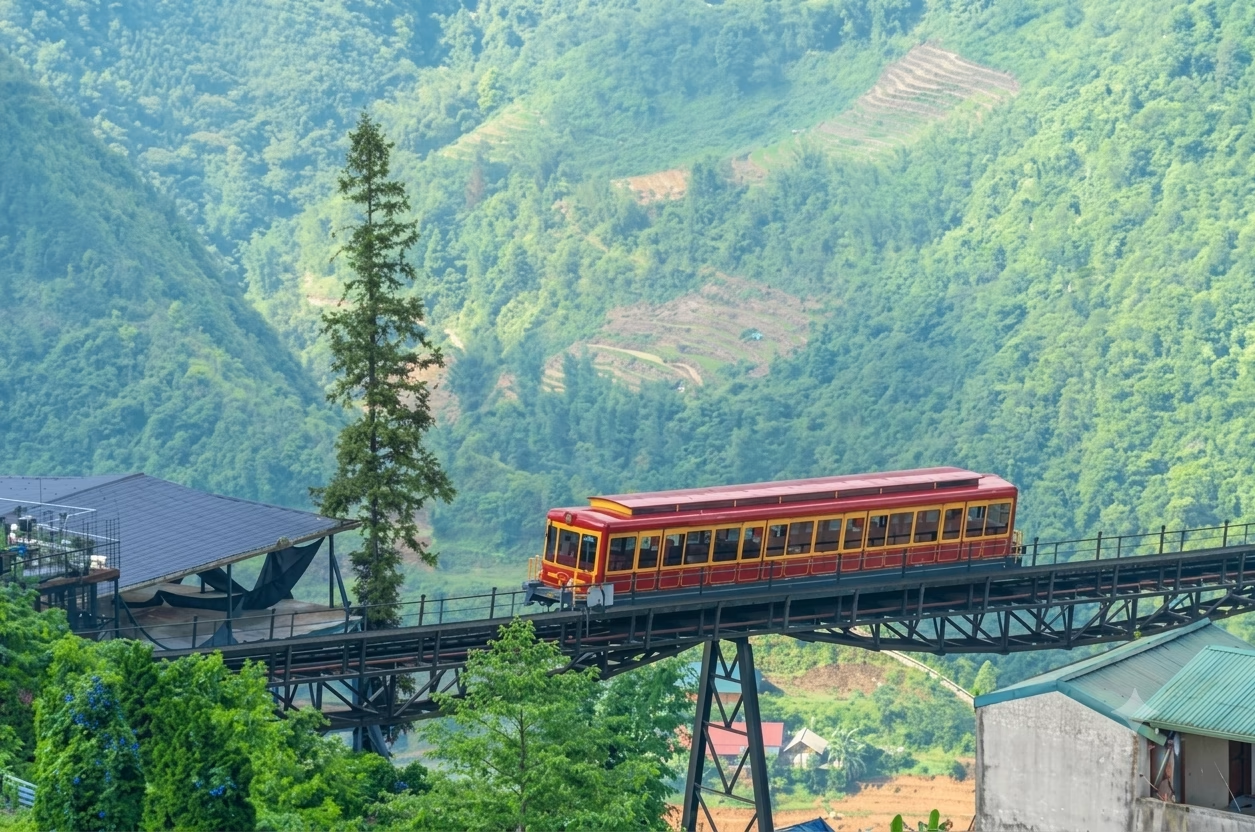
Sapa is northern Vietnam’s misty mountain escape — terraced valleys, hill-tribe villages, and the country’s highest peak. This guide walks through the essential things to do in Sapa Vietnam, from treks and markets to food, Fansipan, and staying connected when the fog rolls in.
Key Takeaways
- Trek the terraces: the Mường Hoa valley route (Lao Chải–Tả Van) gives you the iconic stacked rice fields — pack for mud and fog.
- Do Fansipan your way: cable car, full trek, or a hybrid of both depending on your fitness and time.
- Time the markets: arrive early; Bắc Hà (Sunday) is the big, rural one worth the drive.
- Sleep in a village: a Tả Van or Lao Chải homestay delivers the most reliable cultural experience.
- Pick your season: March–May or September–November for the best balance of views and trail conditions.
- Get connected first: set up a Telekonek Vietnam eSIM before you arrive — signal drops fast in the valleys.
Unveiling Sapa: A Gem in Northern Vietnam
Sapa sits high in the Hoàng Liên Sơn mountains, close to the China border. It’s not a “city break” like Hanoi or Đà Nẵng. It’s a cool-weather hill town where clouds roll through your café table, and the valleys drop away fast. That mix — sharp mountain air, steep landscapes, and daily life that still feels rural — is what makes the things to do in Sapa Vietnam stand out from the rest of the country.
The first thing you notice is the light and the layers. Mornings can start sunny, then turn to thick fog by lunch. On clear days, you’ll see rice terraces cut into the hills like steps, plus dark pine ridges beyond. It’s beautiful, but it also changes your planning. A viewpoint that’s “10 minutes away” can vanish in mist, so you’ll want a flexible day plan and a map you can trust.
Sapa also feels different because of its culture. You’re in the home region of several ethnic minority groups, including the H’Mông and Dao. You’ll see indigo-dyed clothing, silver jewelry, and hand-embroidered patterns in everyday use, not just in tourist shops. That cultural presence is part of the landscape here, and it shapes everything from markets to homestays to the way guided treks work.
Base-wise, most travelers stay around Sapa Town near the stone church (Nhà thờ đá Sa Pa). It’s convenient for restaurants and tour pickups, but it can be noisy at night. If you want quieter mornings, look toward Tả Van or Lao Chải for homestays in the valley. Expect rough price ranges in 2026: simple private rooms around 400,000–900,000 VND/night, and mid-range hotels in town often 900,000–2,000,000 VND/night depending on weekends and views.
Watch out for a common first-timer mistake: treating Sapa like a place you can “wing” without logistics. Trails, meeting points, and even café addresses can be confusing when fog drops in or when roads split without signs. Having reliable data matters here for maps, weather radar, and messaging your guide. Telekonek makes that easy with eSIM plans that work in 200+ countries, so you can activate before you arrive and keep your plans moving in the mountains.
If you want to sort your setup before you go, grab a Telekonek Vietnam eSIM and activate it over Wi‑Fi at home. Takeaway: Sapa isn’t about ticking landmarks — it’s about mountains, shifting weather, and living culture, and you’ll enjoy it more when you plan for those realities.
Trekking the Rice Terraces: Trails and Tips
Trekking is the headline thing to do in Sapa Vietnam, and it’s worth doing right. Sapa’s rice terraces aren’t a “nice view” you snap from a lookout. They’re working fields carved into steep valleys, with narrow paths and slippery edges. The best treks keep you down in the terraces, where you hear water running through irrigation channels and pass buffalo trails. For navigation, trail updates, and meeting your guide, it helps to have data that doesn’t quit when you leave town — keep your Telekonek Vietnam eSIM running before you start walking.
Classic terrace trek: Sapa → Y Linh Hồ → Lao Chải → Tả Van is the go-to for a reason. Expect 10–14 km and 4–6 hours depending on stops, with long downhill sections that burn your knees on the way back. The scenery is strongest between Lao Chải and Tả Van, where the valley opens and the terraces stack up like stairs. In 2026, a local guide for a day is often 300,000–600,000 VND total (more if you want strong English or a private pace), and a homestay in Tả Van usually runs 250,000–600,000 VND per person with dinner.
Quieter, more village-focused: Sapa → Suối Hồ → Tả Phìn is shorter but still steep. Plan 8–12 km and 3–5 hours. This route is a good pick when the main Mường Hoa Valley is socked in with fog, because you’re often moving through forest pockets and small farms. Tả Phìn is also where you’ll see more traditional herbal bath houses, which feel amazing after a wet hike.
Hard day with big views: Sín Chải loop gives you higher ridgelines and fewer shops. It’s often 12–18 km with punchy climbs and fewer “bail-out” points. Go early, bring more water, and don’t count on finding lunch on the trail. This is where having Telekonek data matters for sending a quick location pin if your group strings out or a turnoff isn’t marked.
What usually goes wrong in Sapa treks: the ground turns to soap after rain. Even “easy” trails become ankle-twisters because the clay packs onto your shoes. Also, fog can wipe out visibility fast, and you can miss a turn and drop into the wrong side valley. Don’t rely on offline memory — download an offline map and keep a live signal when you can.
- Footwear: trail runners with grip are fine in dry season; in wet months, bring lightweight hiking boots or rent rubber boots in town (often 30,000–60,000 VND/day).
- Rain plan: a poncho beats a jacket here because it covers your daypack. Pack a dry bag for your phone.
- Layers: mornings can feel cold, but you’ll sweat on climbs. Wear a quick-dry base layer and a thin fleece.
- Poles: cheap trekking poles save your knees on long descents. If you don’t bring them, ask your guide — many can arrange a pair.
- Cash: bring small notes for drinks, entry points, or a quick motorbike ride back if weather flips.
Simple difficulty cheat sheet: choose 2–4 hours for an easy first day, 4–6 hours for the “full Sapa experience,” and 6+ hours only if you’re okay with steep, muddy descents. The terrace paths look gentle in photos, but the slopes are real.
Takeaway: Pick one main valley route (Mường Hoa for iconic terraces, Suối Hồ/Tả Phìn for quieter villages), then pack for mud and fog — your legs will thank you, and your Telekonek connection will keep the day smooth.
Cultural Things to Do in Sapa Vietnam: Meeting Local Communities
Some of the most meaningful things to do in Sapa Vietnam happen off the main road, in villages where Hmong and Dao families still farm steep terraces and dye cloth with plants from the hills. You’ll see the culture best when you slow down and do one thing well: share a meal, walk with a local guide, or spend a night in a home. The difference is night and day compared to a quick photo stop.
Start with a homestay in Tả Van or Lao Chải. These villages sit right on the classic valley routes, so you can pair culture with an easy-to-moderate trek. Expect simple wooden homes, floor mattresses with thick blankets, and family-style dinners (often pork, tofu, mountain greens, sticky rice, and rice wine). In 2026, a solid homestay usually lands around 250,000–600,000 VND per person with dinner and breakfast, depending on group size and season.
Pick your stay with intent. If you want a quieter feel, look for homes a short walk off the main path (your guide will know which lanes avoid the loud karaoke spots). If you want comfort, ask directly about hot showers, heaters, and private rooms — those three details change the whole night in Sapa’s damp cold. Takeaway: Choose a village first (Tả Van/Lao Chải), then choose a home based on warmth and bathroom basics.
Go to the weekly markets for real-life culture, not staged performances. The big one is Bắc Hà Market (Sunday morning), about 1.5–2.5 hours from Sapa depending on road and fog. You’ll see Flower Hmong outfits, farm tools, herbal bundles, and the kind of noisy trading energy you don’t get in town. Another classic is Cán Cấu Market (Saturday), smaller and more local-feeling, with lots of livestock trading.
What goes wrong: drivers leave late, fog slows the mountain roads, and you arrive after the best part. Aim to arrive by 8:00–9:00 for the busiest stalls and food corners. Bring small bills for snacks like thắng cố (a strong, acquired-taste stew) or sticky rice, and don’t block walkways when taking photos — these markets run on tight space and fast movement. Takeaway: For markets, early arrival matters more than anything else.
Book a local guide for the “why,” not just the walk. Hmong and Dao guides often explain crop cycles, indigo dye work, and wedding customs as you pass homes and fields. If you’re curious about textiles, ask to see hemp weaving and indigo dyeing; you’ll start noticing the difference between handmade patterns and factory prints in shops. A good half-day guiding rate commonly ranges 500,000–900,000 VND for a small group, depending on route and language level.
Watch out for awkward pressure shopping. Some treks end at a “friend’s shop” stop. It’s not always a scam, but it can feel forced. Set a boundary early: tell your guide you’re happy to stop for tea or a demo, but you’re not shopping today. Clear, polite, and firm works best. Takeaway: A guide adds meaning, but you should set expectations about shopping before you start.
Look for cultural nights and seasonal festivals — but keep your expectations grounded. In town, you’ll sometimes find stage shows with dance and costumes. They can be fun, but they’re not the same as village life. The most memorable moments tend to be smaller: a family dinner, a shared rice wine toast, kids practicing Vietnamese homework by the fire.
If your trip overlaps with bigger northern festivals, it’s worth planning a day around them for music, games, and traditional dress. Ask your homestay host what’s actually happening in their commune — local timing beats any printed calendar. Takeaway: Festivals are a bonus, but homestays deliver the most reliable cultural immersion.
Staying connected matters more here than you’d think. You’ll message your guide about meeting points, reroutes for fog or rain, and last-minute market transport changes. Mountain weather can also shift fast, and being able to pull up a map or translate politely can save a tense moment. Telekonek gives you eSIM data plans that work in 200+ countries, so you can keep the same setup for Vietnam now and your next trip later.
Exploring Majestic Fansipan: Vietnam’s Highest Peak
Climbing or riding to Fansipan (3,143 m) is a bucket-list thing to do in Sapa Vietnam, and it’s one of the most “earned” views you can get in the north. On a clear day, the Hoàng Liên Sơn range looks like a row of shark fins. On a cloudy day, you’ll still get that high-mountain feeling — cold wind, fast-moving mist, and bells chiming at the summit temples.
Takeaway: Fansipan is worth it, but your experience depends on whether you hike, cable car, or mix both.
Option 1: Cable car (fast, easy, still dramatic)
If you’re short on time or you’re not keen on steep climbs, the cable car from Sun World Fansipan Legend is the simplest plan. You’ll start from near Sapa town, ride a funicular/tram to the cable car station, then glide above forests and ridgelines. Expect the whole “up and down” visit to take about 3–5 hours depending on crowds and how long you linger at the top.
Bring a light down jacket or fleece even if Sapa town feels mild. The summit can be 8–12°C cooler, and wind makes it feel colder. Your Telekonek Vietnam eSIM helps here because weather changes are fast — checking live radar and visibility before you commit can save you from paying for a view you’ll never see.
Watch out for: fog can wipe out the view in minutes. If the morning is clear, go early and don’t “wait for later.”
Takeaway: Cable car is the best comfort-to-view ratio, especially if you go early for clearer skies.
Option 2: Trek to the summit (hard, long, and satisfying)
The classic hike is a 2-day/1-night trek with a guide. You’ll climb through forest and bamboo, then hit rocky steps and exposed sections near the top. The terrain is steep and can be slick after rain, so this is more about endurance than technical climbing. A 1-day push exists, but it’s a rough day unless you’re already used to long mountain hikes.
Most organized treks include a local guide, basic meals, and a simple mountain shelter stop (or a break point) depending on your route. You’ll want trail-friendly shoes with grip, a rain shell, gloves in cool months, and a headlamp if your itinerary starts early or runs late. Keep your confirmation messages, meet-up pin, and emergency contacts accessible offline — but having Telekonek data makes last-minute regrouping easy if your pick-up point shifts or the weather forces a change.
Watch out for: people underestimate the downhill. Your knees take a beating, and wet rocks (especially in mist) are where slips happen.
Takeaway: Hiking is for fit travelers who want the “I did it” feeling, not just the photo.
Option 3: “Hybrid” day: cable car one way, hike the other
If you want a real mountain day without committing to a full trek, do a hybrid plan. Go up by cable car for the summit views and temples, then hike partway down (or the reverse if you want a tougher climb). This works well when visibility is best early — get your summit time first, then earn the landscape on the way down.
Budget-wise (2026), expect the cable car package to be a noticeable spend, while guided hikes vary by group size and inclusions. Your best move is deciding what you’re paying for: time saved (cable car) versus effort and wilderness time (trek).
Watch out for: don’t assume you can “wing it” at the top. The summit area is spread out with steps, viewpoints, and temple paths. If you’re meeting a driver later, message your exact timing from the peak while you still have stable signal — Telekonek helps you keep that plan tight.
Takeaway: Hybrid is the sweet spot if you want both big views and a real walk.
Quick logistics checklist (so the day doesn’t go sideways)
- Start early: clearer skies and shorter lines are usually in the morning.
- Pack layers: wind at 3,000+ meters cuts through hoodies fast.
- Bring small cash: snacks and small buys are easier with cash than cards.
- Save your plan: screenshot tickets, meeting points, and your hotel address in Vietnamese.
- Set up data before you go: install Telekonek ahead of time so you’re not hunting Wi‑Fi at the station.
Takeaway: Fansipan is simple when your timing, layers, and meet-up details are locked in.
Sapa Markets: A Vibrant Tapestry of Local Goods
Sapa’s markets are where the mountain town stops being a “viewpoint” and turns into daily life. You’ll see Hmong and Dao women selling what they actually make and grow: indigo cloth, forest herbs, cardamom-like spices, and baskets built for carrying loads uphill. If you want souvenirs with a real story, this is one of the most useful things to do in Sapa Vietnam.
Start with Sapa Market (Chợ Sapa) in town. It’s the easiest stop, especially if fog rolls in and you want something indoors. Go early (around 7:00–9:00) for produce and busy stalls, or late afternoon (after 16:00) when day-trippers fade and you can browse without getting shoulder-checked. Keep your Telekonek Vietnam eSIM on so you can translate labels and check prices as you walk — signal can dip in back aisles and basements.
For the “big” market day, time your trip for Bắc Hà Sunday Market (about 60–75 km from Sapa; expect 2–2.5 hours each way by car/van). It’s louder, more rural, and more varied than anything in town. You’ll see livestock sections (yes, with smells), rows of textiles, and huge food areas serving hot bowls from early morning. The catch: if you leave Sapa after 8:00, you’ll hit it at peak crowd and get rushed. Aim to arrive before 9:00, then snack and shop in a loop.
What to buy (and what’s actually worth packing):
- Indigo-dyed pieces (scarves, small table runners): easy to carry and usually better value than bulky jackets.
- Embroidered pouches for cables, coins, or a passport. Open the zipper and check the stitching inside.
- Silver-colored jewelry: buy for style, not “purity.” Ask what metal it is, and expect plated alloys.
- Forest honey, dried mushrooms, herbal bath mixes: great gifts, but smell-check and ask how to use it. Wrap liquids twice.
- Skip: “brand-new antique” coins, mass-produced fridge magnets, and anything sold as medicine with wild claims.
Eat like a local while you browse. In Sapa town, look for grilled skewers around the evening food area (often set up near the central lake and market streets). In Bắc Hà, go for a simple bowl of noodles or sticky rice with grilled pork — cheap, filling, and it keeps you from impulse-buying on an empty stomach. Pay attention to the condiments: chili in the north hits harder than you expect.
How to haggle without turning it into a fight:
- Ask one clear question: “How much?” then pause. Silence often gets you the real number.
- Bundle: two or three small items usually gets a better deal than pushing hard on one item.
- Use friendly anchors: offer ~20–30% below the first price, then meet in the middle fast.
- Walk away politely if it feels wrong. In tight tourist areas, prices can jump the second you hesitate.
Watch out for the common slip-ups: color transfer and “final sale” regret. Indigo can rub off on light clothes, especially in damp Sapa weather. Bring a small tissue, rub the fabric hard, and see if it stains. Also, count your cash before you hand it over — busy stalls and wet bills lead to mistakes. If you’re paying by transfer, your Telekonek data helps you confirm the amount and recipient name on the spot.
Takeaway: Hit Sapa Market for easy browsing, save a morning for Bắc Hà on Sunday, and buy small indigo textiles and pouches you’ll actually use.
Staying Connected: Mobile Data and eSIM Options in Sapa
Sapa can feel “remote” the minute you drop into the valleys. Fog rolls in fast, roads twist, and plans change with the weather. That’s why reliable mobile data matters for a lot of the things to do in Sapa Vietnam, from meeting your trek guide to checking when the Fansipan cable car is actually running. With a Telekonek Vietnam eSIM, you can land (or arrive by bus/train) already connected, without hunting for a shop in the mist. If your trip runs beyond the mountains, our guide to using an eSIM across Vietnam’s top spots covers Hanoi, Ha Long Bay, Da Nang and more.
What mobile networks work around Sapa? In Vietnam you’ll usually see Viettel, VinaPhone, and MobiFone. In Sapa town, you’ll get usable 4G in most places, plus Wi‑Fi in hotels and cafés. Out on the trek routes — especially toward Y Linh Hồ, Lao Chải, Tả Van, and higher ridges — signal can drop to one bar or disappear in pockets. Don’t expect video calls to be smooth once you’re down in a deep valley.
eSIM vs local SIM in Sapa (what actually matters on the ground)
- Telekonek eSIM: You set it up before you arrive, keep your physical SIM in, and start using data as soon as you have signal. This is the easiest way to keep Maps, Grab-style rides, and messaging working without a “setup day.”
- Local physical SIM: Means queueing at a shop, swapping out your home SIM (easy to lose in a guesthouse room), and hoping someone’s around to help with setup in English. In Sapa, shops can also close earlier than you expect — not ideal when you’ve just stepped off a night bus.
If you want the step-by-step setup, use this practical guide: Where to Buy an eSIM for Vietnam Travel: 2026 Setup Guide. It’ll save you from the common activation mistakes.
How much data do you really need in Sapa? Sapa is a “maps + messaging + photos” destination for most people. Expect rough usage like this (2026 ranges):
- Light: 1–2 GB for 3–4 days (Maps, WhatsApp/Zalo messages, a few uploads on Wi‑Fi).
- Normal: 3–6 GB for a week (more map checks on trails, more photo/video sharing).
- Heavy: 8–12+ GB for a week (lots of short-form video, hotspot use, cloudy-day downtime scrolling).
Watch out for this: your phone may “look connected” but still not load anything in foggy valleys. It’s usually network congestion or a weak band, not your app. Flip Airplane Mode on for 10 seconds, turn it off, and your phone often grabs a cleaner signal. Also download offline maps for the Sapa valley before you start walking (Google Maps works fine for this). Data is great, but offline maps are what saves you when your guide walks ahead and the trail splits.
If you’re keeping your home number active for OTP codes (bank logins) while using an eSIM for data, read: International Roaming vs eSIM for WhatsApp: A Practical Guide for Travelers. It explains how to avoid surprise roaming charges while your messages still work.
One more practical reason to use Telekonek: once you’ve set up your eSIM the “Vietnam way,” you can reuse the same habit everywhere else. Telekonek has eSIM data plans that work in 200+ countries, so you’re not relearning connectivity every time your trip adds a new border or stop.
When you’re ready to get set up, use the Telekonek Vietnam eSIM page and install it before you head into the mountains.
Takeaway: In Sapa, data isn’t just convenience — set up Telekonek before you arrive, download offline maps, and expect weak-signal pockets once you leave town.
Culinary Delights: A Taste of Sapa’s Unique Cuisine
Sapa’s food is built for mountain weather. Nights get cold, rain can roll in fast, and you often come back from a trek hungry in a way you don’t feel in Hanoi. The best things to do in Sapa Vietnam include eating like locals do: hot, smoky, and meant to share. Keep your Telekonek Vietnam eSIM on while you wander — when fog drops, you’ll rely on maps to find the right alley and the right grill.
Start with thắng cố, the dish people argue about. It’s a Hmong-style stew simmered for hours with herbs and spices, and it’s usually served in busy, loud spots near the market area. You don’t order this for “fine flavors.” You order it to understand the highland food culture, where nothing is wasted and everything is warmed through. Watch out: if you have a sensitive stomach, start with a small bowl and skip the raw herb plate the first time.
Then go straight to đồ nướng (Sapa street BBQ). At night, the center fills with charcoal smoke and skewers laid out like a buffet — pork, chicken, mushrooms, corn, and sticky rice (cơm lam) cooked in bamboo. Prices in 2026 are usually ~15,000–40,000 VND per skewer, with bigger items higher. The move is to pick a stall that grills to order (not one with food sitting lukewarm) and ask for it “nướng lại” (grill again) if it’s been out.
For something more “meal-like,” look for cá hồi/cá tầm (salmon or sturgeon) hotpot. Sapa’s cool climate supports fish farms, so hotpot is a local comfort food, not a tourist gimmick. Expect a table-sized pot, greens, mushrooms, and noodles, usually best split between 2–4 people. Watch out: restaurants sometimes push oversized set menus — ask the staff to size it for your group so you don’t overpay or waste food.
Good, traveler-friendly places to pin on your map:
- Good Morning Vietnam Restaurant (town center): dependable Vietnamese and Western options when you need a reset meal after trekking. Expect ~80,000–200,000 VND per main in 2026.
- The Hill Station Signature Restaurant: strong local ingredients and a calmer room when the streets feel hectic. It’s a good pick for a “one nice dinner” night.
- Little Sapa Restaurant: solid for hotpot and simple Vietnamese dishes without guesswork. Ask what’s fresh that day.
For cafés, Sapa is all about warm drinks and views when the valleys disappear into cloud. Viet Emotion Sapa Coffee & Restaurant is a classic stop for a long coffee break, and Le Gecko Café is handy when you want a cozy seat and something filling. If you’re chasing a viewpoint café, go early — fog often thickens mid-morning, and the “best view” can turn into a blank white wall fast.
One culture note that changes how you eat here: in markets and village homes, food is often built around sharing. Hotpot, grilled plates, and herb bundles make more sense when you order for the table, not just for yourself. If you’re coordinating a group dinner, a quick message thread is easier than yelling over charcoal smoke — your Telekonek line keeps it simple even when Sapa’s signal dips in crowded spots.
Takeaway: In Sapa, eat hot and shareable — BBQ at night, hotpot when it’s cold, and one local specialty (like thắng cố) to taste the culture, not just the menu.
Getting There and Getting Around: Transportation Tips
Sapa isn’t hard to reach, but it is far. The last stretch climbs into the Hoàng Liên Sơn mountains on tight curves, so your choice is really about comfort vs sleep vs flexibility. Keep your Telekonek Vietnam eSIM active before you leave Hanoi, because drivers change pickup points fast and you’ll want working maps in the Old Quarter chaos.
Hanoi → Sapa by sleeper bus (most direct) is the default for a reason. Expect 5–6.5 hours depending on traffic and weather, usually on the Nội Bài–Lào Cai expressway. In 2026, many decent operators price around ₫250,000–₫450,000 for a seat or cabin. Night buses save a hotel night, but the roads can be bumpy on the final climb into town.
Watch out: some “Sapa” buses actually drop you on the edge of town or at a different office than promised. Screenshot your ticket details, and message the operator on the day — your Telekonek data makes that painless when Wi‑Fi is flaky.
Hanoi → Lào Cai by train + transfer (smoother, more reliable sleep) is the calmer option. The overnight train typically takes 7–8 hours to Lào Cai station, then you do a 45–60 minute minivan or taxi up to Sapa (expect roughly ₫60,000–₫120,000 per person for shared vans, more for a private car in 2026). Train cabins cost more than buses, but you arrive less wrecked for early starts like terraces or Fansipan.
Book and double-check train times on the official Vietnam Railways site: dsvn.vn.
Once you’re in Sapa town, you’ll mainly move in short hops. The center is walkable, but the hills are steep and sidewalks can vanish into puddles. Download your maps offline, then use Telekonek as your “always-on” backup when the fog makes it hard to spot landmarks.
- Taxi/Grab-style rides: easiest in bad weather and for families. Expect short town rides in the ₫40,000–₫100,000 range (2026), and more to villages like Tả Van or Lao Chải. Watch out for drivers quoting per-person instead of per-car — confirm the total before you get in.
- Motorbike rental: great freedom for viewpoints and village roads, usually around ₫120,000–₫180,000/day (2026) plus fuel. Watch out: fog + wet concrete + loaded trucks is a real combo. If you’re not confident on steep descents, skip it and hire a driver.
- Private car with driver: best for sunrise/sunset viewpoints and photo stops without stress. You pay more, but you keep your day on track when weather changes fast.
Takeaway: pick sleeper bus for speed, train+transfer for better sleep, then use taxis/drivers in fog and motorbikes only if you’re solid on steep wet roads.
Best Times to Visit Sapa: Climate and Seasonal Highlights
Sapa’s weather is the quiet “boss fight” behind a lot of the things to do in Sapa Vietnam. You’re up in the mountains, so temperatures swing fast and clouds move in like a curtain. A day can start blue-sky at 7:00, turn to heavy fog by 11:00, then clear again near sunset. If you time your visit well, you’ll get clean terrace views, safer trails, and a much better shot at a clear Fansipan day.
Best overall months: March–May and September–November. These shoulder seasons usually give you the best mix of dry skies and comfortable hiking temps. In 2026, expect daytime highs often around 15–24°C, but nights can still drop into the low teens. Pack a light rain shell either way, because mountain showers don’t ask permission. Sapa sits higher and colder than most of the country, so it helps to cross-check these mountain windows against the national picture in our guide to the best time to visit Vietnam.
- March–May (spring): Clearer mornings and greener hills. Great for village treks and markets without the peak humidity. If you’re chasing “postcard” valley photos, aim for early starts (6:30–8:30) before clouds build.
- September–October (harvest): The classic terrace season. You’ll catch rice turning yellow in Lao Chải–Tả Van and beyond. It’s also busier, so book homestays earlier and expect higher prices on weekends.
- November (crisp and clear): Cooler, with a decent chance of sharp mountain views. This is a strong month for Fansipan if you hate heat and don’t mind cold hands at the summit.
June–August is the wet season, and it changes your plan more than you think. Trails around Y Linh Hồ and down in the valleys can turn into slick clay, especially after a night storm. Landslides and rockfall can also slow the mountain roads, which matters if you’ve got a fixed bus or train connection back to Hanoi. If you go in summer, choose shorter treks, start early, and keep a buffer day for weather delays.
December–February is cold, foggy, and sometimes icy. You can even see rare frost or light snow on higher ground. This can be magical in town, but it’s not ideal for long terrace walks if visibility drops. Watch out for one common mistake: people arrive with only a thin hoodie, then end up buying overpriced layers in town. Bring gloves and a warm mid-layer, especially if Fansipan is on your list.
For seasonal events, local holiday timing matters more than big “festival names.” Tết (Lunar New Year) can bring closures, limited transport seats, and higher room rates for several days. On the flip side, it’s a fascinating time to see family travel and local food stalls in full swing. If you want to line up spring travel with wider events across Asia, skim Telekonek’s Top Spring Festivals 2026 guide and then cross-check your Vietnam dates before you lock hotels.
One last practical move: mountain weather forces last-minute changes, so keep your maps, bus messages, and cable car updates working even when fog hits. Grab an eSIM before you travel — Telekonek has affordable Vietnam data plans that save you from hunting SIM shops in Sapa town, and you can set it up in minutes from the Telekonek Vietnam eSIM page. Takeaway: Visit in March–May or September–November for the best balance of views and trail conditions, and plan your connection so weather changes don’t derail your day.