
Southern Europe rewards travellers who move with a plan. In 10 days, you can cross two of its richest countries — Spain and Italy — and still slow down for long lunches and sea views. This 10-day itinerary for exploring Southern Europe takes you from Barcelona to Valencia, down to the Amalfi Coast, into Rome, and through Naples to Pompeii.
It is a full route, but not a rushed one. You get real 2026 prices, the best places to stay and eat, the transport that actually works, and the small mistakes that cost other travellers time. Here is the whole plan, day by day.
How this 10-day itinerary for exploring Southern Europe works
The route runs from Spain to Italy in a clean line. You start in Barcelona, drop down to Valencia, then fly across to Italy. From there you take in the Amalfi Coast, Rome, Naples, and a final day at Pompeii.
You travel by a mix of fast train, one short flight, and a coastal ferry. Spain’s rail corridor links Barcelona and Valencia in under three hours. A quick flight then carries you to Naples, your gateway to the south. Italy’s high-speed trains handle the rest.
The pace is busy but fair. You unpack a handful of times across the trip, and most stops give you a full day or more. If you want a slower trip, drop one city and add those nights elsewhere. The route still works.
Before you go: book ahead and get connected
A few sights sell out days or weeks ahead. Book these early so your days are not built around ticket queues:
- Barcelona: timed tickets for the Sagrada Família and Park Güell.
- Rome: timed entry for the Colosseum and an early slot for the Vatican Museums.
- Naples: a reserved slot for the Cappella Sansevero to see the Veiled Christ.
- Pompeii: your park ticket online, which skips the on-site queue.
Sort your data before you fly, too. A single Europe eSIM covers both Spain and Italy on one plan, so you never buy a SIM in Barcelona and another after landing in Naples. You install it at home over Wi-Fi, and it connects the moment you land. That means no airport kiosk queues and no surprise roaming charges.
How much data do you need? For a trip heavy on maps, messaging, and train apps, 5GB to 10GB is plenty if you skip constant video on mobile data. Go higher only if you upload a lot of photos and reels.
Set up your phone the easy way before takeoff. Install and activate your eSIM at home. Then turn data roaming off on your main SIM and set the eSIM as your data line. On an iPhone, that is Settings, then Cellular. On Android, it is Settings, then Network and internet, then SIMs. Last, download offline maps for each city, since signal can drop on the Amalfi cliffs and in old-town backstreets.
Day 1: Arriving in Barcelona
Land in Barcelona and keep Day 1 local. You are shaking off travel time and getting your bearings. From Barcelona–El Prat (BCN), the simplest ride into the centre is the Aerobús to Plaça de Catalunya. It takes about 35 minutes and costs roughly €6 to €7 one-way in 2026.
Where you sleep matters here, because street noise is real. For a calm first night, base yourself in Eixample, near fast transit. Praktik Bakery is a good pick, often €140 to €230 a night in 2026, a short walk from Passeig de Gràcia. If you want harbour air instead, Barceloneta is handy, but walls are thinner and nights are louder. Hotel 54 Barceloneta usually runs around €180 to €320. Be careful with cheap “Gothic Quarter” deals, as some lanes stay loud until 3am.
For your first afternoon, do a slow loop that teaches you the city fast. Start at La Boqueria market, best before the lunch rush. Then cut through El Raval toward La Rambla, but treat La Rambla as a route, not a place to linger. Keep your phone and wallet out of back pockets here. Finish in El Born at the calm, cool church of Santa Maria del Mar.
Eat like a local on your first night: late and shared. Aim for tapas around 9 to 10pm, and order with intention:
- El Xampanyet (El Born): anchovies, jamón, and a glass of cava, with great standing-room energy. Expect €20 to €35 per person if you do not over-order.
- La Cova Fumada (Barceloneta): the old-school spot credited with the “bomba.” Go early, as they run out of items.
- Can Paixano (La Xampanyeria) (Barceloneta): cheap sparkling wine and hot sandwiches. Crowded, fast, and fun, around €10 to €18 per person.
A couple of customs open the city up. Greet people with a simple “Bon dia” in the morning. On the metro, let people off first and keep right on escalators. And keep your phone working from the start with a Spain eSIM, so you can message your host and pull up directions the second you land. One last tip: if your battery is low after the flight, skip public USB ports and use your own power bank.
Day 2: Barcelona’s architecture
Start early at the Basílica de la Sagrada Família. Gaudí’s basilica reads completely differently at 9am than at noon, when tour groups thicken. Book a timed ticket ahead through the official Sagrada Família site. Basic entry starts around €26, and you should expect €30 to €45 once you add tower access or a guide. If heights do not bother you, take the tower slot, since the view explains why Eixample feels so planned. Inside, look at the branching columns. They are not just decoration; they are Gaudí’s answer to how a forest holds weight.
From there, head uphill to Park Güell. The easy mix is Metro L5 to Diagonal, then a bus; a taxi saves time if you are tight. The paid Monumental Zone holds the famous mosaic salamander and curving bench. The surrounding parkland is free and where locals jog. Tickets here are timed too, often €10 to €20 in 2026. Go mid-morning, before haze builds over the sea, and note that you cannot re-enter once you leave.
Spend the afternoon on Passeig de Gràcia with a modernist pick: Casa Batlló or La Pedrera. Casa Batlló is the showier, storybook Gaudí, with dramatic interiors. La Pedrera is the better architecture lesson, especially the rooftop chimneys. If you only pick one, choose by crowd tolerance, as Casa Batlló feels tighter inside. Either runs about €25 to €40 in 2026, and the last entry of the day is calmer.
End in the Gothic Quarter at the Cathedral of Barcelona. Its cloister, with resident geese and cool stone, is a quiet break after Gaudí’s curves. It also drops you near evening tapas streets like Carrer del Bisbe. Watch for pickpockets here, especially anyone who “helps” with directions or crowds you near an ATM. One practical note: many of these sites use QR-code tickets, and the weak moment is at the gate when your email will not load. Keep a screenshot offline, and keep your Telekonek data active so maps and tickets load instantly between stops.
Day 3: Travelling to Valencia
Valencia is the cleanest next stop, because the rail link is fast, frequent, and central. The best-value move is the Renfe Euromed or Intercity from Barcelona Sants to València Joaquín Sorolla. Plan roughly 2h45 to 3h30, and expect €25 to €60 in 2026 if you book a few weeks out. Joaquín Sorolla is a modern hub, about a 15 to 20 minute walk from the old town, or a quick taxi with luggage.
If you are weighing your options, here is what actually changes on the ground:
- Train (Sants to Joaquín Sorolla): easiest door to door, and you arrive in time to sightsee the same afternoon.
- Bus: often cheaper at €15 to €35 in 2026, but 3.5 to 4.5 hours, and you will feel it by check-in.
- Flying (BCN to VLC): looks quick, but airport time and transfers eat the gain. It only wins with a very cheap fare.
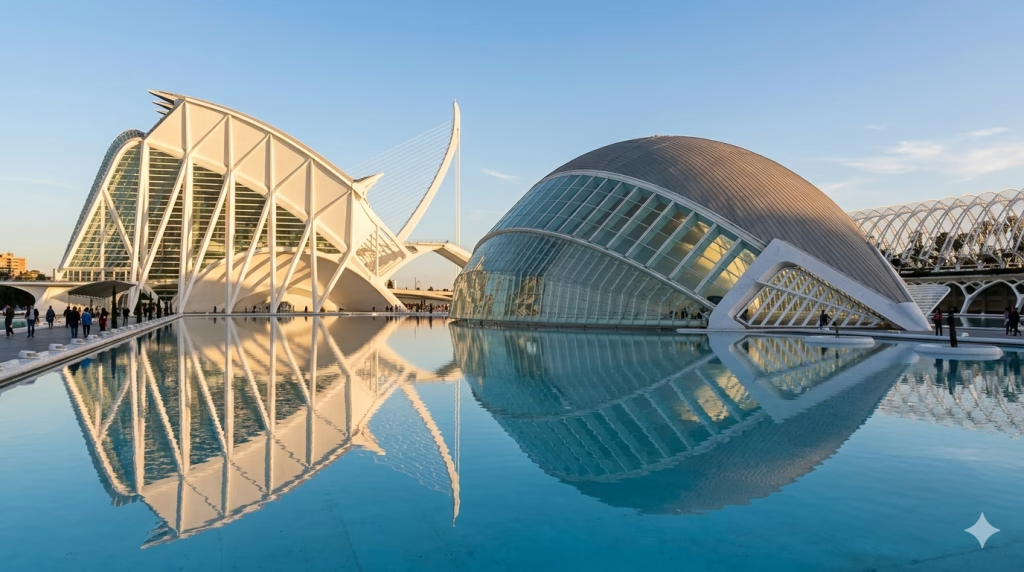
Drop your bag and head for the Ciudad de las Artes y las Ciencias, the City of Arts and Sciences. Take Metro to Alameda and walk, or grab a bus down Avenida del Professor López Piñero. The complex is best in late afternoon, when the white curves and mirror pools photograph beautifully and the midday glare is gone. If you pick one interior, the Oceanogràfic aquarium needs 3 to 4 hours, while the Science Museum is an easy 90-minute sample.
For dinner, do not chase paella in the old centre. Be wary of any place pushing “paella for one” at any hour, since that signals microwaved tourist pans. Real paella is a midday dish, ordered for two people minimum, with a 30 to 45 minute cook time. Save it for tomorrow’s lunch, or book ahead now. Strong options are Casa Carmela by Playa de la Malvarrosa for wood-fired paella valenciana, or La Pepica for classic beach dining, around €18 to €28 per person in 2026.
Tonight, keep it light and local. Try esgarraet, a salt-cod and roasted-pepper dish, and seasonal clóchinas, the small local mussels. Finish with horchata and fartons near the Mercado de Colón as the terraces fill after work. You will lean on maps between the station, the Turia gardens, and the Arts and Sciences, so keep your Spain eSIM running to avoid the classic wrong-direction spiral.
Day 4: Valencia’s old town
Day 4 is when Valencia shifts from sleek and modern to an old, layered port. Begin in the Ciutat Vella while it is still calm. Enter via Plaça de la Reina and walk the tight lanes toward the cathedral before the bells and school groups arrive.
The Valencia Cathedral is the anchor, not because it is the grandest in Spain, but because it is Valencia in one building: Romanesque roots, Gothic bones, Baroque flourishes. The must-do is the Micalet bell tower, for a quick sense of the old city’s scale. Go early to beat the slow, single-file stair queue. Inside, prioritise the cathedral museum and its famous “Holy Grail” claim over speed-running every chapel.
From there it is a short walk to La Lonja de la Seda, the Silk Exchange. This UNESCO site clicks once you step into the Contract Hall. The twisted columns are a flex from a city that grew rich on trade. Pair it with a loop through the Mercat Central next door. The contrast of Gothic stone and iron-and-glass market energy shows how Valencia fed its wealth.
- Time strategy: Cathedral and Micalet first, then the Lonja late morning. Save the Mercat Central for a snack before the lunch rush.
- What to wear: shoulders covered for the cathedral, and grippy soles for the slick Micalet stairs.
- Tickets: expect modest entry fees for both in 2026, in the single-digit to low-teens euro range, with on-site bundles.
One thing to watch: the medieval grid is a navigation trap. Your map spins, and “five minutes away” becomes 15. Download an offline map before you leave the hotel, and keep live data for reroutes when a lane is blocked by deliveries or a procession. With a working connection you can pull up directions, opening hours, and last-minute tickets without gambling on spotty public Wi-Fi. If you have energy after the Lonja, finish with a slow lap through Plaça de la Verge toward the Turia-side edge of the old town.
Day 5: To the Amalfi Coast and Positano
Day 5 is your biggest hop, and the cleanest way from Valencia to Positano is flight, then train, then ferry. Trying to overland it burns the whole day and arrives late.
Option A (most reliable): Valencia to Naples by air, then Positano by ferry. Start with an early flight from Valencia (VLC) to Naples (NAP). In 2026, expect about 2h15 in the air and fares around €70 to €220 depending on bags and timing. From NAP, take the Alibus to Napoli Centrale, about 20 to 30 minutes and roughly €5. Then take a regional train to Salerno, about 35 to 60 minutes and €6 to €10. From Salerno, hop the seasonal Travelmar ferry to Positano, about 70 to 90 minutes and €15 to €25. The ferry is the point. You arrive seeing the cliffside towns the way they are meant to be seen, from the water.
Option B (when ferries do not run): if wind cancels the boats or you land late, go Napoli Centrale to Sorrento on the Circumvesuviana, then the SITA bus to Positano. Be warned: that bus is famous for long queues and standing-room rides, and in summer you can wait through several departures at Sorrento.
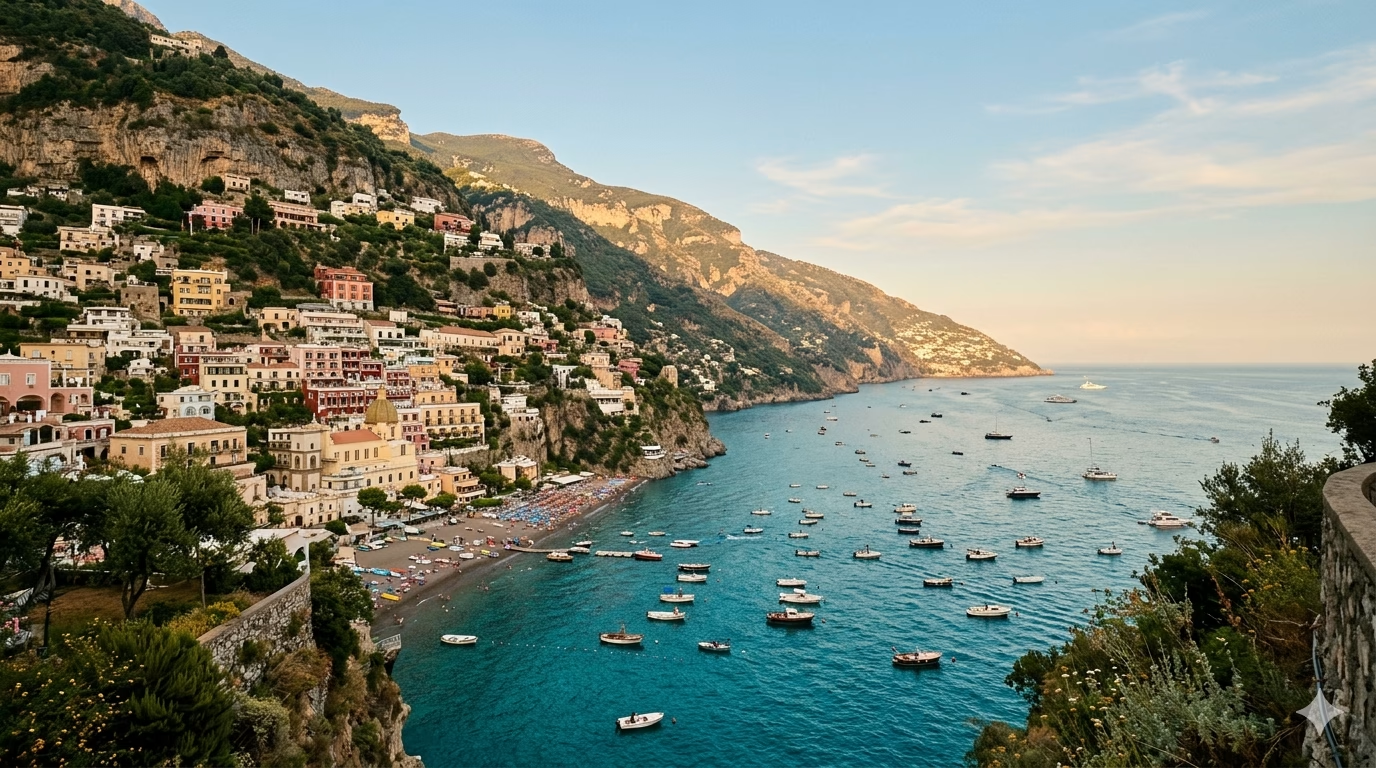
Once in Positano, drop your bags and do the viewpoints in a smart order. For the postcard angle, walk to the church of Santa Maria Assunta and frame its dome against the stacked houses. Golden hour here turns a flat photo into a film still. For a quieter, higher view, climb the steps toward Via Cristoforo Colombo, where small terraces open up above the crowds.
For a more local feel, spend an hour on Spiaggia di Fornillo, a short walk west of the main beach and usually calmer. If you are hungry, keep the first-night order simple: a lemon dessert (delizia al limone) and a plate of scialatielli ai frutti di mare. This is where the coast tastes like itself.
One thing goes wrong here more than anything: luggage. Positano is steep, and “10 minutes away” becomes a workout with bags. If your room is above the main road, ask in advance about a porter, and screenshot your host’s directions, since map pins can be off by a staircase. Ferry and bus times also shift fast. The moment you land in Italy, switch to an Italy eSIM so maps, ferry timetables, and taxi apps work right away, especially when you are deciding in real time whether to chase the next boat.
Day 6: Exploring Amalfi
Amalfi is the flatter, easier contrast to Positano, and a good base for the day’s water and mountain trips. Start early on Piazza Duomo, before the first ferries arrive. The striped face of the Duomo di Sant’Andrea catches the morning light, and the staircase feels almost theatrical before 10am. If you want a quick culture stop, the Cloister of Paradise beside the cathedral is worth 20 to 30 minutes for its Arab-Norman arches.
The smartest splurge is a boat tour from Amalfi harbour, because the coast looks completely different from the sea. Group tours usually run 2 to 4 hours and cost around €45 to €90 per person in 2026. A private boat jumps to €180 to €400 or more, depending on season and length. The reason to go out from Amalfi is access: captains can duck into tiny coves and stop for swims below cliffs you would never reach otherwise. Good routes pass Conca dei Marini and the Furore fjord.
Watch out for one common mistake. A point-to-point ferry is not a scenic boat tour. Ferries are useful transport, but they are crowded and you stay seated the whole time. If you get seasick, morning departures are calmer than the choppier afternoons.
For hikers, the marquee route is the Sentiero degli Dei, the Path of the Gods. The detail that matters is logistics. The classic section runs from Bomerano to Nocelle, and it is far better done in that direction than uphill from the sea. From Amalfi, take a SITA bus toward Agerola or Bomerano, about 45 to 60 minutes. The bus is cheap, but it fills fast, and standing on those hairpin bends is rough. The walk itself takes 2.5 to 4 hours, depending on pace and photo stops.
If you want something shadier and quieter, try the Valle delle Ferriere above Amalfi. Parts of the trail are green and shaded, which helps on hot days. You pass lemon terraces, old paper-mill ruins, and lush stream sections. It ties into Amalfi’s history as a paper town, so the Museo della Carta back in the centre is a nice add-on.
Food here is tied to lemons, anchovies, and the day’s catch. Order scialatielli ai frutti di mare at least once, since the thick local pasta holds the shellfish far better than spaghetti. Look for alici di Cetara or dishes seasoned with the prized colatura anchovy sauce from nearby Cetara. For dessert, choose the delizia al limone or a lemon granita. The local lemons really are more fragrant.
- Budget lunch: a casual trattoria or takeaway panino, roughly €12 to €20 per person in 2026.
- Mid-range seafood meal: pasta, a main, and wine, roughly €30 to €50 per person.
- Watch the cover charge: some seafront tables add a coperto and higher drink prices that only show up on the bill.
One tip saves real frustration. Amalfi’s lanes are simple, but coastal timing is not. Ferries slip with the swell, buses bunch up, and maps underestimate walking time once stairs are involved. Keep your bookings and maps offline. Coverage is usually good in town and along the main coast, but it flickers on the trails, so download your route before you set out.
Day 7: On to Rome
Treat Rome as a purposeful transfer day. From the coast, the smoothest route is Amalfi or Positano to Salerno, then a high-speed train to Roma Termini. From Amalfi, take a SITA bus or taxi to Salerno; from Positano, a private transfer often saves the stress. In 2026, expect about €6 to €10 for the bus, or €90 to €160 for a car transfer. The Frecciarossa or Italo train then takes 1h30 to 2h, usually €25 to €70 if booked ahead.
Here is the thing that regularly goes wrong: coastal bus timing looks fine on paper, then one slow ride or traffic knot near Vietri sul Mare wrecks your train connection. If your Rome hotel matters more than a last hour on the coast, take a train from Salerno after 11am, not the earliest one. The buffer is worth more than the beach time.
Once you reach Roma Termini, do not haul your bags across the city unless your hotel is special. For one night with heavy sightseeing, the practical zones are Monti, the Centro Storico edge near Piazza Venezia, or Prati if the Vatican is tomorrow’s first stop. Realistic 2026 rates:
- The Republic Hotel near Termini: usually €180 to €280, easy arrival, less atmospheric.
- FH55 Grand Hotel Palatino in Monti: often €220 to €340, and a strong base for the Colosseum on foot.
- Hotel Della Conciliazione near St. Peter’s: about €170 to €300, handy for an early Vatican start.
Your first big stop is the Colosseum, but understand what you are booking. Most tickets now bundle the Roman Forum and Palatine Hill, which matters because the arena alone is only half the story. The Forum shows the machinery of ancient Rome, while Palatine Hill adds the imperial context and the best views back over the ruins. Late afternoon is often easier than the 10am rush. On the official Colosseum site, expect roughly €18 to €40 for standard entry and €45 to €90 or more for guided versions. Skip-the-line does not mean skip security, so still arrive 15 to 20 minutes early.
From the Colosseum, walk up Via dei Fori Imperiali toward Piazza Venezia at golden hour. That stretch is one of Rome’s best “I have arrived” moments: broken columns on one side, traffic on the other, the Altare della Patria ahead.
The other anchor is Vatican City, and this is where people waste the most time in queues. The Vatican Museums, the Sistine Chapel, and St. Peter’s Basilica are separate experiences in practice. If you only have time for one, choose by interest. Pick the Museums and Sistine Chapel for art and the papal rooms. Pick St. Peter’s for sheer scale and the strongest free experience. For the Museums, a first-entry timed ticket or early tour beats the mid-morning crush, with standard entry around €20 to €30 on the official Vatican Museums site. St. Peter’s is free to enter, but the security line can still take 45 to 90 minutes on busy days.
Your phone is part of the itinerary here, between train tickets, timed entries, and maps in the tangle around the Forum. This is the stage where you want your Telekonek data already active, since station Wi-Fi is no place to troubleshoot after a long transfer. If your energy fades, do one ancient-Rome block and one Vatican block, and leave the wandering for tomorrow. Rome punishes checklist travel, as cobbles and crowds slow everything down.
Day 8: Roman food and culture
Give Day 8 a slower rhythm, and eat on Roman time: coffee standing up, lunch built around one dish, an aperitivo, then a late dinner. Start at Sant’Eustachio Il Caffè near the Pantheon, or Tazza d’Oro. Both are institutions. The useful detail is the order: pay at the cashier first, keep the receipt, and drink your espresso at the counter to avoid table prices that can double the cost.
For lunch, do not waste a Rome meal on a menu with photos outside. Go for the classic Roman pasta canon: cacio e pepe, carbonara, amatriciana, and gricia. Good bets include Roscioli Salumeria con Cucina, where reservations matter and mains land around €18 to €26 in 2026. Trattoria da Enzo al 29 in Trastevere is another, where the line forms before opening. For fewer crowds, Cesare al Casaletto is farther out but worth the tram ride.
A food rule that matters in Rome: do not ask for Alfredo, and skip “spaghetti bolognese.” Real carbonara is guanciale, pecorino, egg, and black pepper, never cream. If a place near the Trevi Fountain advertises “authentic carbonara” with chicken and a six-language menu, keep walking.
Mid-afternoon, step into a food shop rather than another church. Campo de’ Fiori Market is more about atmosphere now, but nearby deli counters are still worth it. Roscioli’s bakery is great for tasting pizza bianca, aged pecorino, and cured meats without a full second meal. If your battery is fading after maps through Trastevere, this is the kind of moment where having your Telekonek data already set up saves you from hunting café Wi-Fi to find your dinner spot.
For dinner, pick a neighbourhood by mood. Trastevere has ivy and energy, but it is also the easiest place in Rome to eat badly at tourist prices. Testaccio is stronger for food: try Flavio al Velavevodetto for cacio e pepe or amatriciana, or Felice a Testaccio for a benchmark plate. Expect pasta around €14 to €22 and a more serious local crowd. Book ahead for both, especially Thursday through Sunday.
Roman food is not only pasta. Day 8 is the moment to try the city’s quinto quarto tradition, the offal cuts tied to Testaccio’s old slaughterhouse. If that is too far, start gently with supplì (fried rice croquettes), carciofi alla giudia (fried artichokes, in season), or saltimbocca alla romana. If you are curious, coda alla vaccinara, a rich oxtail stew, is the classic test.
- Where to eat tonight: Testaccio for substance, Trastevere for atmosphere, Centro Storico for convenience but more price traps.
- Typical 2026 spend: €12 to €18 for a casual lunch, €25 to €45 per person for dinner with wine, €1.20 to €1.80 for a counter espresso.
- Worth trying: supplì, pizza al taglio, cacio e pepe, amatriciana, Jewish-style artichokes, and a maritozzo for tomorrow’s breakfast.
One etiquette point travellers miss: dinner here is not early. Many good restaurants do not hit their stride until 8pm, and arriving at 6:30 puts you in the “we will serve you, but this is not really dinner” zone. Bread may arrive and be charged as coperto, which is normal. End the night with a slow walk through Piazza Santa Maria in Trastevere, when Rome starts acting like itself again after the day-trippers thin out.
Day 9: A day in Naples
Naples is an easy, rewarding move from Rome, especially after a slow food day. The fastest option is the high-speed train from Roma Termini to Napoli Centrale, about 1h10 to 1h20 on a Frecciarossa or Italo, and €18 to €55 in 2026 depending on timing. Leave after breakfast in Rome and you can be eating pizza in Naples before lunch.
Stay near Napoli Centrale only for a quick overnight or an early departure. It is convenient, but the area is chaotic and not the Naples most people come for. For more character, look at the Centro Storico or Chiaia. In 2026, decent mid-range rooms there run €110 to €190 a night, with smarter budget picks around €80 to €120.
Start in the Centro Storico and walk Spaccanapoli, the long, narrow street that slices through the old city. It explains Naples better than any museum label, with churches, shrines, laundry lines, and scooter traffic in one corridor. Detour to Via San Gregorio Armeno for the famous nativity workshops, which are part folk tradition, part social satire.
For a deeper stop, visit the Cappella Sansevero to see the Veiled Christ. Reserve ahead, since this is one of the few Naples sights where the line can cost you 45 minutes or more. If you would rather have a view, head up to Castel Sant’Elmo in Vomero, where the panorama over the bay shows the city’s whole geographic logic at a glance.
But food is the real reason Naples earns a day. This is the home of pizza, and the details matter. Go classic at L’Antica Pizzeria da Michele for a simple margherita or marinara, or choose Gino e Toto Sorbillo on Via dei Tribunali for more variety and a lively, central spot. Expect roughly €6 to €9 for a traditional pizza, or €10 to €15 with a drink, still one of the best-value meals on this trip.
- Best classic experience: Da Michele, legendary and simple, but queues are common.
- Best central first-timer pick: Sorbillo, easy to combine with old-town sightseeing.
- Best snack between meals: pizza a portafoglio, or fried pizza from a takeaway counter.
Do not stop at pizza. Try a sfogliatella from Attanasio near the station, or from Pintauro in the old centre. For something savoury, look for frittatina di pasta, a deep-fried pasta cake. If you sit down for dinner, seafood around Santa Lucia or a smarter meal in Chiaia shows a different side of the city.
Watch out here: Naples is rewarding but tiring. Streets are uneven, scooters cut through tight lanes, and maps get clumsy in the alley network. Keep your phone charged and lean on mobile data over patchy café Wi-Fi. Your Telekonek plan makes station arrivals, restaurant searches, and last-minute train checks easy without hunting for a local SIM. Finish along the Lungomare, the seafront promenade facing Castel dell’Ovo, with an aperitivo as the light shifts over Vesuvius.
Day 10: Pompeii day trip
End the trip where history stopped in an instant. Pompeii is an easy day trip from Naples, and it deserves its own day rather than a rushed half. The cheapest, most direct way is the Circumvesuviana train from Napoli Garibaldi, on the lower level of Napoli Centrale, to Pompei Scavi–Villa dei Misteri. It takes about 35 to 40 minutes, costs roughly €3.30 one-way, and runs every 20 to 30 minutes. The ruins are a five-minute walk from the station.
For more comfort in summer, the seasonal Campania Express runs the same line with air conditioning and reserved seats, about €15 one-way. Whichever you take, type “Pompei Scavi” into your transit app, not just “Pompei,” since there is a separate town station that costs first-timers a long backtrack. Validate your Circumvesuviana ticket in the yellow machine before boarding, or you risk a €50 fine, and buy a separate ticket for the return.
Buy your park ticket from the official Pompeii site ahead of time, around €22 full price in 2026, which skips an on-site queue that can run 30 to 60 minutes in peak season. Go early, before 9am, to beat both the heat and the crowds. The site is huge, so budget 3 to 4 hours, wear real walking shoes, and carry water and a hat, as shade is scarce.
Inside, aim for the highlights so you do not wander aimlessly: the Forum with Vesuvius framed behind it, the well-preserved Amphitheatre, the frescoes of the Villa of the Mysteries, and the House of the Faun. If you want context, a guide or a good audio app turns a field of stone into a living town.
Short on time, or want something quieter? Herculaneum (Ercolano Scavi) is only about 10 minutes from Naples on the same line. It is smaller and better preserved, and an easier half-day. For a bigger day out, the bus to the crater of Vesuvius leaves from near the Pompeii and Ercolano stations.
Keep your bag in front of you on the Circumvesuviana, since it is crowded in season. And keep your Telekonek data on for train times and your ticket QR code; the last train back to Naples leaves around 10:30pm, so check the return board before you start exploring. It is a fitting close: from Barcelona’s living streets to a city frozen in time, all on one trip and one eSIM.
Final thoughts
Ten days is enough to feel both countries without sprinting. You get Barcelona’s energy, Valencia’s quiet old town, the Amalfi Coast’s cliffs, Rome’s weight of history, Naples’ chaos and flavour, and Pompeii’s silence. The trick is steady pacing, a few bookings made early, and not forcing every hour.
The one thing that ties it all together is staying connected across the borders. A single Europe eSIM covers Spain and Italy on one plan, so you land online in Barcelona and stay online all the way to Pompeii, with no SIM swapping and no roaming bills. Since this trip only touches two countries, you can also build a custom region with just Spain and Italy, so you pay for what you actually use instead of a full 35-country plan. Either way, set it up before you fly, and your maps, tickets, and bookings just work from day one.
Key takeaways
- This 10-day Southern Europe itinerary runs Barcelona, Valencia, the Amalfi Coast, Rome, Naples, and Pompeii.
- Use Spain’s trains, one short flight to Naples, a coastal ferry, and Italy’s high-speed rail.
- Book the big sights early: Sagrada Família, Park Güell, the Colosseum, the Vatican Museums, and your Pompeii ticket.
- Eat local and late, order paella and Roman pasta the right way, and skip photo-menu tourist spots.
- Watch for pickpockets on La Rambla and the Circumvesuviana, and validate Italian regional train tickets before boarding.
- One regional eSIM keeps you online across both countries, with no SIM swapping or roaming charges.