
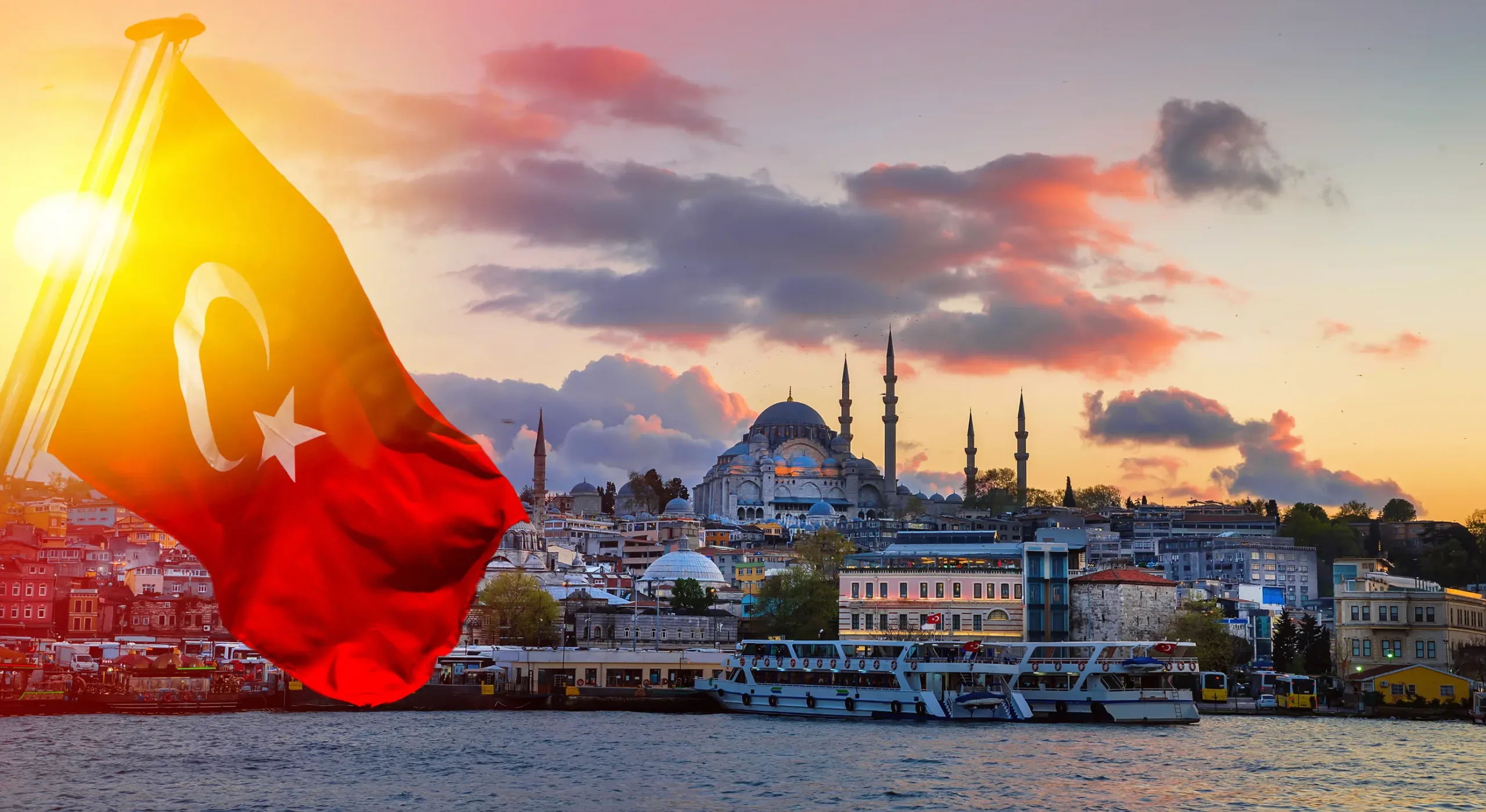
Turkey sits at the crossroads of Europe and Asia, and few countries pack this much into one trip — Byzantine domes, fairy-chimney valleys, turquoise coastline, and some of the best food you will eat anywhere. It is now the fourth most-visited country in the world, welcoming more than 60 million travelers a year. This Turkey travel guide covers where to go, when to visit, and the practical details that keep your trip smooth, so you spend less time guessing and more time exploring.
Key takeaways
- Turkey is the world’s fourth most-visited country — expect crowds at the headline sights, especially June to August.
- Spring (April–May) and autumn (September–October) are the sweet spot: warm days, thinner crowds, lower prices.
- Don’t miss Istanbul, Cappadocia, Pamukkale, Ephesus, and the Mediterranean coast around Antalya.
- The currency is the Turkish lira; cards work in cities, but carry cash for markets and small towns.
- Set up a Telekonek Turkey eSIM before you fly, so maps, translation, and bookings work the moment you land.
Must-see destinations in Turkey
Turkey is home to some of the most iconic sights on earth, and a little planning saves you hours of backtracking. Here are the places worth building your route around.
Hagia Sophia (Istanbul). Once a cathedral, then an imperial mosque, then a museum — and since 2020, a working mosque again. You can still visit between prayer times to see the soaring dome and Byzantine mosaics. Dress modestly and expect a short queue.
Topkapı Palace (Istanbul). The former home of Ottoman sultans, with lavish courtyards, the Harem, and treasury collections of jewels and manuscripts. The terraces give you sweeping Bosphorus views.
Basilica Cistern (Istanbul). An eerie underground reservoir from the Byzantine era, full of columns and the famous Medusa heads. It is cool, atmospheric, and a welcome break from the summer heat.

The Blue Mosque (Istanbul). Officially the Sultan Ahmed Mosque, named for the blue İznik tiles lining its interior. It is a working mosque, so plan around prayer times and dress modestly.
Ephesus (near Selçuk). One of the best-preserved ancient cities in the Mediterranean, with the grand Library of Celsus and a huge amphitheater. Go early to beat the heat and the tour buses.

Cappadocia. A surreal landscape of fairy chimneys, cave churches, and underground cities. The sunrise balloon flight is the headline experience, and staying in a cave hotel makes the whole trip feel unreal.
Pamukkale. The “cotton castle” — white travertine terraces formed by mineral-rich thermal springs. Pair it with the ruins of ancient Hierapolis right above the pools.
Antalya and the Turquoise Coast. The gateway to Turkey’s Mediterranean beaches, with an atmospheric old town (Kaleiçi), Roman gates, and boat trips to hidden coves. Kaş, Kalkan, and Fethiye are all within easy reach.

The Grand Bazaar (Istanbul). One of the world’s oldest covered markets, with thousands of stalls selling spices, textiles, lamps, and jewelry. Haggling is expected, so take your time and enjoy it.
Takeaway: Build your route around Istanbul, Cappadocia, the Aegean ruins, and the southern coast — most trips link them by short domestic flights.
When to visit Turkey: a season-by-season guide
Turkey is a four-season destination, so the “best” time depends on what you want. Here is how the year breaks down, with a few 2026 dates worth planning around. For a deeper region-by-region breakdown, see our guide to the best time to visit Turkey.
Spring (April–May) — the sweet spot. Mild days (around 15–25°C), wildflowers, and far smaller crowds than summer. The Istanbul Tulip Festival runs all through April, with millions of blooms in Emirgan Park, Gülhane Park, and Sultanahmet. Hıdırellez, a folk celebration of spring, lands on May 5–6 and is biggest in Istanbul and Edirne. Note that Ramadan runs from mid-February into March in 2026, with Eid al-Fitr around March 20–22 — a lively time, but expect busy domestic travel and some reduced hours.
Summer (June–August) — coast season, peak crowds. Hot and busy, with inland and coastal temperatures often pushing 30–40°C. This is prime time for the beaches of Antalya, Bodrum, and Fethiye. It is also festival season: the UNESCO-listed Kırkpınar Oil Wrestling Festival near Edirne runs June 29–July 5, 2026 (its 665th edition), the Istanbul Jazz Festival fills July, and the Bosphorus Cross-Continental Swim crosses from Asia to Europe on August 23. In Cappadocia, midday is scorching, but the balloons still fly at dawn.
Autumn (September–October) — the second sweet spot. Warm seas, comfortable cities, and the grape and olive harvest. The Aspendos Opera and Ballet Festival stages performances in a 2,000-year-old Roman theater through September. Republic Day on October 29 brings big celebrations to Istanbul, Ankara, and Izmir. Crowds thin out while the weather stays kind.
Winter (November–March) — low season, lowest prices. Istanbul turns cold and atmospheric, and Cappadocia under snow is genuinely magical (balloons still fly on clear mornings). You can ski at Uludağ near Bursa or Palandöken near Erzurum. The Selçuk Camel Wrestling Festival near Ephesus falls in mid-January, and the Datça Almond Blossom Festival opens spring in February. Pack layers and expect some mountain roads to close in snow.
Takeaway: For the best balance of weather, crowds, and price, aim for late April to May or September to early October.
Turkish food, culture, and etiquette
Half the joy of Turkey is the table. Breakfast (kahvaltı) is a spread of cheeses, olives, eggs, and bread; lunch might be pide (Turkish flatbread) or a plate of mezes; and dinner runs from kebabs to fresh fish on the coast. Save room for baklava and a glass of çay (tea), which you will be offered everywhere. Most Turkish food is naturally halal-friendly — if that matters for your trip, our Muslim-friendly travel guide covers Istanbul’s dining and prayer access in detail.
Turks are famously warm hosts, and a shared pot of tea is how conversations start. A few customs help you travel respectfully:
- Mosques: dress modestly, remove your shoes, and women should cover their hair. Avoid visiting during prayer times.
- Bazaars: haggling is normal and good-natured. Start lower than you expect to pay, and smile.
- Tipping: around 10% in restaurants is appreciated; round up for taxis.
A few Turkish phrases go a long way: Merhaba (hello), Lütfen (please), Teşekkürler (thank you), Evet / Hayır (yes / no), and Ne kadar? (how much?). Locals genuinely appreciate the effort.
Takeaway: Eat widely, dress respectfully at religious sites, and learn a few words of Turkish — it changes how people treat you.
Getting around Turkey
Turkey is big, so mix transport to your route. Here are the options that actually work for travelers.
- Domestic flights: cheap and fast for long hops like Istanbul to Cappadocia (Nevşehir/Kayseri) or Antalya. Book a few weeks ahead for the best fares.
- Intercity buses: comfortable and well-priced, linking nearly every town. The obilet app shows schedules and tickets.
- High-speed trains: handy between Istanbul, Ankara, and Konya, with scenic slower routes elsewhere.
- Istanbul transit: grab an Istanbulkart for the metro, tram, funicular, and ferries. The Bosphorus ferries are transport and sightseeing in one.
Takeaway: Fly the long distances, take buses or trains for mid-range hops, and lean on Istanbul’s ferries and trams in the city.
Where to stay and what it costs
Accommodation spans every budget. Hostels and guesthouses suit solo travelers and backpackers, boutique hotels fill the historic districts, and Cappadocia’s cave hotels are a bucket-list stay in themselves. On the coast, you will find everything from family pensions to all-inclusive resorts.
On money: the currency is the Turkish lira (TRY), which has been volatile in recent years, so check the current rate before you go. Cards are widely accepted in cities, but carry cash for markets, small towns, and tips. ATMs are easy to find, and contactless pay works in most urban spots. Book accommodation early around peak holidays like Republic Day and the two Eid festivals (Eid al-Adha falls around May 27–30 in 2026), when locals travel in large numbers.
Takeaway: Match your stay to the region — cave hotels in Cappadocia, boutique stays in Istanbul, resorts on the coast — and keep some lira on hand.
Staying connected in Turkey
You will lean on your phone constantly in Turkey — maps through Istanbul’s back streets, ferry times, museum QR tickets, translation in lokantas, and ride apps at night. Skip the airport SIM counter and the roaming fees. A Telekonek Turkey eSIM installs before you fly and switches on the moment you land, with plans starting at just $3.50. Your home number stays active for calls and bank codes, while the eSIM handles your data.
Setup takes a few minutes on home Wi-Fi, and our complete guide to staying connected in Turkey walks through every step, plan size, and troubleshooting fix. One thing travelers often miss: travel eSIMs connect through roaming on local networks, so you will need to turn on data roaming for the eSIM line when you arrive.
If Turkey is one stop on a bigger loop — a Greek island ferry or a Balkans flight — a single Europe eSIM covers the whole trip, since Telekonek works in 200+ countries. One setup, no SIM-swapping at every border.
Takeaway: Install your eSIM before you leave home, switch on data roaming when you land, and you will start the trip online instead of hunting for a SIM shop.
Plan your trip with this Turkey travel guide
Turkey rewards a little planning and a lot of curiosity. Use this Turkey travel guide to time your visit for spring or autumn, build your route around Istanbul, Cappadocia, and the coast, and leave room for the unplanned moments — a rooftop sunset, a long lunch, a wrong turn into the perfect bazaar. When you are ready, set up your Telekonek Turkey eSIM so you stay connected from the airport onward, and let the trip take you where it will.