
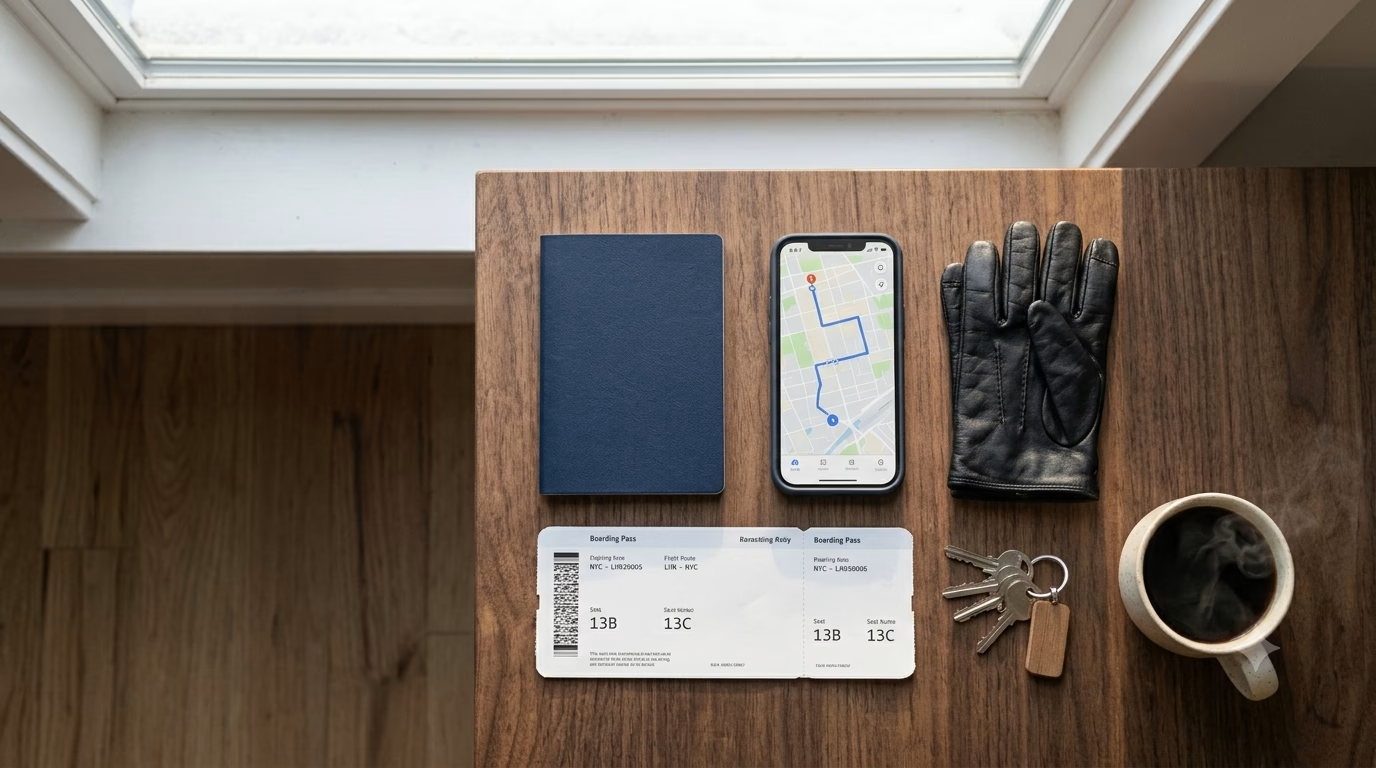
Understanding Canada’s Visa System for Winter Travel
Canada’s visa system is simple once you sort it into two buckets: eTA (Electronic Travel Authorization) and visitor visa (Temporary Resident Visa, or TRV). Winter doesn’t create a “winter visa,” but it does change what officers look for. Your plans usually involve expensive gear, weather delays, and short daylight hours. That means you need cleaner proof that your trip is temporary, funded, and well planned.
An eTA is for visa-exempt travelers who fly into Canada. It’s linked to your passport and is checked at airline boarding. It’s not a guarantee of entry, but without it you can get stopped before you even get on the plane. Winter tip: if you’re flying into places like Calgary (Banff) or Vancouver (Whistler) during peak ski weeks, don’t leave the eTA to the last minute. A small mismatch in your passport number can turn into a stressful re-do at the worst time.
A visitor visa (TRV) is for travelers who are not eligible for an eTA. It’s a sticker in your passport. It usually asks for more proof: ties to home, work or school details, and a realistic itinerary. Winter travelers should expect extra scrutiny around trip cost. Ski towns are not cheap in high season. A basic plan like 4 nights in Banff + 3 nights in Lake Louise can easily run CAD $250–$450/night for mid-range hotels in 2026, before lift tickets and shuttles. If your bank balance doesn’t match your plan, that’s when applications stall.
Winter also changes how you show your itinerary. Officers like specifics that prove you’ll leave on time:
- Round-trip flight (or onward ticket) that matches your leave date.
- Lodging addresses (even if it’s refundable), especially in resort towns.
- Local transport plan (airport shuttle, car rental, or bus) since storms can cancel routes.
One thing that goes wrong a lot: people assume driving in from the U.S. uses the same rules as flying. It doesn’t. Many travelers who need an eTA only need it for air travel. Your entry document depends on your nationality and how you arrive, not on whether there’s snow on the ground. Don’t guess—use the same passport details you’ll travel with, including middle names and spacing, every time you apply.
Staying connected matters for this topic because Canada’s winter travel is full of moving parts—gate changes, road closures, and last-minute document checks. Having data on arrival makes it easier to pull up your hotel booking, insurance, and return ticket at the counter. With Telekonek Canada eSIM, you can set up mobile data before you land, and Telekonek eSIM plans work in 200+ countries, which helps if your winter trip includes a U.S. layover or a multi-country itinerary.
Takeaway: Canada’s winter entry rules come down to the right document (eTA vs visitor visa) plus a winter-realistic plan you can prove on the spot.
Who Needs a Visa to Visit Canada in Winter?
Your winter trip to Canada starts with one question: are you visa-required, or visa-exempt with an eTA? These are the two paths that shape Canada visa requirements for winter tourists. The catch is that the answer depends on your passport and how you enter (fly vs. land). If you’re sorting this out on the go, having data the moment you land helps a lot for last-minute document pulls and hotel confirmations—your Telekonek Canada eSIM keeps that simple.
You typically need an eTA (not a visa) if your passport is from a visa-exempt country and you’re flying into Canada. Common examples include passports from the UK, most EU countries, Australia, New Zealand, Japan, and South Korea. With these passports, you don’t apply for a visitor visa in most tourist cases—you apply for an eTA and then still pass border checks on arrival. In winter, officers often ask extra questions about where you’re staying and how you’ll handle weather delays, so keep lodging and return plans easy to show on your phone.
You typically need a visitor visa (TRV) if your nationality is “visa-required” for Canada. Common examples include India, China, the Philippines, Vietnam, Pakistan, Nigeria, and many other countries across Africa, the Middle East, and parts of Asia and Latin America. A visitor visa is a fuller application with supporting documents. Winter travel can add scrutiny because ski trips can look expensive, and “staying with a friend” without a clear itinerary can look vague. Bring a tight plan: dated hotel bookings (or a host letter), a realistic budget, and a return-flight hold or ticket.
How you enter can change what you need. The eTA is primarily an air-travel requirement. If you drive or take a bus/train across the US–Canada land border, an eTA usually isn’t checked the same way as it is for flights. But you still must be eligible to enter Canada, and officers can still refuse entry if your story doesn’t add up. Watch out for a common mess-up: people assume a connecting flight “doesn’t count.” If you board a plane to Canada—even for a short connection—you can be denied boarding without the right authorization.
Two quick winter-specific reality checks before you choose your path:
- Passport validity: Canada doesn’t have a single “6-month rule” for everyone, but airlines and onward plans can. If your passport expires soon, renew before you lock in nonrefundable winter bookings.
- US transit: If your cheapest route connects through the US (common for Banff/Calgary and smaller airports), you may also need US transit authorization. Don’t discover that at check-in.
Takeaway: Your passport and entry method decide it—visa-required = TRV, visa-exempt flying = eTA, and winter makes clear plans and easy-to-show documents matter more.
Step-by-Step Visa Application Process for Winter Tourists
For Canada visa requirements for winter tourists, the process splits into two tracks: eTA (fast, online) or visitor visa/TRV (more documents, longer waits). Winter trips add a twist. Officers expect higher costs (ski passes, rentals, winter hotels) and more weather disruption. Your application should show you can pay for it and still leave on time.
Step-by-step: applying for an eTA (if you’re eligible)
- Confirm you’re entering by air. The eTA is mainly for flying into Canada. If you’re driving in from the U.S., your rules can differ.
- Get your basics ready. You need your passport, an email address, and a credit/debit card. The eTA is linked to your passport number, so double-check every digit.
- Apply online and save proof. Most eTAs are approved quickly, but not all. If it flips to “needs review,” it can take longer, so don’t leave it to the week you fly.
- Match your booking details to your passport. If your airline ticket name doesn’t match your passport exactly, boarding can get messy. Fix it before check-in.
Watch out for: the most common eTA failure is a simple typo in passport number or issue/expiry date. That can show up at the airport, not at home. A Telekonek Canada eSIM helps when you’re in transit and need to pull up your confirmation email, passport scan, or airline booking without hunting for spotty Wi‑Fi.
Step-by-step: applying for a visitor visa (TRV) for winter travel
- Create your online account and start a Visitor Visa (TRV) application. Canada’s system will generate a personalized document checklist based on your answers.
-
Upload your core documents. Expect to provide:
- Passport (clear scan of bio page and any stamps/visas asked for)
- Digital photo (follow the size rules exactly—wrong dimensions trigger delays)
- Proof of funds (recent bank statements, pay slips, or sponsor docs)
- Travel plan (winter-focused: where you’ll stay, how you’ll move between towns, and rough dates)
- Ties to home (job letter, school letter, lease, family responsibilities—whatever fits your reality)
- Write a tight “purpose of travel” letter. Keep it simple and specific. Name your destinations (e.g., Vancouver → Whistler → Vancouver) and your activities (ski school, gondola day, festival dates). Winter plans look more credible when they’re practical and timed.
- Pay fees and submit. After you submit, you may get a request for biometrics (fingerprints + photo). You’ll need an appointment at a Visa Application Centre (VAC).
- Complete biometrics quickly. In peak winter months (roughly Nov–Feb), VAC appointments can book out. Lock it in as soon as you get the instruction letter.
- Watch for follow-up requests. Immigration may ask for extra documents (stronger bank history, clarified employment dates, a more detailed itinerary). Respond fast and keep filenames clean and readable.
- Submit your passport only if requested. If approved, you may receive instructions to send your passport for the visa sticker (or follow a local process). Build extra days into your timeline for shipping and return.
Timeframes you should plan around (realistic winter pacing for 2026):
- eTA: often minutes to a few days, but allow extra time in case of manual review.
- TRV: often several weeks to a few months depending on your country and season. Add time for biometrics and passport submission if required.
What goes wrong in winter: you book “non-refundable” ski lodging before approval, then your visa takes longer than expected. If you must reserve early for places like Whistler or Banff, pick rates with free cancellation, or book refundable deposits until your decision lands.
When you’re ready to plan the rest—hotels, transfers, and backup routes—set up data ahead of time with a Telekonek Canada eSIM so your confirmations, PDFs, and updates are always in your pocket.
Takeaway: Use the eTA path if you qualify and fly; otherwise, treat the TRV like a winter itinerary + finances file, and start weeks (not days) before your trip.
Official IRCC guide to visiting Canada (visitor visa and eTA)
Important Visa Application Tips for Winter Travelers
Winter is where small application mistakes turn into big delays. For Canada visa requirements for winter tourists, the goal is simple: make your story “easy to approve.” Your forms, dates, money proof, and plans should all match without an officer having to guess.
Tip #1: Make every date line up (flights, hotels, time off, and forms). The most common winter problem is mismatched timelines after a schedule change. Your flight shifts by a day. Your hotel is still the old date. Your leave letter shows different dates again. In winter, storms can also change routes, so keep your itinerary “clean” and update confirmations if anything changes.
Watch out for: “Open-ended” plans. If you write flexible dates but attach fixed hotel bookings, it can look sloppy or unclear. Pick one clear plan and document it.
Tip #2: Show realistic winter money, not just a big bank balance. Officers want to see you can pay for a winter trip without working in Canada. If you’re going to Banff, Whistler, or Québec City during peak season, your costs are usually higher than summer. A better approach is to add a one-page budget that matches your actual plan, then back it up with statements.
- Typical winter trip costs (2026 ranges): CAD $180–$350/night for a mid-range ski-season hotel, CAD $80–$160/day for lift tickets at major resorts, CAD $40–$70/day for ski rentals, plus transport.
- What “good proof” looks like: last 3–6 months of bank statements, regular income deposits, and a clear balance that covers your trip.
- If someone sponsors you: include a signed support letter plus their bank statements and proof of relationship.
Tip #3: Use supporting documents that prove you’ll leave Canada. Winter tourism often means carrying expensive gear and staying longer than a quick city break. If you’re applying for a visitor visa (TRV), make it obvious you have reasons to return home.
- Strong ties examples: an employment letter with approved leave dates, recent pay slips, proof of enrollment (if you study), a lease/mortgage statement, or dependents/family obligations.
- Weak tie example: a vague “I will return after my trip” letter with no proof.
Tip #4: Keep scans readable and “officer-friendly.” A surprising number of delays come from bad uploads. Don’t upload dark photos of documents on a patterned table. Scan in color, keep edges visible, and combine related items into one PDF (for example: “Itinerary + hotel + ski bookings”). Name files clearly so they’re easy to review.
Watch out for: screenshots that cut off your name or booking number. If you use mobile confirmations, expand the details page so your identity and dates show.
Tip #5: Treat your itinerary like a winter safety plan. You don’t need a minute-by-minute schedule. You do need a believable plan that fits winter reality: shorter daylight, weather delays, and long distances. If you’re visiting multiple places, show how you’ll travel between them (flight, train, or car) and leave buffer days.
This is where connectivity helps. If an officer requests an extra document, you don’t want to hunt for café Wi‑Fi with a dying phone battery. With a Telekonek Canada eSIM, you can pull updated hotel confirmations, flight changes, and bank PDFs fast, even while you’re moving between appointments.
Takeaway: Your best winter application is consistent—matching dates, realistic costs, clear ties home, and clean PDFs that are easy to verify.
Checking Visa Requirements for Your Destination in Canada
Canada doesn’t issue different visas for Banff vs. Whistler vs. Québec City. Your entry document (eTA or visitor visa/TRV) is federal, and it covers the whole country. But your risk checks change depending on where you’re going and how you’ll get there. For Canada visa requirements for winter tourists, that’s the part people miss.
Alberta (Banff & Lake Louise) often means you’re flying into Calgary (YYC) and then driving 90 minutes to the park. That route triggers practical questions at the border: “Where are you staying?” and “How are you getting there?” Have the exact hotel name in Banff or Canmore and your dates ready on your phone. If your plan includes winter driving, expect follow-up questions if you say you’ll “just rent a car” without knowing the basics. With a Telekonek Canada eSIM active, you can pull your booking confirmation, car reservation, and weather alerts at the counter if an officer asks.
British Columbia (Whistler) is usually Vancouver (YVR) plus the Sea-to-Sky Highway (BC-99). The visa doesn’t change, but your arrival story should be tight because it’s common to land late, grab a car, and drive in snow or rain. If you’re arriving at night, list a first-night hotel in Vancouver if that’s your real plan. Saying “Whistler tonight” with no lodging address is a classic winter red flag. Also watch out for the “day trip” trap: if you claim you’re only going skiing for a day or two but you’ve packed a huge bag and brought gear, expect extra questions.
Québec (Québec City) brings a different issue: many winter travelers connect through Montréal (YUL) and then take VIA Rail or drive. Your documents are still federal, but officers may look closer at language and booking clarity because addresses and confirmations can be in French. Save screenshots that clearly show the property name, full address, and dates. If you’re staying in Old Québec (Vieux-Québec), having the exact street (like Rue Saint-Jean or Côte de la Montagne) helps you answer fast and confidently.
If you’re moving between regions—say Calgary → Banff → Vancouver → Whistler → Montréal → Québec City—treat it like one clean timeline. Keep a single note with every date, city, and hotel. Winter delays can cause changes, and mismatched dates are what usually turns a quick entry chat into a longer one. Telekonek makes it easy to update bookings on the move and keep your proof in your inbox, even when airport Wi‑Fi is slow or blocked.
- Best practice: save offline copies of your key bookings (lodging, return flight, and any tour/ski reservations).
- What goes wrong: you show up with “flexible” plans, no addresses, and a car plan that doesn’t match winter reality.
- Fix: list one primary base (Banff, Whistler Village, or Old Québec) and day trips around it.
Takeaway: Your visa type won’t change by region, but your chances improve when your Banff/Whistler/Québec City plan is specific, address-based, and easy to verify on your phone.
Travel Insurance and Its Role in Visa Requirements
Travel insurance isn’t always a formal “required document” for Canada, but it can still matter to Canada visa requirements for winter tourists. When an officer is judging your application, they’re also judging risk. Winter travel is higher-risk by default: icy roads, delayed flights, and more chances you end up in a clinic after a fall. Insurance is one of the cleanest ways to show you’ve thought this through and you won’t become a financial problem if something goes wrong.
For a visitor visa (TRV), including proof of insurance can help your file feel complete, especially if your itinerary includes skiing, snowboarding, snowmobiling, or remote areas near Banff or Whistler. It won’t “guarantee approval,” but it can support the bigger story you’ve built in earlier sections: you have a plan, you can afford the trip, and you will leave on time. For eTA travelers, you usually won’t upload insurance anywhere, but you still want it for the same reason: border questions can turn into “show me” moments.
What to buy matters. A basic medical plan is not enough for winter sports. Look for wording that clearly covers the activity you’re doing, and save the policy PDF offline so you can pull it up even in a dead zone. Your Telekonek Canada eSIM helps here because you can access insurer hotlines, clinic maps, and policy files on the spot, even if airport Wi-Fi fails you.
- Emergency medical: aim for at least CA$100,000–CA$250,000 coverage for winter trips (2026 guidance). A single ER visit plus imaging can climb fast.
- Medical evacuation (medevac): important if you’ll be in mountain towns. Look for language covering transport to the nearest appropriate facility.
- Winter sports coverage: confirm it includes skiing/snowboarding and any extras you plan (terrain parks, off-piste, heli-skiing). Some plans exclude “off-piste unless with a guide.”
- Trip delay and interruption: winter storms can strand you. Look for coverage that pays for extra hotel nights and meals after a long delay.
- Baggage and gear: useful if your ski bag gets misrouted. Check the per-item cap and whether rentals are reimbursed.
Watch out for the fine print that trips winter travelers: “pre-existing conditions” rules, alcohol-related exclusions, and vague “hazardous activity” clauses. Also check if your policy only pays after you use any other coverage you have (like a credit card benefit). If you’re relying on a card, confirm it covers winter sports and that you actually paid the trip with that card.
Keep a simple “insurance pack” ready for your application and arrival: policy certificate, coverage summary, emergency phone number, and your travel dates. Store it in your email, and download it to your phone. With Telekonek data active when you land, you can pull documents fast if an airline agent or border officer asks for proof.
Takeaway: For winter trips, insurance is your quiet credibility boost—get medical + winter sports + delay coverage, and keep the proof easy to show.
Staying Connected: Mobile Data and eSIM Options for Tourists
For Canada visa requirements for winter tourists, staying connected is not just “nice to have.” It’s how you pull up your eTA or TRV approval, show your hotel address at the counter, and rebook fast when a storm closes a highway. In Canada, winter problems usually happen between places—airport to resort, town to national park, or hotel to ski hill. Reliable mobile data keeps your trip moving.
Your simplest setup is an eSIM, because you can activate it before you land. With a Telekonek Canada eSIM, you skip the airport kiosk hunt and avoid guessing which local plan covers your route. Telekonek also works in 200+ countries, which helps if Canada is part of a bigger winter loop (like a U.S. connection or a stopover elsewhere).
How to buy and use an eSIM without drama:
- Check your phone supports eSIM. Most newer iPhones and many Android flagships do. If your phone uses “dual SIM,” you can keep your home number active for texts.
- Install the eSIM on Wi‑Fi the night before. Installation is easiest at your hotel or at home, not on shaky airport Wi‑Fi.
- Turn on the eSIM when you land. Set it as your “cellular data” line, and leave your home SIM for calls if you need it.
- Save your visa/insurance PDFs offline. Download them to your phone too, so you’re not stuck if a signal drops in the mountains.
Data needs in winter are higher than people expect. Google Maps in driving mode, ski apps with live lift status, and uploading border documents can burn through a small plan fast. If you’ll be in Banff/Lake Louise, expect weaker reception on stretches of the Icefields Parkway (Hwy 93). In Whistler, coverage is usually solid in the village, but it can dip on the drive up BC‑99 (Sea to Sky) and in some lift areas.
Wi‑Fi helps, but it’s patchy when you actually need it. Vancouver International (YVR), Toronto Pearson (YYZ), and Montréal–Trudeau (YUL) have free airport Wi‑Fi, but it’s often overloaded during weather delays. In ski towns, cafés and hotels usually offer free Wi‑Fi, yet speeds can crawl at peak hours (7–9 a.m. and after 4 p.m.). On-mountain Wi‑Fi exists in some lodges, but it’s not something to bet your ride-share pickup or rebooking on. Your Telekonek data line is the backup that keeps working when everyone piles onto the same hotspot.
Watch out for: roaming settings. Many travelers install an eSIM correctly, then forget to turn off data roaming on their home SIM. One wrong toggle can trigger expensive charges before you even clear customs. Do a quick check right after landing: Telekonek eSIM = cellular data on; home SIM = data off.
Takeaway: Set up your Telekonek eSIM before you fly, so your documents, maps, and rebooking tools work the moment winter throws a curveball.
Arriving in Canada: What to Expect at Customs and Immigration
After you land, the process usually splits into two stops: immigration (entry) and customs (your stuff). In big airports like Toronto (YYZ), Vancouver (YVR), Montréal (YUL), and Calgary (YYC), you’ll often start at a kiosk that prints a receipt. You then take that receipt to a CBSA officer for a short chat and a passport stamp (or electronic record).
Your job is to make your story match what you already prepared for Canada visa requirements for winter tourists: short trip, clear plan, enough funds, and a reason to leave on time. Keep your Telekonek Canada eSIM active as you taxi in, so you can pull up confirmations fast if the Wi‑Fi is slow or the line is moving. The officer won’t wait while you scroll through an inbox offline.
What officers commonly ask (and how to answer)
- “Why are you here?” Say “tourism” and name the places: “Banff for 5 nights, then Calgary 2 nights.” Vague answers can trigger more questions.
- “How long are you staying?” Give exact dates. Winter flights change, but your planned exit date should be clear.
- “Where are you staying?” Have the first address ready (hotel name + street). If you’re heading to a resort, save the booking PDF.
- “How are you getting there?” If you’re driving from Calgary to Banff, say that. If you booked a shuttle, show the ticket.
- “How much money do you have for this trip?” Be honest and realistic for winter. A ski week can run CAD $200–$350/day with lift tickets, rentals, and meals (2026 typical range).
- “Do you work? When do you go back?” This is the “will you leave” check. A return flight plus time-off proof helps.
Watch out for: joking about work, “maybe I’ll stay longer,” or saying you’ll “help a friend’s business.” If you’re not authorized to work, keep the purpose strictly tourism.
What to declare (customs) — the winter-specific traps
Canada is strict about certain items, and winter travelers run into a few repeat problems. Declare honestly, even if you think it’s minor. A calm “yes” with details is far better than “no” that turns into a bag search.
- Food: jerky, meat products, and some fresh foods can be a problem. If you packed trail snacks for the slopes, declare them.
- Alcohol: allowances depend on province and age, but “a few bottles for the cabin” can exceed limits fast. Declare what you have.
- Gifts and new gear: new snowboard goggles with tags look like purchases. If you’re bringing gifts, have a rough value.
- Cash: if you’re carrying CAD $10,000+ (or equivalent), you must declare it. This is legal, but not declaring it is the issue.
- Medications: keep prescriptions in original packaging. Don’t toss pills into unmarked baggies.
How to carry your documents so you don’t fumble at the counter
- On your phone: screenshots/PDFs of your return ticket, first hotel booking, and insurance proof.
- Offline backup: download those PDFs before landing. Airport Wi‑Fi can cut out right when you need it.
- One printed page: a simple itinerary with addresses and dates. Paper still wins when your battery is dying.
- Passports + approvals: your passport, plus your eTA/visa approval details if you have them. (You may not be asked, but it’s smart to have.)
With your Telekonek Canada eSIM, you can pull up that itinerary in seconds, message your hotel if your flight was delayed, and rebook a shuttle before you even reach baggage claim.
Takeaway: Answer clearly, declare honestly, and keep your key bookings ready on your phone (with Telekonek data) so the line stays quick.
FAQs About Canada Visa Requirements for Winter Travelers
Do you need a “winter visa” for Canada?
No. Canada doesn’t issue a special winter visa. You enter on the same document year-round: an eTA (if you’re visa-exempt and flying) or a visitor visa/TRV (if you’re visa-required). Winter changes what you should be ready to explain: higher costs, storm delays, and long drives to resorts.
Is an eTA the same as a visa?
No. An eTA is a travel authorization tied to your passport for flying into Canada. A TRV is the actual visitor visa sticker/record for visa-required travelers. Either way, you still need to satisfy the border officer that you’re visiting temporarily and can fund your trip.
What if you’re entering by land (driving in from the U.S.)?
This is where people get tripped up. An eTA is mainly checked for air travel. Land entry follows different checks, and your nationality still matters for whether you need a visa. If your winter itinerary includes a Buffalo→Toronto drive or a Seattle→Vancouver road trip, confirm your exact entry rules on the official Government of Canada page: Find out if you need a visa to travel to Canada. Having mobile data (like your Telekonek eSIM) makes it easy to pull this up in the car or at the border if plans change.
How long can you stay in Canada as a winter tourist?
Many visitors are allowed up to 6 months, but the officer decides your authorized stay at entry. If you’re coming for a ski season, be ready for follow-up questions. Bring proof you can pay for a longer trip and still leave on time (job letter, return ticket, or school schedule).
What documents should you have ready at the airport in winter?
Keep digital and offline copies of the basics, because cold-weather travel is delay-prone and phones die faster in the cold. You want to be able to show:
- Where you’re staying (hotel booking with address, or host details)
- How you’re moving around (car rental, shuttle, or flight to Calgary/Québec City/Vancouver)
- Proof of funds (recent bank statement + a credit card)
- Winter-specific plans (ski passes, tour bookings, or a simple day-by-day outline)
Watch out for: screenshots with no dates or no property address. Officers often ask for the exact address, not just the hotel name.
Can you work remotely in Canada on a tourist entry?
Tourist entry is for visiting, not joining the Canadian labor market. Remote work gets complicated fast depending on what you do and who you’re doing it for. If your winter plan includes working weekdays from Whistler or Montréal, read the official guidance and make sure your situation fits it before you fly: Visiting Canada (IRCC). Don’t guess at the border.
Do you need proof of onward travel?
Sometimes, yes—especially if your trip looks open-ended (one-way ticket, long stay, vague itinerary). A return flight is the cleanest proof. If you’re crossing the U.S. border later, show a bus/train booking or a flight out of Canada. In winter, also plan a buffer day so a storm cancellation doesn’t accidentally push you past your timeline.
Will winter gear cause issues at customs?
Usually no, but be smart about how you pack. Keep high-value items (camera, laptop, drone) easy to list if asked. If you’re carrying avalanche safety gear, pack it in a way that’s easy to explain. And if you’re bringing food, check what’s allowed—rules can be strict and vary by item. Use the official CBSA list before you pack snacks from home: CBSA: What you can bring into Canada.
What if a storm delays your flight and you miss your hotel or connection?
This is the most common winter failure point: your itinerary changes, but your proof doesn’t. Save flexible bookings (free-cancel hotels, changeable transfers) and keep confirmation emails easy to pull up. If you need to show updated reservations at the counter, having reliable data matters more than you think—especially in arrivals halls where public Wi‑Fi can be slow or locked behind a signup page.
One practical tip before you fly: set up your connection plan early so you can pull up IRCC emails, hotel addresses, and rebooking links the moment you land. Grab an eSIM before departure—Telekonek Canada eSIM plans are a simple way to have data ready without hunting for SIM shops or gambling on airport Wi‑Fi.