
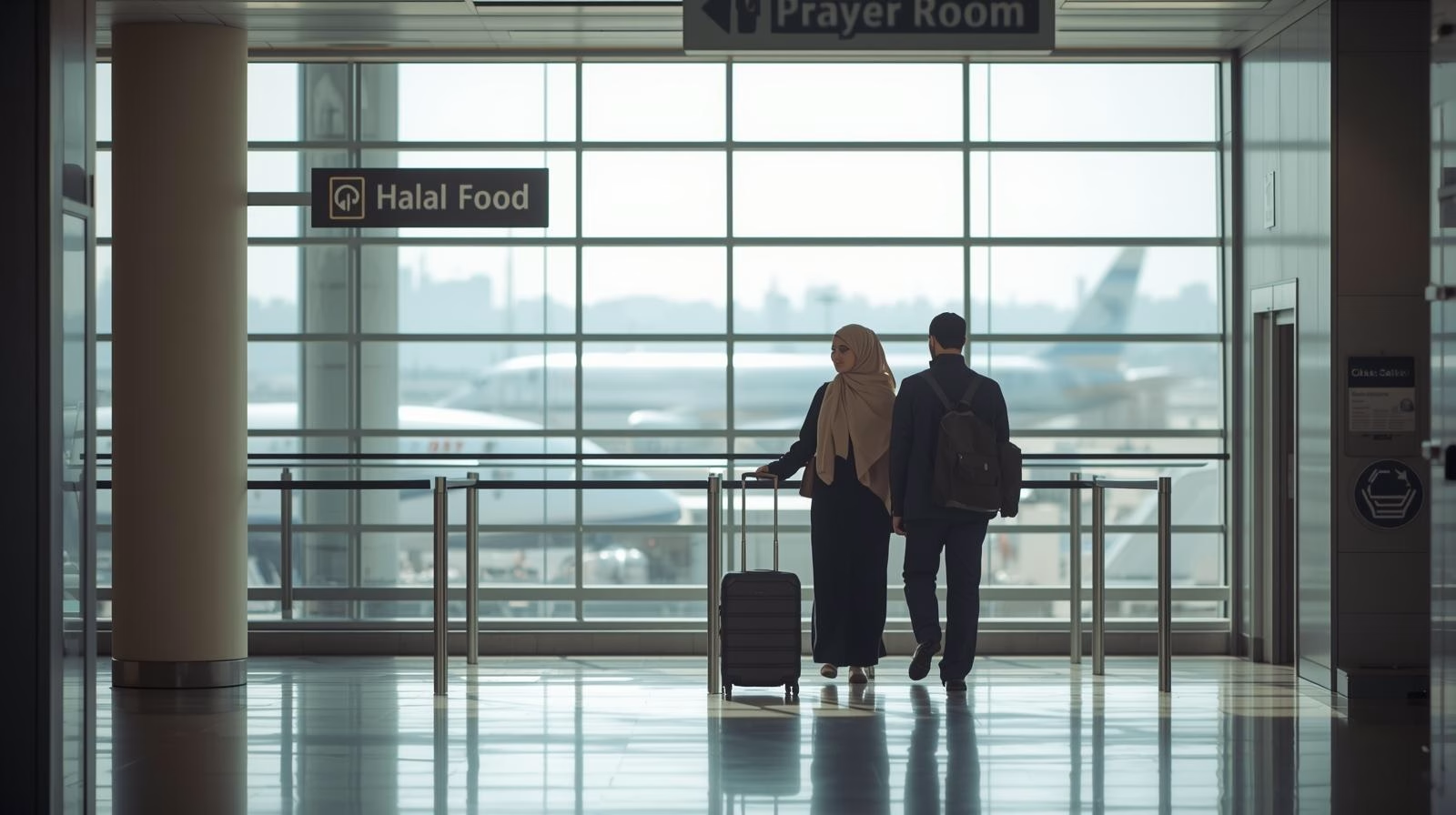
Muslim-friendly travel is growing fast, especially among travelers from Malaysia and other Muslim-majority countries. But what does it really mean to travel in a way that respects Islamic principles? At its simplest, it means journeys built around your faith: halal food, easy access to prayer, and places that welcome your customs. This guide walks you through the essentials, from choosing destinations to staying connected on the road.
Key Takeaways
- Look for halal certification, prayer access, and modest-friendly settings when you plan.
- Apps like Zabihah, HalalTrip, and Muslim Pro do most of the heavy lifting on the go.
- Istanbul, Kuala Lumpur, and Dubai lead for Muslim travelers, with more cities catching up.
- A reliable data connection ties it all together — a Telekonek eSIM keeps you online from the moment you land.
Defining Muslim-Friendly Travel
Muslim-friendly travel means trips designed around the needs of Muslim travelers. That includes halal food, prayer facilities, and accommodations that respect Islamic customs. It lets you see the world without setting your faith aside. For service providers, getting it right is now a basic part of welcoming guests.
Key Components of Muslim-Friendly Travel
- Halal food: Seek out certified halal restaurants. That usually means no pork or alcohol, and meat slaughtered according to Islamic rites.
- Prayer facilities: Many travelers choose hotels with prayer rooms or a mosque nearby, so daily prayers stay easy to keep.
- Cultural sensitivity: Knowing local customs helps you avoid missteps and connect more warmly with the people you meet.
Challenges Faced by Muslim Travelers
Even as options grow, hurdles remain. Reliable halal information can be hard to find in some places. You may struggle to confirm which restaurants qualify, or where the nearest prayer space is. Cultural misunderstandings can crop up too, especially where Islamic customs are less familiar.
A few trusted resources help. CrescentRating rates hotels and destinations for Muslim travelers, and HalalTrip covers halal dining and prayer spaces worldwide. Good connectivity makes these tools usable the moment you need them. With a Telekonek eSIM, you can check halal dining, prayer times, and local customs without hunting for a SIM card or chasing Wi-Fi.
Embracing the Journey
Understanding these principles makes travel richer, not harder. Keep halal food, prayer access, and cultural respect in mind, and the rest tends to fall into place. The result is a trip that fits your values and still feels like an adventure. Next, here are the destinations that do this especially well.
Top Destinations for Muslim Travelers: A Global Perspective
Some destinations make Muslim-friendly travel effortless. They pair rich culture and history with halal dining and easy prayer access. Below are three standouts, plus a few rising stars worth watching.
Istanbul, Turkey
Istanbul sits where culture, history, and faith meet. Landmark mosques like the Sultan Ahmed (Blue) Mosque and Hagia Sophia anchor the skyline. Halal food is everywhere, from kebabs to baklava, so eating well takes no planning. Cultural events run throughout the year if you want to meet the local community, and prayer spaces are easy to find as you explore.
To stay online across the city, set up a Telekonek eSIM for Turkey before you go. It activates the moment you land, so maps, prayer times, and halal listings are ready from the airport.
Kuala Lumpur, Malaysia
Kuala Lumpur blends modern and traditional with ease. The Petronas Twin Towers and the historic Masjid Jamek sit close together. The city is known for halal-certified dining across Malay, Chinese, and Indian cuisines, so variety is never a problem. Shopping runs from luxury malls to street markets, and prayer facilities are plentiful.
It also makes a great base. From here you can reach UNESCO sites like George Town and Melaka, or head into the rainforest. Planning a longer trip? A Telekonek eSIM for Malaysia keeps you connected well beyond the capital.
Dubai, United Arab Emirates
Dubai pairs luxury with strong Islamic roots. Halal dining spans street food to fine dining, so every meal is covered. Visit the Burj Khalifa for the views, then the Jumeirah Mosque to learn about Islamic culture. Prayer rooms are easy to find, including inside major malls and attractions, and the city’s calendar of events keeps things lively year-round.
One practical note: WhatsApp voice and video calls are restricted in the UAE, so plan to use Zoom or Skype to reach family back home. A Telekonek eSIM for the UAE gets you online the moment you land, with coverage across Dubai, Abu Dhabi, and Sharjah.
Emerging Destinations
Beyond the favorites, several destinations are gaining ground:
- Marrakech, Morocco: Vibrant souks and palaces, with halal dining and prayer access throughout.
- Doha, Qatar: Fast-developing, with world-class attractions and plenty of halal options.
- Maldives: Known for luxury, and many resorts now offer halal food and private prayer spaces.
Takeaway: Start with Istanbul, Kuala Lumpur, or Dubai for the smoothest experience, and keep an eye on Marrakech, Doha, and the Maldives. Wherever you go, respecting local customs makes the trip better. Up next: the etiquette that helps you travel well anywhere.
Navigating Local Cultures: Etiquette and Customs for Muslim Travelers
Traveling as a Muslim across different cultures is rewarding, but it helps to know the local norms. A little awareness goes a long way, whether you’re in Istanbul or Bali. Here are the customs worth keeping in mind wherever you land.
Understanding Local Customs and Dress Codes
Dress expectations vary by region. In many places, modesty is the safe choice. A few examples:
- Middle Eastern countries: In Saudi Arabia and the UAE, women often wear an abaya or similar modest dress, and men should skip shorts in public. Cover shoulders and knees to be safe.
- Southeast Asia: Malaysia and Indonesia are more relaxed, but covering arms and legs is respectful, especially in rural areas or at religious sites.
- Western countries: Modesty matters less in the UK or US, but dress neatly at places of worship and formal settings.
Respecting Prayer Times and Religious Practices
Prayer shapes the day in many Muslim-majority countries. Shops and attractions may pause briefly during the five daily prayers. A few tips help you plan around it:
- Plan your schedule: Check local prayer times in an app and build your sightseeing around them.
- Be respectful: If prayer starts while you’re in a public space, give it room. You may even be invited to join.
- Find prayer facilities: Many hotels and tourist areas have prayer rooms. Ask ahead or ask a local for the nearest mosque.
Interacting with Locals: Dos and Don’ts
Small gestures build goodwill fast. Keep these in mind:
- Do: Greet people warmly. A simple “As-salamu alaykum” (peace be upon you) opens many doors.
- Do: Ask before photographing people or sacred spaces. The courtesy is appreciated.
- Don’t: Raise sensitive topics like politics or religion with people you’ve just met. Stick to shared interests.
- Don’t: Show public affection where it may be frowned upon. When unsure, lean toward modesty.
Takeaway: Dress modestly, respect prayer times, and ask before you photograph. Get these right and locals will meet you halfway. Now, on to one of the best parts of any trip: the food.
Halal Dining: Finding the Best Muslim-Friendly Restaurants
Food is one of travel’s great joys, and finding halal options is easier than ever. Awareness has grown, and so has the number of halal restaurants worldwide. Here’s how to spot them, the apps that help, and a few dishes to seek out.
Identifying Halal Restaurants
Start with certification. Many places display a halal certificate from a recognized body. A few quick checks:
- Look for halal symbols: The word “Halal” in Arabic (حلال), or marks from bodies like IFANCA or the Halal Monitoring Authority.
- Ask staff: Most are happy to confirm what’s halal on the menu.
- Check the menu: Many restaurants now label halal dishes directly.
Apps and Websites for Finding Halal Food
A few tools make the search simple:
- Zabihah: Often called the “Yelp for halal food,” with a global directory, reviews, and search by location and cuisine.
- HalalTrip: Finds halal restaurants plus prayer spaces and Muslim-friendly attractions.
- HappyCow: Built for vegetarian and vegan dining, it also lists halal spots — handy when options are thin.
Local food blogs and community groups are gold too. They often point you to hidden gems the big apps miss.
Local Specialties to Try
Every region has dishes worth seeking out. A few to start with:
- Malaysia: Nasi lemak — coconut rice with sambal, fried chicken, and boiled egg. Just confirm the chicken is halal-certified.
- Turkey: Kebabs and pide (Turkish pizza), widely available halal. Save room for baklava.
- Morocco: Tagine, a slow-cooked stew of chicken, lamb, or vegetables in aromatic spices.
- Indonesia: Nasi goreng, flavorful fried rice found in halal eateries nationwide.
To use these apps on the move, you’ll want steady data. A Telekonek eSIM keeps Zabihah and HalalTrip working wherever you wander.
Takeaway: Check for certification, lean on Zabihah and HalalTrip, and try the local staples. Good food sorted, let’s make sure prayer is just as easy.
Prayer Facilities: Accessing Mosques and Prayer Rooms Worldwide
For many travelers, keeping daily prayers is non-negotiable. Prayer grounds the day and offers comfort in unfamiliar places. The good news: finding a spot to pray is easier than it used to be.
The Importance of Prayer in Travel
The five daily prayers stay constant on the road. Whether you’re in Istanbul or on a beach in Bali, you can usually find a suitable place. More cities now cater to Muslim travelers, with mosques and prayer rooms close to hand.
Beyond mosques, many airports, malls, and attractions offer dedicated prayer spaces. They give you a quiet spot and a sense of community while you’re away.
Resources for Locating Mosques and Prayer Rooms
Finding a prayer space doesn’t have to be hard. These help:
- Muslim Pro: Provides prayer times, qibla direction, and a nearby-mosque finder in one app.
- HalalTrip: Lists prayer spaces alongside halal dining, so you can plan both at once.
- Islamic Society of North America (ISNA): Keeps a mosque directory across North America. Useful if you’re traveling there.
- Local community groups: Facebook and Instagram pages often share up-to-date prayer-space tips for a city.
All of these need a connection to be useful in the moment. With a Telekonek eSIM, you can look up the nearest mosque or check prayer times the second you need to.
Tips for Prayer Etiquette in Non-Muslim Countries
- Read the room: Pick a quiet, private spot, like a calm corner of a park or a designated prayer area.
- Dress modestly: Keep your attire respectful, mindful of both Islamic guidelines and local norms.
- Time it well: Use a prayer-time app, and avoid the busiest moments in shared spaces when you can.
- Give a heads-up: In a public space, a quick word to staff or security is a courtesy if you’re using a set-aside area.
Takeaway: Muslim Pro and HalalTrip will find prayer spaces almost anywhere, and a little discretion keeps things smooth. Traveling with kids adds a few more considerations, which is up next.
Family-Friendly Muslim Travel: Tips for Traveling with Children
Family trips are some of the best, especially when the plan fits your faith. From Istanbul’s streets to Langkawi’s beaches, a bit of preparation keeps everyone happy. Here’s how to travel well with children.
Choosing Family-Friendly Accommodations
The right hotel sets the tone. Look for places that cater to Muslim families with:
- Prayer facilities: A prayer room or a nearby mosque keeps daily prayers simple.
- Halal dining: On-site halal meals, or halal restaurants within easy reach.
- Family rooms or suites: More space makes a real difference with kids.
- Kid-friendly extras: Pools, playgrounds, and activities for downtime.
For example, the Shangri-La in Kuala Lumpur is popular with families for its spacious rooms, children’s pool, halal dining, and nearby mosques.
Activities and Attractions Suitable for Children
The right activities keep kids engaged. A few ideas:
- Theme parks: Genting Highlands in Malaysia offers rides and entertainment for all ages.
- Cultural stops: The Islamic Arts Museum Malaysia mixes learning with fun, interactive exhibits.
- Outdoors: The Langkawi Sky Bridge brings big views and is doable with children.
- Workshops: Local cooking or craft classes give kids a hands-on taste of the culture.
Always check age limits and suitability before you book.
Traveling During School Holidays
Holiday travel works, but plan for crowds and higher prices. A few moves help:
- Book early: Lock in rooms and activities to dodge last-minute price spikes.
- Go off-peak where you can: Quieter destinations with Muslim-friendly amenities mean a calmer trip.
- Keep it flexible: Build in rest time so kids don’t get overwhelmed.
Staying reachable matters most when you’ve got children in tow. A Telekonek eSIM keeps maps, messages, and bookings at your fingertips throughout the trip.
Practical Tips for Smooth Family Travel
- Pack smart: Snacks, medications, and a few familiar items ease travel-day stress.
- Involve the kids: Let them pick an activity or two. They’ll be more excited and more cooperative.
- Stay flexible: Adjust to your children’s energy. Some of the best moments are unplanned.
Takeaway: Pick family-ready stays, balance the itinerary, and keep some flex in the day. With logistics handled, let’s talk money.
Budgeting for Muslim-Friendly Travel: Cost-Saving Tips and Tricks
Traveling on a budget while keeping to Islamic practices is very doable. A little planning around food, stays, and flights goes a long way. Here’s how to stretch your money without cutting corners.
1. Planning Your Halal Meals
- Research first: Use HalalTrip or HappyCow to find halal spots before you go, and skip the pricey tourist traps.
- Self-cater: If your room has a kitchen, shop local markets for fresh, affordable halal ingredients.
- Eat your big meal at lunch: Lunch specials often cost far less than the same dishes at dinner.
2. Accommodations That Cater to Muslim Travelers
- Find Muslim-friendly hotels: Many now offer halal food, prayer facilities, and qibla direction. MuslimTravelGirl is a useful starting point.
- Book early: Compare options on the usual booking platforms and lock in lower rates.
- Share space: Traveling as a group? A larger apartment often beats several hotel rooms on price.
3. Finding Deals on Flights and Transportation
- Stay flexible: Track prices across dates with a fare comparison tool. Mid-week flights are often cheaper.
- Set alerts: Let airlines and travel sites tell you when your route drops in price.
- Check nearby airports: A second airport can save money, just factor in the transfer cost.
4. Saving Money While Respecting Islamic Practices
- Use public transport: It’s cheaper than taxis and a great way to see local life.
- Seek out free attractions: Parks, free museum days, and local festivals cost little and give a lot.
- Skip roaming fees: Avoid pricey data roaming with a Telekonek eSIM, so you can look up halal spots and prayer times without bill shock.
Takeaway: Plan meals, book early, stay flexible on flights, and cut roaming costs. Timing your trip well saves even more, which brings us to seasons.
Seasonal Travel Considerations: Best Times to Visit Muslim-Friendly Destinations
Timing changes everything: crowds, prices, weather, and festivals. Here’s how to pick the right window for some popular destinations.
Peak Seasons vs. Off-Peak Travel
Peak season brings energy, but also crowds and higher prices. Istanbul and Kuala Lumpur get busy from June to August. It’s lively, but halal restaurants and prayer spaces can feel stretched.
Shoulder seasons are calmer. Spring (March–May) and autumn (September–November) offer a more local feel. In Malaysia the weather is pleasant then, the crowds thin out, and rooms and flights cost less.
Cultural Events and Festivals
- Ramadan (dates vary): A special time in Muslim-majority countries. Cairo and Istanbul fill with nightly iftar gatherings and special prayers.
- Eid al-Fitr (dates vary): The joyful close of Ramadan. Indonesia and Malaysia see parades, dances, and festive food.
- Hari Raya Aidilfitri (dates vary): Malaysia’s Eid, marked by open houses and halal feasts. A warm window into local hospitality.
- Islamic New Year (dates vary): Marked with cultural events and community gatherings in many countries.
Weather Considerations
- Malaysia: Warm year-round. The monsoon (May–September) brings heavy rain to the east coast. Aim for the dry season, November to March.
- Turkey: Spring (April–June) and autumn (September–November) are ideal. Summer gets hot, especially in cities like Antalya.
- Morocco: Spring (March–May) and fall (September–November) are most comfortable. Desert regions scorch in summer.
Takeaway: Shoulder seasons usually win on weather, cost, and crowds, while festivals like Ramadan and Eid offer something unforgettable. Next, how to travel responsibly while you’re there.
Traveling Responsibly: Sustainable Practices for Muslim Travelers
Responsible travel sits naturally alongside Islamic values of stewardship and respect. Small choices add up: less waste, more support for local people, and care for the places you visit.
Eco-Friendly Travel Choices
Lower-impact transport helps. Trains and buses beat short flights on emissions, and direct routes cut waste when you do fly. For stays, favor hotels with real green practices: energy-efficient systems, water conservation, and waste reduction.
Supporting Local Economies and Businesses
Spending locally is one of travel’s best habits. Eat at family-run restaurants, shop at local markets, and hire local guides. Resident-led tours give you authentic insight, and locally made crafts help keep traditions alive.
Respecting Cultural Heritage and Natural Resources
Respect the places you visit. Follow local customs and site rules, and always ask before photographing people or sacred spaces. Protect natural resources too: carry a reusable bottle and bag, use refill stations, and leave no trace in nature.
Digital Tools for Sustainable Travel
Technology makes greener choices easier. A Telekonek eSIM keeps you connected without a physical SIM, so you can find public transport, sustainable dining, and recycling points on the spot, while skipping the plastic waste of throwaway cards.
Takeaway: Choose low-impact transport, spend locally, and tread lightly. These habits honor both your values and the places you love. Finally, here’s how to connect with fellow Muslims on the road.
Connecting with the Muslim Community: Networking and Resources
Connecting with local Muslims can be the highlight of a trip. You’ll find insight, company, and practical help. Here’s how to make those connections.
Finding Local Muslim Groups and Organizations
- Search online: Sites like Muslim Travel Network list organizations, events, and community hubs for travelers.
- Use social media: Search city hashtags like #MuslimsIn[CityName] or #HalalTravel[CityName] on Facebook and Instagram.
- Try Meetup: Look for gatherings aimed at Muslim travelers or locals to meet people with shared interests.
The Benefits of Networking with Fellow Travelers
- Cultural exchange: Sharing experiences deepens your understanding of local life.
- Insider tips: Other travelers know the best halal spots, prayer rooms, and safe areas.
- Support: A friendly contact makes an unfamiliar place feel far less daunting.
Online Platforms and Forums
- HalalTrip and HaveHalalWillTravel: Guides, articles, and community tips from travelers who’ve been there.
- WhatsApp groups: Many communities run traveler groups sharing events, prayer times, and halal options in real time.
- Blogs and vlogs: Muslim travel creators share honest recommendations to shape your plans.
Staying connected ties all of this together. A Telekonek eSIM keeps you reachable for forums, groups, and last-minute plans without roaming charges.
Next Steps for Your Journey
- Research local Muslim organizations and events at your destination.
- Join online forums and social groups for Muslim travelers.
- Set up a Telekonek eSIM so you’re connected from arrival.
- Reach out to fellow travelers and locals once you’re there.
Takeaway: A few connections turn a good trip into a memorable one. Plan ahead, stay open, and let those introductions guide your journey.