
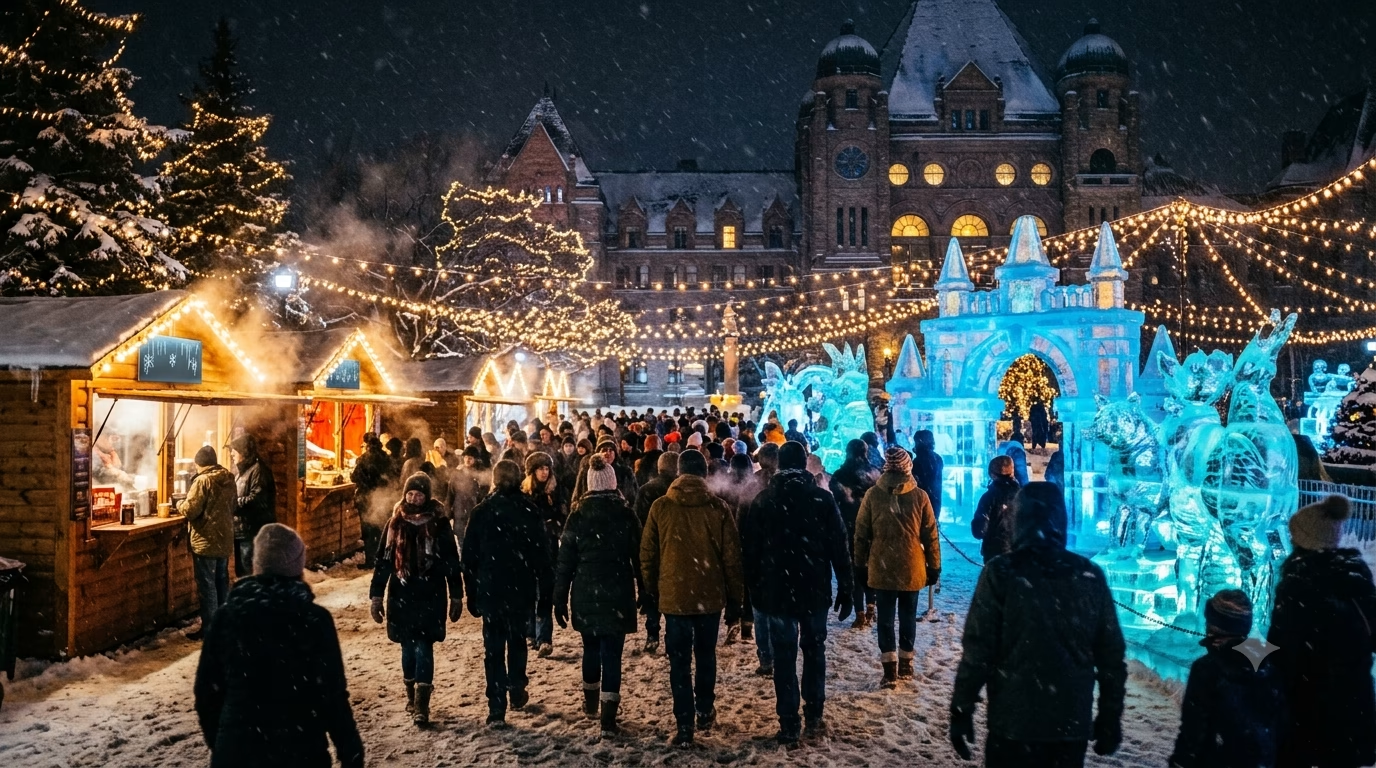
Top Winter Festivals to Experience in Canada 2026
Winter in Canada isn’t one event. It’s a cross-country calendar of ice, lights, music, and cold-weather food. For events and festivals in Canada winter 2026, these are the big names you can build a trip around, with the details that actually affect your plans.
Montréal en Lumière (Montréal, Québec) — late Feb to early Mar 2026 (dates vary). This is your best pick if you want a city festival that still feels like deep winter. The action centers around Place des Festivals in the Quartier des Spectacles, with night shows, light installations, and outdoor food stands. Book restaurants early for the “Nuit Blanche” weekend because lines spike fast, even in the cold. Watch out: sidewalks get slick after freeze-thaw days; pack real boot traction, not just “winter sneakers.”
Winterlude (Ottawa, Ontario + Gatineau, Québec) — early to mid Feb 2026 (dates vary). You come for the ice and snow sculptures and stay for how walkable it is between sites. Key zones are usually around Confederation Park and the ByWard Market area, with family programming in Gatineau. The Rideau Canal Skateway is the headline, but it depends on weather, so plan a backup day for museums nearby if it closes. What goes wrong: people bank on skating and don’t check the daily NCC updates, then waste half a day bouncing around.
Québec Winter Carnival / Carnaval de Québec (Québec City, Québec) — late Jan to mid Feb 2026 (dates vary). This is the “big coat, big energy” festival, with night parades, snow baths, and the Ice Palace scene near the core events. You’ll want a warm layer system because you can go from crowded streets to windy open areas in minutes. If you’re staying inside the Old Québec walls, you’ll walk most places, but the hills can be brutal in fresh snow. Watch out: parade nights can jam taxis and rideshares; lock in a meeting point and time with your group before you step into the crowd.
Igloofest (Montréal, Québec) — mid Jan to early Feb 2026 (dates vary). This is the iconic outdoor electronic music festival on the Old Port waterfront. It’s loud, cold, and genuinely fun if you dress like you mean it. Expect a strong “après-ski” vibe with snow pants and goggles, plus bag checks and entry lines. What goes wrong: phones die fast in subzero temps—keep your battery warm in an inner pocket.
Niagara Falls Winter Festival of Lights (Niagara Falls, Ontario) — mid Nov 2025 to early Jan 2026. This one is perfect if your Canada winter trip starts around the holidays. The lights are spread across the Niagara Parkway and around the tourist core, and it’s easy to pair with a daytime falls visit when crowds are lower than summer. Go on a weekday night if you can; weekends get congested with car traffic and tour buses. Watch out: the mist near the falls can freeze on railings and paths—walk slow and keep gloves handy.
Why reliable data matters for winter festivals: schedules shift with weather, transit detours happen, and meetups fall apart when everyone’s standing in different lines. Having working mobile data lets you pull last-minute updates, maps, and QR tickets without hunting for Wi‑Fi. Telekonek makes that simple with eSIM data plans that work in 200+ countries, so you can set up your Canada plan before you arrive and keep the same setup for your next stop too.
Takeaway: Pick one “anchor” festival (Ottawa, Québec City, or Montréal), then stack a second nearby event to save time and maximize winter nights.
Get your Telekonek Canada eSIM sorted before you land so your festival days aren’t spent searching for signal or a SIM shop.
Cultural Celebrations: Indigenous Events This Winter
Some of the strongest events and festivals in Canada winter 2026 are Indigenous-led gatherings where winter isn’t a backdrop. It’s the point. You’ll see drumming, dancing, hand games, winter hunting culture, and community feasts—shared in a way that asks you to show up with respect, not just a camera.
Manito Ahbee Festival (Winnipeg, Manitoba) — typically mid-winter. Dates can shift year to year, but it often lands in late winter and draws dancers, singers, and drum groups from across the Prairies. The powwow is the centerpiece, with Grand Entry (the formal opening) and full regalia that tells family and Nation stories. If you go, arrive early, stand for Grand Entry, and listen to the MC—protocol is explained clearly, and it makes the whole weekend make sense.
What to do: buy from the vendor market (beadwork, moccasins, art) and budget for it. Expect handmade pieces to start around CA$20–$60 for small items and CA$150+ for major work (2026 ranges). You’ll want mobile data for schedules and arena maps, so your Telekonek eSIM keeps you online even when venue Wi‑Fi gets swamped.
Igloofest (Montréal, Québec) — January/February weekends is already on your radar for music, but look for Indigenous artist nights and collaborations that pop up in winter programming. Montréal’s winter stages often include Indigenous DJs, vocalists, and visual artists. The move here is to follow the lineup drops and set alerts, since the best sets can land on a random Thursday.
Inuvialuit / Inuit community celebrations in the North — winter varies by community. In places like Inuvik, Tuktoyaktuk, and parts of Nunavut, winter events can include drum dancing, throat singing, and community games tied to sea-ice season. These are not “tourist shows.” They’re community life, and you may need a local host, an invite, or a posted community schedule. Keep your Telekonek data active for last-minute time changes—weather can move everything by hours or days.
- Good ways to participate: watch first, ask before filming, and buy local food or crafts when offered.
- Better questions to ask: “Is it okay if I take photos?” and “Where should visitors stand?”
- What goes wrong: you show up late to a Grand Entry or prayer song. Fix it by arriving 30–45 minutes early and following staff cues.
If Indigenous winter culture is a main reason you’re coming, set up your connection before you land. Use a Telekonek Canada eSIM so you can check day-by-day schedules, message local contacts, and navigate between venues without hunting for a SIM shop.
Takeaway: Pick one Indigenous-led event as a priority, learn the basic protocol, and arrive early—respect is what turns a stop into a real experience.
Winter Sports and Activities: Where to Enjoy Them
For events and festivals in Canada winter 2026, the sports calendar is your best excuse to see the “real” winter landscape, not just city lights. The trick is picking places where you can watch a competition and still get on snow (or ice) the same day. Keep your Telekonek eSIM running before you leave the hotel so you can grab last-minute lift tickets, check wind holds, and pivot fast if a hill shuts down.
Alpine skiing + snowboarding (big mountains, big crowds) live in the Rockies. Banff Sunshine Village and Lake Louise (Alberta) are the easiest pairing for a multi-day trip. Expect CAD $160–$200/day for a lift ticket in 2026, plus CAD $60–$90/day for skis/board and boots if you rent. If you want a competition vibe, keep an eye on FIS/NorAm race weekends that often run in Jan–Mar around these resorts and nearby venues in the Bow Valley.
- Best for views + variety: Lake Louise (long groomers, big bowls). It gets busy by 10:30 a.m.—arrive early.
- Best for cold, dry snow: Sunshine (higher elevation). Watch out for wind closures on exposed lifts.
- Best “one hill, one town” feel: Whistler Blackcomb (B.C.). Prices are usually the highest, but the village makes nights easy.
Watch out for the rental trap: on powder weekends, popular rental shops in Banff and Whistler sell out of the right boot sizes by mid-morning. Reserve gear for pickup the night before, or you’ll burn half your day hunting a board that fits.
Ice skating (easy, cheap, and very “Canada”) is the move on short trips. In Ottawa, the Rideau Canal Skateway can be the headline—when conditions allow—while rinks like Lansdowne Park give you a solid backup. In Montréal, you can skate at Parc La Fontaine or the Old Port and still make it back to festival shows after. Use Telekonek to check rink status and ice conditions before you commute across town for a “closed” sign.
Want an active day that still feels like an event? Try a fat biking or cross-country ski day where trails are groomed like a stadium. In Canmore (Alberta), the Nordic Centre often hosts race weekends and has rental-friendly loops. In Québec City, Plaines d’Abraham can turn into a winter playground with groomed tracks and rentals nearby, which fits perfectly between city festival nights and daytime outdoors.
If your winter trip is built around sport days, set up your connection before you land so your maps, weather, and ticket apps just work—start with Telekonek’s Canada eSIM and keep your plans flexible.
Takeaway: Pick one mountain hub (Rockies or Whistler) for “big snow,” and one city rink plan for a guaranteed, low-cost winter win.
Food and Drink Festivals to Warm Your Winter
Canada does winter food in a way that feels built for standing outside in a parka. Between skating rinks and night markets, you’ll run into dishes that are meant to be eaten fast, hot, and with mittens on. For events and festivals in Canada winter 2026, the smartest move is to stack one “big festival” day with one food-focused day, so you’re not living on arena fries and hotel breakfast.
Québec City’s Carnaval season (late Jan–mid Feb most years) is your easiest place to eat like a local without planning a fancy night out. Look for tire d’érable (maple taffy) at outdoor stands—hot maple syrup poured on snow, rolled onto a stick. You’ll also see caribou (a warm, sweet booze mix) sold in souvenir cups; pace yourself because it hits harder in the cold. Keep your Telekonek eSIM live while you’re walking between sites so you can pull up the day’s stand locations and avoid backtracking in slush.
Ottawa’s Winterlude food stops (usually Feb) aren’t one single “food festival,” but the winter pop-ups are worth treating like one. You’ll find BeaverTails (the classic cinnamon sugar one is the baseline), hot chocolate lines, and festival kiosks near the canal and event hubs. The practical play: eat before you skate. A sugary pastry after skating sounds right, but it cools down fast and turns weirdly stiff. Save the treat for a warm-up break instead.
Niagara Icewine Festival (Niagara-on-the-Lake area, typically Jan) is the winter drink event that feels the most “planned.” You’re there for icewine tastings paired with small bites, and it’s a good way to try local cheese, charcuterie, and dessert pairings without committing to a full prix-fixe dinner. Expect tasting tickets and small pours rather than full glasses, and budget roughly CAD $30–$80 depending on how many stops you add (2026 range). Watch out for one thing: winter roads + winery hopping. Don’t assume rideshares will be instant in rural pockets, especially at night. Lock in a shuttle, a designated driver, or stay in Niagara-on-the-Lake and walk the core.
Vancouver’s Dine Out period (often late Jan–Feb) is your best bet if you want sit-down comfort food between cold outdoor events. Prix-fixe menus let you try harder-to-book places at a predictable cost, usually CAD $25–$65 for set menus (2026 range). The move is to book an early seating, then head back out for lights, markets, or a seawall walk. Use Telekonek on the go to grab last-minute reservations and to check menu details like allergens before you commit.
- Must-try winter bites by region: Montréal-style smoked meat sandwich (hot, peppery), Québec tourtière (meat pie), poutine that’s eaten immediately (or the curds go sad), and coastal chowder on the Atlantic or Pacific.
- What goes wrong: you underestimate wait times for “simple” snacks. Lines spike right after fireworks or a main stage show. Eat 30–45 minutes earlier than you think.
- Cold-proof trick: carry a small insulated bottle. Warm water helps more than you’d expect when you’re bouncing between tastings.
Takeaway: Build one winter day around a real tasting event (icewine or prix-fixe), then use snack stands as your “heat breaks” between outdoor festival moments.
To keep maps, reservations, and transit changes working while your hands are cold, set up your Telekonek Canada eSIM before you step outside.
Family-Friendly Winter Events for a Memorable Holiday
For events and festivals in Canada winter 2026, the best family days are the ones with a clear “base camp.” You want warm-up spots, short lines, and simple transit. Aim for festivals built around a park, a waterfront, or a pedestrian downtown, so you can loop back for snacks and mitt fixes.
Toronto: Winterlude at Harbourfront Centre (Ontario) is an easy win with kids because the waterfront has space to roam. Expect weekend programming in January–February most years, with indoor + outdoor activities that don’t require sitting still. Pair it with skating at Nathan Phillips Square (free rink access; skate rentals cost extra) and a quick warm-up inside the Eaton Centre food court when the wind comes off the lake. Keep your Telekonek Canada eSIM active here so you can check rink conditions and last skate rental times before you haul everyone downtown.
Ottawa–Gatineau: Winterlude (Ontario/Québec) is built for families, but it can go sideways if you don’t plan around cold exposure. The classic move is skating the Rideau Canal Skateway when it’s open, then heading to ByWard Market for a hot snack. Watch out: the Skateway can close on short notice due to mild spells or overnight cracks. That’s when you pivot to indoor options like Canadian Museum of Nature or Canadian Museum of History across the river. Use Telekonek data on the go to confirm same-day closures and avoid a stroller meltdown at the canal entrance.
Québec City: Carnaval “kid day” energy without late nights works best when you focus on daytime zones near the old city. Plan for snow slides, mascot sightings, and quick bites you can eat outside fast. The old streets get slick, especially on Rue du Petit-Champlain, so put kids in real winter boots with tread, not fashion soles. If you’re tracking meet-up points in a crowd, drop a pin and share it while you still have warm fingers—Telekonek makes that simple even when your hands are in mitts.
Vancouver: Canyon Lights at Capilano Suspension Bridge Park (typically late Nov–Jan) feels like a holiday movie set, and it’s genuinely all-ages. Go early evening for smaller crowds and better photos before bedtime. What goes wrong here is traffic: taxis and rideshares surge, and the shuttle queues can stack up. Lock in your route back to downtown before you enter, and screenshot it in case your phone gets cold and slow.
Calgary: ZooLights at the Calgary Zoo (typically Nov–early Jan) is perfect when you need a contained, stroller-friendly loop with bathrooms and indoor warm-up spots. Go on a weekday if you can. Weekend entry lines can chew up the first hour of your night, and that’s when kids burn out fastest. Use Telekonek to time your arrival, store digital tickets, and message your group when someone needs a mid-loop hot chocolate break.
- Best for toddlers: ZooLights (Calgary), Harbourfront programming (Toronto)
- Best for school-age kids: Winterlude (Ottawa–Gatineau), Carnaval daytime zones (Québec City)
- Best for “wow” photos: Canyon Lights (Vancouver)
Takeaway: Pick one family festival “hub” per day, and use Telekonek to stay flexible when weather or closures change the plan.
Staying Connected: Mobile Data and eSIM Options While Traveling
During events and festivals in Canada winter 2026, your phone isn’t just for photos. It’s your transit card backup, your weather radar, your “where did everyone go?” tool, and your ticket wallet. In winter, plans change fast. A sudden wind chill can shut an outdoor stage. A highway can go from “fine” to “whiteout” in one hour.
Takeaway: In Canada winter, staying connected isn’t a nice-to-have—it’s how you keep your day on track.
Your biggest decision is simple: roam on your home plan, buy a local SIM, or use an eSIM. Roaming is easy, but it’s the one that usually turns into a surprise bill. A physical SIM can be cheap, but it costs time when you land (and you need a phone that still has a SIM tray). A Telekonek eSIM is the smooth option because you can set it up before you fly, then land with data already working.
Takeaway: If you want the least friction, set up your Telekonek eSIM before you leave home.
Canada’s network coverage is strong in cities like Montréal, Toronto, Québec City, Calgary, and Vancouver. The gaps show up when you chase winter: highway drives, smaller lake towns, and mountain corridors. That’s when data matters most—checking road closures, avalanche bulletins, or whether your shuttle is delayed. With Telekonek, you’re not hunting for Wi‑Fi in a lodge while your gloves freeze.
Takeaway: Expect great signal downtown, and spotty service on long drives—plan for it.
Here’s what usually eats your data at winter festivals:
- Maps + transit: Google Maps and local transit apps for reroutes and next departures.
- Messaging + calls: iMessage/WhatsApp is light, but sending lots of videos isn’t.
- Tickets: QR codes, email confirmations, and last-minute venue updates.
- Weather: Environment Canada updates are small, but you’ll refresh them all day.
If you’re doing one major festival day plus some exploring, 1–3 GB/day is a realistic range in 2026. Add more if you post reels or hotspot a laptop.
Takeaway: Budget more data than you think—cold days lead to more “phone time.”
What goes wrong most: you land late, your hotel Wi‑Fi is slow, and you still need to message your ride or pull up your check-in code. Fix this by activating your Telekonek eSIM while you still have stable internet at home (or at least before boarding). An eSIM is a digital SIM—no plastic card—and it lets you keep your main number active for texts while your data runs on the eSIM (settings vary by phone).
Takeaway: Activate before you fly so your first minutes in Canada aren’t a scramble.
Use these quick settings so your data lasts through long outdoor days:
- Download offline maps for the city you’re visiting (Montréal/Québec City/Toronto) before you head out.
- Turn on Low Data Mode (iPhone) or Data Saver (Android) on festival days.
- Stop autoplay on Instagram/TikTok while you’re in lines.
- Carry a power bank: cold drains batteries fast, and a dead phone is a dead ticket.
Takeaway: Save data and battery at the same time—winter is hard on both.
If you’re stacking Canada with other winter stops, this is where an eSIM is even more useful. Having one setup you can reuse across borders is simpler than juggling SIM cards in the cold. Telekonek offers eSIM data plans that work in 200+ countries, so your connection plan can follow you from Canada to wherever you’re going next.
Takeaway: One eSIM setup can cover your whole winter trip, not just Canada.
To get your plan sorted before your festival calendar kicks off, start with the Telekonek Canada eSIM options and pick a data amount that matches your travel style (navigation-heavy days need more than museum days). Once it’s installed, keep the QR code or activation details saved offline, just in case you need to reinstall.
Takeaway: Choose your Canada plan now, then arrive ready to navigate, pay, and pivot all day.
Plan Your Winter Festival Itinerary: Tips for Visitors
Stacking multiple events and festivals in Canada winter 2026 into one trip works best when you plan by region, not by “must-see” list. Canada’s distances are the real boss fight. Put Montréal + Québec City on the same run, or pair Toronto + Ottawa, or keep it Rockies-only (Calgary/Banff/Lake Louise). Keep your Telekonek eSIM active before you land so you can reroute fast when weather or sellouts force a change.
Takeaway: Build your itinerary in tight clusters—Canada is not a day-trip country in winter.
Transportation: choose one “spine” and branch off. In Québec, the easiest city-to-city move is bus: Montréal ↔ Québec City is usually ~2.5–3.5 hours depending on conditions, and winter roads can add time. In Ontario, Toronto ↔ Ottawa is a long day by ground (often 4–5+ hours), so fly if you’re trying to catch a specific night program. In the Rockies, don’t underestimate drive fatigue; a snowy evening on Hwy 1 or Hwy 93 can turn “scenic” into stressful.
- Big city festival days: use metro/streetcar where you can, and plan a warm-up stop every 60–90 minutes.
- Mountain festival/sport days: book shuttles if you don’t love winter driving, and leave daylight for returns.
- Watch out for: phone batteries drop fast in -10°C to -25°C. Bring a power bank and keep your phone in an inner pocket.
Takeaway: Pick one main corridor, then add short hops—not long winter drives between “headline” nights.
Accommodation: stay close to the “late-night zone,” not just the cheap zone. Winter festivals end late, and transit slows down in snow. In Montréal, staying near Place des Arts / Quartier des Spectacles often saves you 30–45 minutes of cold walking each night. Expect CAD $170–$320/night in 2026 for midrange hotels during peak weekends, with prices jumping if there’s a concert series or major sports event in town. In Québec City during Carnaval season, Old Québec fills first; if prices spike, look just outside the walls and budget for taxis on icy nights.
- Budget move: book a hotel with breakfast so you start warm and fed before outdoor programming.
- Comfort move: prioritize a lobby you can actually warm up in, plus on-site laundry or dryers for wet gear.
- Watch out for: “free parking” can mean an uncovered lot. Digging out after overnight snow is a real time sink.
Takeaway: Pay for proximity on at least 2–3 key nights—cold, slush, and late finishes make distance feel expensive.
Tickets: treat weekends like limited inventory. Many winter festivals have a mix of free outdoor zones and ticketed indoor shows. Your risk is assuming you can decide at 6 pm on a Saturday. Build a simple rule: buy tickets for one anchor event per city (a headline concert, a night market timed entry, a special exhibit), then keep the rest flexible. With Telekonek data running, you can grab last-minute release tickets, check entry rules, and pull up QR codes even when venue Wi‑Fi is overloaded.
- Keep proof ready: screenshots of QR tickets + the confirmation email offline.
- Plan for lines: timed entry often still means 15–30 minutes outside—dress for standing still.
- Watch out for: resale tickets can fail at the door if the original buyer’s name is required. Use official channels only.
Takeaway: Lock one “must-do” ticket per stop, then leave room to chase weather and energy levels.
When you’re mapping a cross-country run, start with your connectivity basics so every pivot is easy. Your quickest setup is the Telekonek Canada eSIM, then build your days around the nights you can’t miss.
Takeaway: Set your eSIM first, then plan your festival nights—winter rewards fast changes, not rigid schedules.
Local Insights: Best Places to Stay and Eat Near Festivals
Your best winter festival trip feels easy because you can walk (or do one short transit hop), warm up fast, and eat well without a reservation panic. Use these stay-and-eat “clusters” near the main venues so your nights don’t turn into long, icy commutes after the fireworks end.
Montréal (Quartier des Spectacles / Place des Festivals) is built for festival hopping. Stay in Downtown or Quartier des Spectacles so you can duck into the Montréal Underground City when the wind bites. Solid, central picks usually land around CAD $180–$320/night in 2026 for mid-range hotels, with price spikes on big weekends.
- Where to stay: Hôtel Monville (walkable, modern), DoubleTree by Hilton Montréal (right by the action), or Hyatt Place Montréal–Downtown (good value when booked early).
- Where to eat nearby: La Banquise for late-night poutine (expect lines after shows), Schwartz’s Deli for smoked meat (go off-peak), or Time Out Market Montréal when your group can’t agree on one cuisine.
Watch out for: Old Montréal is pretty, but winter sidewalks can be slick and it’s a colder walk back uphill. If you’re chasing nightly programming, sleep closer to Place des Arts.
Québec City (Carnaval zone: Old Québec / Plains of Abraham) is best when you stay inside the walls or just outside them so you can pop back to your room to thaw out. Expect CAD $170–$350/night in 2026 for central hotels, and higher for historic properties during peak Carnaval nights.
- Where to stay: Hôtel Manoir Victoria (Old Québec, practical base), Hôtel Château Laurier Québec (steps from the Plains), or Le Germain Hôtel Québec (Old Port, stylish and walkable).
- Where to eat: Chez Boulay – Bistro Boréal for Québec ingredients in a warm room, Aux Anciens Canadiens for classic comfort food, or La Bûche when you want a loud, festive cabin vibe.
Watch out for: The stairs and steep streets (like Côte de la Montagne) get icy. If mobility is a concern, choose a hotel closer to the top of the hill near the Plains.
Ottawa (Winterlude: ByWard Market / Downtown / near the canal) runs on quick warm-up breaks. Staying near ByWard Market keeps you close to food and a short ride from the canal areas. Typical winter rates sit around CAD $160–$280/night in 2026, with weekends climbing.
- Where to stay: Andaz Ottawa ByWard Market (right in the neighborhood), Lord Elgin Hotel (classic, central), or The Business Inn (often strong value for longer stays).
- Where to eat: Play Food & Wine (small plates), Chez Lucien (burger-and-beer comfort), or BeaverTails ByWard Market for the essential sweet stop.
Watch out for: If it’s a mild winter, skating conditions can change fast. Keep your day flexible so you’re not stuck with a long trek for a closed section.
Banff town (for Rockies winter events + Lake Louise/Sunshine day trips) is the easiest “base camp” because you’ll have restaurants, gear shops, and shuttles in one compact strip. Expect CAD $200–$450/night in 2026 depending on weekends and school breaks, with cheaper deals midweek.
- Where to stay: Moose Hotel & Suites (great for hot-tub recovery), Banff Park Lodge (central and practical), or HI Banff Alpine Centre (budget-friendly if you’re prioritizing mountain days).
- Where to eat: The Grizzly House for a quirky Banff classic, Block Kitchen + Bar for ramen on a cold night, or Evelyn’s Coffee Bar for a quick warm-up before the bus.
Watch out for: Parking in Banff gets annoying during busy winter weekends. If you can, pick a hotel with included parking or commit to walking/transit for the whole stay.
To keep all these moves smooth—hotel check-ins, reservation waits, transit changes, and last-minute venue updates for events and festivals in Canada winter 2026—set up your data before you land. Grab an eSIM ahead of time so you’re not hunting for a SIM shop in a snowstorm; Telekonek Canada eSIM plans make it easy to pull up maps, QR tickets, and weather alerts the moment you step off the plane.
Takeaway: Sleep within a short walk (or one quick transit hop) of the main festival zone, and pick restaurants you can reach without a long, icy commute.